
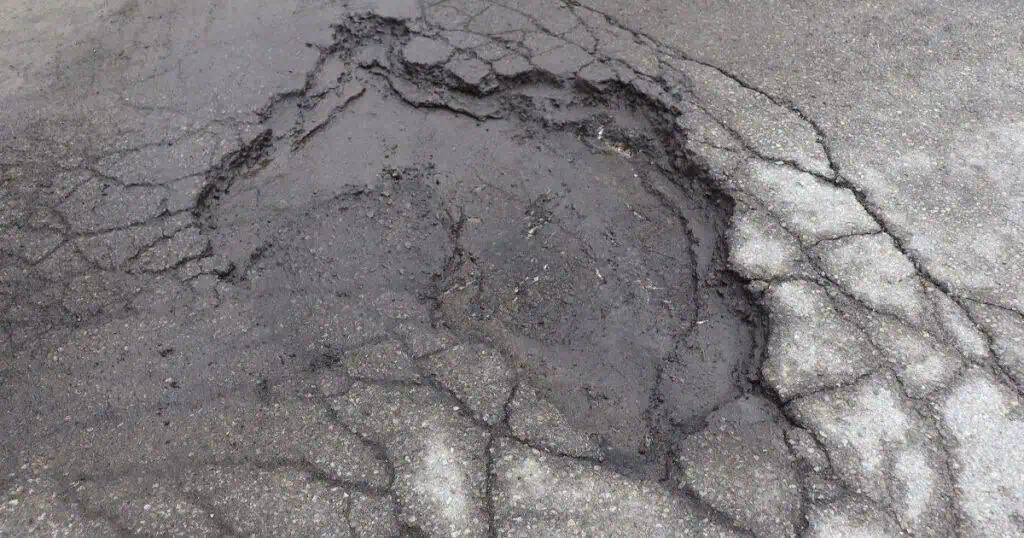
An especially harsh winter has put work crews behind schedule in repairing the numerous potholes on Mississauga roads, the city says.
The filling in of hundreds of potholes across the city is part of Mississauga’s annual spring maintenance and cleaning effort. Following most winters, work crews are able to effectively keep up the pace in ridding the roads, to the relief of motorists, of such damage.
But not this year, says Helen Noehammer, the City of Mississauga’s director of works operations and maintenance.
Noehammer told the mayor and councillors at Wednesday’s general committee meeting that what made this past winter different than most is “we had an extended period of cold weather and below-zero temperatures.”
The senior city staff member explained that most winter seasons in the Greater Toronto Area are characterized by “several cycles of freeze-thaw, and the potholes appear over an extended period of time in January, February and March … so we’re able to keep on top of the pothole repairs as they appear.
“This past winter was a little different,” continued Noehammer. “We had an extended period of cold temperatures, so we didn’t have those freeze-thaw cycles and as a result all of our potholes appeared at once, if you will, and a little later in the spring than they would normally. Not to say there were more potholes, it’s just that they came to light in a more compressed timeline.”

Helen Noehammer, the City of Mississauga’s director of works operations and maintenance, says extended periods of cold weather this past winter have impacted the pace at which potholes are being filled in across the city.
Discussion of potholes on city roads — and the pace of repairs — was prompted by a delegation on Wednesday from Mississauga resident Ramsha Haq, who told councillors and the mayor she delivers a regular podcast that helps keep her aware of residents’ various concerns.
She said an area of particular concern to many residents at the moment is the seemingly slower pace of road and sidewalk maintenance, notably as it relates to accessibility.
“A cracked sidewalk, an uneven curb and a poorly maintained road” are not just infrastructure issues, but they’re “also a barrier to mobility” that impacts many people’s safety and independence.
“Potholes and uneven resurfacing (of roads) are not just inconveniences; they contribute to vehicle damage and safety concerns.”
Mayor Carolyn Parrish, while acknowledging the importance of keeping the city’s roads in good shape, said it’s noteworthy that “the worst winter we’ve ever had” has been “very hard on the infrastructure.”
As a result, she added, pothole complaints are common this spring in municipalities across Ontario.
“This is just a reality right now,” Parrish said.
Ward 8 Coun. and Deputy Mayor Matt Mahoney noted that cities across the province — and Canada — are facing similar or worse road conditions this spring.
He said Montreal is filling 12,000 potholes a week while Toronto is up to 135,000 potholes fixed to date this year, and counting.
“So this isn’t just a Mississauga issue; it’s everywhere,” said Mahoney.

Mississauga resident Ramsha Haq told the city this week that many residents she’s spoken to are concerned about the state of the city’s roads.
Residents in Mississauga’s east end, meanwhile, complained last month that “significant potholes” were making at least two main roads in that area unsafe for drivers and others who use the routes.
Ward 3 Coun. Chris Fonseca said at a city council meeting in April that a number of roads in that part of Mississauga, “in particular Tomken Road, basically from Dundas Street right up to Eastgate Parkway, and then also Bloor Street,” were dotted with “significant potholes.”
Many of the potholes were located in the middle of the road and were not only deep, but lengthy as well, the councillor added.
Fonseca also pointed to troublesome potholes on other major routes such as Cawthra Road and Dixie Road.
City officials ask residents to be patient as road repairs continue and urge them to call the city’s 311 line to report potholes. From there, they’ll be repaired as quickly as possible, officials said, noting city crews prioritize the fixing of potholes based on the threat to road safety they present.
According to the Canadian Automobile Association (Ontario), which each year produces a top 10 list of the “Worst Roads in Ontario,” pothole damage to a vehicle can cost from $500 to $2,000, depending on the car model, to repair. The most recent average repair cost is $933, the association added.
Furthermore, a recent survey conducted by the CAA shows nearly half of respondents have experienced vehicle damage because of poor roads. The survey also found that cracked pavement remains the most dominant road-related issue (88 per cent), followed by potholes (84 per cent) and congestion (81 per cent).
INsauga’s Editorial Standards and Policies
Last 30 Days: 53,687 Votes
All Time: 1,356,611 Votes
187 VOTES
What’s your favourite major concert venue in Toronto?
WIN A $100 GIFT CARD
Subscribe to INsauga’s daily email newsletter for a chance to win a $100 Amazon gift card.