
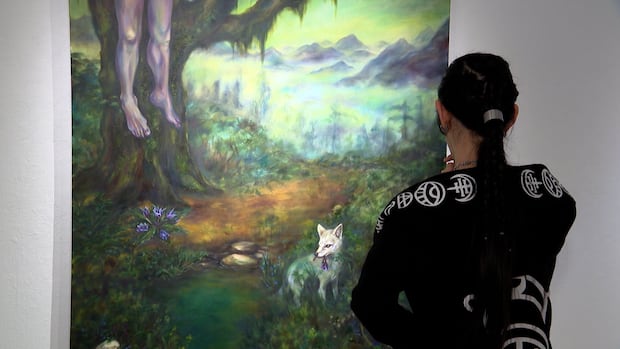
Qiming Sezava Sun was 17 when he left the eastern Himalayas.
He didn’t take much with him.
But he carried something that weighed on him heavily. It was a secret he inherited from his grandfather: ancient Himalayan Shamanism, paganism and the occult.
Sun says he came from a region under political suppression, Panzhihua, where his spirituality, beliefs and practices were banned.
“I always call my late grandpa, with all the affection, that he’s a closeted witch,” Sun says.
His grandfather’s knowledge is being kept alive. It has crossed mountains and oceans, and it now lives in the paintings, ceramics and art installations Sun creates.
The Gordon Snelgrove Gallery at the University of Saskatchewan has been displaying works by Sun and three other Asian artists. Thousands of kilometres away from the countries where they were born, on Treaty 6 territory, their new identities were born.
Their stories go beyond Asian Heritage Month.
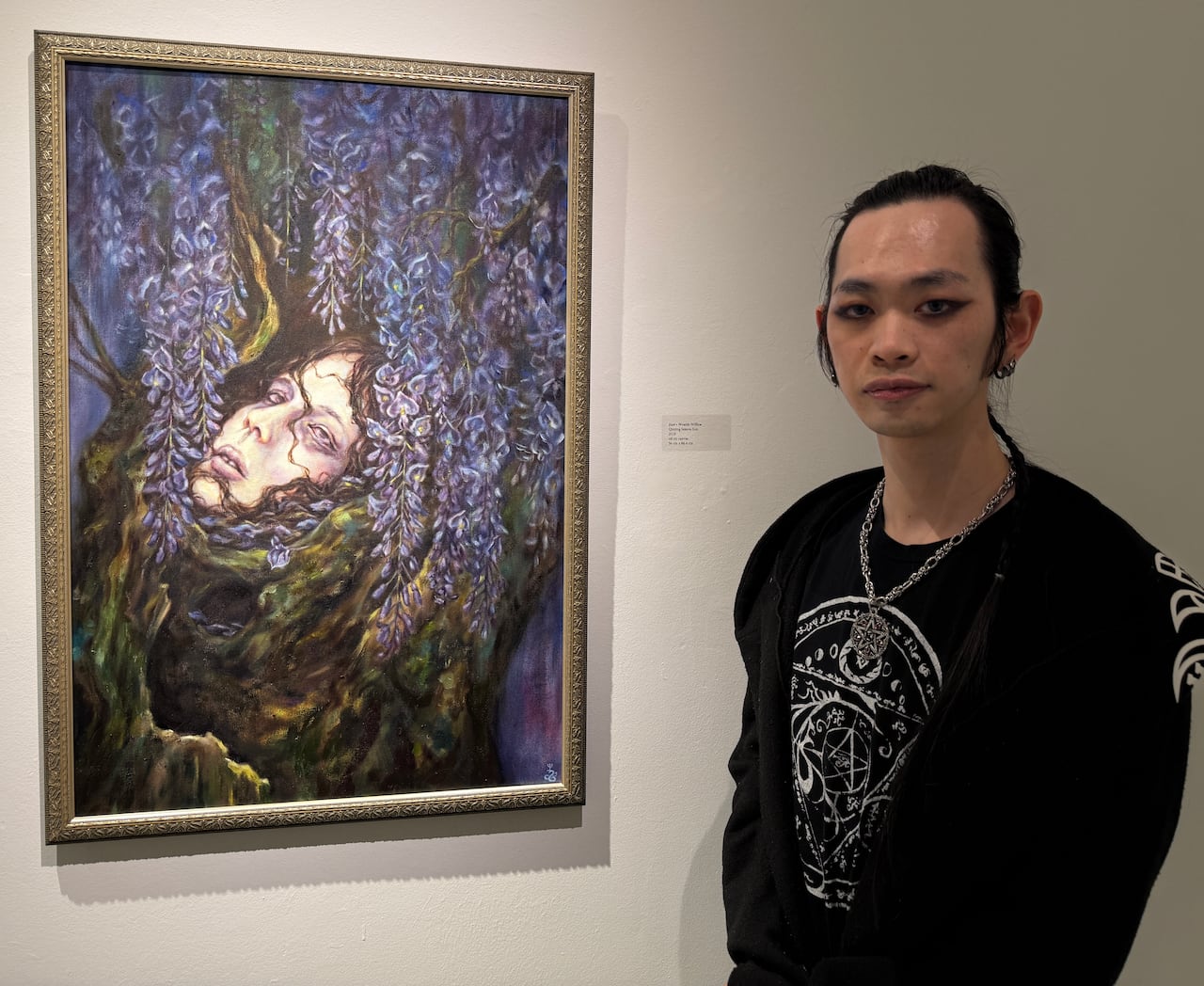 Qiming Sezava Sun’s paintings are mostly oil-based. They’re dense and layered. The subject matter revolves around death, the occult and the circle of life. (Aishwarya Dudha/CBC)
Sun came to Saskatchewan for university in 2012, but stayed for much more.
He’s a witch, a gay man, an artist working to change perceptions of death, the occult and the circle of life — things people often describe as negative or dark, he says.
“Here is where freedom is. It’s after I came here, I can openly explore any kind of a topic. I can openly explore my spirituality, my sexuality and also I can be a visual artist that makes art about many different, sometimes very difficult topics.”
Before, being a witch was dangerous and being gay was not an option. His grandfather’s knowledge had to live inside cooking recipes, teas, potions and spells hidden from the rest of the world, he says.
“I’m trying to keep all that knowledge and the memory of him alive through that.”
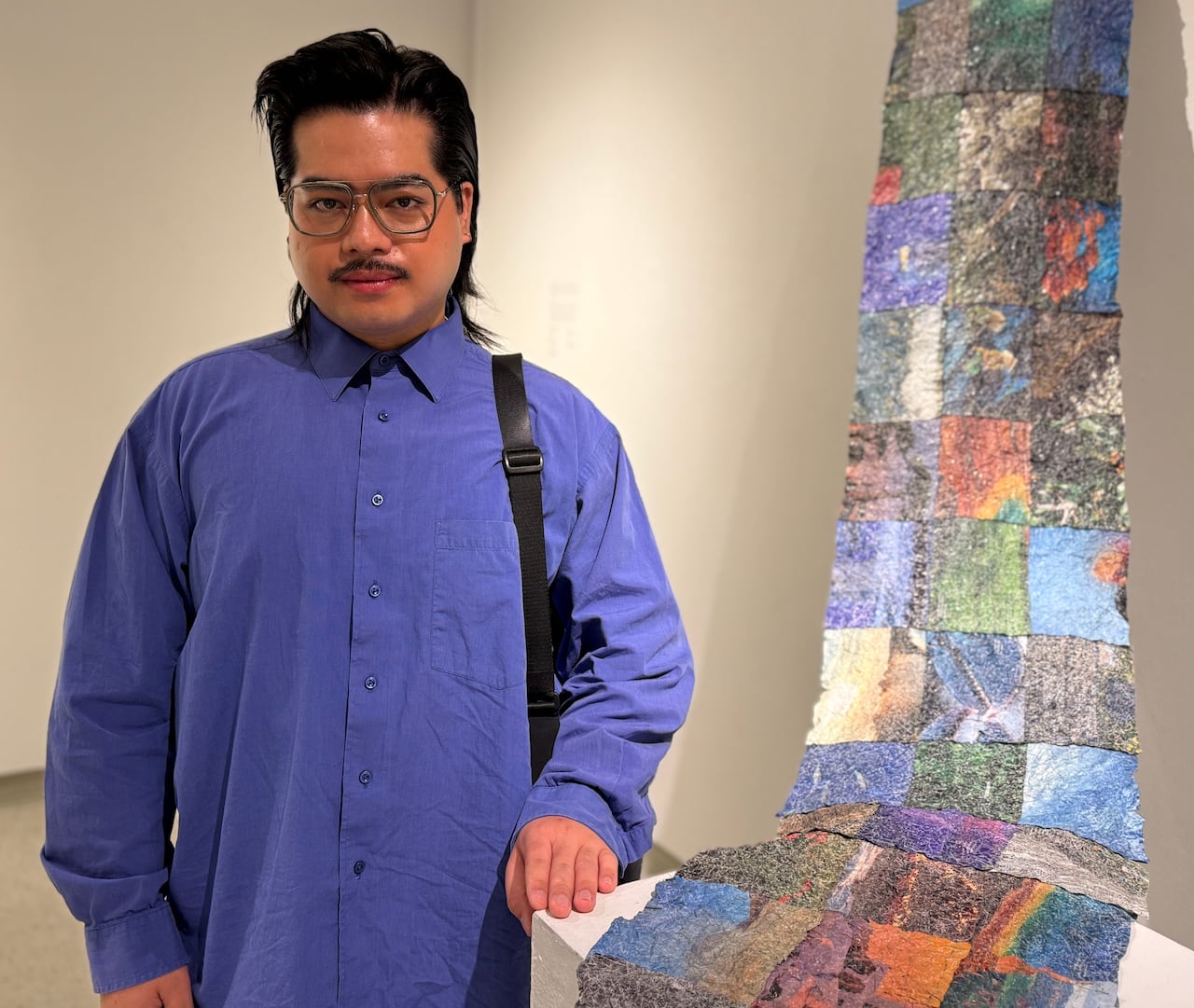 Aldeneil Española Jr. says his work is all about the process of “becoming.” He likes to use objects that may seem outdated to show that they can be transformed and still hold value, like the crumpled magazine pages in this art installation. (Aishwarya Dudha/CBC)Aldeneil Española
Aldeneil Española left the Philippines when he was 12.
His father had arrived first, working as a welder in Gravelbourg, a small town 200 kilometres southwest of Regina and a world away from Manila.
Española says the transition wasn’t hard, but being an immigrant kid comes with a cost.
“I’m not Canadian enough,” he says. “Or not Filipino enough.”
He calls it the third culture, the unnamed space between two worlds where people like him live, and his art is where he makes those two worlds meet.
Española likes to make pieces from things others might consider useless.
“I wanted to work with an object that feels outdated or has reached its potential, and I wanted to show that it can still transform, that there’s still value in what this thing is,” he says.
One of his pieces is made from his own used makeup wipes — remnants of drag performances — and crumpled magazine pages pulled from thrift stores, soaked in olive oil.
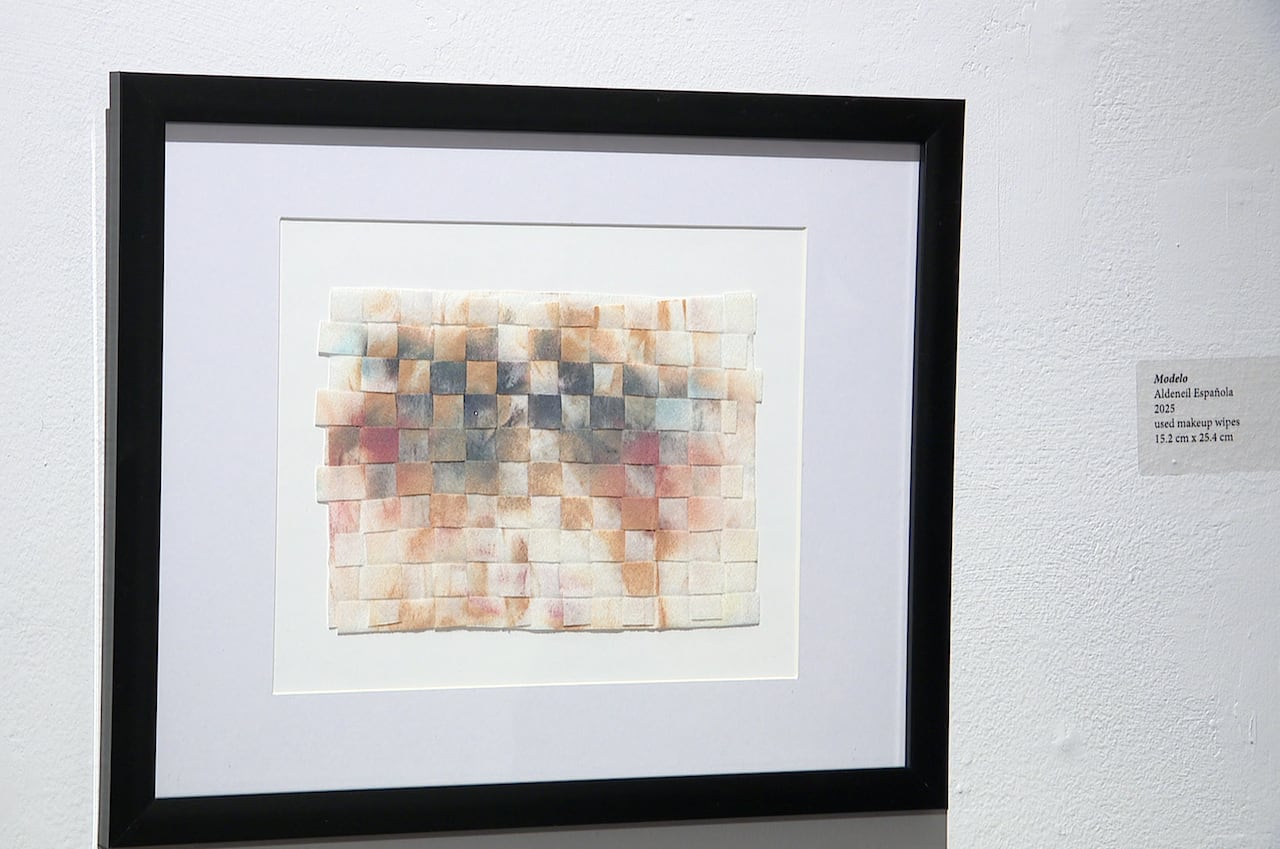 Aldeneil Española Jr. says this piece is a physical manifestation of the fact that there’s beauty within his queerness, and even within the marks and the pain. (Aishwarya Dudha/CBC)Abraham Galman
Abraham Galman also came from Manila, when he was nine, moving straight to North Battleford for the rest of his childhood before moving to Saskatoon for university.
He studied theatre — costume design and set design — and folded all of it into a visual art practice that’s still growing up.
He names his pieces in Tagalog, as a way to keep the language alive in his Canadian home.
“I think Filipino has this, this tendency to have a very distinct way of how they [use] different words. And if you really break up each word, there seems to be a sort of story within it already,” he says.
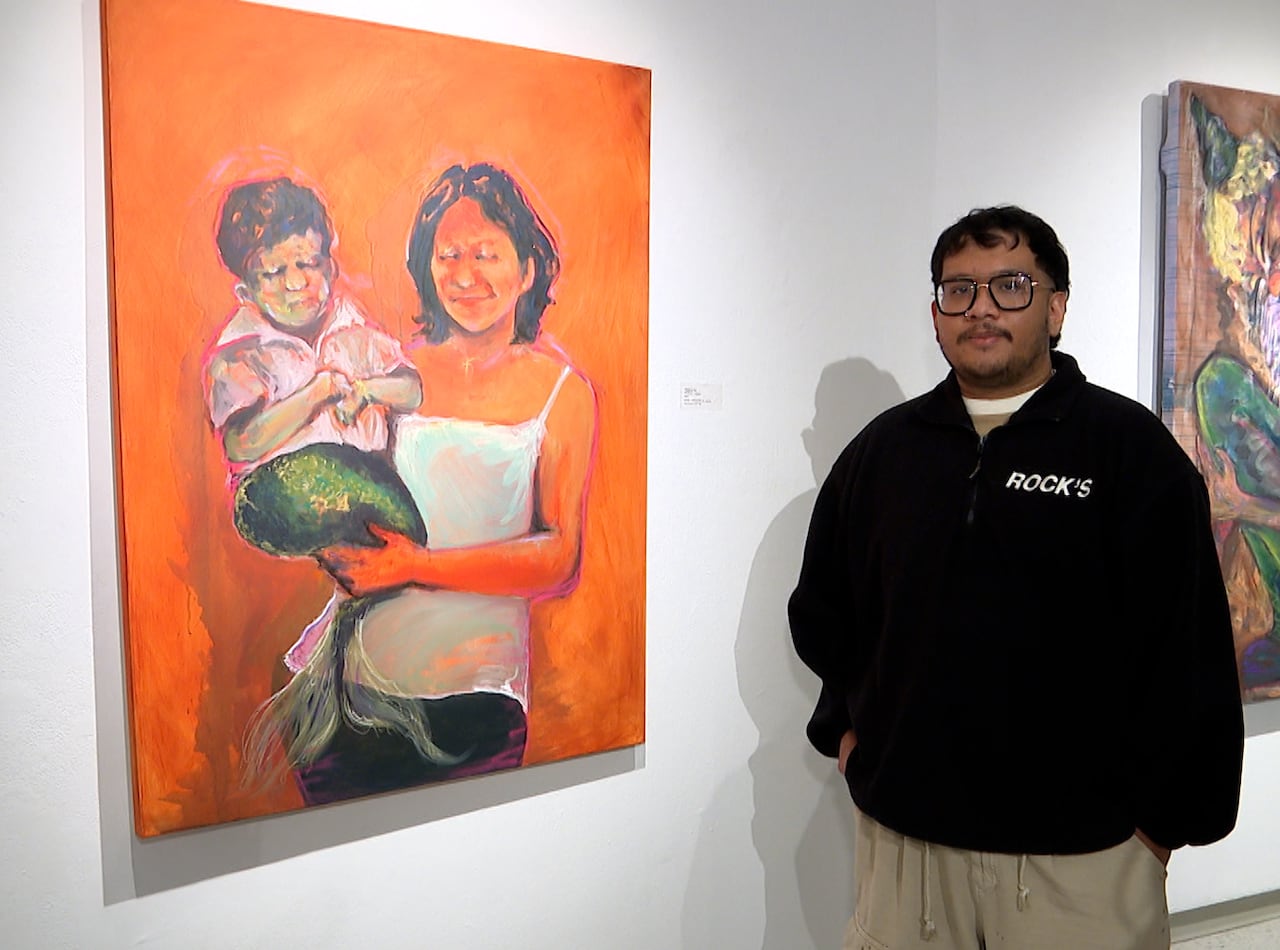 Abraham Galman says he uses art to research and learn his culture. He says he finds a way to connect with it and his family through his work, including this painting of his mother and himself as a mermaid. (Aishwarya Dudha/CBC)
Galman says he once had plans to leave Saskatoon and go somewhere bigger, somewhere that felt more like the world.
Those plans changed.
“If all the artists want to move to a big city,” he says, “how is Saskatoon going to flourish?”
He says it’s all about forming roots, staying long enough to let something grow.
Atrayee Basu
Atrayee Basu has been in Saskatoon for more than 15 years. She came from Kolkata, India — one of the biggest cities in the world, full of colour, density and noise.
She works with clay, saris, and anything she can find, mold, feel and create with.
Last summer she went back to Kolkata, by now pretty much an outsider, she says. But she’d spent her whole life watching the making of Durga Puja idols — the goddess that rises each year from clay and is celebrated, then carried to the river. Returned. The cycle completed.
This time she went back as an artist and was part of the process of creating the idol.
“When you look at something, it’s a different feeling,” she says. “But when you are into that creation, your energy is into that.”
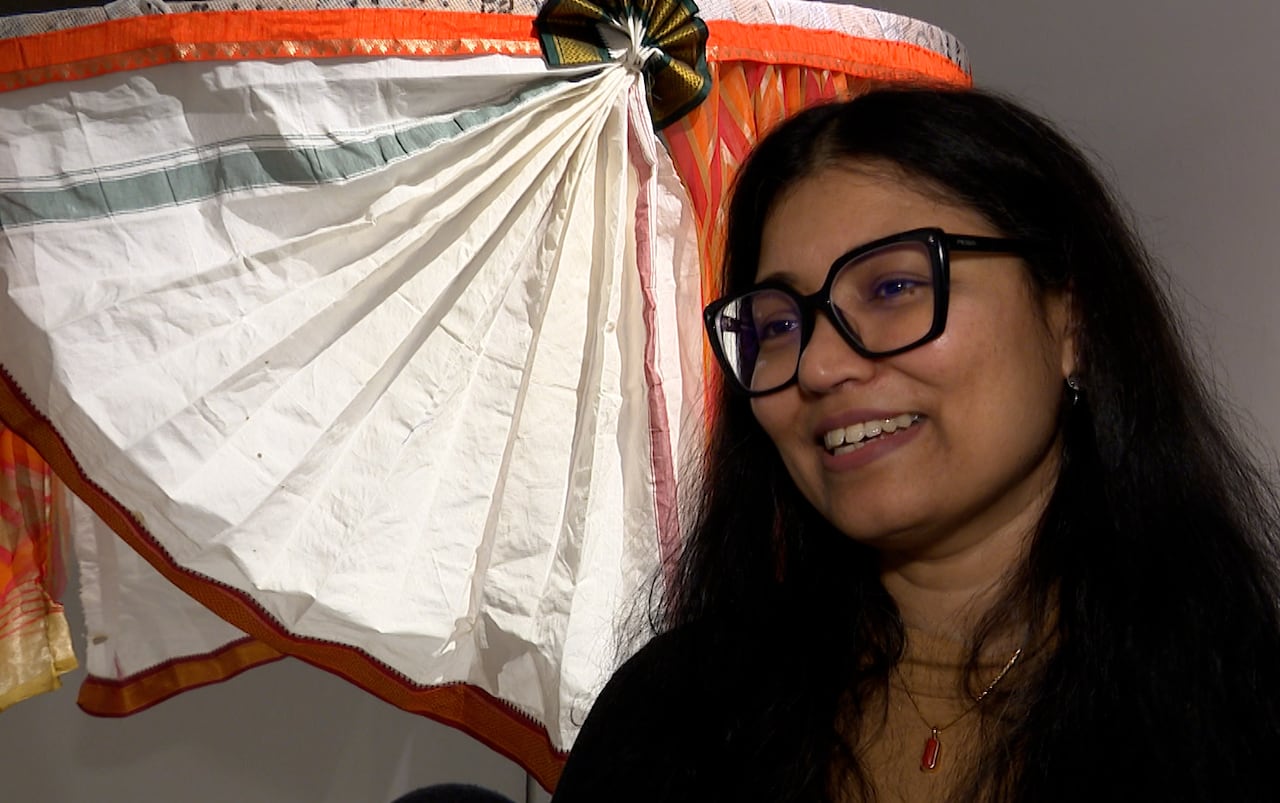 Atrayee Basu says she likes to bring her culture from Kolkata, India and her Bengali background into her art through fabric, spices, materials and concepts. (Aishwarya Dudha/CBC)
Basu once did a show called “Presence in Absence” about her two grandmothers in India, and about carrying someone inside you across a distance they never crossed themselves.
Strangers told her it reminded them of their grandmothers, she says.
Basu brings spices into the gallery. Cardamom. Turmeric. The scent reaches you before the image does.
“I bring lots of spices in my work,” she laughs.
These four people were carrying something that was either taken, hidden or suppressed. And each of them, here in Saskatchewan, could finally feel free.
They say Canada didn’t just give them a home, it gave them room to find out who they are, and how to be themselves.