
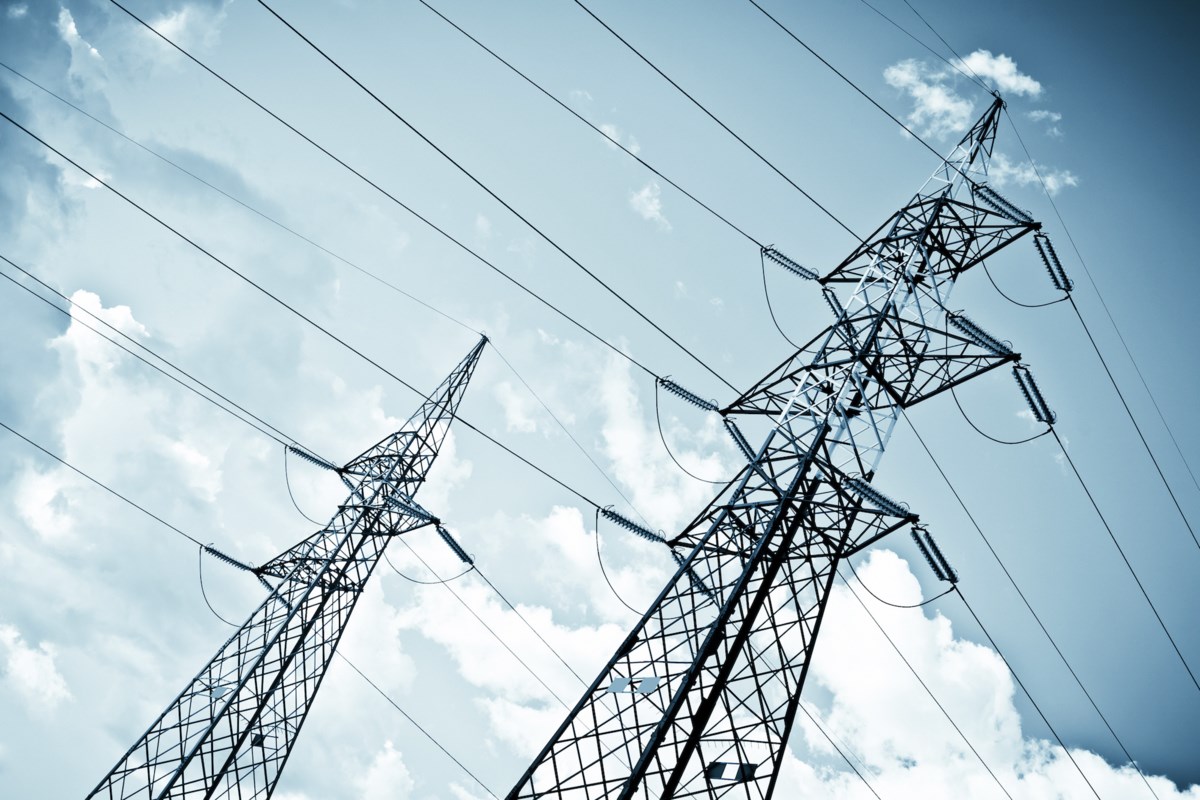
‘We do want to continue to hear from members of the public,’ said a Hydro One official about the project, which will span from Wharncliffe to the Third Line transformer station
Hydro One is seeking public input on a new power line that will bolster the electrical grid in northern Ontario and beyond.
The North Shore Link is a planned 230-kilovolt transmission line that will span a 105-km stretch from the Mississagi transformer station near Wharncliffe to the Third Line transformer station in Sault Ste. Marie.
The project is one of many meant to meet growing electricity needs in the region and across the province – like the Northeast Power Line project planned between Sudbury and Wharncliffe.
“There’s long-term electricity demand and growth right across Ontario, and there’s a number of projects that we are investing in, that we call critical infrastructure, in order to meet that demand. The North Shore Link is one such project,” said Sonny Karunakaran, vice-president of strategic projects and partnerships with Hydro One.
The new power line will serve as part of a broader network that can meet growing needs in Sault Ste. Marie or as far away as northwestern Ontario.
“With the electricity demand and growth, it caters for new developments, new industrial growth, the mining sector growth, and manufacturing sector growth,” Karunakaran said.
Hydro One recently completed its draft environmental study for the power line, and community members are encouraged to weigh in on the environmental impacts and mitigation strategies laid out in the document.
The report is available for public input until June 12.
“We do want to continue to hear from members of the public,” Karunakaran said.
“If they have new and advanced information that they want to bring to light to us, we do encourage them to bring that to light, and what we will do is we’ll address them on a case-by-case basis to see if there is an adjustment or an amendment that we need to make.”
According to the report, the project might disturb the quality of the numerous rivers, streams and lakes in the area, but mitigation measures – like avoiding sensitive water features and minimizing vegetation removal – will be employed during construction.
“The draft environmental study report does draw the conclusion that the potential impacts can be mitigated, and as a result there are no significant cumulative effects,” Karunakaran said.
The line will also cross Indigenous territories and conservation areas like the Mississagi River Provincial Park.
The report has proposed providing advance notice of any trail closures through the construction process, as well as consulting with Indigenous communities “to identify hunting areas and seasonal schedules so that, where feasible, construction timelines can be coordinated to avoid peak harvest season.”
Last summer, Garden River First Nation raised concerns about the chosen route for the North Shore Link, which was selected out of three potential options.
“Garden River First Nation is not opposed to responsible energy infrastructure development,” said a news release issued last year.
“However, such development must respect our rights, laws, and jurisdiction, and reflect a genuine government-to-government relationship founded on trust, transparency, and respect.”
Karunakaran said Hydro One has held over 280 meetings with nine partner First Nation communities regarding the project since 2023, and that the company values “the rights, the interests, and the perspectives” of those communities.
“We’re very confident that, through the spirit of partnership and the continued collaboration, we’ll be able to continue to advance through real action and reconciliation and build the energy infrastructure that the province needs,” he said.
According to the report, the plan is to complete the environmental assessment for the project this fall.
Construction is expected to begin in 2027, with the line entering service in 2029.