
You see them in bike lanes, sometimes on sidewalks, or you might catch a glimpse of them riding off as you collect your food delivery from your porch.
E-bikes have been an ever-growing part of Toronto’s landscape since the province made them legal in 2009. But the city has struggled to regulate their use, with safety concerns ranging from battery fires to speeding routinely heard at council meetings.
Over the last two months, the province — which is in charge of e-bike legislation — has looked into updating rules around their use. And this past week, e-bikes made their way back to city council and were positioned as an election issue in Toronto’s race for mayor.
Here’s what’s happening:
The province’s proposal
In April, Ontario’s Ministry of Transportation opened an online feedback portal on changes it wants to make to its e-bike legislation.
The proposed changes are meant to make enforcement easier. If they pass, they could help cities clarify to riders what is and isn’t allowed on their roads and in bike lanes.
The changes include creating two categories for e-bikes. E-bikes would be categorized as class 1 or 2, depending on their weight and how they’re powered. Since bike enforcement typically falls under city purview, it would be up to municipalities to decide where these classes of bikes would be allowed to operate.
Bikes that don’t fit into a class category, such as those with paneled frames like mopeds, could require insurance and an M licence.
The province already has requirements on e-bike speeds and the minimum age to ride one.
WATCH | Toronto’s fire chief on e-bikes: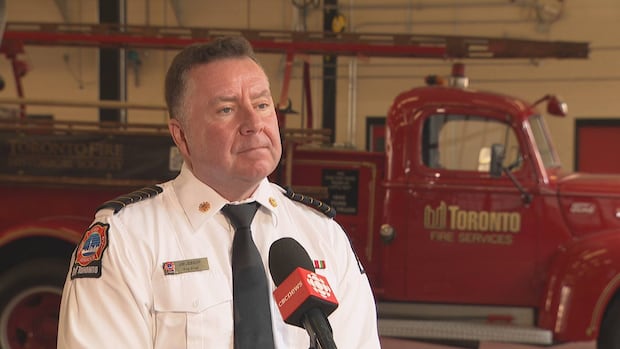
Lithium-ion batteries the ‘largest growing fire safety risk’, Toronto Fire says
Toronto Fire Chief Jim Jessop is calling on the federal government to increase regulation around lithium-ion battery fires, particularly in their use in e-bikes and e-scooters.
Meaghan Evans, a spokesperson for the Ministry of Transportation, said that “the range and capabilities of electric vehicles have evolved significantly” since the province legalized e-bikes in 2009.
“To support road safety, the Ministry of Transportation has posted a proposal to modernize the regulatory framework for e-bikes on the Ontario Regulatory Registry,” she said in an email.
E-bikes cycle into election race, city council
Last Wednesday, mayoral candidate and Toronto city councillor Brad Bradford put forward an eight-point proposal to crack down on “dangerous e-bikes,” positioning them as a potential issue in the upcoming municipal election.
The proposal includes calls for a ban on motorized vehicles in spaces like bike lanes, a task force to inspect e-bike retailers, and for courier businesses to educate contractors on the rules of the road.
Bradford put forward a member’s motion last Thursday at city council calling for similar measures.
Mayor Olivia Chow, who has not formally declared a re-election bid but regularly talks about her plans for the city beyond 2026, put forward a member’s motion similar to Bradford’s.
It included calls to prevent uncertified lithium ion batteries from being sold in Toronto and to look into safe e-bike storage in apartments.
Both Bradford and Chow’s motions sought to amend a council motion that asked the city to support Ontario’s proposed e-bike changes.
It was passed by a unanimous vote, with both Chow and Bradford’s amendments included.
WATCH | Cycling advocates host information sessions on e-bike use: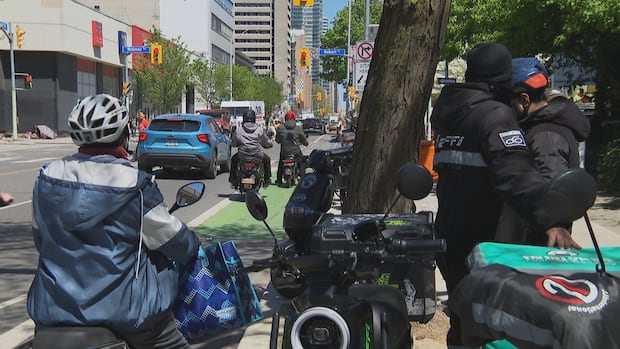
Should Toronto crack down on e-bikes?
The province and Toronto’s city council want to enforce tougher regulations for e-bikes. However, as CBC’s Tyler Cheese explains, some advocates say what’s needed is cycling education to curb unsafe riding habits.Delivery couriers and e-bike retailers weigh in
As the province works through its e-bike legislation, cyclist advocates Cycle Toronto, Bike Brigade and The Biking Lawyer LLP, have partnered up to host information sessions for riders on proper use, geared for those who do deliveries.
David Shellnutt, a personal injury lawyer and managing partner at The Biking Lawyer LLP, said the workshops have helped open dialogue with gig workers.
“We represent a lot of these guys who are hit by motorists and suffer serious injury, so we know the risks that they face out there,” he said.
“These guys aren’t making dangerous decisions for no reason. There’s time-sensitive deliveries, they’re trying to make money.”
Hena Salam, who has been an “on-and-off” delivery courier for almost 10 years, said he feels safe on the roads but would like to see more bike lanes in the city.
“Some people don’t care about [the] traffic rules,” he said.
“My concern is always safety first,” he said, noting that if is was running late on a delivery, he texts the customer and lets them know rather than try to make it on time.
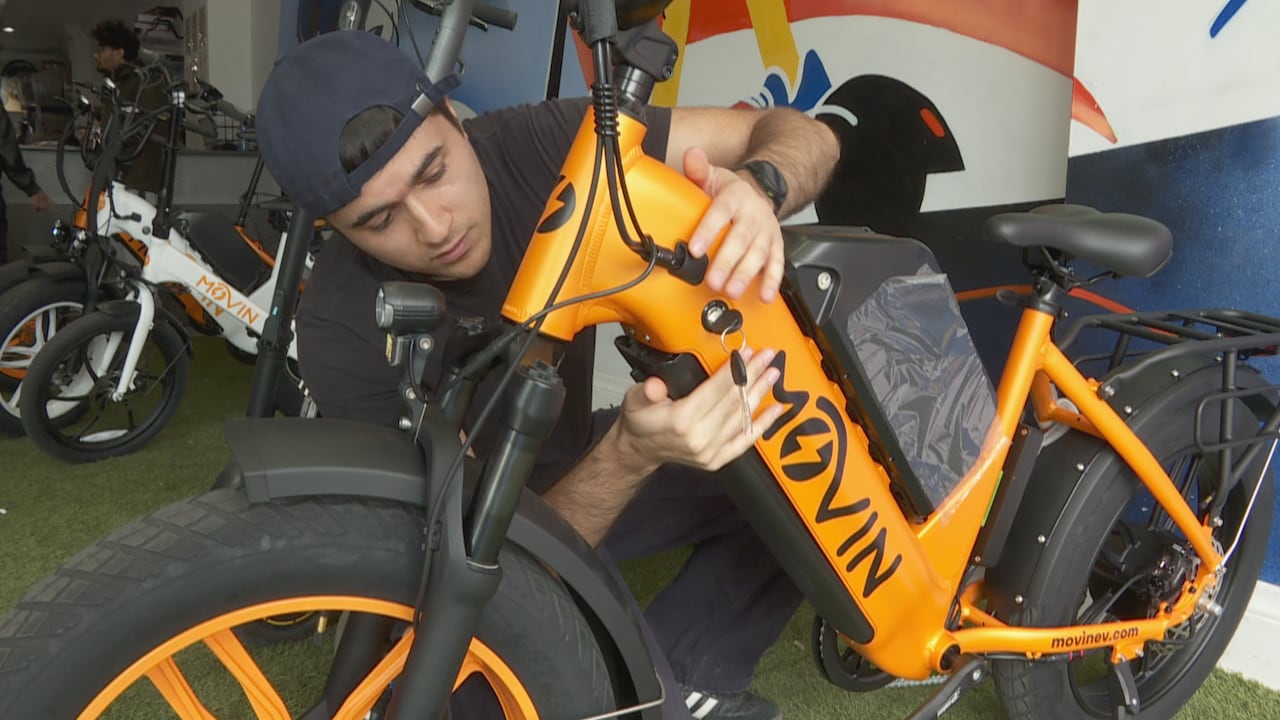 Parwaiz Nijrabi, one of the owners of Movin’ Ebikes, which supplies e-bikes to many couriers in the city, said e-bike regulations are “due for an update.” (Grant Linton/CBC News)
Parwaiz Nijrabi, one of the owners of Movin’ Ebikes, which supplies bikes to many couriers in the city, said e-bike regulations are “due for an update.”
Nijrabi sells e-bikes that fall within provincial guidelines, but said even store-bought bikes can be modified to travel faster, which is a concern.
“Even if a retailer tries to do everything clearly by the book, they [e-bike users] are able to kind of ‘jail break’ these bikes and increase the speed if they want to, so that’s kind of hard to control right now,” he said.
“As a retailer, all I can do is work within the bounds of the law and respond to what the market needs.”
Dr. Steve Lin, chief of the emergency department at St. Michael’s Hospital, said the province’s proposed changes to classify bikes and possibly require some to be licenced are a reasonable step.
“We’ve seen an increase in [e-bike] injuries, mainly because [they’re] becoming more used around in the city,” he said, noting that the hospital has seen fewer e-bike users using helmets when compared to regular cyclists.
“It’s good to know that they’re not trying to remove them off the streets.”