


Listen to this article
Estimated 4 minutes
The audio version of this article is generated by AI-based technology. Mispronunciations can occur. We are working with our partners to continually review and improve the results.
A devout Sikh man who was told he couldn’t write a Winnipeg police recruitment exam unless he removed his kirpan — a ceremonial religious dagger — is hopeful a forthcoming policy will allow him to adhere to his faith while applying to the force.
Jaspal Singh Gill left the Winnipeg Police Service headquarters late last month feeling “shocked” and “disappointed” after being told he couldn’t write the exam.
Now WPS is developing a new policy to allow people to wear a kirpan during the application process, a spokesperson confirmed to CBC News on Sunday.
Singh Gill long dreamed of becoming a police officer while growing up in India, always looking up to family members who took that path.
“I used to see my grandfather and my father wearing the police uniform and serving the community. So that was my dream, that one day I will become a police officer,” he said.
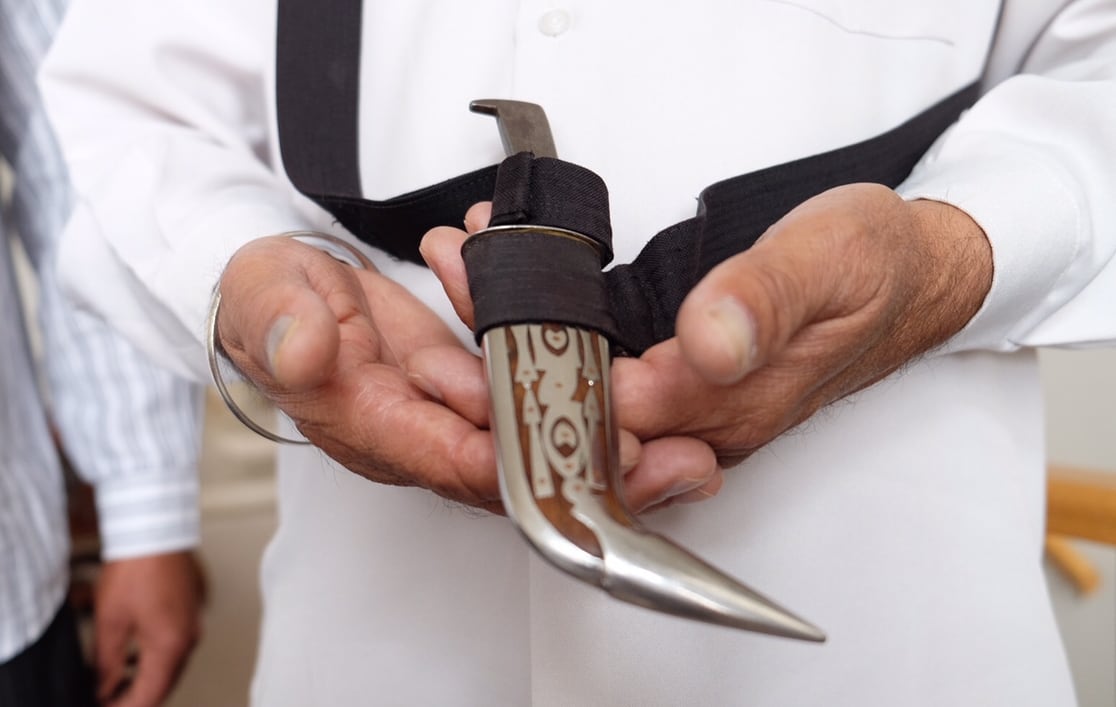 A kirpan is a ceremonial dagger carried by devout Sikhs. (Brett Purdy/CBC)
But Singh Gill, who came to Canada in 2021 and moved to Winnipeg last summer, feared that dream was “shattered” when he was told to remove his kirpan. He said it felt like he had to “choose between employment and my faith.”
The kirpan is one of five articles of faith that initiated Sikhs must wear at all times. Singh Gill said it is not a weapon but a sacred religious symbol that represents courage, responsibility and “our duty to protect the weak and stand against injustice.”
“For Sikhs, it serves as a reminder to act with compassion, discipline and justice,” he said.
Devout Sikhs in Canada have the religious freedom to wear a kirpan under the Charter of Rights and Freedoms, the Supreme Court of Canada decided in a unanimous 2006 ruling.
Some Canadian police forces have policies outlining how Sikh articles of faith can be incorporated into the uniform. For example, the Toronto Police Service’s uniform standards say initiated Sikh members can wear all five articles of faith, including a kirpan, which can be no longer than about 19 centimetres in length (7.5 inches).
Toronto’s police force also offers police-issued turbans to which a member attaches a badge and a coloured stripe reflecting their rank.
Singh Gill hopes the WPS policy will have a “reasonable accommodation where security and citizens rights will be balanced.”
He would support a policy where kirpans must be worn under clothing or have length requirements similar to airlines. Kirpans with a six-centimetre blade, or less, are permitted on domestic flights within Canada, according to the Canadian Air Transport Security Authority.
The World Sikh Organization of Canada, which sent a letter to WPS earlier this month, is happy to see WPS is developing a new policy.
“Sikhs wearing the kirpan have served with distinction in police services and public institutions across Canada for many years,” the WSO’s legal counsel Balpreet Singh Boparai wrote in a statement to CBC News.
“There is simply no justification for excluding someone from a police examination because they wear a kirpan.”
There needs to be more education around the ceremonial dagger and its religious importance, Singh Boparai said.
Singh Gill said he hopes the new policy will come into effect within the next few months, allowing him to go through recruitment process for a constable job before the January 2027 joining date.
“I believe once they have a policy regarding [the] kirpan, then I am not going to face these types of experiences in future. And I believe many other Sikh applicants in future who want to join police service are not going to like to face these types of experiences,” he said.