

Listen to this article
Estimated 4 minutes
The audio version of this article is generated by AI-based technology. Mispronunciations can occur. We are working with our partners to continually review and improve the results.
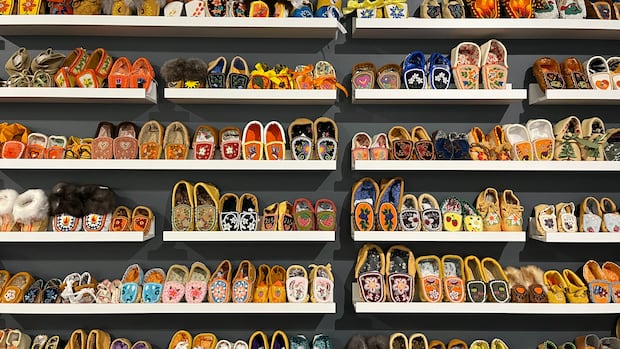
Moccasins line the wall behind seven international judges from the Permanent People’s Tribunal, hearing evidence at the daphne art centre in Montreal.
In front of them, two chairs draped with a blanket hold small red wrapped bundles and two small plates of food.
“The chairs are to recognize those disappeared children that never came home,” said Christa Big Canoe, an Anishinaabe lawyer and the lead prosecutor for the tribunal.
On Monday, the tribunal began a week-long investigation into missing Indigenous children and unmarked burials associated with residential schools.
Requested by the Native Women’s Shelter of Montreal in 2024, the tribunal will hear from expert witnesses and examine evidence regarding Canada’s responsibility for the residential school system and the human rights violations associated with it.
“We’ll often hear people use terms like assimilation or attempts at assimilation,” said Big Canoe, who is also the legal director of Aboriginal Legal Aid, in her opening remarks.
“I want us to use the correct language. The correct language in this circumstance is genocide and crimes against humanity.”
The Permanent People’s Tribunal is an independent international court of opinion that has investigated human rights abuses globally since 1979.
The tribunal on missing children and unmarked burials marks its 57th session and second in Canada.
Tribunal opens
The proceedings Monday began with a sacred fire opening ceremony, followed by a performance by Wolastoqew musician Jeremy Dutcher.
Native Women’s Shelter of Montreal executive director Na’kuset and the tribunal’s secretary general provided opening remarks, followed by the reading of the indictment by Big Canoe.
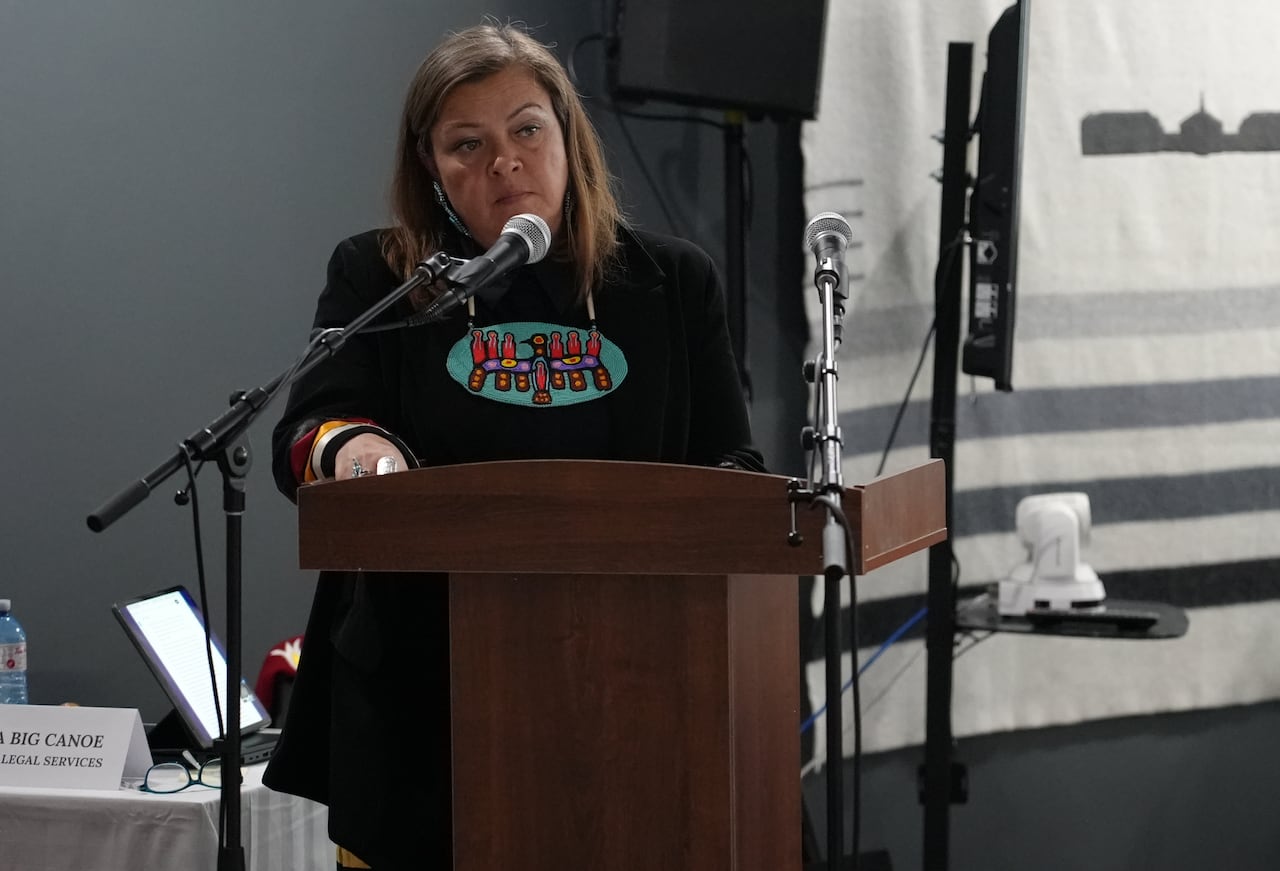 Christa Big Canoe, legal director of Aboriginal Legal Services and lead prosecutor for the Permanent Peoples’ Tribunal, questions witness Kimberly Murray on Monday at the daphne art centre in Montreal. (Kolya Hubacek-Guilbault/Radio-Canada)
The indictment, which was prepared by the Native Women’s Shelter of Montreal and Aboriginal Legal Services, calls upon Canada to answer for the policies and practices of the residential school system adopted over time by various administrations, which, according to the indictment, constitute genocide and crimes against humanity under international law.
“We submit respectfully that we’re giving you the tools to be able to make that determination,” Big Canoe said.
Crown-Indigenous Relations and Northern Affairs Canada has said the Government of Canada will not be participating in the proceedings.
Inside the art centre, an empty chair was set aside “as a symbol of Canada’s defence in this crucial and important and historic event,” Big Canoe said.
Testimony begins
Judges will hear from witnesses throughout the week, including two panels of residential school survivors, one panel of survivor-led initiatives and investigations experts, and one investigative journalism panel.
Kimberly Murray, Canada’s former independent special interlocutor for missing children and unmarked graves and burial sites, was first to testify as an expert witness Monday afternoon.
Murray spoke about her roles as special interlocutor and as the executive director of the Truth and Reconciliation Commission, providing evidence and answering questions related to missing or “disappeared” children and unmarked burials.
“Communities have a big hole in their heart and their land and their communities because these children were taken and Canada has done nothing in relation to reparations,” she told the tribunal.
“Appointing me as the special interlocutor did not fill that gap.”
Murray said through tears, “Those little lives stolen, those little lives lost…. who could they have become if they were only allowed to live and be with their families and their communities?”
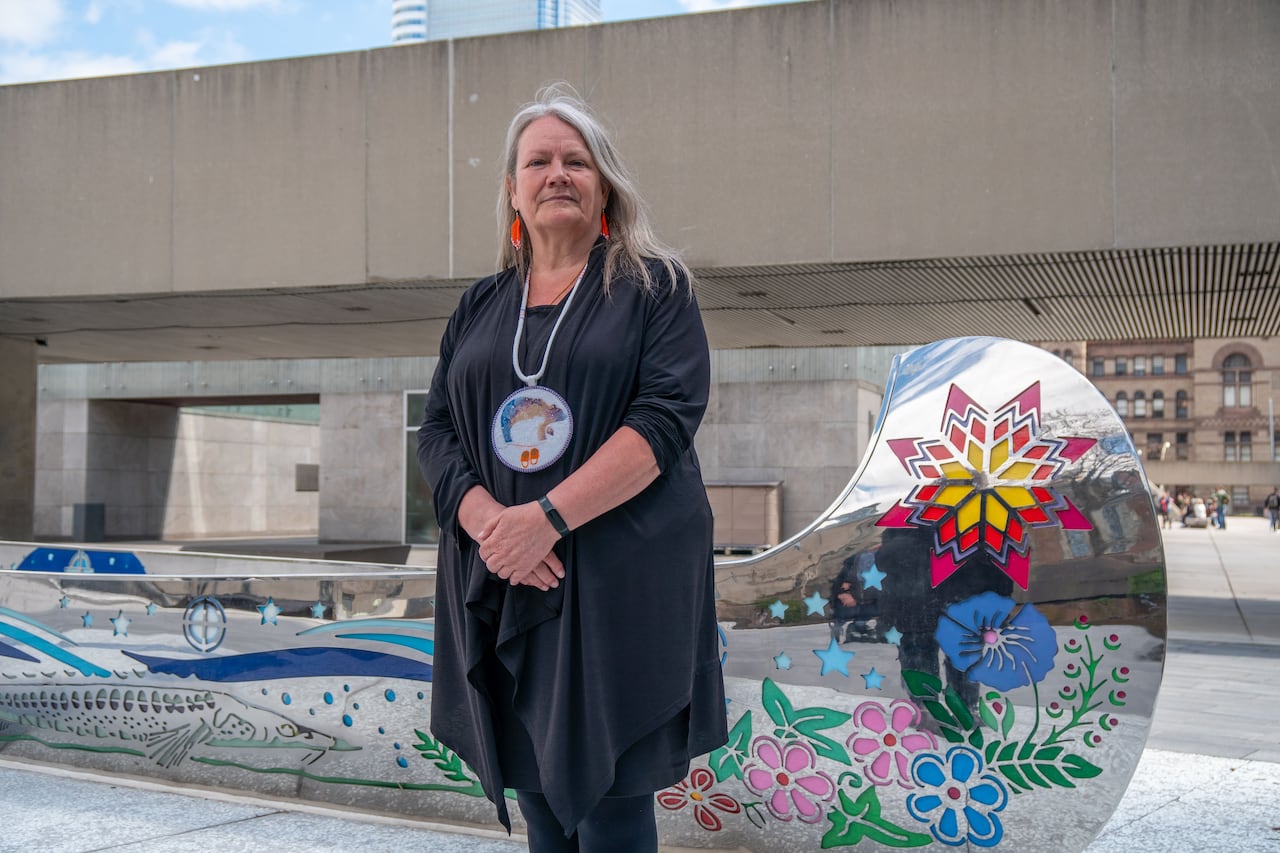 Kimberly Murray, former special interlocutor for missing children and unmarked graves and burial sites, will give testimony to the Permanent People’s Tribunal on Monday. (Sarah Law/CBC)
Murray told CBC Indigenous that beyond examining Canada’s accountability, the tribunal is an opportunity for survivors and Indigenous communities “to be heard and acknowledge the work that they’re doing and the importance of it,” as well as be an “antidote” for residential school denialism.
The tribunal is expected to issue an interim ruling at the end of the week. A full ruling is expected Sept. 30, the National Day for Truth and Reconciliation.
The Native Women’s Shelter of Montreal also plans to hold a five-day recovery gathering for all involved with the tribunal.
A national 24-hour Indian Residential School Crisis Line is available at 1-866-925-4419 for emotional and crisis referral services for survivors and those affected.
Mental health counselling and crisis support are also available 24 hours a day, seven days a week through the Hope for Wellness hotline at 1-855-242-3310 or by online chat.