

Listen to this article
Estimated 4 minutes
The audio version of this article is generated by AI-based technology. Mispronunciations can occur. We are working with our partners to continually review and improve the results.
The owner of Caspian Construction obtained a high-interest mortgage from a Vancouver-based non-bank lender in order to fulfil his $28-million settlement agreement with the City of Winnipeg over a police-headquarters lawsuit.
Caspian principal Armik Babakhanians secured a $33-million mortgage at an interest rate of 18 per cent from Travelers Capital in April, using Winnipeg properties as collateral, according to Manitoba land titles.
The prime lending rate in Canada is 4.45 per cent.
George Orle, a Winnipeg lawyer who has represented Babakhanians over the past year, said his client had difficulty finding financing because the City of Winnipeg placed a $28-million mortgage on five of his properties in 2024, in the event the construction company owner did not fulfil his settlement obligations.
“The fact that all of the properties were encumbered by the city as part of the agreement made primary lenders hesitant to to get involved,” Orle said Monday in an interview.
“He could not get the big banks nor could he get the credit unions to take on this risk. So he went to commercial credit lenders.”
On its website, Travelers Capital describes itself as a full-service provider of “asset-based loan and lease solutions to borrowers facing a variety of traditional funding challenges.”
Settlement ends 6-year legal saga
The City of Winnipeg sued Babakhanians, Caspian, former Winnipeg chief administrative officer Phil Sheegl and dozens of other defendants in 2020, accusing them of fraud, forgeries and kickbacks.
The lawsuit against Sheegl and several associated companies was later severed at the behest of the former CAO’s lawyer. That civil lawsuit ended in 2022, when Manitoba’s Court of King’s Bench ruled Sheegl had accepted a $327,200 bribe from Babakhanians in exchange for showing favour to Caspian in the police-headquarters tendering process.
Sheegl paid the city $1.15 million in fees and damages this year after the city went to court in Arizona to obtain its court awards.
In what became a separate lawsuit, Babakhanians, Caspian and other defendants settled with the city in 2023 and have since paid $28.5 million, according to city statements.
A group of consultants named in the suit paid the city $500,000, followed by a $28.02-million transfer from Caspian which Orle said remained in trust as of Monday.
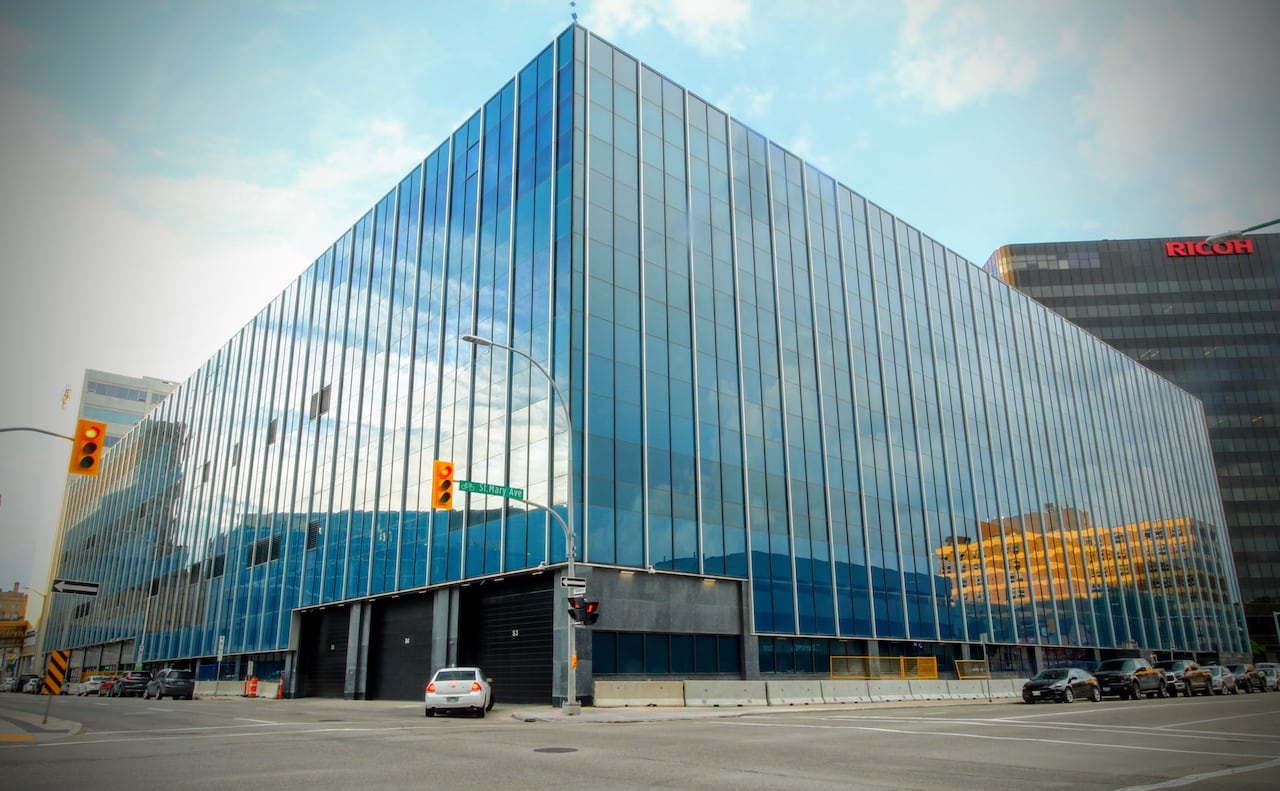 The Winnipeg Police Service’s downtown headquarters has been the subject of two audits, a five-year RCMP investigation that concluded without charges and a pair of lawsuits that garnered the city nearly $30 million in court-ordered payments and negotiated settlements. (Tyson Koschik/CBC)
The city pegged the total value of the funds it has recovered or is in the process of recovering from the defendants in its police-headquarters lawsuits at $29.67 million.
The money from Caspian is destined to top up Winnipeg’s depleted rainy-day fund, which is formally known as the fiscal stabilization reserve, Winnipeg’s mayor said.
“This shows that it was the right decision to pursue this this matter legally,” Scott Gillingham said Monday in an interview.
“Now we’ve recovered nearly $30 million for Winnipeg taxpayers, which is a major win for our city.”
Babakhanians ‘did everything the city required’: lawyer
The lawsuits against Babakhanians and Sheegl followed the conclusion of a five-year RCMP investigation into allegations of fraud, forgery and secret commissions during the procurement and construction of Winnipeg’s $214-million police headquarters project.
The project was subject to a pair of city audits in 2014 and remains the subject of a provincial public inquiry, whose public hearing component ended on Friday — the same day Babakhanians was able to transfer his $28-million settlement payment to a bank account maintained by Marr Finlayson LLP, the city’s external legal counsel in the police headquarters lawsuits.
Orle said Babakhanians strove to pay the city sooner but was stymied by his search for financing.
“It wasn’t until several months before the inquiry that Armik was able to get a reputable commercial lender to loan him the money to pay off the the money owed to the city in full,” Orle said.
Orle chafed against what he described as public perception that Babakhanians was avoiding his obligations to the city or was otherwise unco-operative.
“People should also remember that the Caspian Group and Armik Babakhanians in particular didn’t try to avoid payment, didn’t try to avoid having [the city] have access to his assets to secure, did not try to dispose of assets or in any way try to prevent the city from being able to collect on what they were entitled to collect on,” Orle said.
“This isn’t somebody who’s trying to get away with their responsibility. He did everything the city required.”