
On May 8th, the FIA announced that, following a meeting of key Formula 1 stakeholders, agreement had been reached in principle for changes that should address the current frustration over power unit usage. The news was well-received by drivers and fans alike—but in the weeks since the meeting, the expected confirmation hasn’t yet come, as some of the manufacturers have put the brakes on the changes.
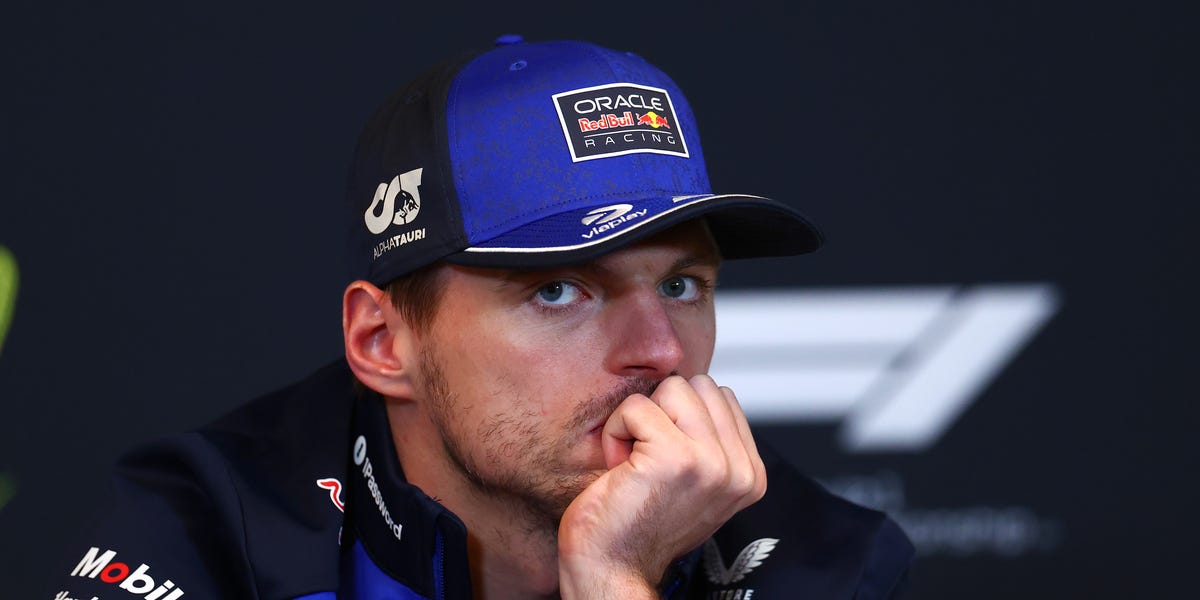
The key is to address the frustrations of the drivers, as so clearly expressed by Max Verstappen. In Montreal, the Dutch driver made it plain that if the changes don’t go through as planned for 2027, he will walk away—simply because he doesn’t enjoy racing cars with the current power unit regulations. “Well, if it stays like this, it’s going to be a long year next year,” he said. “Which I don’t want.”
“I can tell you, if it stays like this…” he added, “then let’s see. It’s just mentally not doable for me to stay like this. Absolutely not.”
Asked by Road & Track if he would think about a sabbatical to bridge the gap to delayed revised rules in 2028 Verstappen responded with a simple “No,” further clarifying that if he does stop next season, that would be it: “Yep. There’s a lot of fun things out there.”
Skeptics could argue that even the sport’s biggest box office draws can’t hold it to ransom, and if they no longer like F1, they should go. However Verstappen’s voice carries a huge weight, and he’s saying what others are thinking in his own honest way.
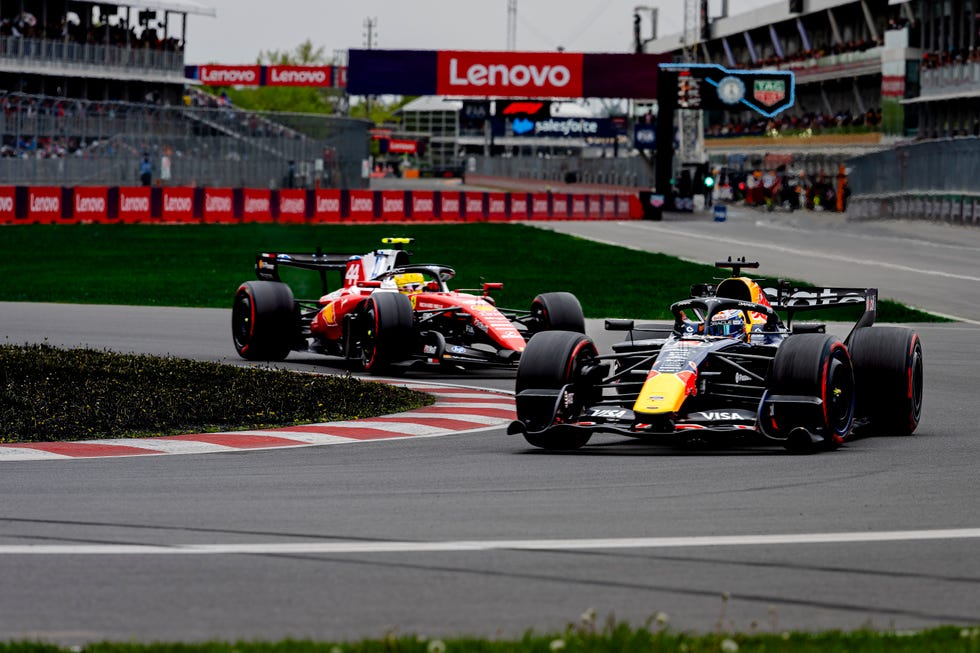
NurPhoto//Getty Images
The delay in confirming the changes is due to the fact that what was agreed in principle now has to be voted on. The voting parties are the FIA, the F1 organization, both of whom are obviously backing the changes, and the six manufacturers—with Cadillac having the same power as the likes of Ferrari and Mercedes, despite not yet being on the grid with its own product.
Under the governance, four of the six manufacturers have to say yes to the plans. While Mercedes and Red Bull Ford have clearly and publicly backed the plan, the others are either still strongly opposed to fact fast-tracking major changes for 2027, or have been holding their cards close to their chests. The FIA and F1 have been lobbying, and there were lots of individual discussions in Montreal. There are conflicting views on how close we are to a resolution, but one source told Road & Track on Tuesday that there are now enough votes for the changes to be pushed through, with Honda and Cadillac both now on the yes side, if not yet in public. That leaves Ferrari and Audi as the outliers.
In theory, their support is not needed. But obviously, it is not a good look if two teams are opposed, so efforts continue to address their specific concerns so the sport can present a united front. It’s a fascinating stand-off, and something we’ve seen so often in the past as teams or manufacturers jockey for position, and inevitably back one they think is right for them.
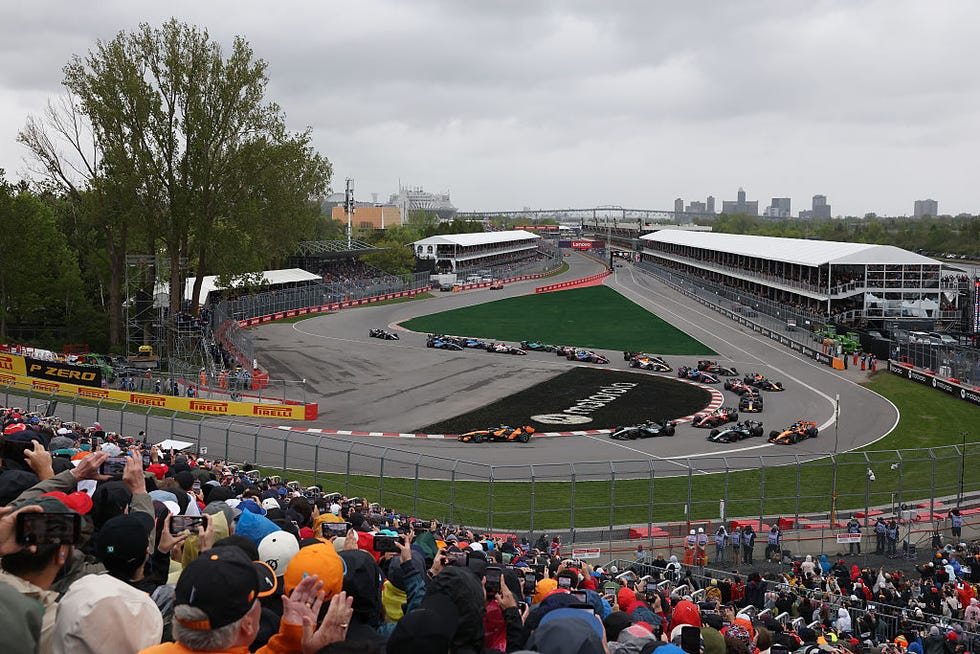
Anni Graf – Formula 1//Getty Images
In essence, the plan is to increase the combustion engine contribution with a move from the current 50/50 split with electric to 60/40. That would essentially be done by increasing the fuel flow limit, which in turn means cars will use use more fuel over a race distance. The biggest headache that creates is that fuel tank size has to increase—and at a time when several teams planned to carry over their current chassis in 2027, that became an issue.
It has been addressed by cutting the laps to the grid from the typical current three to one (already mandatory for sprints), and by trimming those races where consumption is marginal by a few laps. Thus on the team side, the main concerns were quickly addressed. The teams don’t have a vote in this process, and obviously the real impact is on the five current power unit manufacturers, given that hardware changes will be needed for 2027.
The frustrating thing with the current delay is that, for once, it appeared that all parties were prepared to do something for the good of the sport, and take the hit of having to adjust on the fly to different regulations. The bigger picture is the need to keep the sport healthy and maintain the momentum built up over the last 10 years by Liberty Media in the Drive to Survive era. Yes, we had a great Canadian Grand Prix, and we’re likely set to have a fascinating title battle between the Mercedes drivers, but that doesn’t paper over the cracks of the shortcomings of the current power unit.
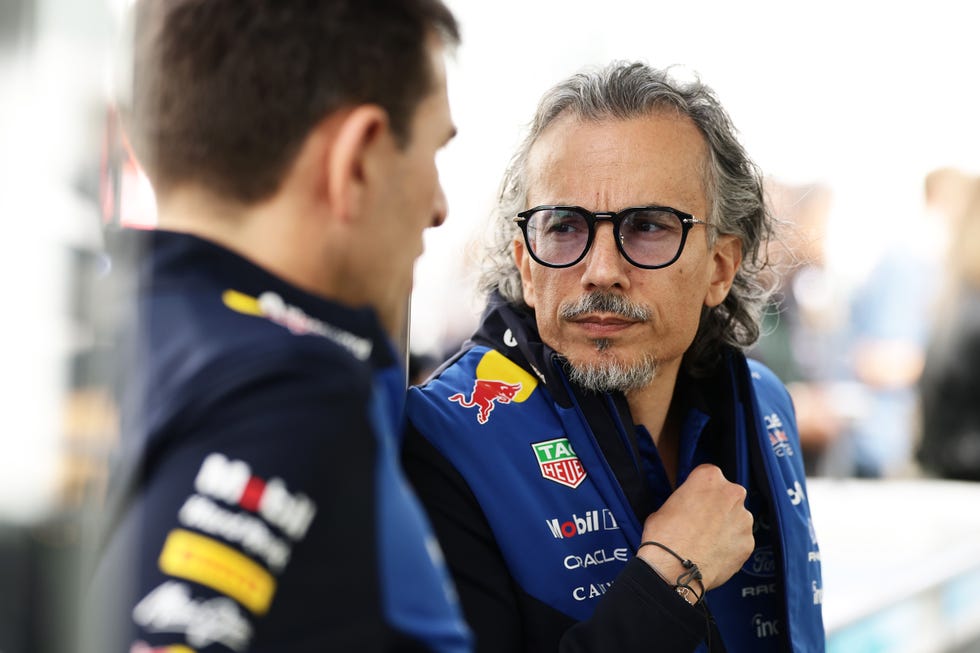
Mark Thompson//Getty Images
“I think we all love the racing part of it,” said Verstappen’s boss Laurent Mekies when Road & Track asked about the situation. “And I think it’s great, and we all enjoy watching the races, and it’s brilliant for the sport. I think what you are targeting with the changes for ’27 is not to change that part, it’s to make sure that underneath that the guys are flat out.”
And that is the important thing: less focus on energy management. “So you want the same amount of overtaking, the same amount of gaming, same amount of overtaking tools,” Mekies said, “but you want to make sure that underneath that the guys are flat out in qualifying, flat out in the race.”
Mercedes boss Toto Wolff is winning at the moment, but he insists the manufacturers should act for the good of the sport.“Well, it’s easier to talk from my position, but I think the races are pretty entertaining now,” he said on Sunday night. “Obviously, the Montreal track layout helps in terms of energy. But I think that the changes that we had anticipated, all of us together, in adding more power, maybe helping the energy deployment in the right way, these are good changes. They mean a compromise from each of the engine manufacturers, but it looks like a sensible approach. But we haven’t voted on them yet.”