
It’s still been less than a week since Kyle Busch’s sudden passing, and the haze of shock and confusion still obscures the ramifications.
But with each passing day, a bit more processing takes place. And what’s become clear is that it can’t be overstated what a seismic impact this loss will have on NASCAR and its future.
It goes without saying that the biggest loss is to Busch’s family — wife Samantha, children Brexton and Lennix, brother Kurt, parents Tom and Gaye.
But in other, still important ways, everyone involved in NASCAR was unfairly robbed of seeing the end of Busch’s story. And it’s a story that would have woven a thread through the sport for decades to come.
Here’s a look at just a few of the things all of us lost when NASCAR lost Busch.
Busch’s redemption arc
On the popular Racing Reference site, which serves as the keeper of all NASCAR stats, there’s a sobering and unwelcome reminder on Busch’s statistics page.
“Born: May 02, 1985 … Died: May 21, 2026”
That still feels impossible to read. But it’s a signal that the record books have been closed on Busch’s career, save for his final points position at the end of this season.
Except up until last week, all of those statistics very much had the potential to grow. Busch was 41 and in a career-worst slump in the Cup Series. He had just two top-10 finishes in 12 races this season, his average finish of 20.8 was the worst since his rookie season, and he had a career-long winless streak (last Cup Series win: June 4, 2023, at Gateway).
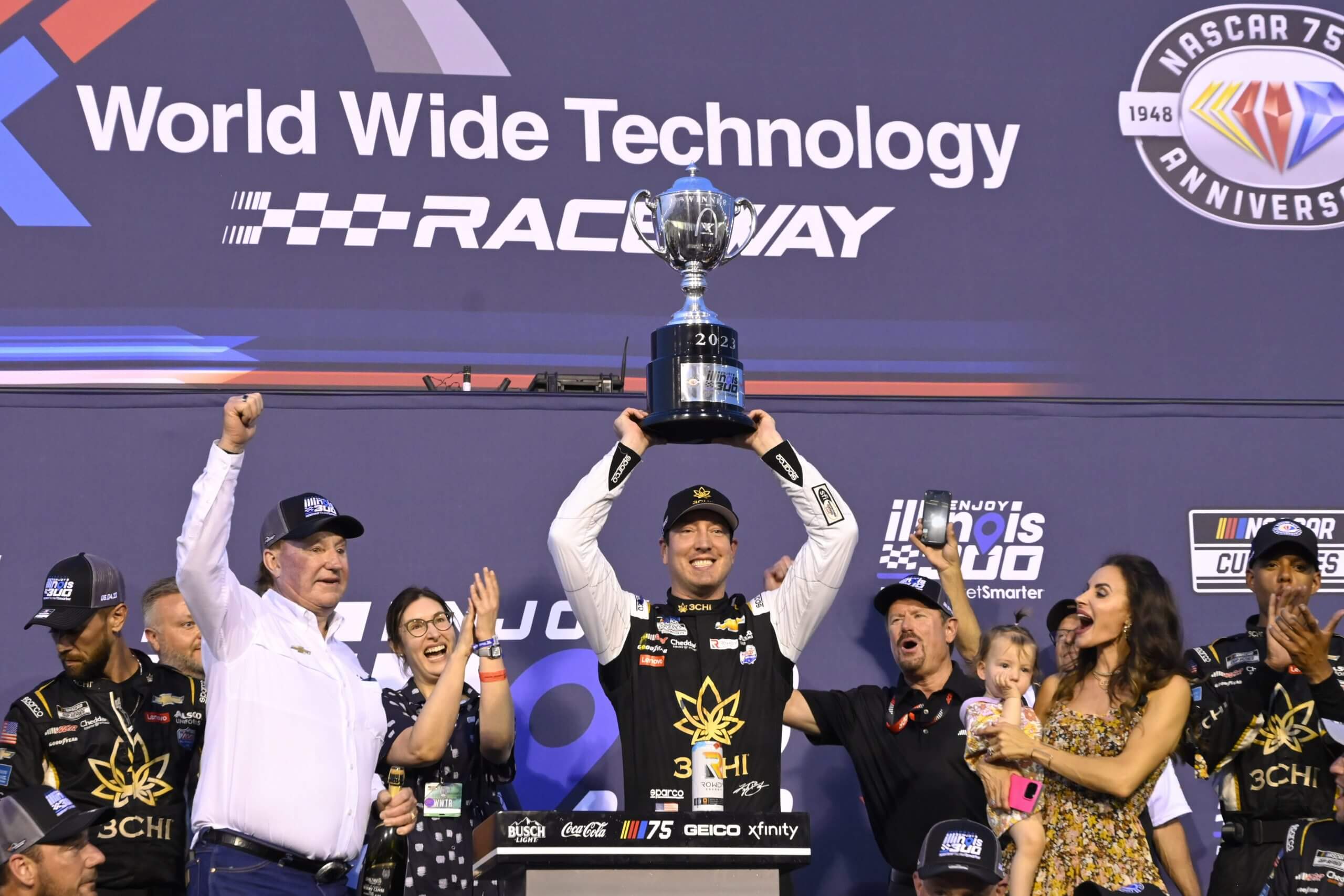
Kyle Busch celebrates his final Cup Series win, in June 2023. (Joe Puetz / USA Today Sports)
But as Busch showed in his final race weekend at Dover Motor Speedway, he still had it. In that Truck Series race, he was fastest in practice, won the pole, swept the stages, led the most laps and won the race before taking what was literally his final bow.
And, as it turned out, he did so while battling pneumonia.
Busch had a new Cup Series crew chief at Richard Childress Racing, Andy Street, and the pair seemed to be producing immediate results — his two top-10s came in his last three races, the second one with Street. Would RCR have turned it around and gotten Busch back to victory lane? Would the pending free agent have left RCR for a different opportunity in hopes of rejuvenating his career with one last push?
He was certainly looking at all of his options, and he likely had several prime years remaining. For example: Denny Hamlin is as good as ever at age 45, and Busch was intent on racing long enough to compete against son Brexton in NASCAR’s Truck Series (more on that below).
Because it had been so long since he was dominant (and perhaps because he was no longer driving a Toyota), NASCAR fans had embraced Busch like never before. His next Cup win would have been massively popular, and Busch would likely have heard thunderous cheers from the grandstands in place of the boos he once routinely received.
It’s sad that moment will never come.
Father vs. son
Brexton Busch turned 11 this month, leaving him five years away from the current age requirement to make a NASCAR Truck Series start on a short track or road course. It’s impossible to know what the NASCAR schedule will look like then, but Brexton could have conceivably made his NASCAR national series debut at a place like Dover, North Wilkesboro or Richmond and competed against his dad.
Thankfully, at least Brexton and Kyle did get to share the racetrack together on dirt. But Kyle’s long-stated goal was to race against Brexton in Trucks as his son began a NASCAR career.
That would have been a big moment for NASCAR. Busch would have been 46 and perhaps in his final year of Cup racing (or maybe even a full-time Truck competitor then). And then Brexton’s career would have been off to the races.
Obviously, there’s also an exponentially larger impact here with Kyle not being around to keep mentoring Brexton, making sure he landed with the right teams and opportunities to give him the best chance of success. That part is impossible to measure, and there’s no telling what would have been different.
But Kyle told me last year he sees a lot of his own fire and competitiveness in Brexton.
“The fire I have to go out and be successful for me — to win and do everything — is the same as what I see in Brexton for himself,” Kyle said. “But I feel like my fire and desire I have for him is probably less, because I’m trying to instill in him the notion that you’re going to lose a hell of a lot more races than you’ll ever win. I was never taught that. I was taught ‘win or die.’”
Kyle and Brexton Busch, in 2024. (Sean Gardner / Getty Images)
Farewell tour, Hall of Fame induction
Busch’s death has drawn coverage from all over the world and in all of this country’s mainstream news outlets. Whether someone followed NASCAR or not, they likely heard about Busch through the many stories and tributes in recent days.
It’s a shame Busch never got the chance to experience these accolades himself, because he would have loved it and found it fitting. His final Cup Series season would have been a true farewell tour — a last chance at his elusive Daytona 500, last visit to each racetrack as a Cup driver, gifts from each racetrack and tributes such as grandstands named in his honor.
Not only did he deserve that, but his loyal Rowdy Nation fans did, too. Busch fans would have flocked to places like Bristol to see him race there one more time. Now they’re forced to say goodbye in a far more painful way than anyone could have ever imagined.
Additionally, Busch is an obvious Hall of Fame lock with the most combined wins in NASCAR history, but he deserved to see that moment and soak it in — and the rest of us deserved to hear what would have been a whale of a funny, memorable speech.
The Hall induction night is something that can move even the great ones to tears, and Busch would have proudly worn the blue induction jacket.
TV career
Busch drew so many rave reviews during an appearance on The CW last year as a guest analyst for the Las Vegas Xfinity Series race, it got written up in Awful Announcing as a possible look at his post-driving career.
Indeed, Busch showed an uncanny knack for analysis and was brilliant in educating viewers on what was happening with the cars and drivers on the track. And, in true Busch fashion, he wasn’t afraid of telling the audience how he really felt about things.
That would have made for a tremendous TV career after he was done, and, let’s face it: Good TV broadcasts are crucial to the NASCAR experience. Look at the praise Prime Video gets during its portion of the NASCAR season, with many fans expressing they wish Prime would show the entire season. Similarly, The CW enhances the watchability of the O’Reilly Series.
Busch’s unique skill set and knowledge could have made him a must-listen commentator, the kind that comes along only once in a generation and helps make races worth watching. We’ll never know the impact that could have had.
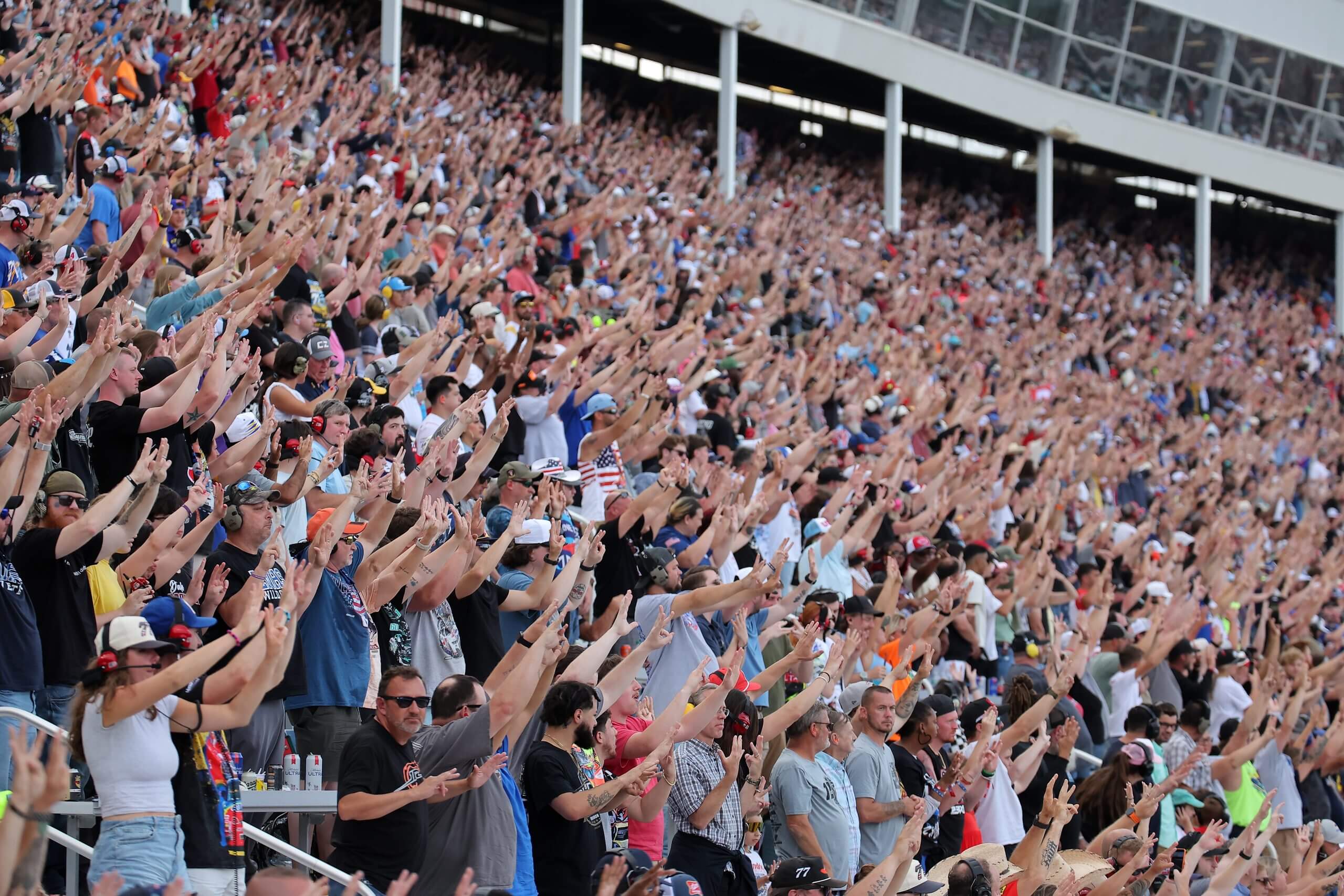
Fans pay tribute to Busch on Sunday at Charlotte Motor Speedway. (Jonathan Bachman / Getty Images)
Influence on NASCAR
This one is hard to measure as well, but Busch absolutely had the right combination of attributes to help push the sport forward. He had the ear of NASCAR CEO Steve O’Donnell and COO Ben Kennedy, and he was never shy about opinions on which direction to go.
To wit: On the day before he collapsed at a simulator session with what turned out to be a fatal bout of sepsis, Busch texted O’Donnell with a rule proposal.
“What I look back on is a text from Kyle Tuesday, as only Kyle could do — and I keep looking at it — and he said: ‘Hey, man, what do you think about an over-40 rule to be able to compete in all the Truck Series races next year?’” O’Donnell said. “I said, ‘You know, we put that rule in place because you were winning so much.’
“But when we looked about it and had a meeting Wednesday internally, we thought, ‘Damn, that’s actually good. We need Kyle in the Truck Series.’”
It says a lot that NASCAR was prepared to listen to Busch that quickly, to take his words to heart that fast.