

Listen to this article
Estimated 4 minutes
The audio version of this article is generated by AI-based technology. Mispronunciations can occur. We are working with our partners to continually review and improve the results.
An Edmonton Public School Board report found the use of seclusion rooms in schools is on the decline — and some say they’re hoping that means the board is one step closer to eliminating seclusion rooms altogether.
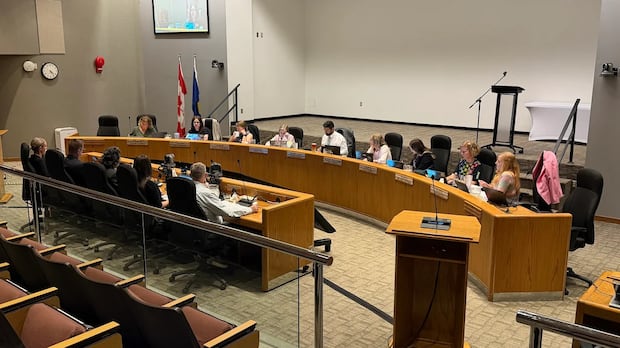
The report, which was presented at a board meeting Tuesday, found a total of 272 uses of seclusion rooms from September 2025 to March 2026. The data is broken down into usages per month.
For the 2024-25 school year in that same time period, seclusion rooms were used 379 times.
Between the 2021-22 and 2023-24 school years, total seclusion room uses exceeded 1,000.
As of March, the school board recorded 46 operational seclusion rooms in 24 schools.
Edmonton Public School Board chair Saadiq Sumar said he’s happy to see the decrease in the need for seclusion rooms. However, he isn’t sure whether this means seclusion rooms could be eliminated.
“Our administration is working really hard to make sure that number continues to come down,” Sumar told reporters Tuesday.
“We’ve seen a significant reduction in seclusion rooms. We’re continuing to see good staff training, responsive to what our students’ needs are and our staff needs are in terms of keeping everybody safe.”
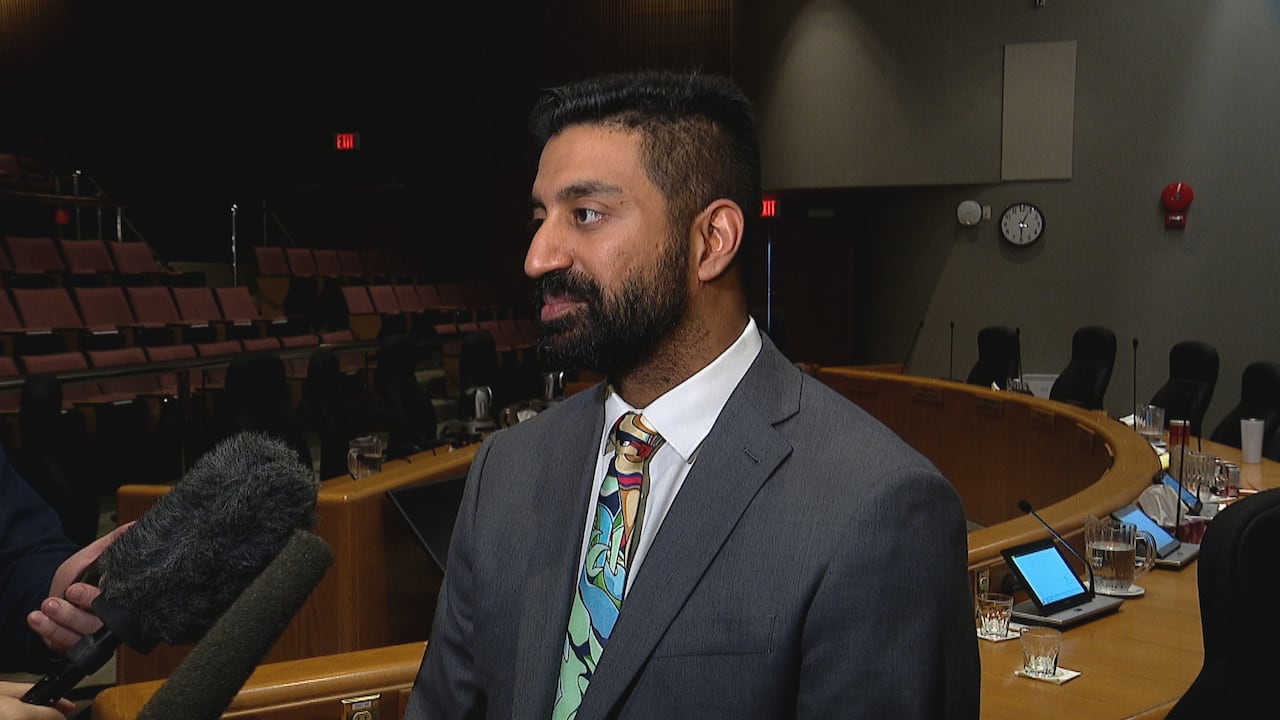 Saadiq Suumar spoke to reporters on Tuesday, and said he wasn’t sure if or when EPSB would scrap the practice of seclusion rooms. (Paul Rampersaud/CBC)
The report said the use of proactive and preventative measures, increasing staff capacity and expanding staff training contributed to the decrease.
Some advocates want to scrap seclusion rooms
Inclusion Alberta’s director of community engagement, Philip Ney, said while he welcomes the news, he wants to see the school board and the province to work together to scrap seclusion room practices.
He said he had particular concerns about the ongoing use of physical restraints.
“Physical restraint is a crisis response that is also harmful, and so it shows that there’s a need to shift more fully towards prevention and proactive approaches rather than crisis responses,” Ney said.
He said he’d also like to see the provincial government commit to phasing out the practice.
From September 2025 to March 2026, physical restraints have been used in schools 374 times. For the 2024-25 school year in that same time period, physical restraints were used 349 times.
Ney said he would like the see the government conduct an external review of seclusion and restraint in schools, and use the data to “to identify better evidence-based alternatives and to invest in supporting divisions to provide those supports in classrooms.”
Alberta’s Education Minister Demetrios Nicolaides told CBC News in a statement that school boards are responsible for managing seclusion rooms in line with provincial standards.
“Seclusion rooms will continue to be an exceptional intervention, reserved for emergency situations where a student’s behaviour poses an imminent risk of serious physical harm to themselves or others,” it read.
Edmonton parent Rosemarie Jordan said seclusion rooms were detrimental to her son’s early education. She said her son has a number of neurological and learning needs.
Jordan said her son benefited from seeing specialists like speech pathologists and occupational therapists.
While the government has committed more funding to hiring more staff for complexity teams in Alberta schools, Jordan said the province should consider hiring more specialized staff.
“We are so understaffed in our schools. So yes, [the complexity teams] will be more bodies. That will be helpful,” she said in an interview.
“But what they’re bringing in is not speech therapists, they’re not occupational therapists, and they’re not necessarily teachers or educators that have been trained in explicit instruction for students with learning needs.”
The report said EPSB will continue to improve data collection when it comes to the use of seclusion rooms.
Sumar said the board will continue to work with schools to identify when seclusion rooms are no longer needed and replace them with programs like sensory or self-regulation spaces.