
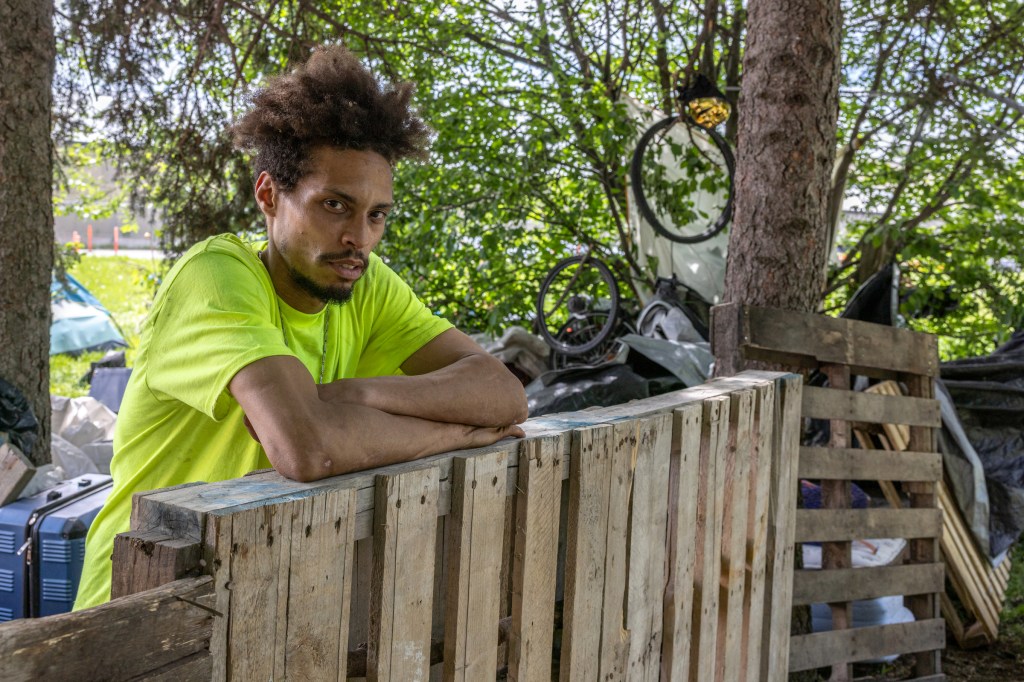
After losing his spot in a shelter three weeks ago, Blake Halliday made his way to the only place he could think of: the encampment along Montreal’s Notre-Dame St. E.
He’s been sleeping in a tent next to a bike path ever since, watching as others in similar positions keep arriving — either seeking safety in numbers, he said, or simply with nowhere else to go.
“I think we need to accept it,” Halliday, 37, said of the encampment. “It’s not going to go away.”
Community groups say the encampment, a fixture of the homelessness crisis in Montreal since the COVID-19 pandemic, is now larger than it ever has been. It has swelled from 40 tents this winter to 95 on today, with 150 people living on site.
At city hall Wednesday, Mayor Soraya Martinez Ferrada said she’s concerned the encampment is growing too large to manage or ensure people’s security, calling the situation “‘unprecedented.”
The mayor pointed to the city’s new protocol on encampments, which calls for a more tolerant approach, but noted they can’t be accepted anywhere or at any size.
Asked about the line between tolerating encampments and inviting people to live in them, the mayor said her administration has been clear it does not see them as a long-term solution.
“But we need to offer people alternatives, and right now I don’t have them, or not enough,” Martinez Ferrada said. “I can’t dismantle an encampment if I don’t give people an option.”
The city announced a series of measures aimed at addressing the issue Wednesday, including a crisis unit focused on encampments, more money to help boroughs apply the new protocol, and increased funding for community groups.
It will also be deploying a team of three blue-collar workers to be on site seven days a week to help with waste collection and cleanup around the encampment.
Reacting to the announcement, the opposition at city hall, Projet Montréal, pressed the administration to clarify how the encampment protocol is supposed to be applied by different boroughs.
A central part of the protocol calls on boroughs to establish “tolerance zones” where people could be relocated when it’s deemed an encampment needs to be dismantled.
But the opposition said it’s heard of people facing eviction from other encampments being directed toward Notre-Dame St., essentially concentrating the issue in one location.
“We’re waiting for more information on how to implement the protocol, and it needs to come quickly,” said Projet Montréal leader Ericka Alneus. “Because if we don’t have a game plan, this summer is going to be very difficult.”
The encampment’s future is also before the courts.
Located on land owned by Quebec’s transport department, it was slated to be cleared last summer before a legal clinic that works with unhoused people obtained a court order halting the dismantling. The case is still ongoing. In April, however, the Mercier — Hochelaga-Maisonneuve borough informed the transport department it no longer wished to see the encampment dismantled, given the new protocol.
Julien Montreuil, director of L’Anonyme — which offers services at the encampment — said he’s also concerned about the growing number of tents on site, especially with Moving Day approaching on July 1.
Montreuil recalled that few people are staying in the encampment because they want to.
“What we’re seeing right now is people who feel the only way to have a roof over their head is to pitch a tent,” he said. “As a society, we need to offer them more options.”
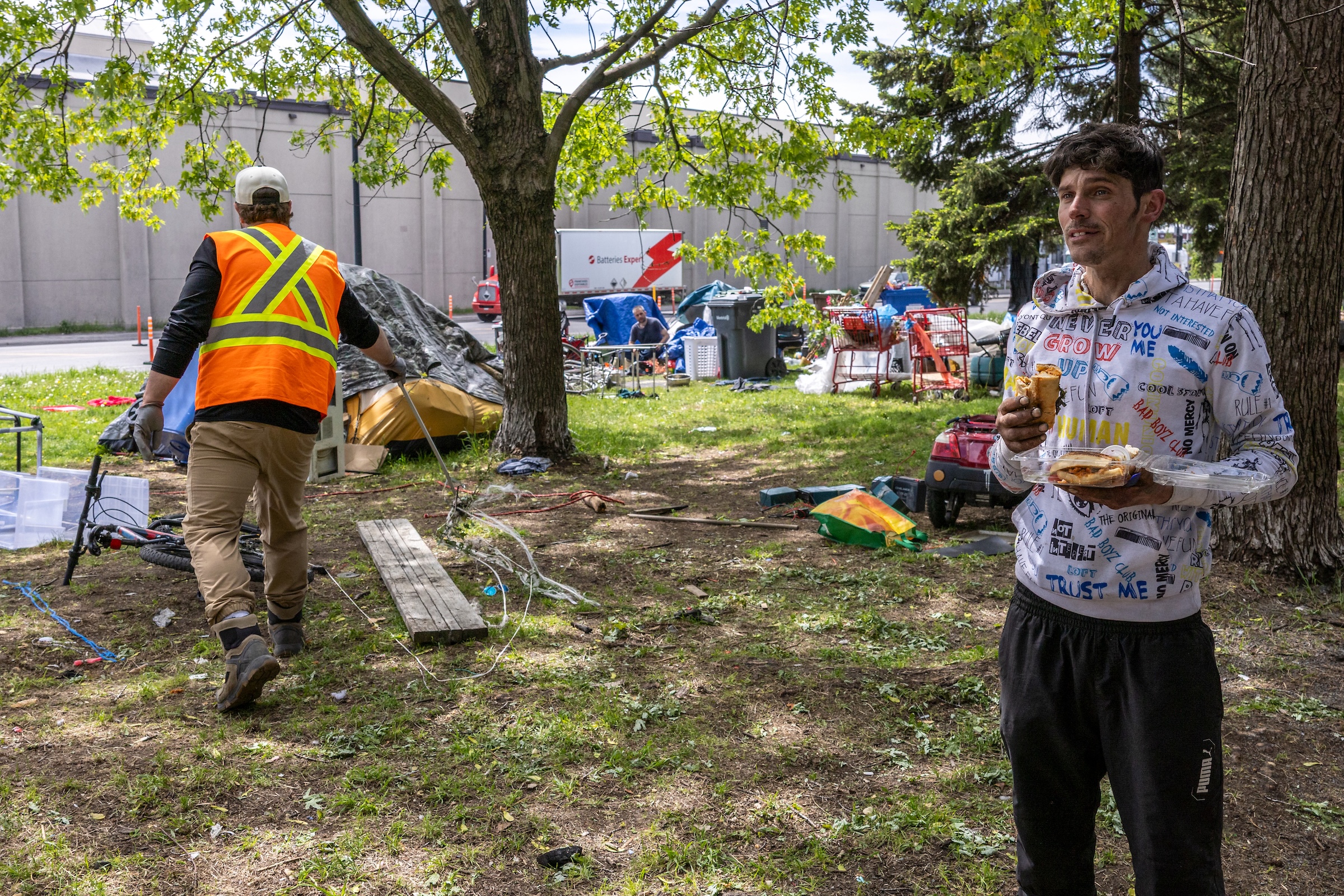 Devint Vézina, 41, right, says politicians should talk to those living in the encampment to better understand their needs. Dave Sidaway / Montreal Gazette
At the encampment Wednesday, a man who gave his name as Devint Vézina was rearranging the makeshift shelter he shares with eight others, pausing to mow the lawn around it.
The 41-year-old said he has lived in the encampment for four years and has moved along the strip 17 times, either because of tensions with neighbours or because the city asked him to.
Vézina believes the encampment’s size has helped draw attention to the homelessness crisis and pushed it into public view.
He invited the mayor to meet with people living there to best understand how to address it.
“Come talk to us,” he said. “Listen to those who’ve been in the street for 10, 20, or 40 years.”
Editor’s Picks