
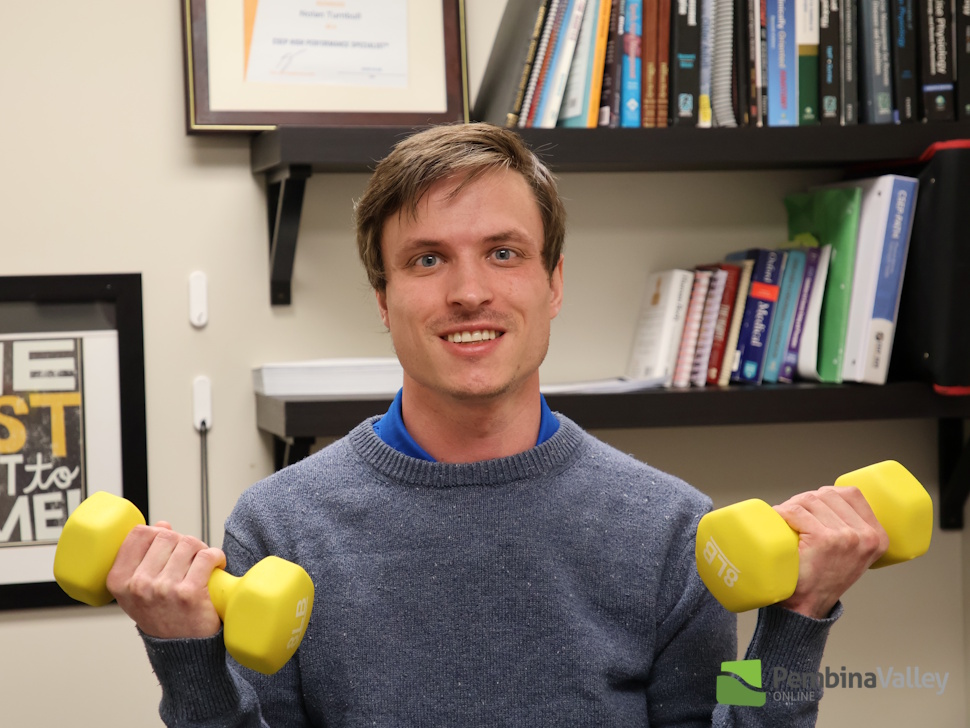
Nolan Turnbull is the kinesiologist on the Morden-Winkler My Health team.
Among his services, Turnbull works with the Pembina Valley Cardiac Rehabilitation (PVCR) program.
PVCR is an education and exercise program designed to support recovery after heart disease, heart surgery, or heart attack.
Participants learn skills for long-term heart health through regular supervised exercise, heart-healthy nutrition, medication management, stress management and lifestyle education and counselling.
Milestone reached
The program is celebrating 5 years of services and its 25th cohort in June.
Each group aims to help 10-12 people recover from a heart event or procedure.
“My job basically is to help with physical activity and counseling.” Turnbull explained. “I prescribe exercise to patients.
“So I might do things like, if they have chronic pain, give them exercise to help with that. Or for a variety of chronic diseases, diabetes, heart disease, etc., give them exercises or come up with exercise-related goals, to help keep them healthy.”
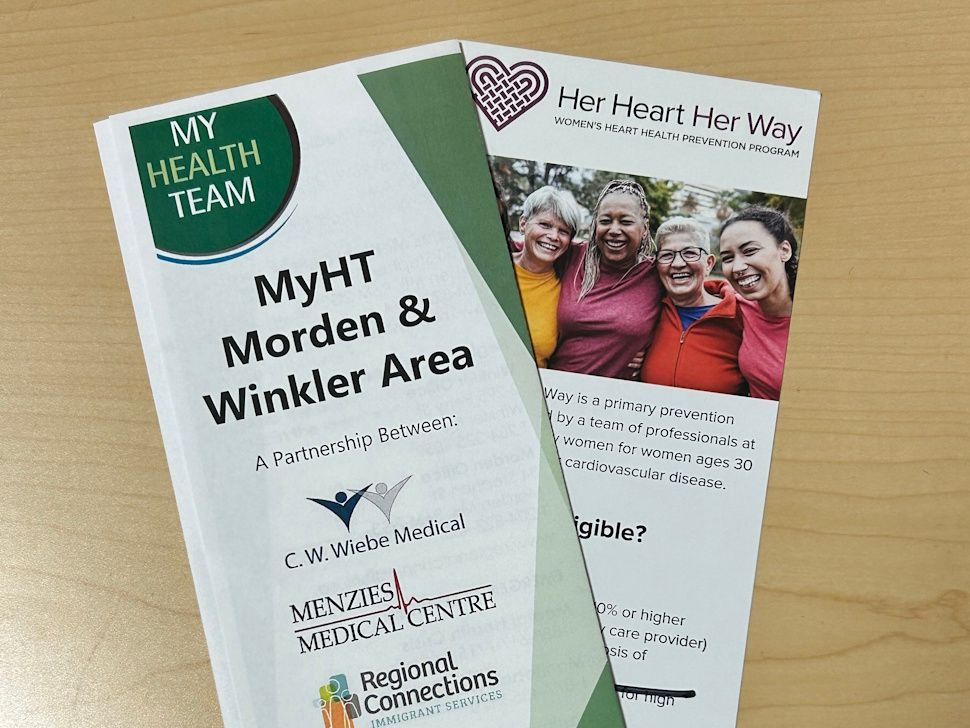
All things heart-related
Those are but a few of the heart health offerings Turnbull provides his expertise in.
“I also help with smoking cessation if people want to quit smoking.” He added. “If people want to lose weight, I help them manage those types of goals.
“Really my job is mostly counseling around physical activity, and sometimes I’ll give people exercises specifically. Then, with the cardiac rehab program, I help coordinate it. I help organize it, help go through the referrals, help streamline everything, contact the patients, get them enrolled, and then at the actual program I present sometimes, mostly related to physical activity, and then actually lead the exercise portion.”
In that portion of Turnbull’s job, he’s helping people exercise safely, overseeing the exercise part of the program.
Expertise provides guidance
His training guides those core programing decisions for patients.
“I’m a clinical exercise physiologist technically, and so my training is to help people exercise safely regardless of their chronic disease or health status.” Turnbull shared.
The PVCR Program occupies a large portion of his day.
“It’s a program designed to help people after they have heart events or heart procedures.” Turnbull explained. Heart attacks, stents, coronary artery bypass grafts, those types of things, and more.
“Essentially it is a group program where they come, and we meet at the community centre. They get some education from a multidisciplinary team of healthcare professionals, pharmacists, dietitians, myself, the kinesiologist, shared care counselor, nurse. A physician even comes, which is really unique.
“Most programs don’t have a physician involved directly in education, and we do. They get a presentation related to their heart health, and then the second part of it is we do some physical activity together. Walking the track, using recumbent bikes or arm ergometers to do some cardio.”
Special attention to individual needs
Those activities can be varied.
“We do some cardio together and then we do some strength all as a group, mostly banded body weight strength, sometimes with light dumbbells.” Turnbull outlined. “We do it as a group and then that’s my job is to try and tailor it to each patient as much as possible if they need modifications.
“if they’re at different abilities, stuff like that, try and keep it interesting and safe.”
The program is celebrating an anniversary.
“Yes, it’s our 5th anniversary.” Turnbull confirmed. “We started June of 2021. Our very first cohort was virtual because we were just dealing with COVID restrictions.
“Then things opened up and we were able to start with some small groups. We’ve been going strong ever since.”
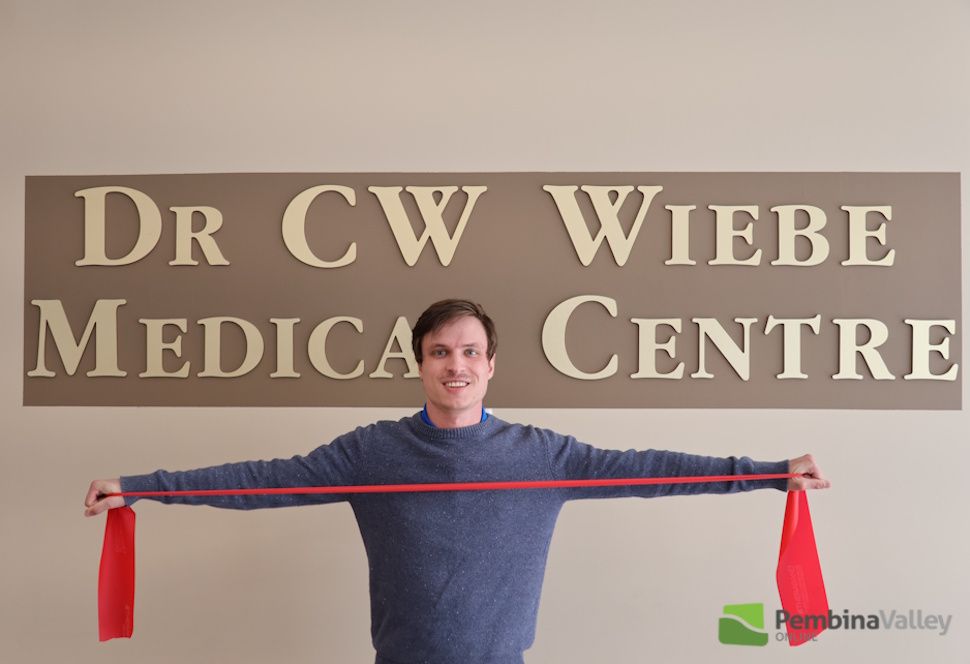 Nolan Turnbull, Kinesiologist
About a dozen at a time
Those cohorts average around a dozen people at a time.
“We do five groups a year.” Turnbull explained. 10 to 12 patients is the target in each group, throughout the year. Each group, each session that we do, each session is six weeks long, 12 sessions twice a week we run it.
“So it’s a total of 12 sessions per group and 60 sessions a year if you do, if you combine all them.”
Their reach is large.
“We’ve had really good buy-in from the C.W. Wiebe Medical Centre, the Menzies Medical Centre working together, Boundary Trails Health Centre helping with referrals, and then also support from other programs in the province.” Turnbull shared
“Portage has a program. Most of our referrals come from the Reh-Fit Centre in Winnipeg. They redirect the rural referrals out accordingly, so we have partnerships throughout the province that really help us as well. The five years have flown by. It’s went really well.”
Diversity required
As with anything involving large and diverse groups, there’s not a one-size-fits-all solution.
“Sometimes we have people as young as 30-year-olds who’ve had heart attacks in the group.” Turnbull pointed out. “Then you have people as old as 80, 90 sometimes coming through who are still interested in wanting to better their health.”
Those in the group have a host of conditions to work on.
“It’s a wide range of cardiac conditions.” Turnbull noted. “It can be basic arrhythmias, things like that, or again, stents, coronary artery bypass grafts, a wide range of issues.
“Some people are healing faster, some people are at higher fitness levels than others. So you have to try and accommodate all that and make sure everyone has a good time and is able to participate safely.”
Gotta stick with it
When it comes to exercise or changes in lifestyle, you might expect challenges with having people stick with the program.
“No, we actually do really well.” Turnbull acknowledged. “Typically, cardiac rehab programs have a 50% dropout rate, so over half the people will drop out of a program.
“We don’t really see that. It has happened in the odd group or whatever, you know, winters get tough and stuff for people. That’s a big barrier to transportation over winter. But for the most part, people start our program, they finish it.”
Related stories:
Credit for that success rate goes to the partners involved.
“I think part of that is the fact that we have so many presenters who come in and try and keep it engaging and interesting for the participants.” Turnbull suggested.
After the program wraps, there is additional follow-up for participants.
“We do a follow-up at the end of the program just to check in with myself to see if they want any more exercises or if they’d like any other referrals.” Turnbull shared. Maybe they want a referral to a specific team member such as the dietitian for more one-on-one guidance, things like that.
“But the follow-up is optional. I do have people who’ve been following up with me since the start, you know, once a year, once every six months who just like that kick in the **** for some more accountability.”
Optional, but advised
Continuation is strongly advised.
“It is optional.” Turnbull commented. “We do highly recommend the follow-up. There’s so much evidence for if you continue to follow up, you’re more likely to stick with your goals.
“I see that the people who come to see me, some of them do need that kick in the **** , but a lot of them are actually doing quite well, we’re just having a chat and I’m keeping them accountable and just having that appointment coming up helps them know, oh yeah, I gotta keep doing my exercise.”
If needed, program remains open
Even completing follow-up, patients are still able to access the resources in the program.
“The goal is that we can keep them active here, keep them healthy and doing all the healthy things so that we don’t have to actually see them do the program again.
“They can do the program again. People are eligible to redo it if they have a new event or new procedure. We have had people repeat, but for the most part we’re pretty good at keeping people out of the program again. The whole goal is that people have the best quality of life moving forward and hopefully don’t have another heart attack or don’t need another procedure.”
Cardiac patients can get into the program themselves, or through their family doctor.
“Yeah, they can self-refer.” Turnbull advised. “It’s always nice to have a little bit more information. So if people can get a referral from their primary care provider, it’s always nice just to get a little bit more background.
“But I’m willing to dig and look for the information I need if people want to self-refer. We love self-referrals. Those people are usually quite motivated and are going to show up. If they want, they can just reach out to me directly via my cell or via e-mail, or by contacting C.W. Wiebe Medical Centre directly, but physician referrals, other allied health referrals, we’ll take them all.”
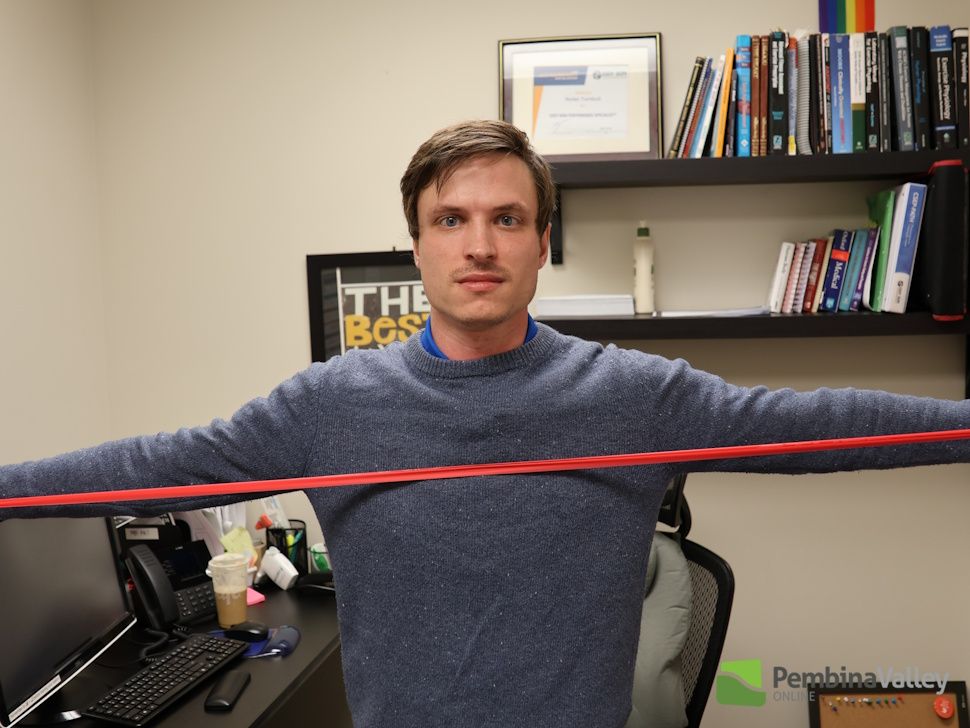 Nolan Turnbull, Kinesiologist
The cost of the program is $50.
“Basically, that goes to our room rental.” Turnbull noted. “It just helps us go towards the room rental fee, the classroom that we rent. The City of Winkler very generously donates half of the room fee each session, and they’ve done that all along for all five years.
“So we owe a lot to the City of Winkler for continuing to make it low cost and feasible for as many patients as possible.”
The program was a long time coming
At five years young, the PVCR took some time to nurture into being.
“This program was a long time coming, probably decades and decades in the work.” Turnbull shared. There’s been a lot of people over the years who tried to do heart health education. and identified a need.
“Jim Neufeld, the former clinic manager, did a lot of work to get this going. We have the backing of the health care board in the community that does a lot of work for us. The steering committee identified this as a need and ended up hiring me and getting this program.”
It’s not a one-man show by any means though.
“This program has been made possible by the hard work of a lot of people over the years.” Turnbull explained. “There’s still a lot of people who are really involved in it.
“We also rely on a volunteer nurse to help us. We really, really owe Karyn Krahn a lot.”
Find out more
To get more information on the program, Turnbull pointed to several options.
“They can check out the C. W. Wiebe Medical Centre website.” he recommended. “We have a page directly with Cardiac Rehab’s information, a little bit about the program and my contact info on it.
“There’s also information on our program on the Winnipeg Regional Health Authority website, on the Health Management Guide, and also the Group Program Guide. There’s also information on the Cardiac Sciences Manitoba website.”
with files from Southern Health-Santé Sud