
QUEBEC — The rights of the English-speaking community will be respected in new legislation extending Bill 101 to adult education and vocational training, the minister responsible for relations with the community said Thursday.
But Quebec’s Liberals have their doubts about the road ahead, asking the Coalition Avenir Québec government why it has not studied the impact the new law will have on English educational institutions.
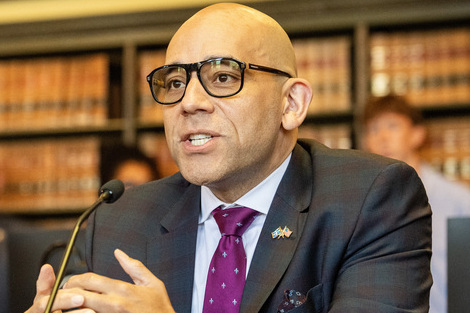
In an exchange Thursday at a committee examining annual spending estimates, Christopher Skeete, the minister responsible for relations with English-speaking Quebecers, said English-speaking Quebecers with the right to education in English will not be affected by the new law.
“The intention of the government is to ensure that we francize immigrants and to ensure English-speaking Quebecers continue to have access to the courses,” Skeete said.
Skeete was answering a question from the Liberal point person for English-speaking Quebecers, Elisabeth Prass, who asked whether the government had considered the full impact of its plans.
The new government of Premier Christine Fréchette has announced plans to present legislation extending the rules of the French language charter to the vocational and adult education level.
The charter already limits enrolment in English elementary and high schools to anglophones born in Quebec or the rest of Canada but does not restrict adult or vocational training, which attracts many immigrants and allophones.
Nearly 14,000 students are enrolled in such programs at the English Montreal School Board. The board says about 70 per cent of the students would not be eligible if Bill 101 is extended.
French Language Minister Jean-François Roberge said on May 12 that the change would redirect as many as 27,000 students from English to French schools. The bill is expected sometime in the next two weeks before the legislature recesses June 12.
But school boards and minority groups including TALQ say the change will have a big impact on the viability of the English system. If enrolment drops, they say they will have to lay off teachers, cancel courses and cope with lost revenues.
Prass asked Skeete if Quebec has consulted those affected or examined whether the French system will be able to handle such a migration given chronic shortages in French teaching already.
“Is someone going to sit at home for a month or two months waiting to have access to French courses, which means that they’re not going to take their vocational class, which means they are not contributing to the job market,” Prass asked Skeete.
She said even if the government tables the bill next week, that only leaves two weeks to conduct consultations and adopt the bill before the legislature recesses.
“You think you have the time, in two weeks, to do all these consultations and adopt the bill,” Prass asked.
“There are 24 hours in a day and I think we will be able to meet everyone,” Skeete responded. “We believe in the success of what we’re trying to do.”
Later, Skeete specified his concerns are less about the school board situation than ensuring anglophones get the services they have a right to.
“The institutions are important, they can adjust, they can offer other services,” Skeete told The Gazette. “I will leave that to them. That’s a sovereign thing, but our intention is not at all to affect English-speaking Quebecers.”
Asked about the concerns of school boards, Skeete said: “Unfortunately, it’s very hard, with certain members of the English community, to understand when something is truly urgent because the volume is always at 10.”
“The fact that he admitted no consultations took place with any English school board is very problematic to begin with,” Prass said later in an interview.
“They need to be able to say here are the numbers, here’s how many programs might close, how many courses and teachers we will lose. He can say he wants to protect the rights of historic English speakers to continue in those courses, but are those courses even going to exist?
“He doesn’t have an answer.”
Thursday marked the return of Skeete before the committee to defend the spending estimates of the ministry. It now has a total budget of $14.6 million a year.
Former premier François Legault handed Skeete the responsibility in a September cabinet shuffle. He replaced Finance Minister Eric Girard, who had the job since 2022.
When Fréchette formed her new government in April, she left Skeete on the job.
Editor’s Picks