

Listen to this article
Estimated 3 minutes
The audio version of this article is generated by AI-based technology. Mispronunciations can occur. We are working with our partners to continually review and improve the results.
In light of the water capacity constraint that was identified in the Mannheim service area, the Region of Waterloo is looking to update its water conservation efforts in the coming year.
That include expanding existing conservation programs for homes, institutions and businesses, by increasing the number of home reviews and water saving incentives.
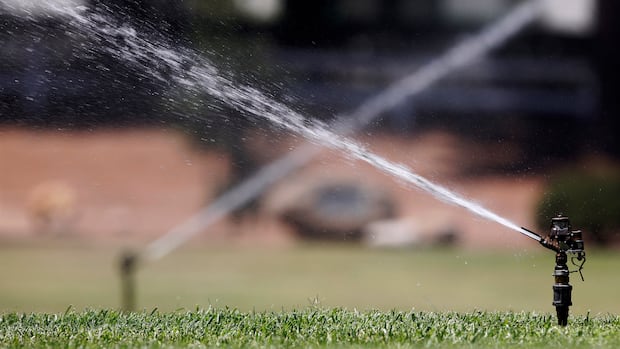
Staff also recommend a review of the region’s water conservation bylaw to see if gradual restrictions on outdoor water use are needed before a ban is introduced.
A report that went before a special council meeting Thursday also asked for the region to allocate up to $400,000 to fund these efforts in the 2027 budget.
“These are just the starting point. They are items that council can give direction on today, but do not represent the full picture of proposed efforts,” Amy Shaw, director of water and wastewater operations, told council.
Shaw said other planned measures that don’t require council’s approval include increasing communications and bylaw enforcement this summer and standby measures that can be implemented quickly should the water constraint change.
The recommendations passed, with council’s direction for the water conservation working group to meet twice a year or more frequently if necessary.
Thursday’s recommendations stem from council’s direction back in January that asked staff to look at conservation policy options after the region reported a water capacity constraint a month earlier that is impacting the Mannheim Service Area, which includes all of Kitchener, Waterloo and parts of Cambridge, Wilmot and Woolwich Townships.
The region has taken steps to address the water capacity constraint, which has impacted new development in the Mannheim service area.
Those efforts include the installation of water filtration units at the Mannheim Treatment Plant and removing a water taking policy in Wilmot Township.
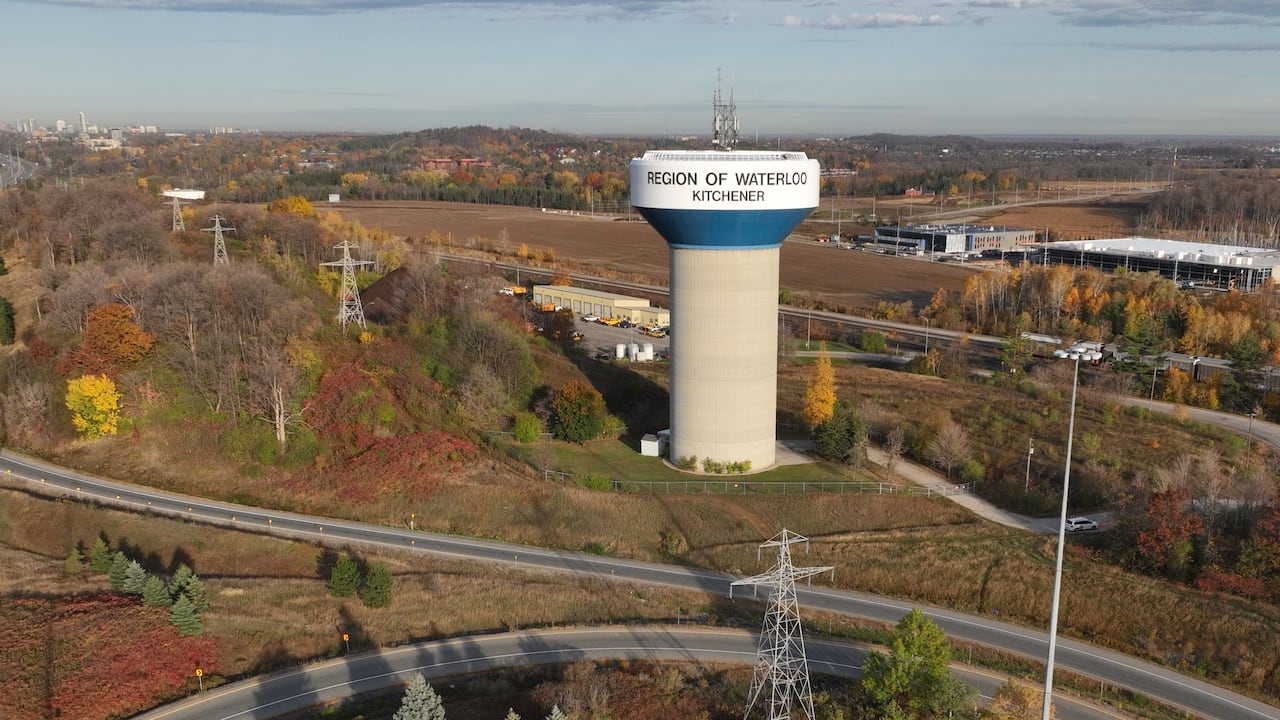 Waterloo region has some of the lowest water consumption per capita, with 154 litres of water used daily by a single person, compared to the national average of 223 litres per day. (Yan Theoret/CBC)Region’s programs ‘remarkably successful’
Dan Meagher, supervisor of water efficiency innovation and programs at the region, told council the region has some of the lowest per capita water use in the country and water conservation will remain a “very important mitigation strategy” to manage the water constraint and other issues.
“This work has been ongoing for decades and the work will continue to evolve,” he said.
Kirk Stinchcombe, managing director at Econics, a consulting company brought on to aid in the report recommendations, said the region’s water conservation programs have been “remarkably successful” in reducing outdoor water use, so much so that it presents a challenge to “gain more savings.”
“And so we’ll have to look at more marginal options, like banning certain types of uses outdoor to reduce that even further,” he said.
The current regional bylaw on outdoor watering allows people to water their lawn once a week and comes into effect between May 31 and September 30 annually.
Stinchcombe said he wouldn’t recommend an outdoor watering ban right now with the current water constraint and instead for staff to have it “at the ready.”
Another standby option, he said, could be a more intense retrofit program to tackle low-flow toilets in homes.