
Get the best of Vancouver in your inbox, every Tuesday and Thursday. Sign up for our free newsletter.
After years of quietly transforming empty Vancouver buildings into artists’ studios, the Narrow Group is giving the project a public identity of its own.
Artopia has officially launched as a separate umbrella for the Narrow Group’s growing network of artist spaces across Vancouver. It comes alongside the opening of Cosmo, a new Mount Pleasant studio project and the first step in a broader expansion still to come.
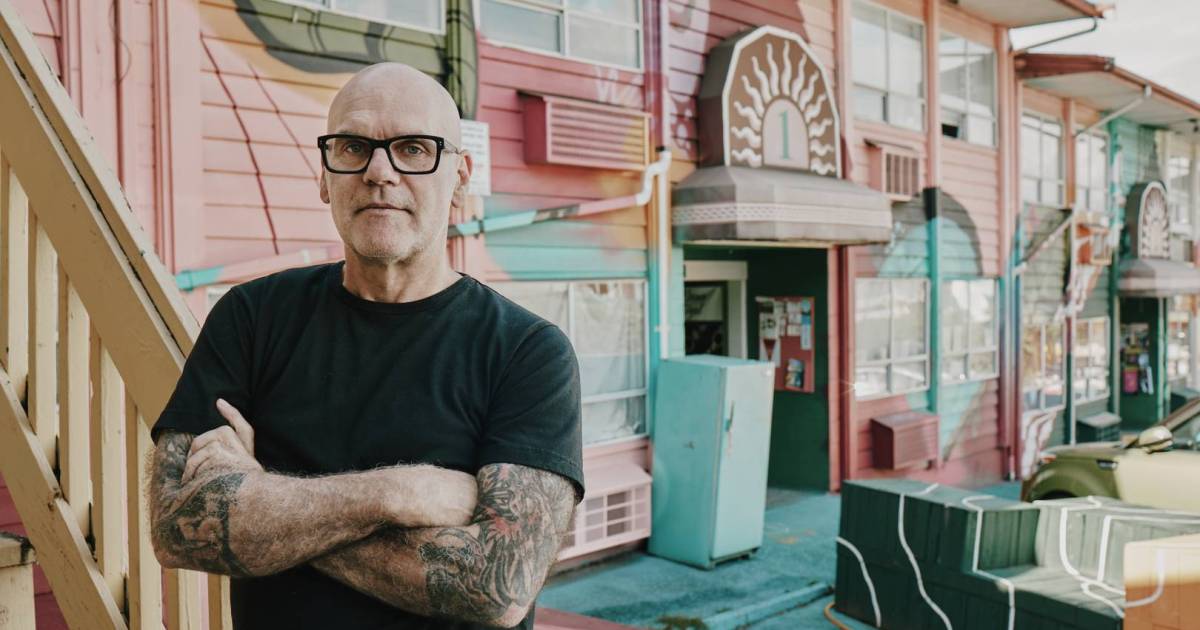
Over the past two decades, founder David Duprey has transformed underused and abandoned buildings into artist spaces across the city. What began with a single building has since expanded into 10 buildings and roughly 170,000 square feet of studio space across Vancouver, including the colourful City Centre Artist Lodge on Main Street.
“I’ve been doing this for 20 years,” Duprey says. “And I’ve been doing it kind of in the background.”
Now, he says the network has grown large enough to stand on its own outside the Narrow Group’s bars, restaurants, and venues, which include the Rickshaw Theatre and Fox Cabaret.
The newly opened Cosmo occupies a former industrial building in Mount Pleasant that had sat empty for two years. The 10,000 square foot project is expected to house more than 50 artists across 32 studios.
“There are so many empty buildings out there all over the place,” Duprey says. “There are tens of thousands of square feet of empty buildings that I would love to activate.”
Duprey points to permitting and compliance requirements as one of the biggest obstacles facingArtopia.
“My constant challenge with this business has always been the City of Vancouver,” he says.
Many older buildings were not designed to meet modern commercial standards, even if they can still safely function as artist spaces. Duprey argues that navigating permits and formal city processes has become significantly more difficult over the last decade.
“Now it gets digitally put in,” he says of the application process. “And so then it goes to multiple different people and it turns into a thing instead of it just being a simple conversation.”
Permits, regulations, and renovation requirements can quickly push studio spaces beyond what many tenants can afford, according to Duprey. He says the difference between the DIY approach behind Cosmo and larger-scale fully compliant projects shows how dramatically those costs can escalate. Cosmo cost roughly $50,000 to create, he says, while another similarly sized artist space project completed through formal city processes can cost millions.
“That cost ultimately has to be passed on to the tenants,” he says. “If I spent $2.1 million, the amount I have to charge for rent, no one could afford that.”
Duprey says he hopes conversations around artist spaces can eventually become more collaborative.
“I’d love to have a conversation with some of the upper level managers and just be like, hey, can we all get on in the same boat, row in the same direction and all agree that this needs to happen affordably and ethically,” he says.
Projects like Artopia are not just about studio space, but about supporting creative culture in Vancouver.
“A city without art, a city without culture,” says Duprey, “is a no-fun city.”