
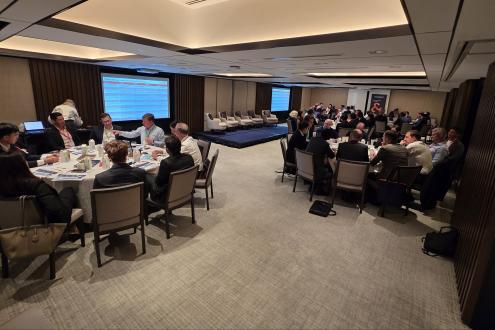
Singapore’s private wealth industry is entering a period in which technology, generational change, and client sophistication are converging more quickly than many institutions are prepared for. Artificial intelligence is reshaping workflows and expectations, but the discussion is no longer simply about whether machines will replace people. The more relevant question is how advisers, private banks, EAMs, family offices and investment partners can use AI to become more effective, more informed, and more valuable to clients who already have access to more information than ever before.
At the same time, the next generation of wealth owners is changing the nature of engagement. Younger clients are not necessarily approaching wealth through the same lens as their parents. They are often more interested in digital assets, AI, startups, alternatives, and values-led capital deployment, while older generations remain more focused on preservation, succession, structuring, and asset protection. That divergence is creating new challenges for institutions trying to serve families across generations, jurisdictions and investment preferences.
Against this backdrop, the opening panel at WealthTHINK Singapore 2026 brought together perspectives from family offices, investment management, China-focused advisory, next-generation engagement and the Hubbis platform itself. The discussion explored how AI is changing the wealth management conversation, where human advice remains defensible, why next-generation engagement is still underdeveloped across much of the industry, and what private wealth advisers must do to remain relevant in a more demanding environment.
Key Takeaways
AI will change wealth management, but it will not remove the need for human judgement: The panel suggested that AI is more likely to compress low-value roles than replace sophisticated advisers who can build trust, understand context, and manage complex family or cross-border issues.
Clients are becoming harder to impress: Information access has improved dramatically, meaning clients often arrive with existing opinions, competing advice, and preconceptions that advisers must understand before they can influence.
Data and prompting matter as much as the technology itself: AI is only useful if advisers and clients know what data to feed it, what questions to ask, and how to challenge the output rather than accepting it passively.
Next-generation wealth engagement remains a major industry gap: Several panellists questioned whether most private banks and wealth managers are meaningfully engaging the children of clients beyond a very small ultra-wealthy cohort.
China’s wealth conversation is shifting from IPOs to preservation and succession: Older Chinese wealth creators are focused increasingly on offshore asset protection, structuring and transfer, while younger generations are looking at funds, startups, crypto, AI and new investment themes.
Trust, curiosity and relationship depth remain difficult to automate: The panel repeatedly returned to the idea that AI can support process and efficiency, but genuine understanding, long-term partnership and informal knowledge exchange still depend on people.
The panel began with the question now facing almost every part of the private wealth industry: what does AI mean for the future of advice, relationship management and client engagement?
The discussion did not suggest that AI will remove the need for private bankers, advisers or investment professionals in the near term. Rather, the panel framed AI as a tool that will expose weaker models and weaker practitioners more quickly. Those who rely primarily on product pushing, generic commentary or low-value intermediation may find themselves under pressure. Those who use AI as a co-pilot to strengthen their own judgement, workflow and responsiveness may become more effective.
One panellist argued that implementation is much harder than the current enthusiasm suggests. Drawing a comparison with algorithmic trading, he noted that even highly resourced proprietary trading firms have spent heavily over many years trying to apply advanced technology to decision-making. In his view, that illustrates why replacing complex human advisory relationships any time soon is unrealistic.
“It is not about replacing the adviser,” said one panellist. “It is about knowing what to ask, how to ask it, and how to use the answers properly.”
That distinction was important. AI may help a family office or adviser organise information, interrogate assumptions and generate sharper questions. But it depends heavily on data quality, access to relevant sources, and the ability of the user to frame the right workflow. Without that, the output risks becoming generic, superficial or misleading.
The panel also highlighted a more subtle risk: complacency. If AI is used passively, clients, students, advisers and even investment professionals may become less rigorous rather than more effective. One panellist said the key is to challenge the output, not simply accept the first answer.
“The first version is rarely enough,” said a panellist. “You have to ask whether the answer is too high level, too fluffy, or missing the real issue. That is where the thinking begins.”
Better Information Has Made Clients More Difficult to Serve
A recurring theme was that clients are now more informed, but not necessarily easier to advise. Technology has made information widely available, and many clients arrive at conversations with opinions already formed by other advisers, media sources, peers, banks, funds or digital tools.
That changes the adviser’s role. It is no longer enough to provide access to a product or present a standard house view. Advisers must understand the client’s existing assumptions, the sources behind those assumptions, and the degree of sophistication within the family or investment team.
One panellist reflected on how the role of advisers has evolved over several decades. Earlier generations of families often needed help gaining access to global markets, diversifying beyond local businesses or real estate, and understanding international investment opportunities. Today, many families have already compounded wealth over long periods, built internal investment teams, and developed substantial exposure to alternatives.
For such clients, the conversation must be more precise. A large private bank may define access in terms of institutional reach, while an EAM, MFO or specialist adviser may need to define access differently – for example, through niche opportunities, complementary strategies, or differentiated insights that do not simply replicate what larger institutions already provide.
“You need to know what advantage you bring, and you need to understand the client before you start selling anything,” said one panellist. “The same pitch will land very differently with a mature family office than with a newly monetised entrepreneur.”
This has implications across the wealth ecosystem. The more sophisticated the client, the less tolerance there is for generic engagement. Follow-up, consistency and relationship depth become critical. Trust is built through repeated evidence that the adviser understands the family, not through a single meeting or a polished presentation.
China’s Wealth Conversation Is Moving From Growth To Protection
The panel also explored how China-related wealth needs are evolving. One panellist with long experience in the Chinese market said the conversation has changed significantly over the past decade. Earlier discussions often focused on IPOs, listed vehicles, M&A and growth opportunities. More recently, the emphasis has shifted towards asset protection, offshore structures, succession planning and the transfer of wealth to the next generation.
This is particularly relevant for first-generation Chinese wealth creators, many of whom remain focused on preserving what they have built and protecting offshore assets. Those assets may include listed shares, financial instruments, cash or property, but the wider concern is increasingly about continuity, security and structure.
The next generation is approaching the question differently. According to the discussion, many younger Chinese wealth owners are not necessarily looking to inherit or run the family business. Some want capital from their parents to create funds, attract LPs, invest in startups, pursue AI or biotech exposure, or explore digital assets in ways that older generations may not fully understand or support.
“For the older generation, the focus is preservation, protection and succession,” said one panellist. “For the younger generation, the question is often how to use capital to do something new.”
That divergence creates a practical challenge for advisers. Serving the family now requires more than a single investment proposition. The first generation may need structuring, governance and succession support. The second generation may want access to new economy themes, crypto-related strategies, quant trading, venture capital, or AI-led opportunities. Advisers must be able to bridge those priorities without assuming that one generation’s preferences will transfer neatly to the next.
Next-Generation Engagement Is Still Too Narrow
The discussion became particularly direct on the topic of next-generation engagement. While many private banks and wealth managers claim to have next-generation programmes, the panel questioned how broad, meaningful and scalable those efforts really are.
Some global institutions have long-running next-gen networks and alumni communities. These can be powerful for ultra-wealthy families, particularly where clients are in the billionaire segment and can access highly curated programmes. But the panel raised a more difficult question: what happens below that level?
For families in the US$5 million to US$10 million segment, or even far above that but below the highest UHNW thresholds, meaningful engagement with children may be much thinner. The issue is not necessarily lack of intent. It is capacity, cost and suitability. Proper next-generation engagement requires time, skilled people, trust-building, education, and often difficult family conversations.
One panellist also argued that the industry often misses a critical intermediate stage in the great wealth transfer conversation: spouses. Men often die before their wives, and wealth may first move to a spouse whose risk tolerance, investment confidence and advisory preferences differ significantly from those of the original wealth creator. If advisers have not engaged that spouse properly, assets may move into cash or away from the existing adviser relationship.
“The next generation is not the only missing conversation,” said one panellist. “The spouse may be the person who controls the wealth first, and many institutions have not built that relationship properly.”
The panel also noted a talent challenge inside institutions. Senior bankers may have the experience to hold complex family conversations, but may not be natural peers to younger clients. Younger bankers may be closer in age, but may lack the technical or emotional depth required to discuss wealth transfer, governance, risk, business succession or family expectations.
That gap leaves many institutions with a proposition that sounds persuasive in theory but is hard to execute consistently in practice.
The Best Advisers Understand The Family Before The Product
Perhaps the most concrete example of effective engagement came from the discussion around long-term family office relationships. One panellist described speaking with a US-based GP about his family’s third-generation planning. A year later, before any account had been opened, a member of the GP’s team reached out to offer his daughter an internship opportunity.
The point was not the internship itself. It was the evidence that the GP had listened, understood the family’s priorities, and identified a way to support the next generation before asking for capital. The GP then followed up separately, making clear that he understood the family was still evaluating potential partners and wanted to be part of that long-term journey.
That example stood out because it reversed the normal sequencing. The relationship did not begin with a product. It began with an understanding of the family’s future needs, including who would eventually inherit responsibility and which external partners might still be relevant when the current decision-maker was no longer around.
“That is the mindset shift,” said a panellist. “Do not look at the product first. Look at the organisation, the people inside it, and whether they can steward the next generation.”
This is a harder proposition to scale than product distribution, but it is likely to become more important. Families are thinking not only about what they invest in today, but who will still be credible, available and trusted when the next generation assumes greater responsibility.
Digital Assets, AI And New Themes Are Pulling Younger Clients Forward
The panel also linked next-generation engagement to the rise of digital assets, AI, blockchain and new investment structures. Younger wealth owners may not be satisfied with traditional conversations around public equities, structured products or family businesses. Some are actively interested in crypto, tokenised assets, AI-related ventures, robotics, biotech, quant strategies and startup investing.
This does not mean all younger clients want the same thing, or that digital assets should be treated as universally appropriate. But it does mean that advisers who cannot hold a credible conversation on these topics may struggle to remain relevant.
The Singapore agenda also reflected this direction of travel, with interactive discussions across AI, investments, digital assets and family office engagement. The panel framed these themes not as isolated topics, but as part of a broader change in how private clients think about access, optionality and the future of capital markets.
One panellist noted that some younger Chinese clients are interested in crypto exposure partly because of restrictions in the domestic market, and may look to Singapore as a place to access strategies that are otherwise difficult to pursue. Another pointed to the broader movement of capital markets towards blockchain-enabled infrastructure, regardless of whether individual clients are enthusiastic about cryptocurrency itself.
The implication was clear: the industry does not need to become indiscriminately bullish on every digital theme. But it does need enough knowledge to distinguish between speculation, infrastructure, operational change and genuine client demand.
Curiosity Remains A Competitive Advantage
The final part of the discussion returned to a more human theme: learning. Several panellists argued that in a market changing this quickly, the most important professional habit is continued curiosity.
That applies across AI, China, digital assets, family offices, alternatives, next-generation engagement and cross-border planning. The industry cannot rely on legacy knowledge or old relationship models. Clients are changing, tools are changing, and the definition of value is becoming more demanding.
One panellist said the best conversations are not always directed or transactional. They often come from letting people explain what they are seeing, where they come from, and what they know. That kind of informal knowledge exchange is difficult for AI to replicate because it depends on trust, context and human openness.
“To me, that is what AI cannot replace,” said one panellist. “The ability to build trust, to learn something you were not specifically looking for, and to stay naturally curious.”
That point captured much of the panel’s broader message. AI may improve efficiency, content creation, research, data analysis and workflow. But the private wealth industry still depends on judgement, curiosity, relationship-building and contextual understanding. The advisers who survive and thrive will not be those who ignore AI, nor those who rely on it passively. They will be those who use it to sharpen their own thinking while continuing to do the human work that clients still value.
The Wealth Industry Must Think More Seriously About Its Own Relevance
The opening panel set the tone for WealthTHINK Singapore 2026 by challenging the industry to think more seriously about what it actually provides. AI is forcing advisers to examine whether they are adding value or simply repeating information that clients can now obtain elsewhere. Next-generation wealth transfer is forcing institutions to ask whether they truly understand families beyond the patriarch or matriarch. China’s shifting wealth priorities are forcing advisers to balance preservation, offshore structuring and innovation-led ambition. Digital assets are forcing the industry to separate hype from structural change.
The discussion did not suggest that the private wealth industry is becoming obsolete. On the contrary, complexity may make good advice more important. But it did suggest that weak advice, generic engagement and product-led relationships are becoming more exposed.
The future adviser will need to be more informed, more curious, more technically capable and more aligned with the family’s long-term needs. AI can support that evolution, but it cannot substitute for it. The real test is not whether technology changes the industry. It already is. The test is whether wealth managers can use that change to become more relevant to the clients and families they are trying to serve.