
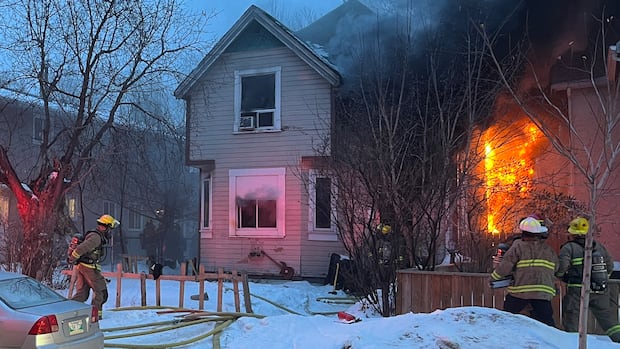
Winnipeg has already seen a dozen fire-related deaths in the first five months of 2026 — a number being driven by poverty and substance abuse, one fire official says.
The majority of the deadly fires involved residential structures, said Winnipeg Fire Paramedic Service Deputy Chief Scott Wilkinson, who told CBC last week the city has had 12 fatalities connected with fires so far this year.
“There’s a tragic loss of life occurring,” he said. “We have to start working together to help prevent it.”
While some of the fatal fires are related to criminal activity, Wilkinson said in many cases, the main factors increasing the likelihood of injuries or deaths are socioeconomic issues, particularly poverty and drug use.
The equipment used to consume drugs can ignite fires, and people under the influence might not be able to escape, he said.
In other instances, people living in poverty might not be able to afford appliances in good condition, so they resort to using damaged or unsafe ones, said Wilkinson.
While the fire-paramedic service has put in resources to raise awareness on how to be fire smart, those struggling to meet basic needs are not necessarily in a position to prioritize prevention, Wilkinson said.
“No matter how much education we do, those issues are still going to result in some of these tragic outcomes unless we can start making a difference there,” he said.
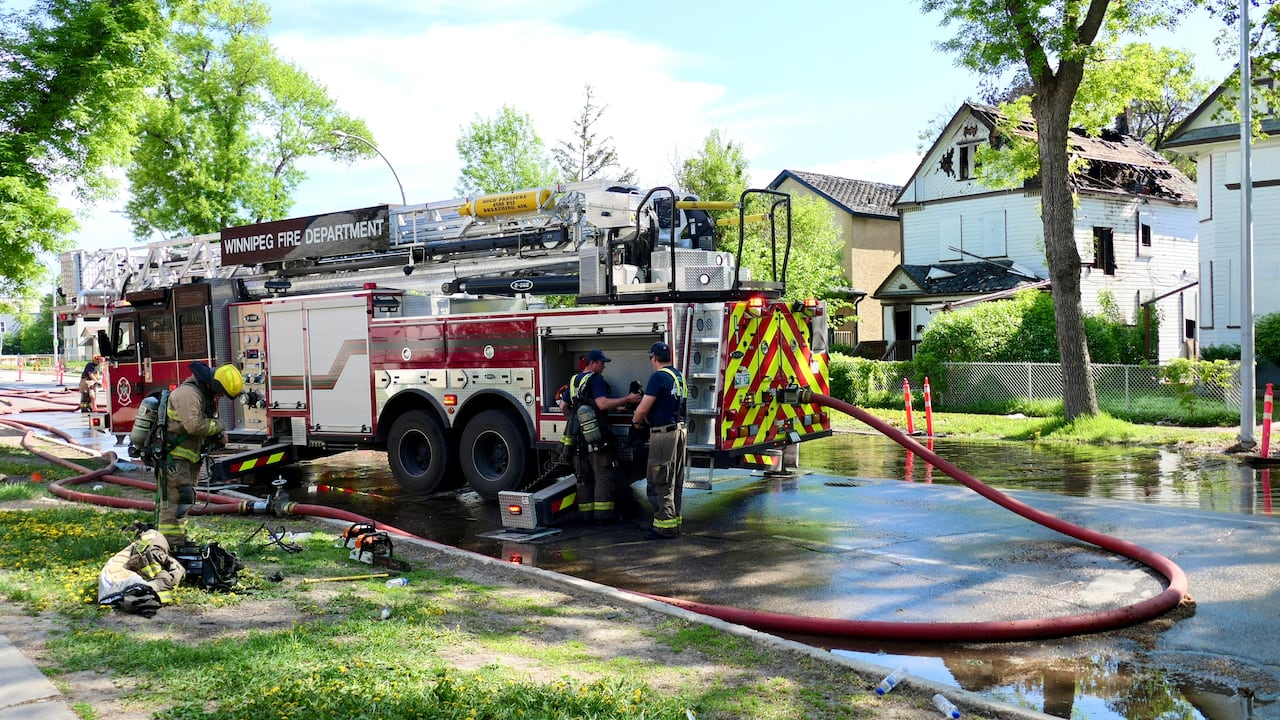 Winnipeg firefighters respond to a fire on Sherbrook Street on May 31. The union representing the city’s firefighters says additional staff are needed to prevent more fire-related deaths. (Travis Golby/CBC)
Manitoba’s chief medical examiner’s office said it has recorded six accidental or undetermined fire-related deaths in Winnipeg so far this year — three in February and three in May. That office’s numbers do not include deaths caused by fires intentionally set, like suicides and homicides.
During the first five months of 2022, there were two accidental or undetermined fire-related deaths, according to the medical examiner’s office. There were five over the same period in 2023, and three in 2024.
“These aren’t just statistics on the page,” said Adam Smithson, the treasurer with the United Fire Fighters of Winnipeg, the union that represents firefighters in the city.
“They are families awakened by unimaginable loss, neighbourhoods forced to a degree of tragedies that could and should have been prevented.”
Residential fires that result in deaths tend to follow a pattern, disproportionately affecting vulnerable populations facing economic hardship in aging and overcrowding homes, he said.
“When fire occurs in these conditions, the outcomes are often catastrophic.”
Fire prevention ‘severely understaffed’
While the risks have been known for years, Smithson said needed investments in prevention and emergency response to address them have been delayed or deferred.
For instance, the union has been pushing the city to implement the recommendations from a 2020 review of the fire-paramedic service that included adding fire investigators, prevention officers, public education officers and other positions.
“These critical branches remain severely understaffed,” Smithson said. “At the same time, emergency call volumes are surging, placing greater strain on the system that’s already identified as under-resourced.”
The union said the fire department’s ability to respond to fires is also compromised because crews are stretched, delaying response times when every second matters.
“We’ve been sounding the alarm for quite a while now,” Smithson said. “These numbers are steadily rising, and we’re not getting the resources.”
Wilkinson said the city has added some fire prevention officers and fire investigators, but the budget hasn’t been enough to fill all the positions recommended in the 2020 report.
Colin Fast, a spokesperson for Mayor Scott Gillingham, said the city has added 44 full-time firefighter positions over the last two years, and another 20 are planned in the 2027 budget. That’s one of the largest staffing increases of any city department, Fast said.
Addressing many of the issues connected to fire risk, including addictions, mental health, and poverty, requires support from the provincial government, Fast wrote in an email.
The mayor agrees more addictions treatment services are needed, which is why he supported the province’s recent legislation allowing people intoxicated by drugs like methamphetamine or fentanyl to be detained for up to 72 hours, said Fast.
He also noted the mayor is supporting a proposed fourth emergency service, focused on mental health-related calls to make sure people in crisis get the response they need, while reducing pressure on police, fire, and paramedics to attend those calls.
The fire-paramedic service’s Wilkinson said efforts like that, meant to address the effects of mental health and substance abuse, are crucial to prevent more fire-related deaths and reduce the risk to those responding to emergencies.
“A lot of this is outside our control.… We can’t just resource our way out of it,” he said.
“We need to put our efforts into community risk reduction and managing the issues that we see on the street today, which are extremely tragic.”
WATCH | Number of Winnipeg fire deaths continues to swell :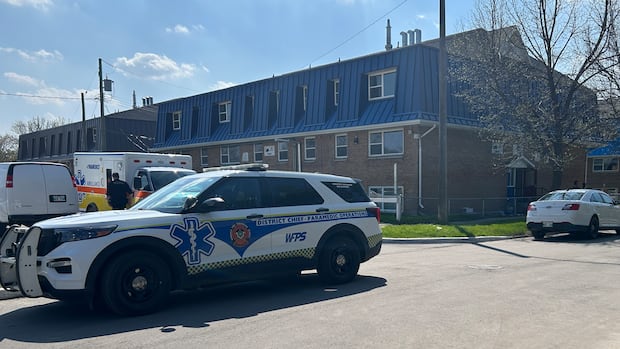
Number of Winnipeg fire deaths continues to swell
At least 12 people have lost their lives after a fire in the city so far this year. The city’s fire and paramedic service says the number of fatalities is growing due to underlying issues including poverty and substance abuse, but the union representing firefighters argues a lack of resources available to tackle and prevent fires is also a contributing factor.