
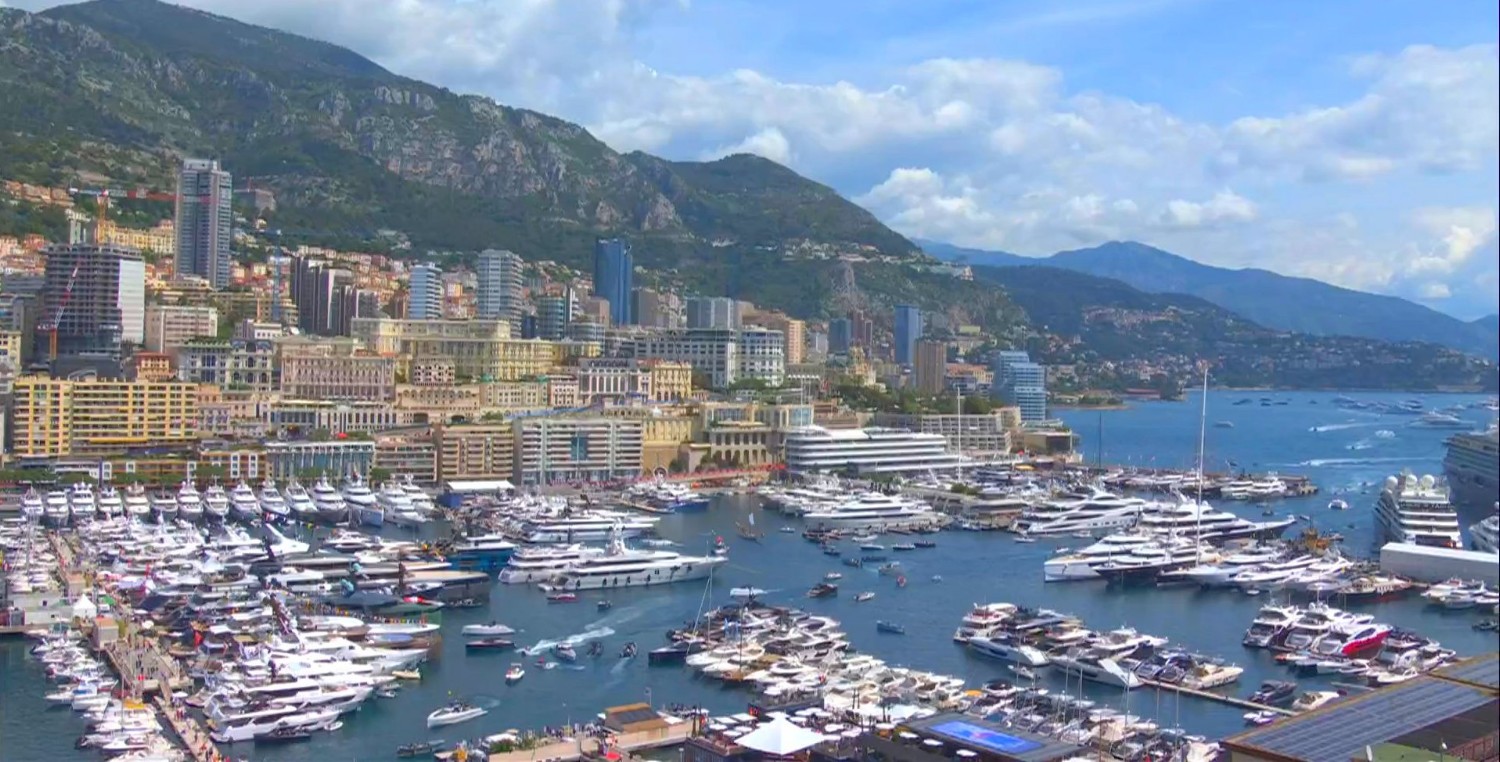
The Monaco Grand Prix is one of the most iconic and prestigious events on the Formula 1 calendar, not just because of its long history, but also because of the mystique that surrounds it. It was first held in 1929, making it one of the sport’s oldest races and it is also part of what’s known as motor racing’s Triple Crown, along with the Le Mans 24 Hours and the Indianapolis 500 Miles.
Narrow streets, tight turns, steep climbs and descents and the famous tunnel that leads onto the harbor are some of the defining characteristics that make Monaco a track like no other. It’s a place where precision is more important than power, with virtually no room for mistakes.
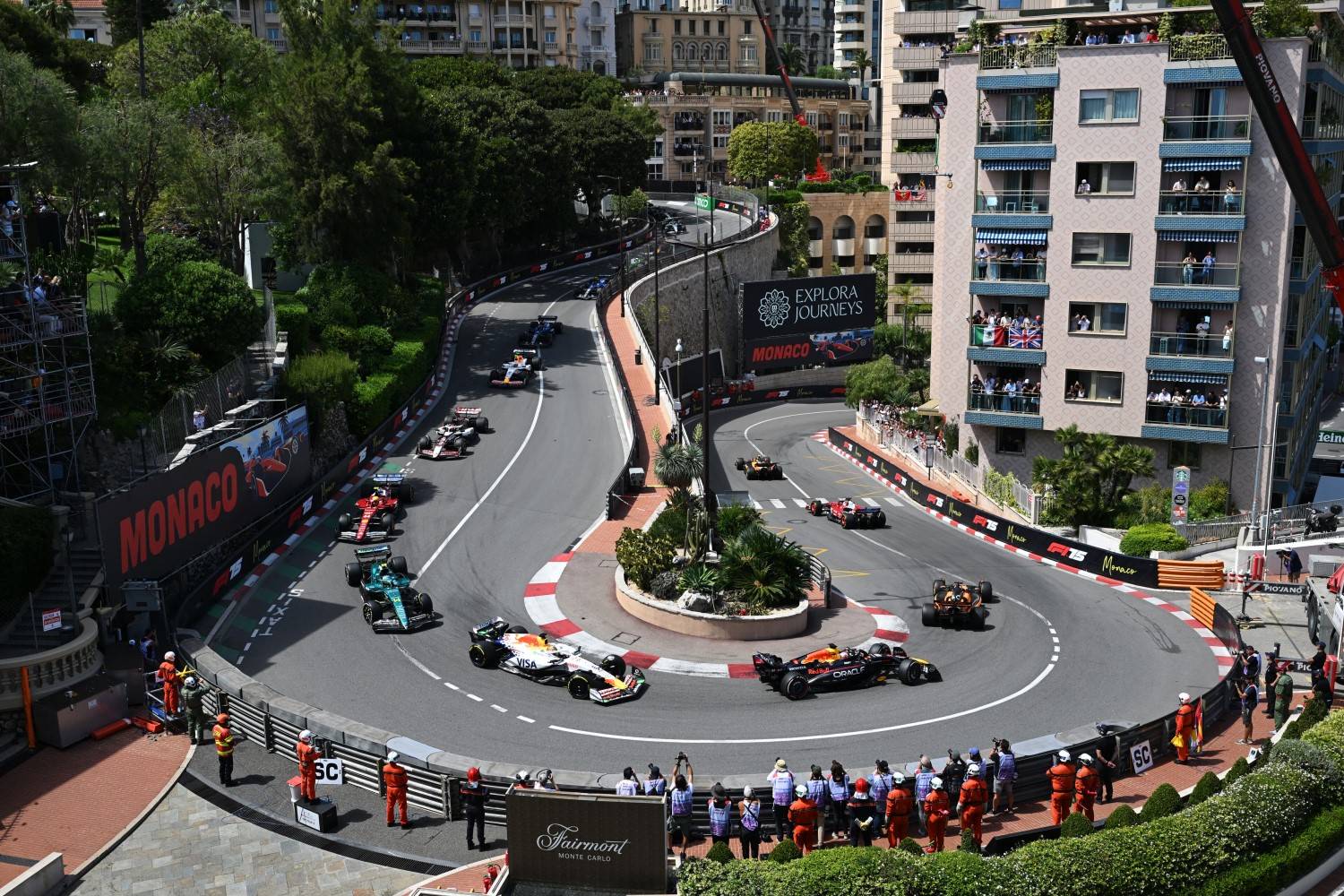 Lando Norris of Great Britain driving the (4) McLaren MCL39 Mercedes leads Charles Leclerc of Monaco driving the (16) Scuderia Ferrari SF-25, Oscar Piastri of Australia driving the (81) McLaren MCL39 Mercedes, Max Verstappen of the Netherlands driving the (1) Oracle Red Bull Racing RB21, Isack Hadjar of France driving the (6) Visa Cash App Racing Bulls VCARB 02, Fernando Alonso of Spain driving the (14) Aston Martin F1 Team AMR25 Mercedes, Lewis Hamilton of Great Britain driving the (44) Scuderia Ferrari SF-25, Esteban Ocon of France driving the (31) Haas F1 VF-25 Ferrari, Liam Lawson of New Zealand driving the (30) Visa Cash App Racing Bulls VCARB 02, and Alexander Albon of Thailand driving the (23) Williams FW47 Mercedes on track during the F1 Grand Prix of Monaco at Circuit de Monaco on May 25, 2025 in Monte-Carlo, Monaco. (Photo by Sam Bagnall/Sutton Images) // Getty Images / Red Bull Content Pool
Apart from the actual racing, the Monaco Grand Prix is a unique social event, a mix of sport, elegance and glamour, generating an atmosphere all of its own. From a technical point of view, it is a very complicated race: the cars run with maximum aero downforce and with very limited overtaking opportunities, qualifying generally plays a key role in determining the winner. Ultimately, Monaco is much more than just a race, it’s a symbolic celebration of the purest and most spectacular essence of Formula 1.
For the teams racing there, of course, Monaco is different. Monaco is a test of strength, willpower and resistance for drivers and crews alike: in the cockpit, it’s a relentless mental challenge, corner after corner requiring millimetric precision to avoid a race-ending rendezvous with the barriers; it’s pure performance, one of the places where the skill of those behind the wheel most comes to the fore. In the garage – the cramped garages, on three levels, with trees sticking through the floor and ceiling – mechanics contend with conditions they don’t experience anywhere else in the world – but cannot compromise on precision. Driving Monaco may be like “riding a bicycle in your living room”, but working in these garages could be described as being more akin to a crossfit workout in a broom closet.
Winding its way through the streets of the Principality usually open to normal traffic, the track is 3.337 kilometers long and tackled 78 times in the race. Very narrow with 19 corners, some of them very tight, there are virtually no run-off areas and the barriers are so close that the drivers often brush against them, as they strive to use every available inch of road.
Around half the track has been resurfaced (from the 2025 modifications), specifically from turn 12 to turn 3, so that this section should now be as smooth as the rest of the circuit. This type of surface does not promote tire grip and could lead to graining, especially in the first couple of practice sessions. Then, as the racing line gets rubbered-in, the situation should improve, while bearing in mind that the track is reopened to road traffic at the end of each day.
Monaco is unique in every aspect: it’s a track from a different era, on which qualifying means as much as the race, a circuit on which the wider, larger F1 cars of today tread the same streets on which Jackie Stewart’s and Graham Hill’s slender machines darted. The paddock, away from the garages on the Quai Antoine 1er, is a world on its own, yachts bobbing quietly on the sea in front of busy hospitalities; the fans, ubiquitous, crowd the hill over Rascasse and every other open space – they’re the closest they can be to Formula One here. They’re as much part of the story as the cars on track.
Despite every challenge, Monaco is still Monaco. Each crammed space, each oddity, is just making this race unique: for every fan, for every driver, for every team member, doing Monaco is a badge of honor. Because one thing is true to all those who experienced it: nothing ever feels like Monaco.
The Monaco Grand Prix is one of the most iconic events on the sporting landscape. It was first run in 1929 while in 1950 it was part of Formula 1’s inaugural World Championship season. It has been a near-permanent fixture of the sport ever since, absent on only four occasions, most recently in 2020 due to the pandemic.
The Circuit de Monaco stretches out across only 3.3km of the tiny Principality and while it is Formula 1’s shortest circuit it packs a lot into its layout. The 19-turn track means drivers rarely have a chance to draw breath, with the challenge heightened by the proximity of the barriers, and the blind nature of several of the corners. Drivers must build up speed through the course of the three practice sessions as confidence and track conditions ramp up.
Given that overtaking is a near-impossibility Saturday’s qualifying session, and the timing of the mandatory pit stop in Sunday’s race, takes on added importance compared to most grands prix. Teams and drivers must also be on alert for the probability of Safety Car periods, or even red flags, which could upend the situation at any moment.
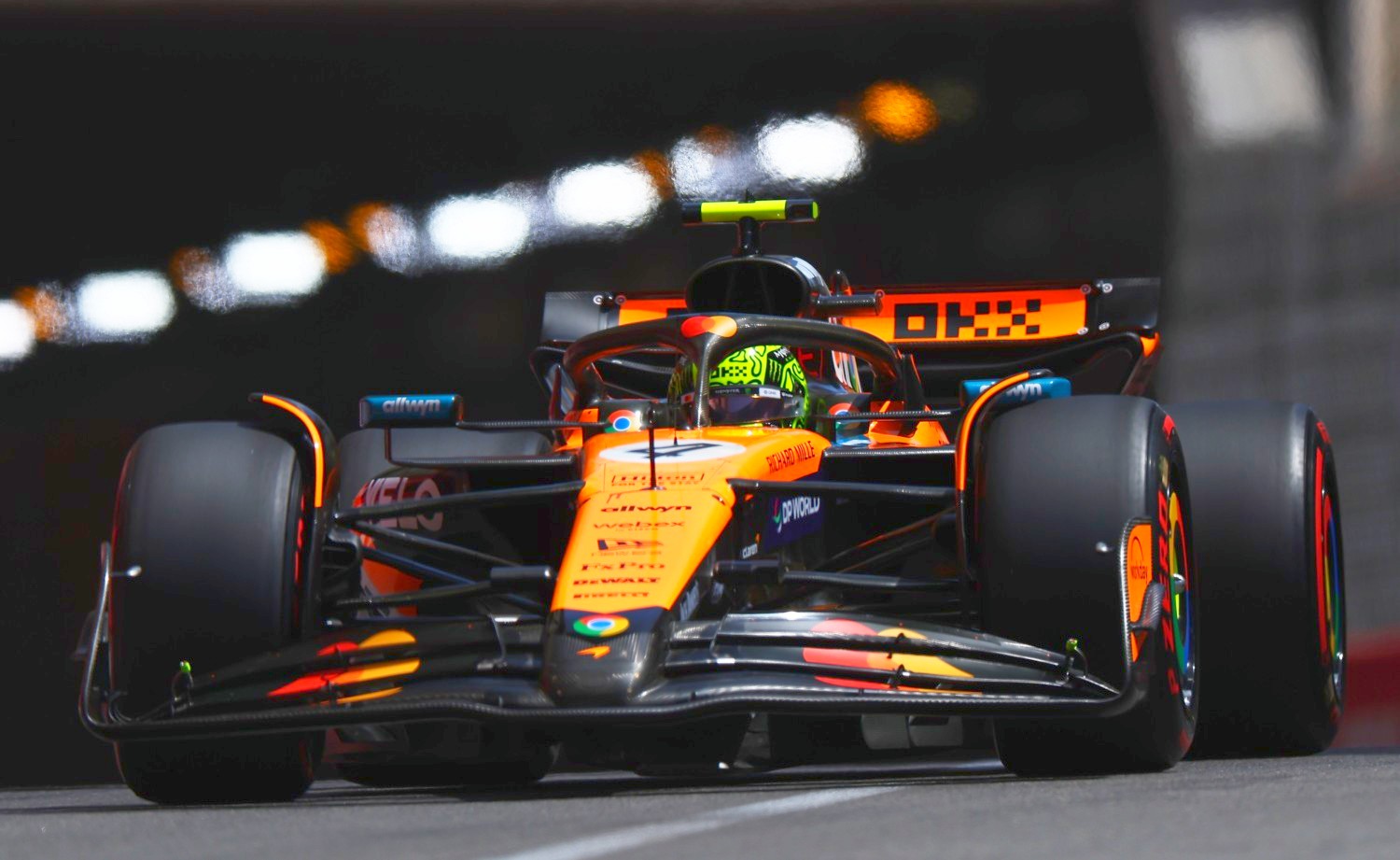 Lando Norris of Great Britain driving the (4) McLaren MCL39 Mercedes on track during final practice ahead of the F1 Grand Prix of Monaco at Circuit de Monaco on May 24, 2025 in Monte-Carlo, Monaco. (Photo by Andy Hone/LAT Images for McLaren)
Changes for 2026
The mandatory two-stop rule introduced for the 2025 Monaco Grand Prix has been scrapped. Teams will return to traditional strategy, with no requirement to make two pit stops or use a minimum of three tire sets.
2026-specific technical adaptations
With the new-generation 2026 cars featuring active aerodynamics (replacing the old DRS system), the FIA has confirmed there will be no Straight Mode zones at this weekend’s Monaco Grand Prix. Both front and rear wings will remain in the closed (high-downforce) configuration throughout the entire weekend for safety reasons, particularly to limit excessive speeds at the tunnel exit where run-off is minimal. A new engine mapping called “Rev1” will also limit MGU-K energy deployment at certain speeds and sections of the circuit to further control top speeds.
Circuit modifications (carried over from 2025)
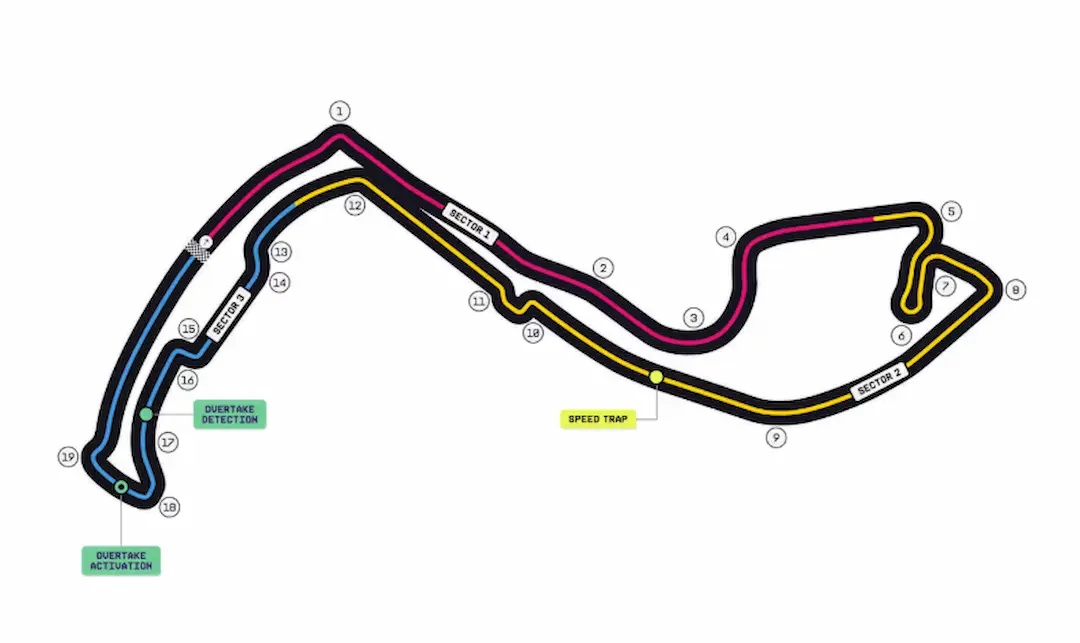 Monaco GP Circuit Map
Several sections remain freshly resurfaced:
– From the exit of Turn 4 to the entry of Turn 6
– From the exit of Turn 6 to the entry of Turn 10
– From the exit of Turn 19 to the exit of Turn 1
Additionally, the FIA upgraded the fencing between Turns 13 and 15 on the left-hand side, incorporating a 45-degree angled upper section to enhance driver safety.
Track limits
Drivers using the escape road at Turns 10-11 must rejoin the track only when signaled by green lights operated by marshals, ensuring safe re-entry.
Curfew adjustments
Given Monaco’s unique logistical challenges, the FIA has adjusted team curfew regulations for the event. Specific details on these adjustments have been communicated directly to the teams to accommodate the tight scheduling constraints typical of the Monaco Grand Prix weekend.
These changes reflect the FIA’s commitment to enhancing the spectacle of the Monaco Grand Prix while maintaining the safety and integrity of the sport—especially with the all-new 2026 machinery.
USA TV Schedule
All sessions will be available live on Apple TV (via the dedicated F1 channel). Full details below (all times Eastern):
– Friday, June 5, 2026
– FP1: 7:10am – 9:00am (Live)
– FP2: 10:40am – 12:00pm (Live)
– Saturday, June 6, 2026
– FP3: 6:10am – 7:30am (Live)
– Qualifying: 9:25am – 10:30am (Live)
– Sunday, June 7, 2026
– Race: 7:50am – 10:00am (Live)
Full schedule and any updates: [https://www.autoracing1.com/upcoming-weekend-tv-schedule/](https://www.autoracing1.com/upcoming-weekend-tv-schedule/)
Race Insight
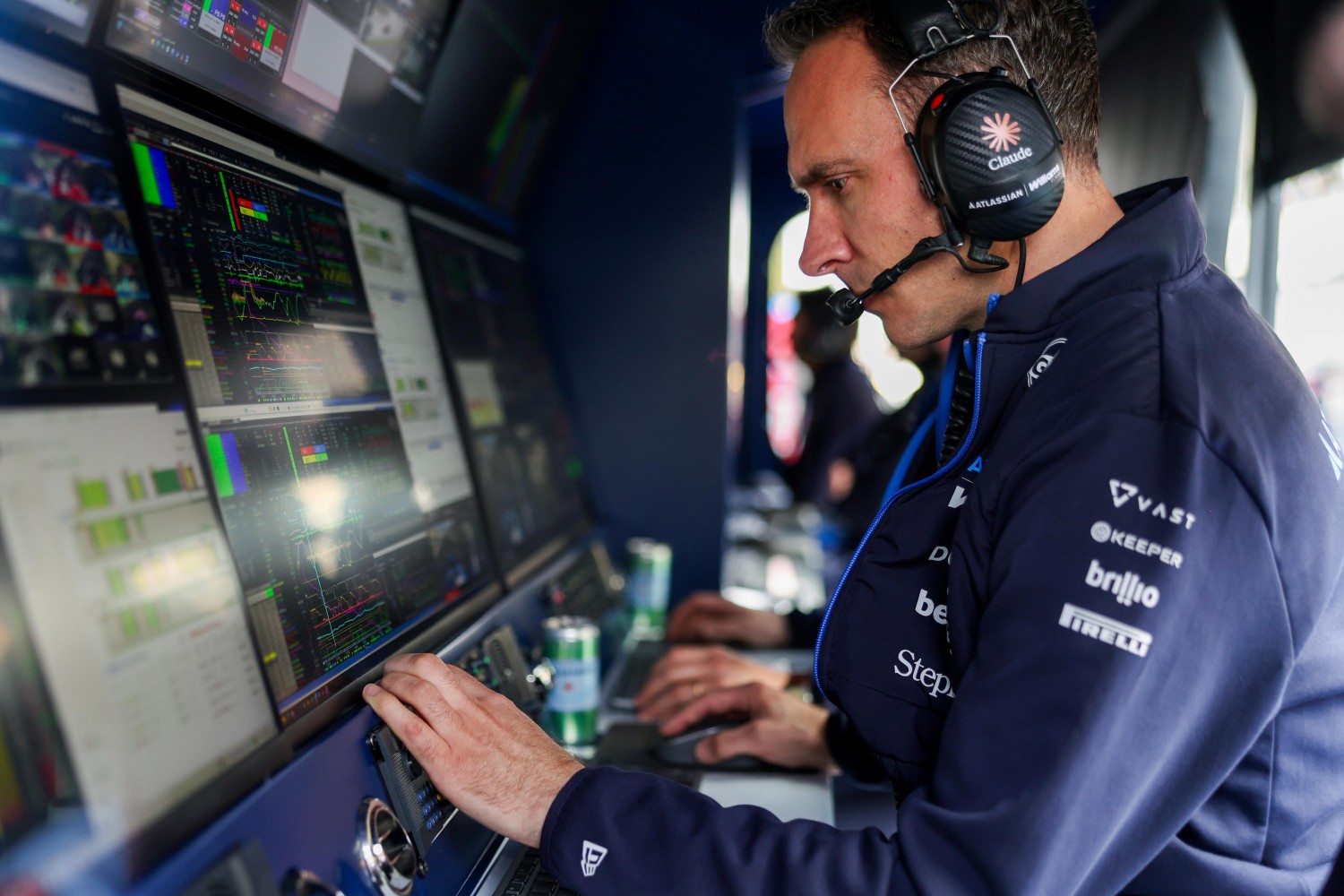 Atlassian Williams Chief Trackside Engineer Paul Williams,
Low-speed grip and balance management: The circuit’s unique low speed layout makes grip and balance critical. Understeer is typically the primary issue, and a stable balance that feels comfortable to the driver is often not the fastest.
Driver confidence through predictability and consistency: The tight street layout demands that the car behaves predictably. With virtually no margin for error around the barriers, the driver needs absolute trust in the cars handling at all times.
Changes to active aero: Monaco is unique on the calendar in having no designated straight-line mode zones, a direct result of its limited straight-line content.
Track evolution and surface variation: The circuit is open to the public during the weekend, causing a significant track reset and high evolution each day. Combined with annual resurfacing patches, grip levels vary considerably around the lap and across sessions.
Session management under high disruption risk: There is a high risk of yellow flags, red flags, and safety cars, which heavily disrupt sessions. Managing driver composure, avoiding frustration-driven mistakes, and not aborting laps in free practice are all critical.
Monaco GP Fact File
– The Monaco Grand Prix was the second round of the 1950 season, the inaugural year of the Drivers’ World Championship. It saw the first appearance of Scuderia Ferrari, the only team to have taken part in every edition of motor racing’s blue riband series. The Italian marque heads the field when it comes to World Championships (15 Drivers’ and 16 Constructors’), wins (248), pole positions (253), fastest race laps (263) and podium finishes (830). There have been 82 Monaco GPs to date prior to this weekend (it was off the calendar from 1951 to 1954 and in 2020). The “Prince” (the four-wheeled variety) of Monaco is Ayrton Senna with six wins, followed by Graham Hill and Michael Schumacher on five. The Brazilian also holds the record for the most pole positions (5) and podiums (8). McLaren is the most successful team in the Principality with 15 wins, followed by Ferrari on ten, while Lotus and Red Bull Racing are joint third with seven. The team from Maranello has the most poles (13), with McLaren second (11) and Lotus third (9). Ferrari also tops the table for podium finishes with 57, more than double the number of second placed McLaren on 28, with Lotus again third on 16. Almost half the winners (32, equivalent to 45.71%) started from pole. If one considers that a further 16 winners (22.68%) started from second on the grid, it is easy to understand why Saturday’s qualifying is so crucial to doing well on Sunday. However, in 1996, Olivier Panis delivered an exceptionally rare feat by winning from 14th on the grid!
– This will be the 83rd running of the Monaco Grand Prix.
– The race sees the highest lap count of any event with 78 tours of the circuit forming the Monaco Grand Prix. It is the only race that does not adhere to the FIA’s mandated 305 km minimum distance, measuring 260.286 km.
– A tighter and narrower pitlane than most F1 tracks means Monaco is one of three circuits to run a pitlane speed of 60 km/h, rather than the usual 80. The other two are Zandvoort and Singapore.
– Monaco, along with Jeddah, has the most number of right hand turns on the F1 calendar with 11.
– The softer C3, C4, and C5 tire compounds will be used at the streets of the Principality (C3 Hard, C4 Medium, C5 Soft).
– From the seven races in F1’s inaugural 1950 season, only four of them remain on the calendar in 2026: the British, Monaco, Belgian and Italian Grands Prix. All four races take place on the same circuits they did in 1950: Silverstone, Circuit de Monaco, Spa-Francorchamps, and Monza.
– The first-ever Monaco Grand Prix was organized in 1929 by Antony Noghès. The final corner of the circuit is named in his honor.
– The 1996 event holds the record for the F1 race with the fewest finishers. Only podium scorers Olivier Panis, David Coulthard, and Johnny Herbert finished the race.
Related Article: F1 News: Norris wins 2025 Monaco GP
Weather Forecast
Friday, June 5 – FP1 & FP2
Dry and hot with sunny intervals. Low chance of precipitation.
Temperature: ~82-84°F (28°C) throughout.
Saturday, June 6 – FP3 & Qualifying
Dry and hot with sunny intervals. Low chance of precipitation.
Temperature: ~82-84°F (28°C) throughout.
Sunday, June 7 – Race
Dry and hot with sunny intervals. 0% chance of precipitation.
Temperature: ~82-84°F (28°C) throughout.
Pirelli Tires
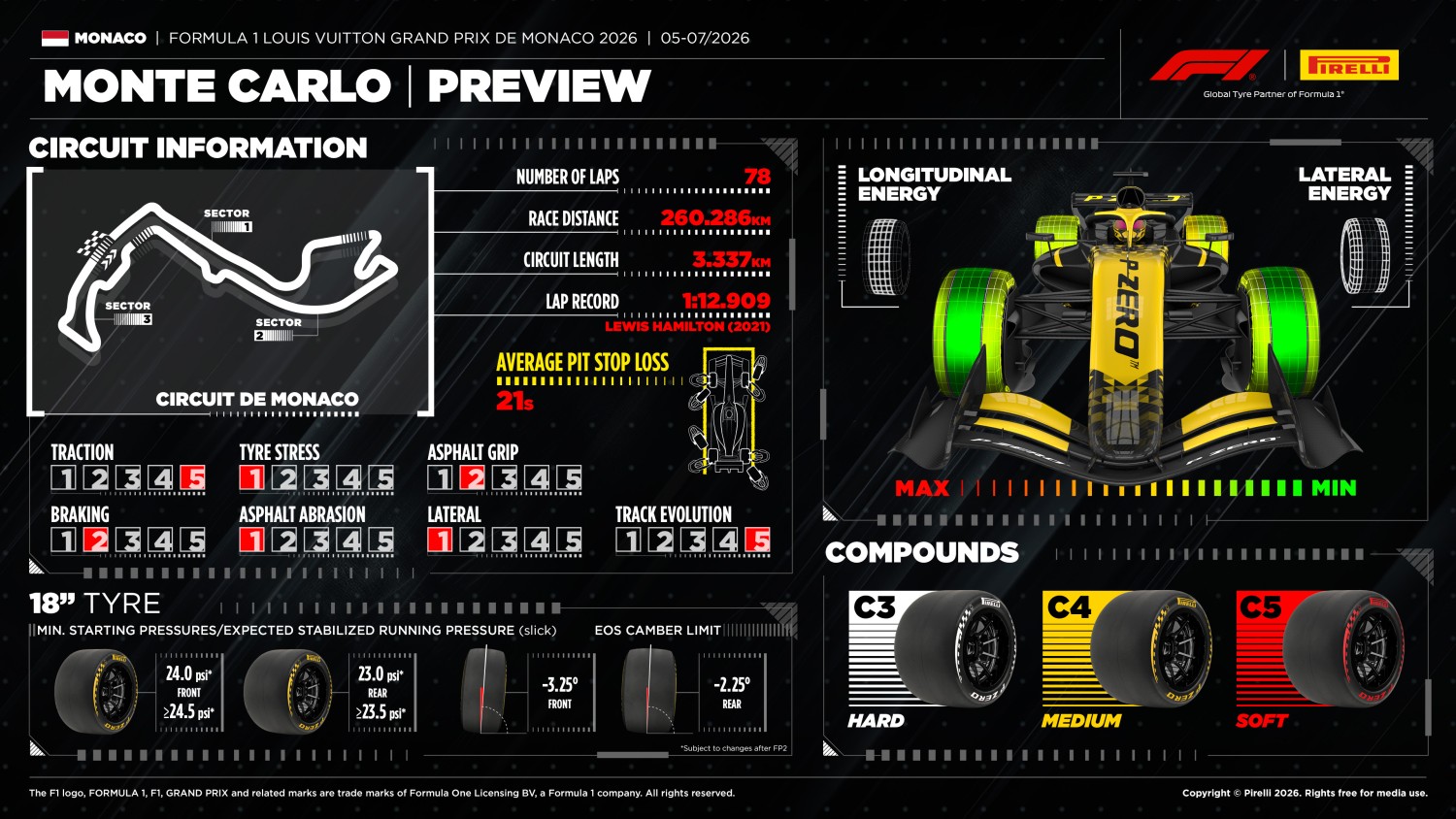
Pirelli has brought the three softest compounds in its 2026 range to the Principality: C3 as the Hard, C4 as the Medium and C5 as the Soft. This is the same soft-biased selection used on low-grip street circuits to maximize grip and one-lap performance around the barriers.
With the two-stop rule now removed, expect classic Monaco strategy focused on track position, qualifying performance, and a single well-timed stop. Tire degradation remains low on this smooth, low-speed layout, but the new 2026 car characteristics (with restricted aero) may introduce subtle differences in how the tires behave under load in the tight corners. It will be fascinating to see how the balance between one-lap qualifying pace and race-day management plays out in the narrow confines of Monte Carlo.