

New Brunswick’s auditor general says all literacy assessment targets were missed in recent years in both the anglophone and francophone sectors.
Paul Martin released three new reports on Tuesday, including one on literacy achievement.
The report showed that some schools are consistently failing assessments.
“We found that five schools in the anglophone sector performed consistently below the provincial average achievement rate on every assessment in our audit period,” the report said.
The audit period covered July 1, 2022, to June 30, 2025.
In the 2024-25 school year, no students at one francophone school passed the Grade 2 reading assessment. Only four schools hit the target.
Similarly, only four anglophone schools passed the Grade 4 reading assessment in 2024-25.
Tuesday’s report showed a years-long trend in the province of missed literacy targets.
In a 2018 auditor general report, it said provincial assessments hadn’t met literacy targets in the 15 years prior to that report.
WATCH | ‘We want to make sure our children succeed,’ auditor general says: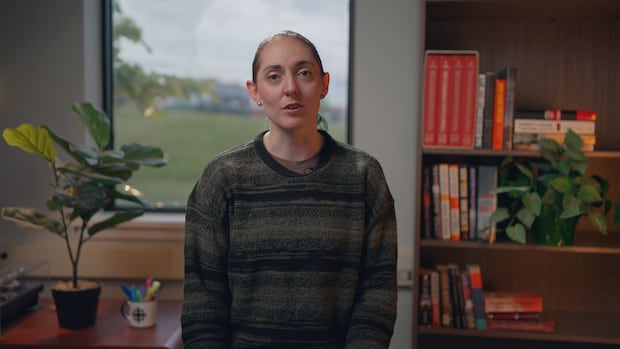
Watchdog says N.B. students continue to score below literacy targets
A report from Auditor General Paul Martin said student literacy scores are lagging behind provincial targets, and in some cases, students were not even assessed. That follows an earlier report from the office that said the targets hadn’t been hit in 15 years.
Tuesday’s report said that in 2022, New Brunswick was last in the country for 15-year-olds who are at or above baseline proficiency.
Martin said if literacy problems persist, someone has to bring them to light.
“It’s unfortunate that I have to spend resources and time and taxpayer money to go after the same problems,” Martin told reporters on Tuesday.
He said this report is his chance to speak up for New Brunswick’s students and educators.
“They’re the people that are going to be in these seats in the future — I want them to be well-educated,” he said.
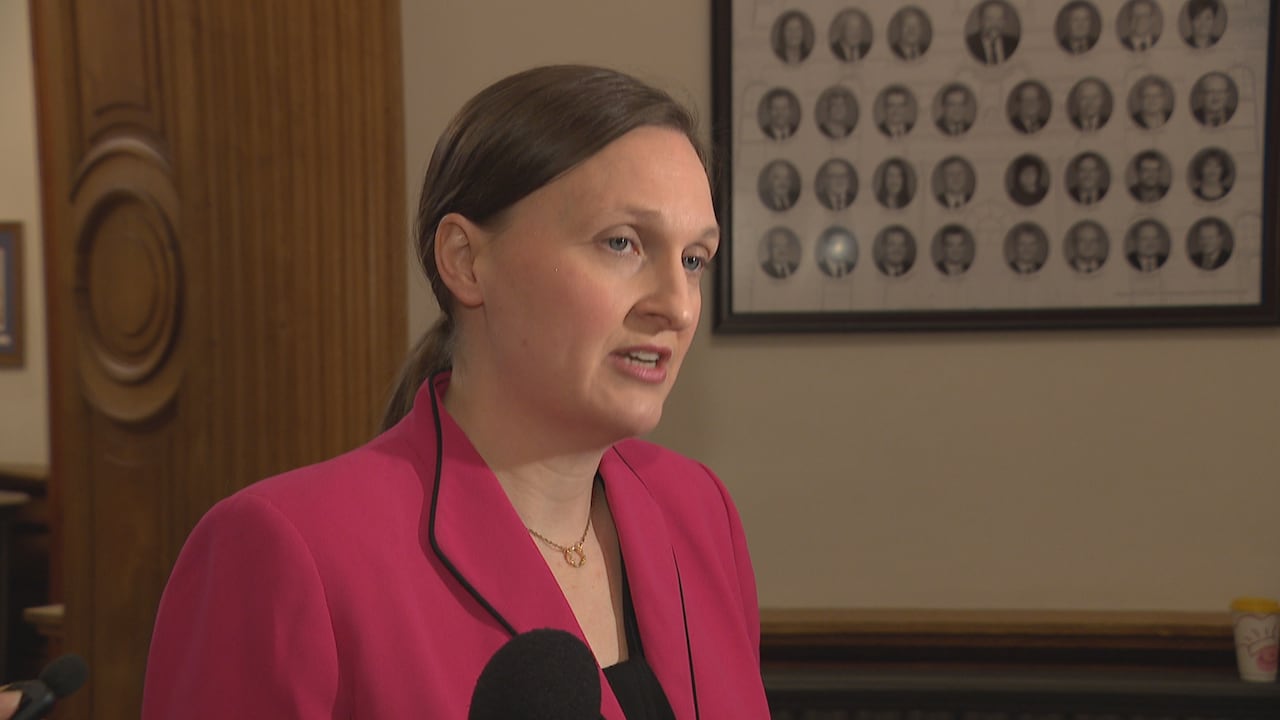 Green MLA Megan Mitton said the province’s classrooms need to start learning without screens and AI. (CBC)
Green MLA Megan Mitton was not surprised that New Brunswick’s literacy achievement is lagging but she was surprised to see the numbers laid out.
She said the province needs to go back to learning without screens and AI in the classroom.
Interim PC Leader Glen Savoie echoed Mitton’s concerns and found the report’s findings alarming.
“We really just need to let teachers teach,” he said. “We need to get back to the basics and make sure that our kids are getting the supports that they need so their literacy scores can improve.”
Minister found the auditor general’s report ‘helpful’
Education Minister Claire Johnson said the report is helpful, and she is also concerned about missed literacy targets.
Her department released new education plans yesterday for the anglophone and francophone sector.
She said the 12-year plan, that supersedes the 2016 plan, will address the auditor general’s concerns.
“One of the core values of our [education] plan is a refocus on fundamental skills, which is literacy and numeracy with specific action plans,” Johnson told reporters.
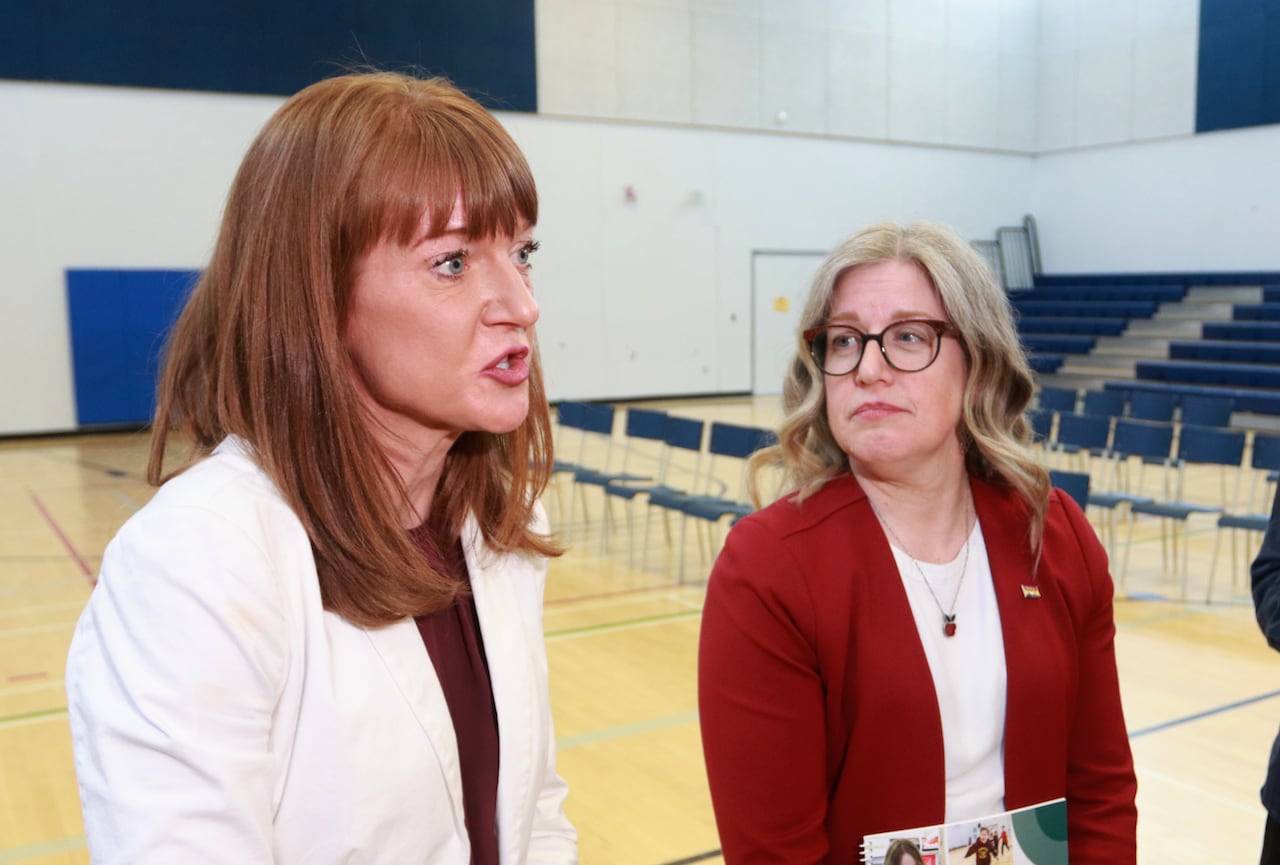 New Brunswick Education Minister Claire Johnson and Premier Susan Holt launched new education plans for the francophone and anglophone sectors Monday in Moncton. Johnson said the new plans will help address the auditor general’s report on literacy. (Shane Magee/CBC)
That new plan was released on Monday but was not assessed as a part of the audit.
The report makes 12 recommendations — which the department agreed to — and listed a target date to make corrections.
Some of the target dates are listed as June 1, 2026 which is the day the education plans came out. Other recommendations will be worked on over the next three years.
Assessment goals not being met
According to the report, within the audited period, no literacy assessment target was hit.
Anglophone students are tested on reading in grades 4 and 6. Then students take the English Language Proficiency Assessment in Grade 9.
Francophone students are tested on reading in grades 2, 3 and 7. Their writing is assessed in grades 4 and 7, then they take the Grade 10 Provincial Reading and Writing Assessment.
According to the report, the Education Department’s 10-year plan released in 2016 set goals for the percentage of students achieving required levels on reading and writing assessments. Those targets ranged from 80 to 90 per cent for specific assessments.
It also says some provincial literacy assessments aren’t being done at all.
The one assessment with an 80 per cent target, Grade 11 reading and writing, has since been discontinued, according to the report.
Over three years of testing, the achievement rate for some tests was as low as 55 per cent and peaked at 82 per cent.
No process to identify struggling schools
The report said there was no “process or intervention threshold” found at the department to identify when a district or school needs support.
The recommendation is for the department to look for schools and districts persistently missing literacy targets and support them.
For example, English prime students consistently perform worse than French immersion students in English assessments but there is no plan to address the gap.
The report also says over 50 per cent of students who miss required literacy targets aren’t receiving extra support, which includes personalized learning plans.
 New Brunswick’s auditor general has found that half of students missing literacy targets aren’t getting the support they need. (CBC)
The department should ensure that these students are receiving support and that staff are available to provide it, the report says.
Martin said that schools don’t have the staffing right now to fulfill his recommendations.
He said the staffing issue falls on the department since it provides funding, not the districts.
First Nations students also performed worse in the English Language Proficiency Assessment than non-First Nations students. This is despite the 2016 education plan identifying the importance of closing that gap.
The report found that all four anglophone school districts and three francophone districts set literacy targets lower than the province’s 2016 education plan. The report says doing that is against the Education Act.
Johnson said the province’s new education plans included with many parties, including superintendents and teachers.
“We created this with them,” Johnson said. “So that’s why we’re feeling so confident that we’ll be able to work with them towards the same goals.”