

Listen to this article
Estimated 4 minutes
The audio version of this article is generated by AI-based technology. Mispronunciations can occur. We are working with our partners to continually review and improve the results.
The Federal Court of Appeal has upheld a victory by the Kebaowek First Nation in its fight against the building of a nuclear waste disposal facility near Chalk River, Ont.
In a decision released Thursday, the court stood by a previous Federal Court ruling which said that Environment and Climate Change Canada (ECCC) erred in granting a permit to Canadian Nuclear Laboratories (CNL) for a proposed radioactive waste disposal site.
The area around the proposed facility is home to endangered species including the Blanding’s turtle, and two types of bats. Under the Species at Risk Act, the government must prove that alternatives sites were looked at and the best possible location was chosen.
Both courts took issue with how ECCC made that determination.
“While the Chalk River site may well be a defensible location for the disposal facility, the minister’s reasons for issuing the permit failed to meet the applicable standards of transparency, intelligibility and justification,” Court of Appeal Justice Monica Biringer wrote in the ruling.
Decision praised by Kebaowek First Nation
The dismissal of CNL’s appeal was welcomed by Kebaowek First Nation, an Algonquin community in Quebec about 300 kilometres northwest of Ottawa, which in a news release called the appeal court decision a “significant victory.”
Kebaowek elected Councillor Justin Roy, who leads the community’s engagement on the project, said the decision shows that legislation needs to be properly followed for such projects.
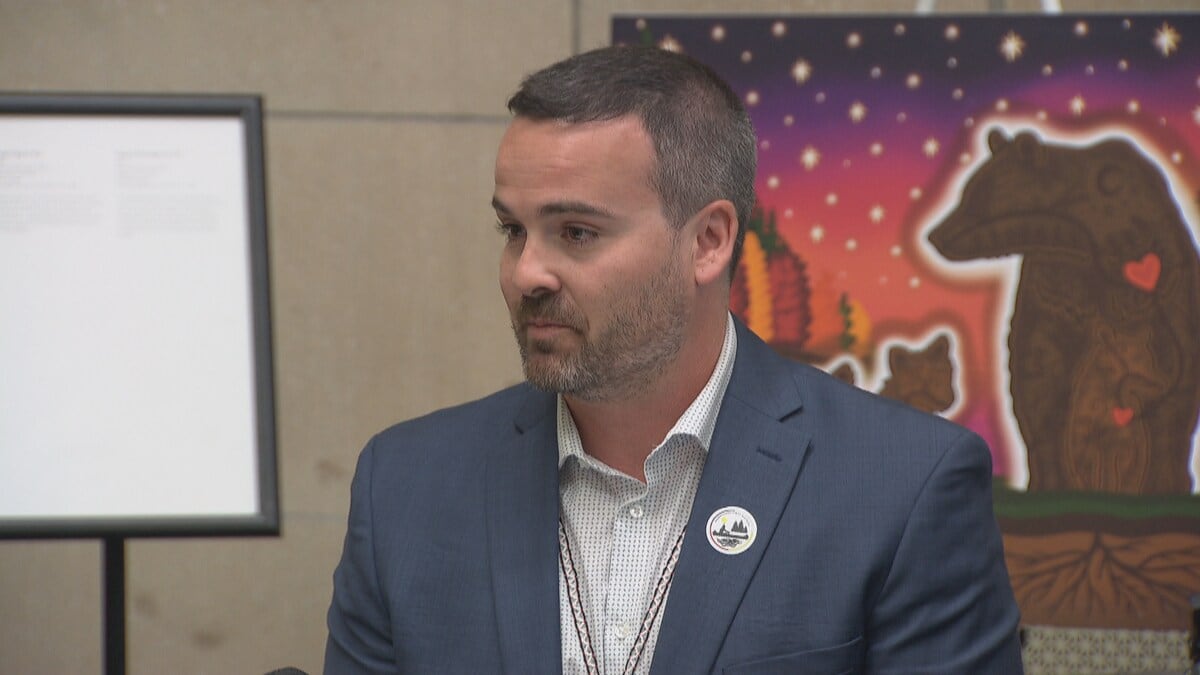 Justin Roy, member of the Kebaowek First Nation Council (Radio-Canada)
“There are acts, legislation, laws that we all must follow when we want to look towards development that to kind of push us forward. And if we don’t follow those acts and regulations, then why do we have them?” he said.
The Concerned Citizens of Renfrew County and Area, another group to oppose the project, also said they welcome the decision, as it will mean that ECCC will have to take another look at the permit for the project.
“There’s good information for Environment Canada to really reconsider and redetermine this,” said Ole Hendrickson, a spokesperson for the group.
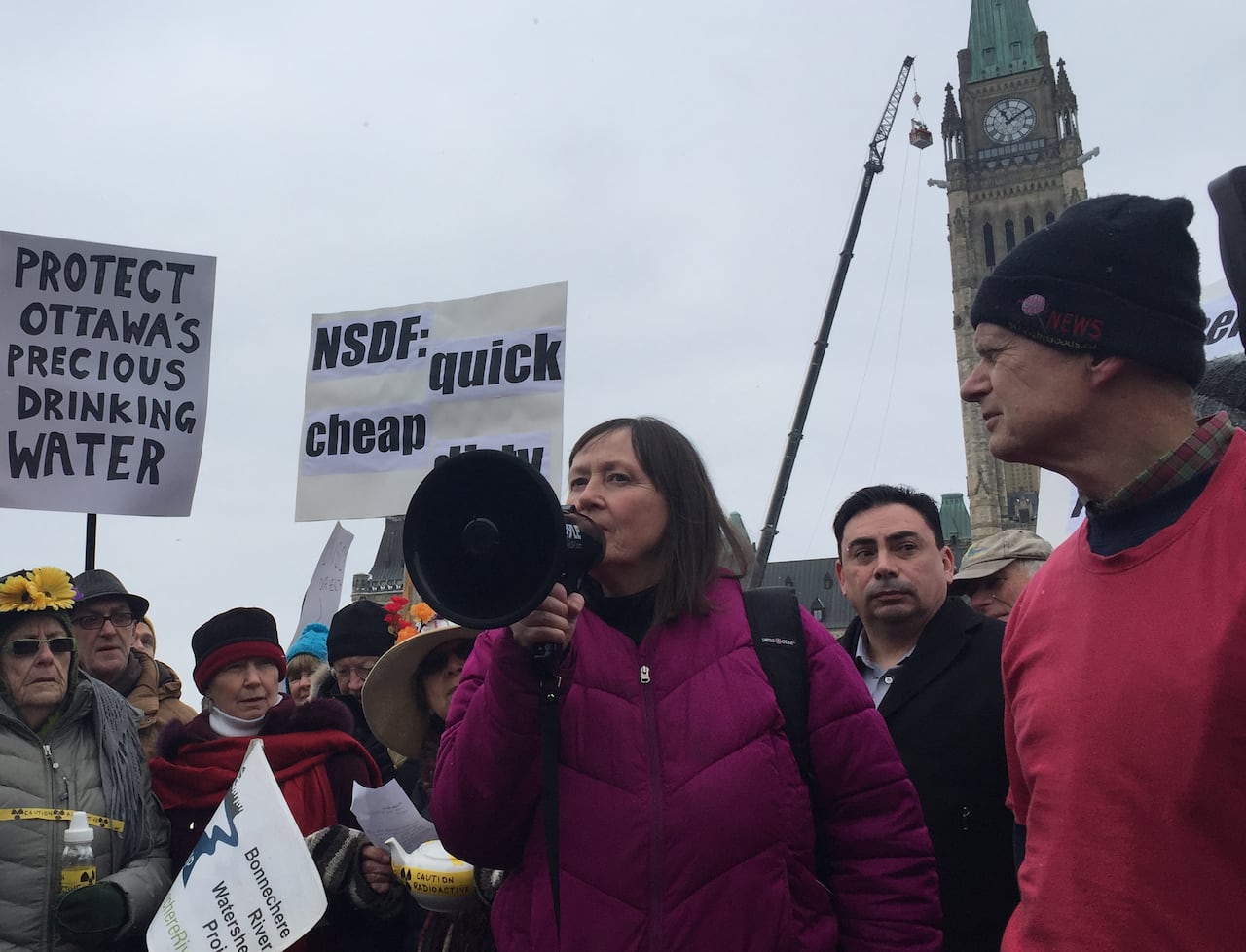 Lynn Jones (with bull horn) stands beside Ole Hendrickson, and other protesters raising concerns about nuclear waste dumping near the Ottawa River, winter 2018. (Julie Ireton/CBC )
Hendrickson believes there are more at risk species in the area than just the three that were named in the permitting process.
“We hope that they’ll find a better solution. And that means a location not a kilometre from the river where there’s a huge number of species at risk,” he said.
In an email to CBC, ECCC said it acknowledges the court’s decision. It would be reviewing the decision before deciding on its next steps.
CNL said it was also considering its response.
“CNL remains committed to protecting the environment and species at-risk – restoration and protection of the environment is at the core of our work,” a spokesperson told CBC in an emailed statement. “CNL firmly believes in the science that is behind our proposal.”
What’s next?
Fights around the species at risk permitting process isn’t the only legal challenge Kebaowek launched against the project.
In February 2025, Federal Court also found the Canadian Nuclear Safety Commission failed to consider the United Nations Declaration on the Rights of Indigenous Peoples when consulting Kebaowek, rendering the approval both unreasonable and incorrect.
That decision is also being reviewed by the Federal Court of Appeal, Roy said.
Roy hopes CNL and ECCC will proceed with the redeterminsation process rather than challenging the appeal court decision.
“That way proper Indigenous consultation could happen with the minister,” he said.