This article is brought to you by the editorial team of JLI’s Living Jewish series, which has recently released The Complete Guide to Keeping Kosher, as previously reported on COLlive.
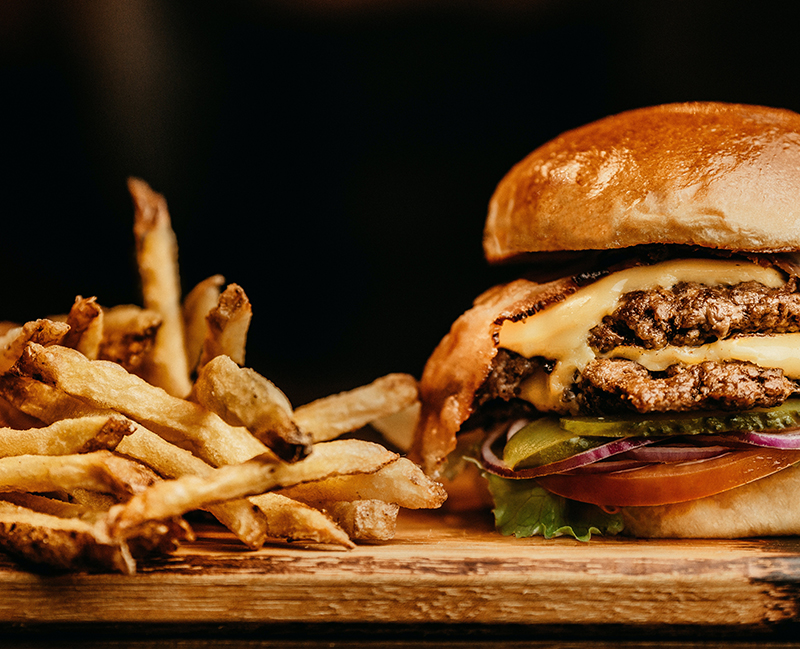
Dining out for my birthday, I opened the menu and did a double take. Right there on the page was a burger with cheese, crab cakes, and fries topped with bacon bits. I looked up for the mashgiach, while scanning the wall for the certification. Did I walk into the wrong place by mistake? The waiter promptly came over and clarified: the cheese is plant-based, the crab is a fish substitute, and the bacon is beef fry. All kosher.
So I ordered the “cheeseburger,” but halfway through I felt uneasy, and not from the calories. Should I really be eating something that looks and tastes exactly like the forbidden version? Also, isn’t this maris ayin?
What’s maris ayin?
Maris ayin is a rabbinic prohibition against doing something that’s technically permitted but appears to an onlooker like breaking Halachah. This is because they’ll either assume you’re doing something forbidden, or worse, they might assume the act is permitted and end up doing the actually forbidden version themselves.
The classic case in our context is cooking meat in almond milk. Almond milk isn’t real milk, so technically there’s no meat and dairy issue. But someone walking past your kitchen sees a bowl of chicken marinating in white liquid and assumes you’re cooking chicken in buttermilk. Halachah therefore requires you to place some almonds (or in today’s terms, the almond milk bottle) next to the pot to make clear what’s really going on.
But there was no packaging or evidence next to my cheeseburger. If I couldn’t tell after taking a bite, the people at the next table definitely couldn’t!
That’s true. But nowadays we live in a time when imitation products have become common. Thanks to our vegan friends, nondairy creamer, margarine, pareve ice cream, and plant-based meat are standard supermarket fare, and therefore no reasonable onlooker assumes that the yellow goo melted onto a burger is the real dairy thing. Since this suspicion is no longer relevant, many contemporary authorities are lenient and say the prohibition of maris ayin doesn’t apply.
So I wouldn’t be so concerned about your cheeseburger, and neither will your table mates. Everyone knows the products exist, so they won’t draw the wrong conclusion.
But isn’t there something off about wanting to eat a “cheeseburger” in the first place?
Fair question. If the Torah forbade us from eating meat and milk together, shouldn’t we be steering clear of anything that even resembles it rather than chasing the closest possible imitation?
The truth is, there’s an interesting Gemara that tells us that “for everything Hashem forbade us, He permitted us something similar.” The Gemara lists examples: Blood is forbidden, but liver (which is full of blood) is permitted after proper preparation. Cooking meat and milk together is forbidden, but roasted cow udder is permitted after the milk is removed. There’s even a certain fish that can taste like pig. The takeaway is that there’s nothing inherently wrong with eating food that tastes like a forbidden item since Hashem Himself built kosher equivalents into creation.
So provided the product carries a reliable hechsher, you’re free to enjoy your kosher cheeseburger, crab roll, and pepperoni slice and, if you like, all in the same meal.
The first volume of Living Jewish: The Complete Guide to Keeping Kosher is available now at Hamafitz and Judaica World.
If you have a question you’d like to submit, email us at [email protected].
Note: The Halachic rulings in this article were reviewed by Bais Hora’ah Chabad.