
Jeff Boniface shares how he supported patients with mpox, highlighting the power of team-based care in global health emergencies
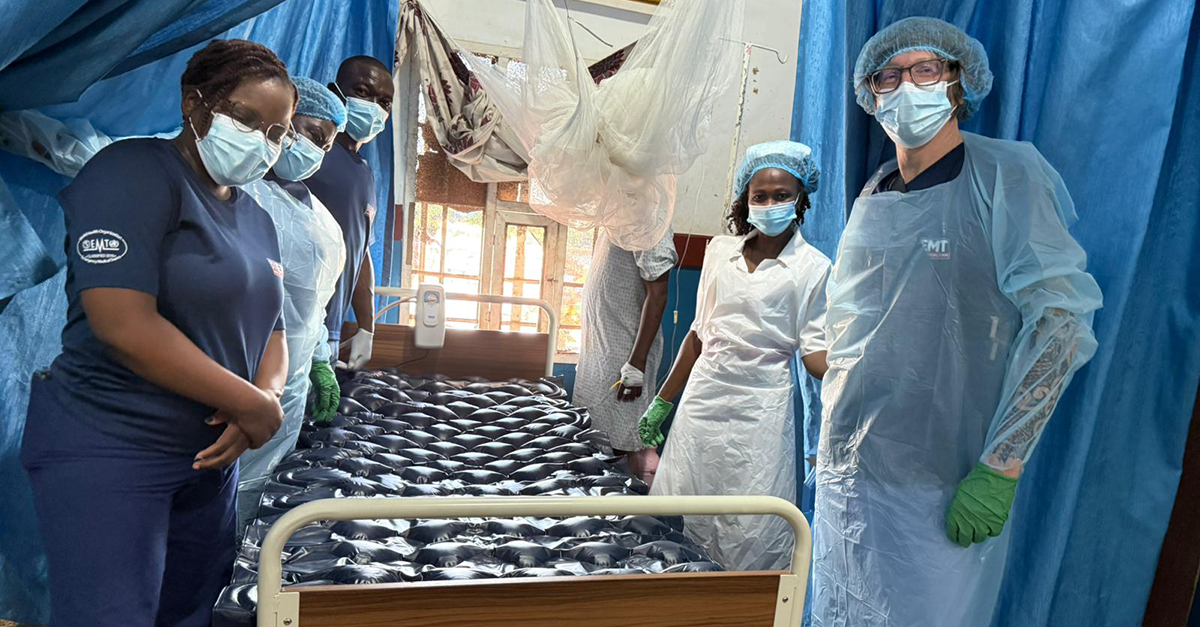 The UK EMT team, including UBC’s Jeff Boniface (right), with national clinicians on the ward in Connaught Hospital, Freetown, Sierra Leone. (Photo credit: UK EMT Team)
In 2025, Sierra Leone reported its first case of mpox in nearly a decade, with the number rapidly increasing to more than 5,400 cases by the end of the year.
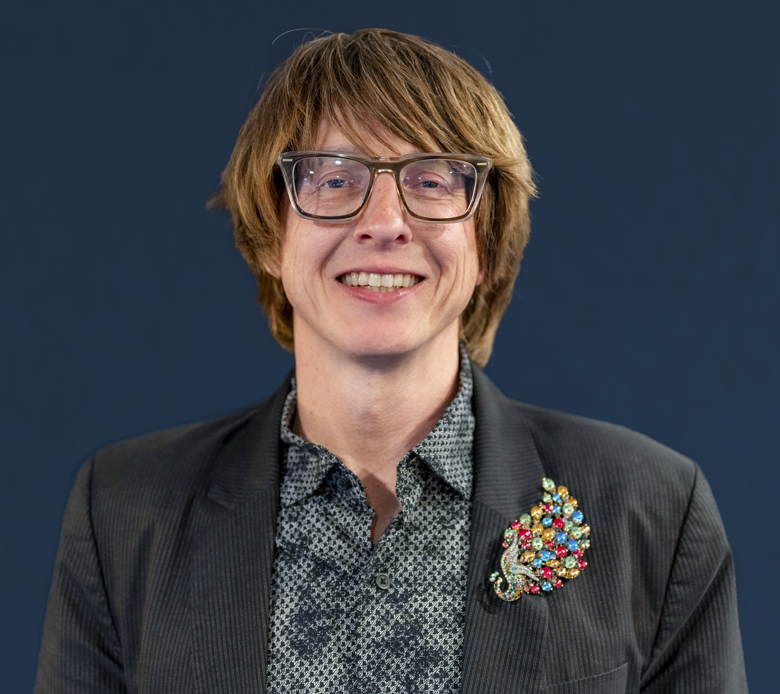 Jeff Boniface
Mpox, an infectious viral disease related to smallpox, can cause flu-like symptoms and a painful rash that can lead to severe complications, particularly among vulnerable populations such as children, pregnant people and those who are immunocompromised.
As mpox infections rose in Sierra Leone, the World Health Organization (WHO) requested support from the UK Emergency Medical Team, an expert WHO-verified team funded by the UK Government, to provide specialized surgical care and rehabilitation. Jeff Boniface, a clinical associate professor in the Department of Occupational Science and Occupational Therapy at UBC’s Faculty of Medicine, joined the effort and was among the first rehabilitation professionals to participate in an international mpox emergency response.
We sat down with Boniface to learn more about his experience, how it influenced his clinical practice and teaching, and the important role health professionals play in global health emergencies.
What inspired you to join the emergency response team to Sierra Leone?
I’ve always been passionate about global health, humanitarian service and finding ways in which I can give back to make this world a better place. We have a high need for rehabilitation services here in Canada but there is also a desperate need in many places across the globe, and I truly believe that we have a responsibility to serve all people.
How did you support patients in Sierra Leone?
Our role as occupational therapists is to help people get back to their daily activities and restoring function. In places like Sierra Leone, this can be challenging due to extreme poverty and limited access to resources.
Our team’s goal focused on two areas, surgical intervention and rehabilitation support. Most of the patients we saw were immunocompromised and hadn’t yet seen a doctor, so they needed significant medical intervention due to complications like severe skin infections or vision loss. My colleagues and I supported patients with compression, wound care, recovery and rehabilitation.
We also supported patients’ mental health. There’s still a lot of stigma and misinformation about mpox in Sierra Leone and many affected people are alienated from their family and communities. Our team partnered with a local advocacy group to establish a psychosocial support group, creating a safe space for mpox survivors to share their experiences, while also working with them to help them better understand their condition, manage pain more effectively and develop practical strategies for coping and reintegrating into their communities.
How did you collaborate with local health care teams?
Another key piece was health education, promotion and capacity building. We supported local rehabilitation staff in Sierra Leone in strengthening their knowledge of mpox, including how it’s transmitted and specialized wound care and rehabilitation practices.
Overall, we delivered more than 100 rehabilitation sessions for patients and trained over 40 local health care staff in just a few weeks, helping establish support that will continue in Sierra Leone. The advocacy group is now leading the support group, providing ongoing care for mpox survivors and information for local healthcare staff and community members to help reduce stigma.
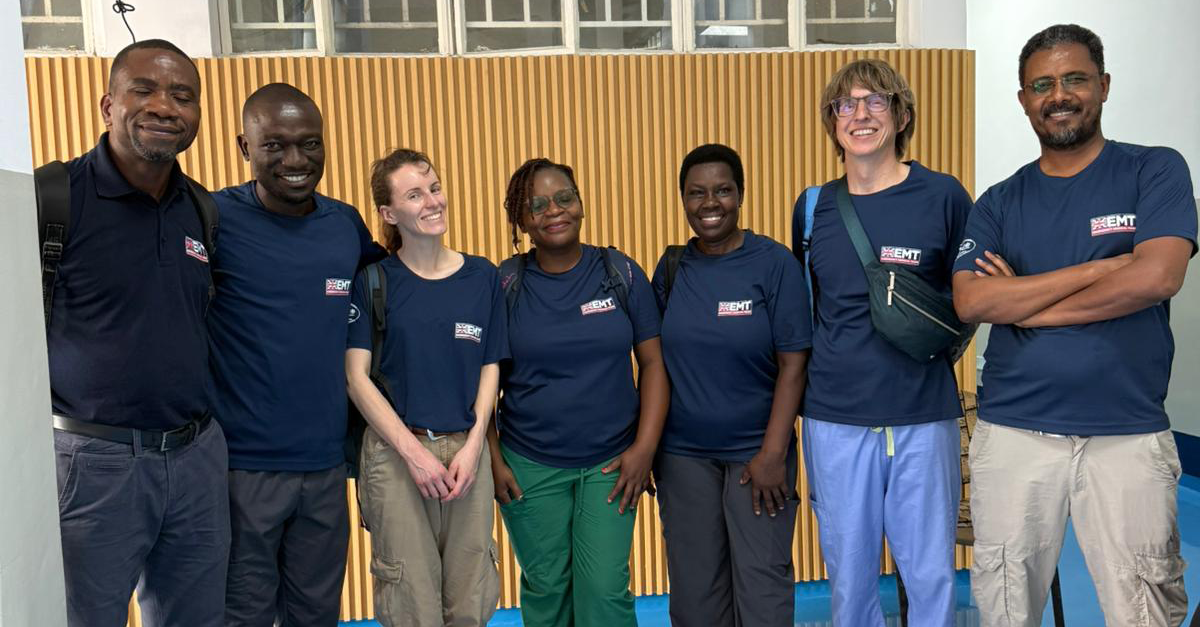
UBC’s Jeff Boniface (second right) was part of the UK Emergency Medical Team who provided specialized surgical care and rehabilitation for patients with mpox in Sierrra Leone. (Photo credit: UK Emergency Medical Team)
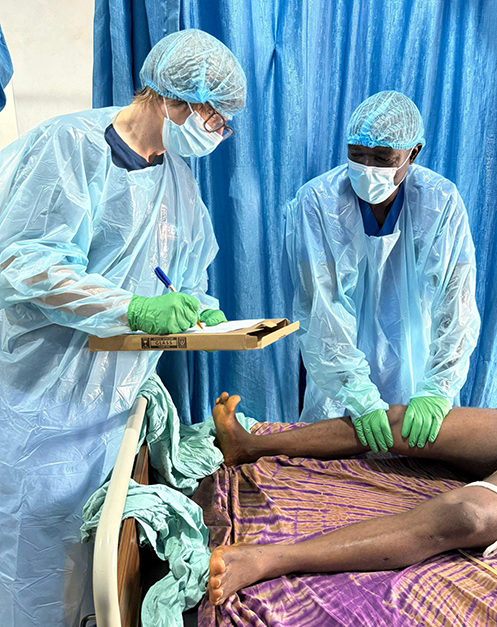
Surgical consultation (Photo credit: UK EMT Team)
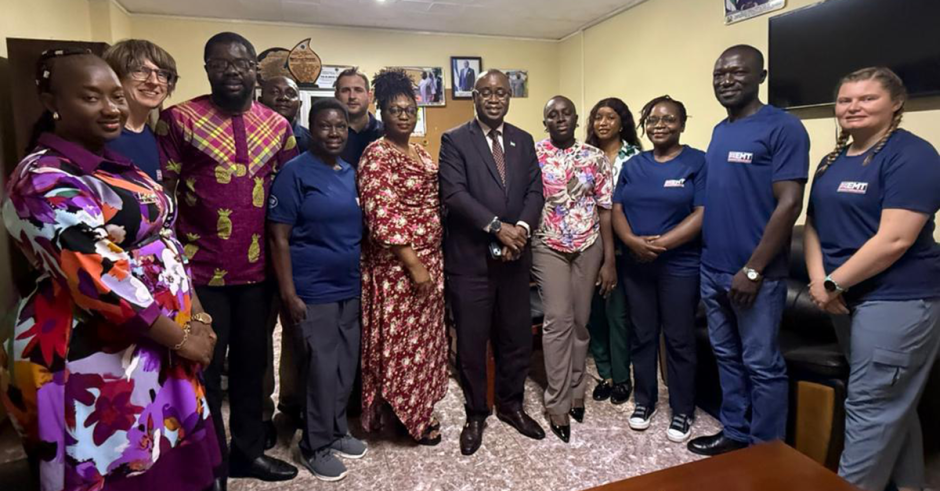
The UK EMT team with Dr. Charles Senessie, the Deputy Minister of Health 1 in Sierra Leone. (Photo credit: UK EMT Team)
How did this experience highlight the value of occupational therapy in global health emergencies?
I think there is growing awareness of the benefits of team-based care and the value of interdisciplinary healthcare teams in improving health outcomes, especially in global health emergencies. When we work together to address a patient’s medical, rehabilitative and mental health needs, we are treating the whole person and giving them the best possible chance of recovery.
I am very grateful to have been able to serve internationally and I hope to see future efforts include a diverse range of medical and health professionals.
How has this experience shaped your clinical practice and teaching here at UBC?
I always try to impart the importance of international service to students because the benefits are so far reaching. It is highly rewarding to help people in need but you also learn a lot through the process — from the patients, as well as from your international colleagues. You are then able to take these lessons back home to strengthen your own practice and improve care.
Learning how to practice in lower resource settings also provides insight into how we can better serve our rural and remote communities here in B.C., for example:
Practitioners in lower-resource settings often use the “train-the-trainer” model, empowering community members and caregivers with the skills and knowledge they need to continue supporting others and their loved ones.
Outreach, education and virtual care reduces barriers to people living in geographically isolated communities.
And, when you have few resources or equipment, it strengthens your creativity, adaptability and innovation in finding other ways to deliver the care people need.