

Listen to this article
Estimated 4 minutes
The audio version of this article is generated by AI-based technology. Mispronunciations can occur. We are working with our partners to continually review and improve the results.
The Nova Scotia government has spent more than $20 million from an agreement it signed with the federal government to help protect land, and the province’s environment minister expects that total to increase as final numbers are crunched.
The Canada-Nova Scotia Nature Agreement was signed in 2023 and provided the province with up to $25 million to help protect biodiversity, species at risk and habitat. An additional $3.5 million went directly to the Mi’kmaq.
While the agreement called for the money to be spent by the end of March, information about the final tally has taken time to be released as the federal government assesses the numbers.
Figures provided recently by the provincial Environment Department show that to date, $20.3 million has been spent.
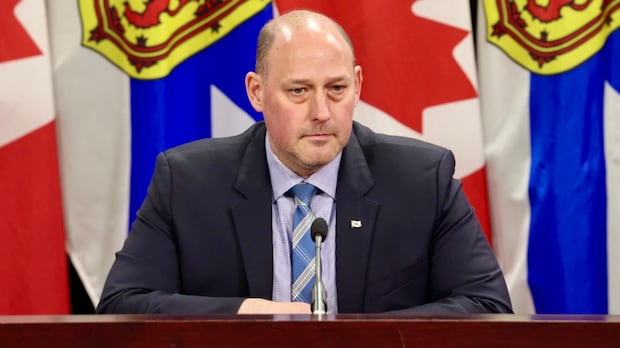
“I’m very pleased with what we’ve utilized,” Environment Minister Tim Halman said in an interview Wednesday.
“Is there more work to do? Absolutely. But we remain committed to the goals we established in 2021.”
Awaiting more info from land trusts
According to Halman’s department, to date about $6.6 million from the agreement was used by land trust organizations to purchase land, while $10.2 million was used by the Environment Department. The combined efforts helped acquire almost 8,000 hectares of land.
That includes four recent additions to land that is already protected:
Lambs Lake Nature Reserve, Annapolis County (one additional hectare).Carleton River Wilderness Area, Yarmouth County (50 additional hectares).Cloud Lake Wilderness Area, Annapolis and Kings counties (76 additional hectares).Johnson Lake Nature Reserve, Cape Breton Regional Municipality (33 additional hectares).
The province’s Natural Resources Department spent $3.5 million for species at risk, migratory bird conservation and ecological inventories to support provincial park management planning, as part of the agreement.
Although that means there could still be about $5 million left over, a spokesperson for Halman’s department said the province is awaiting some information from land trusts, and that information then needs to be verified by the federal government before they have a final number.
The land bought through the agreement with Ottawa, along with other sites recently announced for protection and consultation for protection, moves the province to 14.6 per cent of its land and water mass being protected.
The province has a legislated target of protecting 15 per cent by the end of this year and 20 per cent by 2030, and Halman said his government remains committed to meeting both marks.
Biodiversity offset for gold mine
Last week’s news of more land for protection shows the variety of ways getting to those goals can be accomplished, the minister said.
Included in the list is 144 hectares being added to the Ship Harbour Long Lake Wilderness Area in the Halifax Regional Municipality.
That land was originally acquired by Atlantic Mining Inc. as a biodiversity offset for the same amount of land the company used for the Touquoy gold mine in Moose River.
The offset was a requirement of the terms and conditions of the company’s 2008 environmental assessment approval. The land in question had to meet certain criteria outlined by the government in order for it to qualify and it was then transferred to the province.
“It’s an example that sustainable development works,” said Halman.
“As they have their imprint on the landscape, the expectation is they do land and water conservation, so we’re pleased with that.”
Some cases take time
Last week’s announcement of new land to be protected or go through the consultation process did not include five parcels that were announced for consultation in 2024. That includes land for the Antigonish Nature Reserve, the Beaver River Nature Reserve, the Caribou River Nature Reserve, the Chignecto Isthmus Wilderness Area and the Middle River Wilderness Area.
Halman said that does not mean those parcels will not be protected, but rather it’s an indication of how long the process can take to complete.
“These types of transactions are very, very complex in some cases,” he said. “Some pieces of land and water that’s being conserved, sometimes it’s taken years to work through the process.”
MORE TOP STORIES