
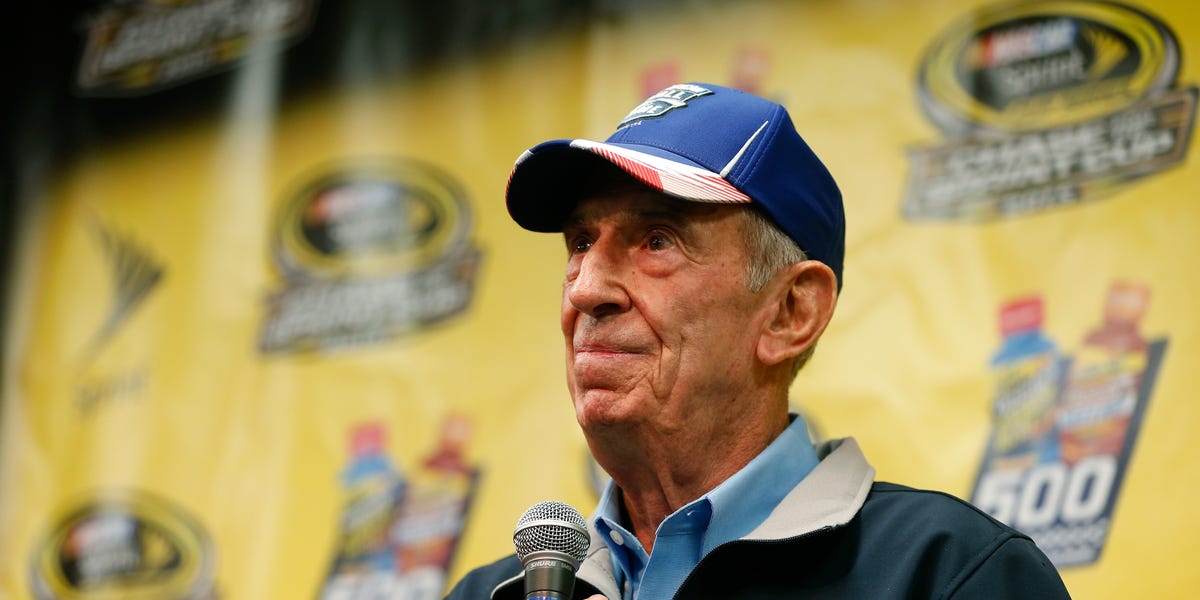
NASCAR champion Ned Jarrett, who paved the broadcasting road for retired race car drivers, has passed away. He was 93.
Jarrett was NASCAR’s oldest living champion at the time of his death on Thursday.
A statement from the Jarrett family said the man nicknamed “Gentleman Ned,” died peacefully of natural causes at his home in Newton, North Carolina, with his family by his side.
“Our father was a devout Christian and a devoted, loving, family man. He was a friend to everyone he met and NASCAR’s oldest living champion. By all accounts, he was a true NASCAR legend. While we mourn his passing, we celebrate the remarkable life of an amazing man and truly the best father anyone could have wished for. Rest in Peace, Dad,” the Jarrett family said in its statement.
Jarrett was nicknamed “Gentleman Ned” because his demeanor was the opposite of stock racing’s rough and often rowdy environment of the 1950s and 1960s. However, he was a tough competitor as NASCAR CEO Steve O’Donnell noted in his statement.
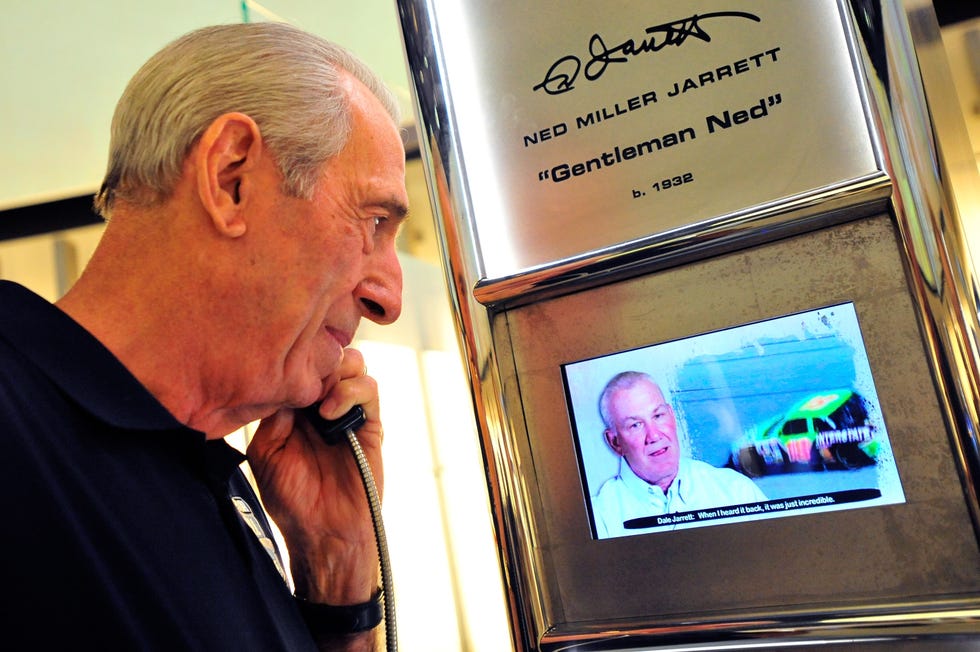 Jason Smith//Getty Images
Ned Jarrett at the NASCAR Hall of Fame.
“Despite his calm demeanor, ‘Gentleman’ Ned Jarrett was as fierce a competitor as NASCAR has ever seen,” O’Donnell said in his statement. “His on-track accomplishments speak for themselves with wins and championships across several NASCAR divisions. But it was his off-the-track persona that separated Ned from his peers. He was as kind as his nickname indicated. And his endearing personality helped him excel in his second career as a broadcaster. Ned was an outstanding ambassador for the sport for more than six decades and he will be dearly missed. On behalf of the France family and all of NASCAR, I offer my deepest condolences to all of Ned’s family and friends on the loss of a NASCAR legend.”
“It was his off-the-track persona that separated Ned from his peers. He was as kind as his nickname indicated.”
The third driver to win at least 50 races in what is known today as NASCAR’s Cup Series, Jarrett claimed championships in 1961 and 1965. Prior to those titles, he earned two consecutive Sportsman championships, 1957 and 1958.
After earning the 1961 title in NASCAR’s premier division, Jarrett decided he needed to find a better way to represent himself and the sport, so he took the Dale Carnegie course. He cited it as giving him the knowledge he needed to better handle interviews, speaking engagements and media.
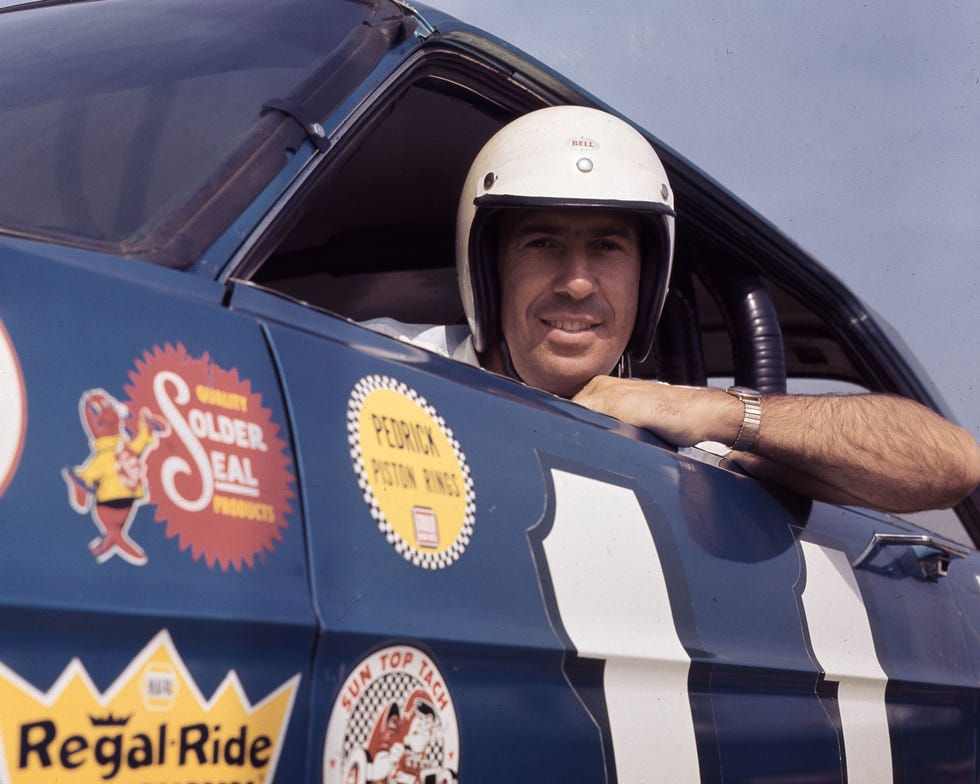 RacingOne//Getty Images
Ned Jarrett took his second NASCAR Cup title in 1965, winning 13 of 54 races and scoring 45 top-10 finishes. All of his victories came on short tracks, with the exception of the Southern 500 at the Darlington Raceway in South Carolina, a win that Jarrett considered the biggest of his career.
En route to the 1965 championship, Jarrett set a record that will probably never be broken—largest margin of victory. He won the 1965 Southern 500 at Darlington Raceway by 14 laps. That year, he competed in 54 of 55 races, won 13 events, had nine poles, and recorded 42 top-five and 45 top-10 finishes. He won that championship driving with a broken back he suffered in a June crash at Greenville-Pickens Speedway in South Carolina.
Jarrett’s back injury came slightly more than a year after he pulled Fireball Roberts from his burning car in May 1964 after the two of them, along with Junior Johnson, crashed on the seventh lap of the World 600 at Charlotte Motor Speedway. Roberts, one of NASCAR’s first superstars, died two months later while still undergoing treatment for his burns in Charlotte, North Carolina.
Jarrett’s 50 career Cup victories came in just 352 starts that covered 13 years, from 1953-1966. His ‘61 title came in a car owned by shipping heir B.G. Holloway, while his ’65 championship was with team owner Bondy Long.
Even though Jarrett ran more than half of the scheduled races only six times, he still totaled 185 top-five and 239 top-10 finishes, and 35 poles.
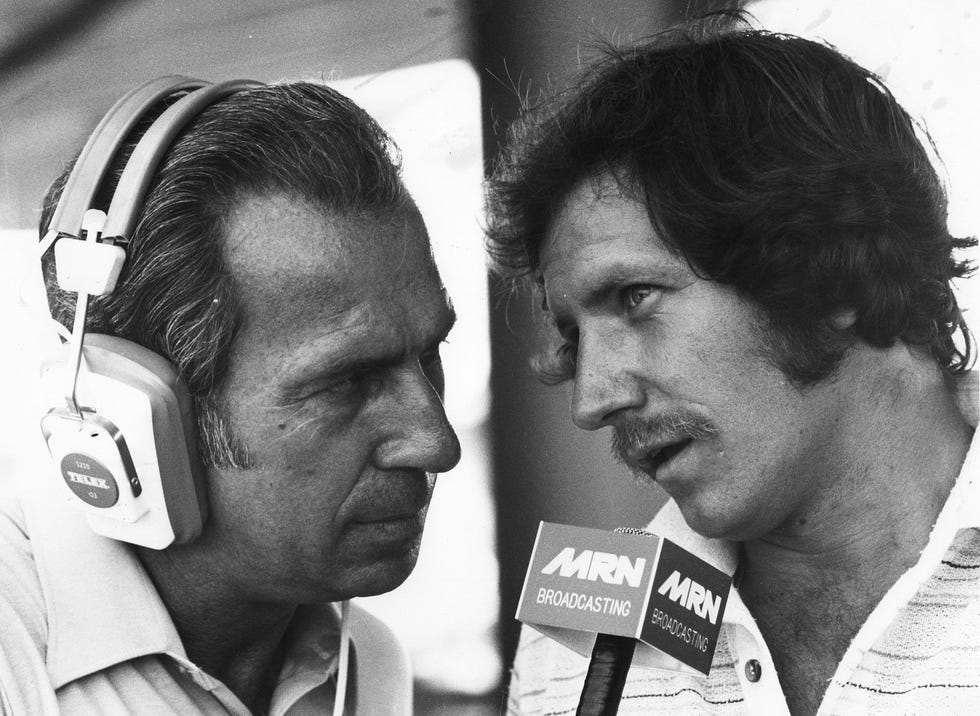 RacingOne//Getty Images
Ned Jarrett interviewing Dale Earnhardt.
Jarrett retired from driving at age 34, but he quickly forged a path in broadcasting. He became a pit reporter for Winston-Salem, North Carolina-based Universal Racing Network in the 1960s. He also launched his syndicated radio show “Ned Jarrett’s World of Racing.” When Motor Racing Network was created in 1970, Jarrett moved to that network and remained there as a pit reporter until shifting to the television booth where he spent time with CBS and ESPN. He also co-hosted the syndicated television show “Inside NASCAR” and interviewed President Reagan when he attended the 1984 Firecracker 400 at Daytona. Reagan was the first sitting president to attend a NASCAR race.
During this time, 1968-1977, Jarrett also ran Hickory Speedway, the North Carolina short track where he began his racing career and won his first event. He was named Promoter of the Year twice.
Even though Jarrett became a household name during his broadcasting days, it was his call of the 1993 Daytona 500’s final lap that created his most memorable television moment. The race came down to a duel between his son Dale Jarrett and Dale Earnhardt. When the TV production trailer told anchor Ken Squier to let the elder Jarret call the final lap, they told him to call it as a father, not a television analyst. For those who have forgotten:
“C’mon, Dale, go baby go… Don’t let him (Earnhardt) get to the inside of you coming around this turn. Here he comes, Earnhardt; it’s the Dale and Dale show as they come off turn 4. You know who I’m pulling for, it’s Dale Jarrett. Bring her to the inside, Dale, don’t let him get down there. He’s gonna make it! Dale Jarrett’s gonna win the Daytona 500! All right!”
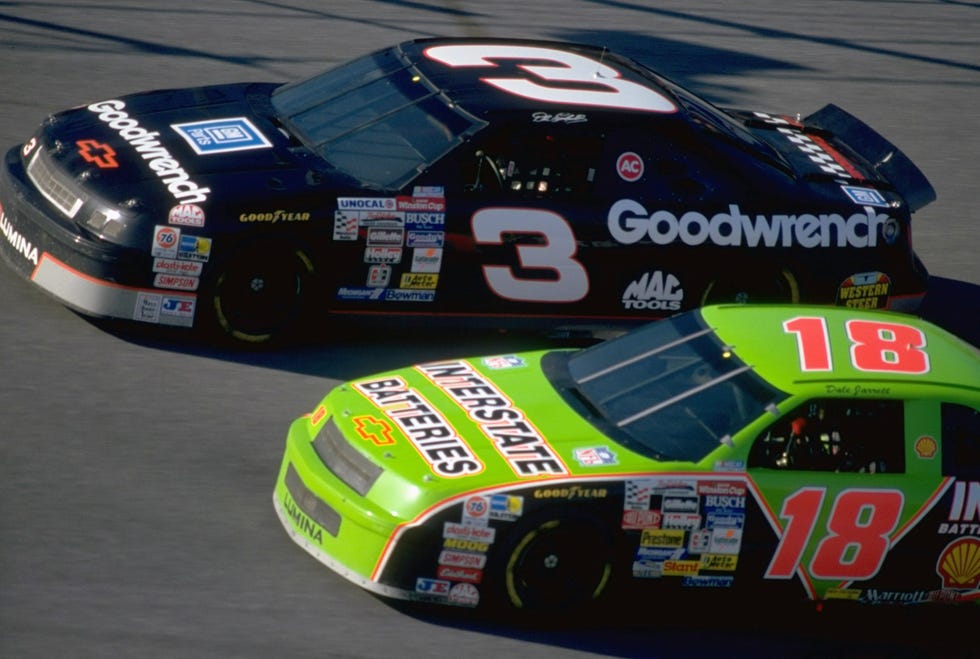 Bill Frakes//Getty Images
Dale and Dale, neck and neck at the 1993 Daytona 500.’ expand=
The next time the elder Jarrett saw Earnhardt he apologized to him for the final lap call. Earnhardt told him it was OK, because he was a father, too.
One of six children, Jarrett was born Oct. 12, 1932, near Newton, North Carolina, and grew up on a 300-acre farm. About 160 acres were used for crops, while the rest was in woods, providing the trees needed for the family’s sawmill business. Initially, Jarrett’s father didn’t want him racing because he viewed the drivers as “either bootleggers or fools” and he didn’t see how his son could gain any respect in the community by participating with them. Jarrett first raced under an assumed name, but after he won an event, his father told him if he was going to race, to use his own name.
Jarrett never had an issue with his three children’s involvement in racing.
Jarrett’s younger son, Dale, won the 1999 NASCAR Cup championship driving for team owner Robert Yates. Before retiring, he won 32 races. He was inducted into the NASCAR Hall of Fame in 2014.
Jarrett’s older son, Glenn, competed in both the Cup Series and NASCAR O’Reilly Auto Parts Series before turning to broadcasting.
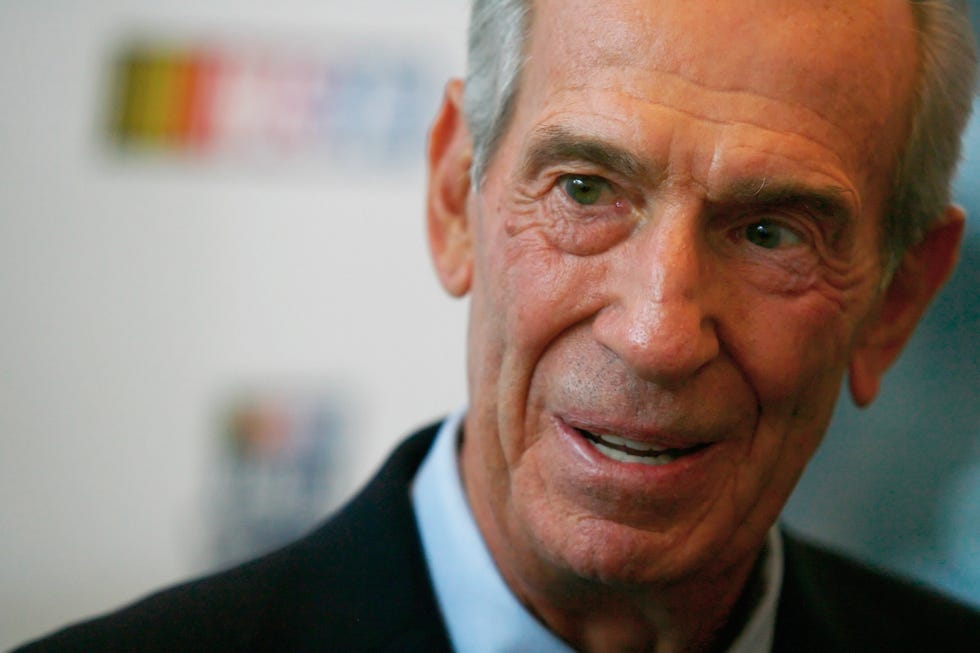
Jason Smith//Getty Images
Jarrett’s only daughter, Patti, was employed by U.S. Tobacco Company where she handled public relations for Benny Parsons and Phil Parsons. Her husband, Jimmy Makar, was Joe Gibbs Racing’s senior vice president of racing operations.
Ned Jarrett was preceded in death by his wife Martha, who died Feb. 5, 2023. They were married for 67 years.
In January 1963, The Associated Press interviewed Ned Jarrett about the business of stock car racing. He told The AP the following:
“There’s very little glamour in this business of stock car racing. It is hard work. To make money in it, you’ve got to run your team like you would any other business. You’ve got to match dollars that go out with dollars that come in. You can’t live on fame.”

A North Carolina native, Deb Williams is an award-winning motorsports journalist who is in her fourth decade covering auto racing. In addition to covering the sport for United Press International, she has written motorsports articles for several newspapers, magazines and websites including espnW.com, USA Today, and The Charlotte Observer. Her awards include the American Motorsports Media Award of Excellence, two-time National Motorsports Press Association writer of the year, and two-time recipient of the Russ Catlin award. She also has won an award in the North Carolina Press Association’s sports feature category. During her career, Deb has been managing editor of GT Motorsports magazine and was with Winston Cup Scene and NASCAR Winston Cup Scene for 18 years, serving as the publication’s editor for 10 years. In 2024 she was inducted into the NMPA Hall of Fame.