
Eos SENOLYTIX says new preclinical findings highlight body composition and healthy aging as the next frontier in obesity medicine.
A new set of preclinical findings from Eos SENOLYTIX is adding a longevity perspective to one of medicine’s largest and fastest-growing therapeutic areas. Presented today at the Sachs 2nd Annual Obesity & Cardiometabolic Innovation Forum, the data suggest that how weight is lost – and what happens after treatment ends – may matter more than the number on the scale.
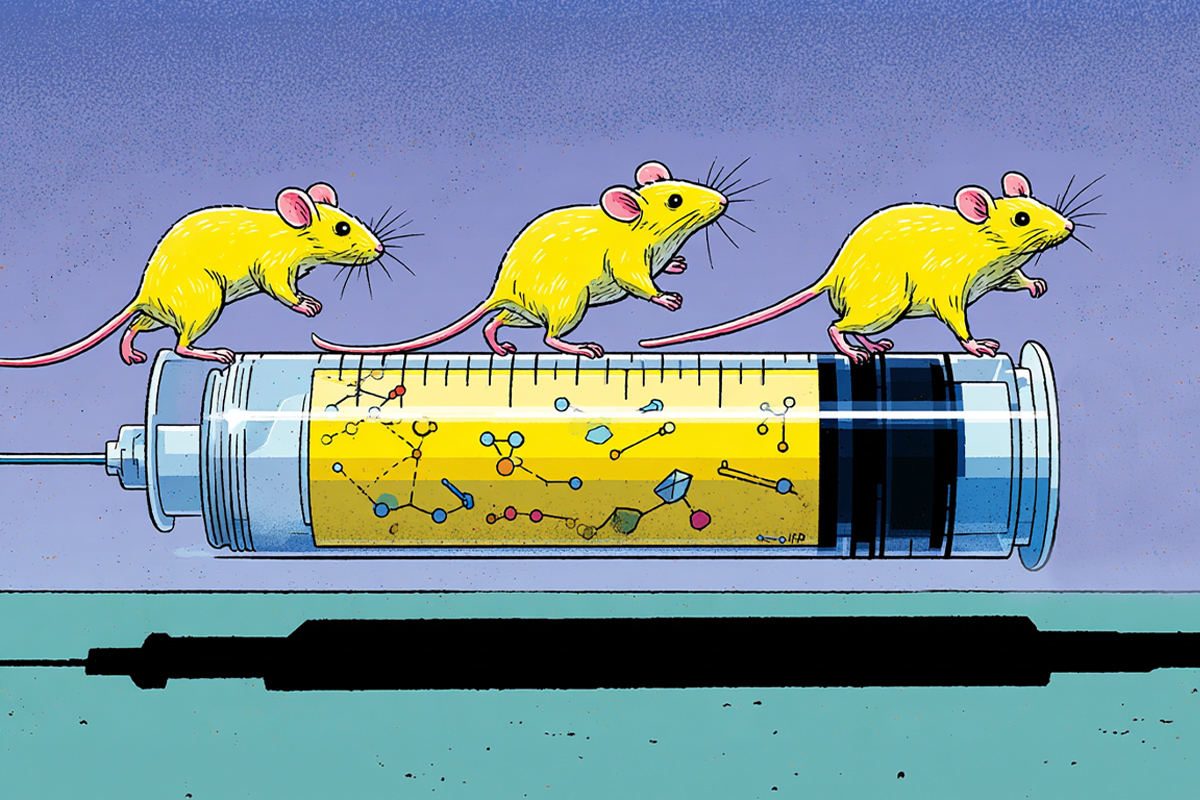
The Houston-based biotech reported long-term mouse data – from studies involving more than one year of treatment and observational findings – comparing its mitochondrial-targeted geropeptide candidate PTC-2105 with semaglutide, both as monotherapy and in combination. Differences were found not only in later-life body composition but also in healthspan and achievable lifespan. Among the observations highlighted by the company was evidence suggesting that mice previously cycled on and off semaglutide appeared more likely to experience an accelerated form of late-life decline associated with reduced lean mass and a sarcopenic phenotype.
Longevity.Technology: The important point here is not that a mouse study can or should be treated as a direct forecast of human outcomes; it cannot. Biology has a habit of becoming considerably more complicated once humans enter the picture. What it does provide, however, is a glimpse of questions that obesity medicine has not traditionally been designed to ask.
GLP-1 therapies have transformed the treatment landscape by delivering clinically meaningful weight loss, but weight is a blunt instrument – useful, certainly, but rather like judging an orchestra by its volume. Body composition, physical function, lean mass preservation, frailty risk and what happens after treatment stops are all part of the healthspan equation, and they become more important as obesity care moves from short-term weight reduction toward long-term management across aging populations.
This is where the tale of two paradigms begins to matter: conventional obesity medicine has tended to focus on fat loss, metabolic markers and cardiometabolic risk, while geroscience asks what kind of organism is left behind after intervention. Less fat is good. Less muscle is not. If the next phase of obesity therapeutics is to be judged by healthy longevity rather than pounds alone, then the field will need to look beyond BMI and toward the harder, messier biology of resilience – where muscle, mitochondria and the dynamics of aging are not lurking in the background but front and center as main characters in the plot.
Beyond the scale
Eos is developing a platform of mitochondrial-targeted gerotherapeutics that they call MitoXcel geropeptides and which are designed to address underlying biological mechanisms of aging rather than individual disease pathways. Its lead candidate, PTC-2105, is designed to simultaneously restore mitochondrial membrane potential while selectively triggering apoptotic self-elimination of the majority of senescent cells throughout the body.
According to the company, long-term studies in naturally aging mice demonstrated reductions in fat mass greater than those experienced with GLP-1 therapy, alongside increases in lean mass and significant improvements in physical performance, all achieved without directly targeting either fat or muscle regulatory pathways. Unlike GLP-1 receptor agonists, which are associated with both fat and lean tissue loss, Eos argues that its approach may improve overall body composition while preserving functional capacity.
The distinction is increasingly relevant as obesity medicine evolves. While substantial weight loss obviously remains an important clinical goal, growing attention is being paid to the proportion of lean tissue lost during treatment, particularly in older adults who may already be vulnerable to sarcopenia and frailty.
A question of rebound
Among the findings presented, one observation draws particular attention.

Eos reported that semaglutide-treated animals regained lost weight within one to two weeks of treatment discontinuation, while animals treated with PTC-2105 experienced an attenuated rebound that only tracked back to control levels after approximately 10 weeks. More strikingly, the company observed that mice previously cycled on and off semaglutide later entered what it describes as an accelerated “terminal decline of aging” characterized by rapid weight loss and reduced lean mass in the period just preceding death.
By contrast, animals treated with PTC-2105 appeared less susceptible to this pattern.
The findings remain preclinical and require further investigation. Even so, they touch on a question that has become increasingly relevant as millions of people begin long-term treatment with GLP-1 medicines: what are the biological consequences of repeated cycles of weight loss and regain over time with GLP-1s? After all, it is known that patients will often stop therapy for intervals of time due to side-effects, only to restart them again when they quickly regain lost weight. While researchers have known that patients end each cycle with less muscle mass than the one before, until now, it has been unclear as to what the actual price in healthspan might be levied for this diminishing muscle mass.
The data presented by Eos puts a stark, potential cost on this very equation – noting that across the board, an uncomfortable 25% to 40% of total weight loss during GLP-1 therapy is consistently comprised of lean mass. In Eos’s models, this muscle depletion maps onto a heightened risk of that terminal decline, suggesting that the long-term biological invoice for cyclical weight management may be far higher than previously assumed. It is a provocative signal, and while animal models cannot replace the definitive proof of human clinical trials – which the company plans to initiate in 2027 – it reframes the entire discussion around the hidden vulnerabilities of current obesity care.
 From obesity to healthspan
For Dr Kevin Slawin, founder and chief executive officer of Eos SENOLYTIX, the broader implication is that obesity and aging should not be viewed as separate fields.
“We believe the obesity field will increasingly move beyond BMI and total weight loss to focus on the achievement of an optimal body composition – particularly directing attention towards effects on visceral fat and lean mass – which are important predictors of overall health and long-term survival,” he said, adding that a true gerotherapeutic should provide a “lifespan extension dividend” resulting from meaningful improvement in healthspan across a broad range of disease pathways. This is consistent with what Eos has seen in its long-term studies of PTC-2105 in treatment and control groups followed for more than a year.
 Kevin Slawin MD is the Founder and CEO of Eos SENOLYTIX
The data points to a distinct physical divergence.
“In multiple well-controlled preclinical studies in naturally aged mice, PTC-2105 preferentially reduced overall and visceral fat while increasing lean mass and improving multiple measures of physical function, all simply by targeting the underlying mitochondrial mechanisms of aging,” he added.
Slawin argues that the next phase of obesity therapeutics will require a deeper understanding of aging biology itself.
“The major obesity players have transformed the treatment of obesity because they understand obesity exceptionally well,” he told Longevity.Technology. “What they have not historically been built to study is aging, which requires the preclinical models and patience to perform very long-term studies, and the complex interplay between aging, muscle preservation and long-term resilience. What seems increasingly clear is that in the context of aging, GLP-1s may expose certain vulnerabilities both during treatment and even after the treatment ends. That may prove to be an Achilles heel.”
Just as in classical Greek tragedy, the flaw is often not a lack of strength, but a failure to see the vulnerability hidden within it.
A broader therapeutic horizon
In additional insights gleaned from these long-term studies, the company reported a statistically significant survival benefit after 66 weeks of treatment with PTC-2105, when the mice surpassed an age of 146 weeks – notably, 40% of the mice in the 25 mg/kg cohort remain alive and active in this ongoing study, whereas the control group reached 100% mortality by week 137, just short of the published maximum lifespan of these C57Bl/6 mice of ~145 weeks.
Thus, more than just extending survival compared to controls, PTC-2105 pushed survival past the known limits of lifespan of C57B/6 mice, showcasing its profound gerotherapeutic potential.
Those findings sit squarely within the ambitions of geroscience itself. The goal is not merely to treat obesity, nor even to extend lifespan, but to improve the quality and functionality of later life by targeting the biological processes that drive aging across multiple systems simultaneously.
Where the fields converge
The commercial success of GLP-1 therapies has changed the conversation around obesity. The emergence of gerotherapeutics may change it again.
As researchers begin to examine obesity through the lens of healthspan, new endpoints are likely to emerge alongside familiar ones. Weight will still matter. So will metabolic health. Yet questions of muscle, function and resilience are increasingly moving from the margins toward the center of the discussion. The most interesting developments may occur where those worlds meet.