
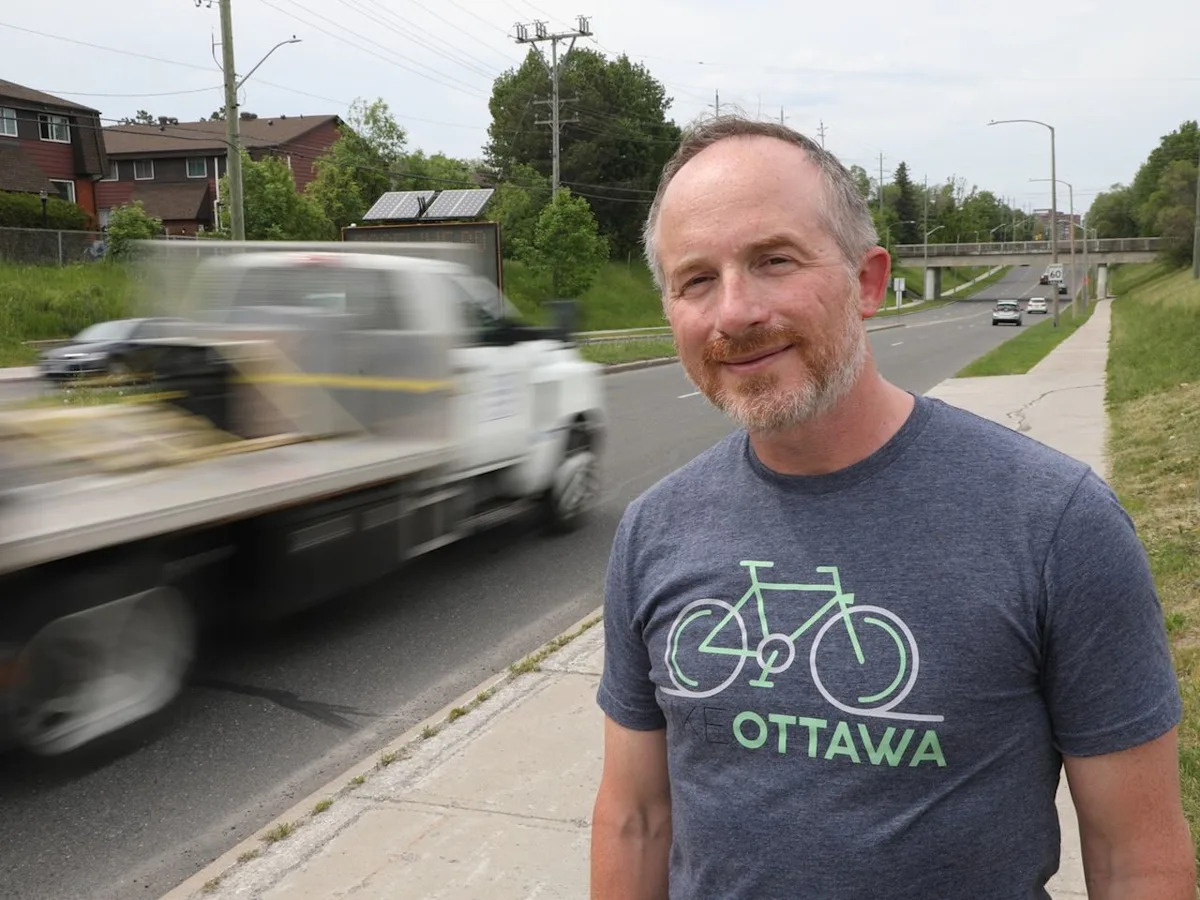
Chris Hircock’s daily commute would start with a one-kilometre walk to Broadview Public School in the Nepean High School complex in Westboro. He’d drop off his daughter there.
Hircock would then bike to a Department of National Defence building downtown from the family’s west-end home.
By far the most dangerous part of the commute was in the area immediately around his daughter’s school, the marine systems engineer says.
Hurried parents. School-zone speeding. Unsafe U-turns.
“All rational people otherwise doing very irrational things,” Hircock said, adding this was what inspired him to co-found Vision Zero Ottawa.
The six-month-old not-for-profit organization is a mixture of parents and working professionals who are pushing municipal and provincial governments to implement traffic safety changes to an Ottawa road system that they say inherently prioritizes drivers.
“Our communities and our city are really not designed for children to move around safely or older kids to move around independently,” Hircock said in an interview.
For Hircock and other local advocates, part of having safer roads is in the infrastructure. They say the city needs to double down on the strategy to reach its “Vision Zero” goal.
What is Vision Zero?
Vision Zero is a global movement that essentially asks governments to “prioritize human life over driver convenience.”
The world-wide road traffic safety project, first introduced in 1995 by Sweden’s government and the Swedish Transport Administration, says no loss of life or serious injury on the roads is acceptable.
The strategy advocates for better road design and policy at systemic and cultural levels. Vision Zero has proven to be successful across Europe and is gaining momentum in major North American cities like Toronto.
The national capital formally joined the pledge in late 2019, when the City of Ottawa published its most recent road safety action plan.
The Road Safety Action Plan 2020-2024 adopted Vision Zero by setting a goal to reduce traffic-related fatalities and serious injuries to zero by 2035.
‘Short-term’ safety goals
As part of its Road Safety Action Plan 2020-2024, Ottawa also set a short-term goal to reduce its average annual rate of fatal and major-injury collisions by 20 per cent by 2024.
Valerie Smith, director of road safety programs at Parachute, a national charitable organization dedicated to injury prevention, said the city reached that goal.
Smith, who overseas and manages Parachute’s road safety initiatives, said that Vision Zero was “the long game” and that Ottawa had decreased serious injury and death rates overall.
But Smith said a five-year-increment comparison was a better representation of the state of road safety in Ottawa.
Between 2019 and 2023, there were 598 collisions — about 12 per 100,000 population — resulting in serious injury or death, according to 2024 data from the City of Ottawa.
Smith said the five-year average was down from the period between 2013 and 2017, when there were 743 fatal or serious injury collisions.
Twenty-per-cent reduction ‘not enough’
Hircock questions the principle of setting a 20-per-cent reduction goal.
“It’s the same as planning for 80 per cent as being an acceptable fatal and major injury rate,” he said.
“If our roads were a workplace, what workplace would accept having death or injury as just an acceptable way of doing operations? And yet Ottawa has a written policy for 20-per-cent reduction in fatal major injuries per year.”
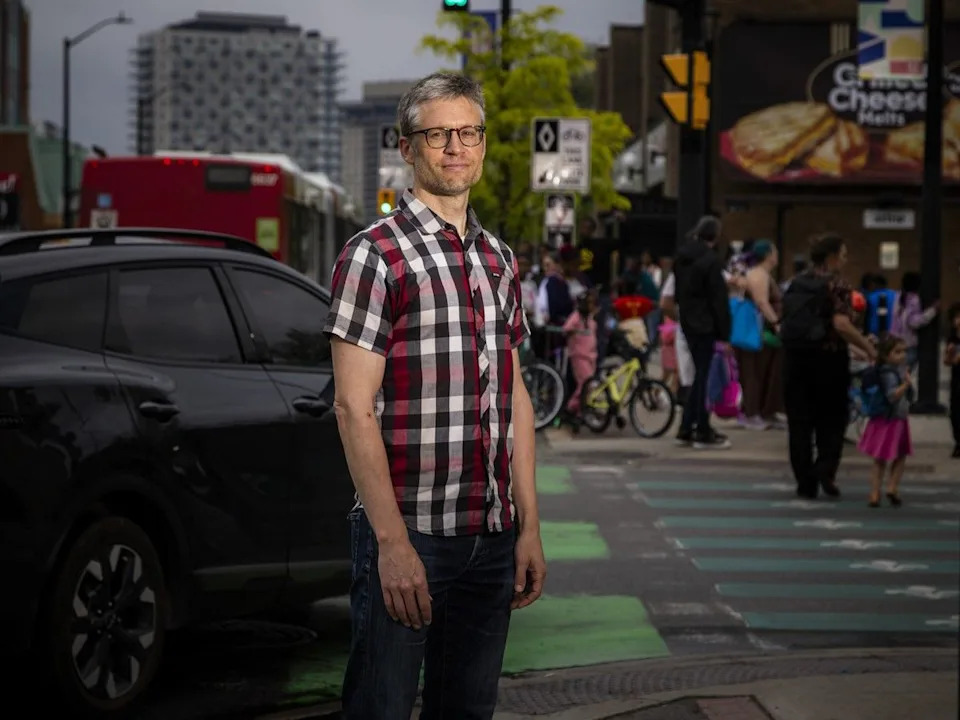
William van Geest, executive director of Ecology Ottawa, says the City of Ottawa continues to build roads and intersections that inherently prioritize drivers.
William van Geest, executive director of Ecology Ottawa, shares that sentiment. He says the city continues to build roads and intersections that inherently prioritize drivers.
He says this further reinforces existing “road hierarchy,” which puts convenience for drivers ahead of community accessibility.
Van Geest gave the example of construction of Laurier Avenue and Elgin Street. Although the intersection is theoretically meant to increase safety for “vulnerable road users like people on bicycles and pedestrians,” crossing time increases because the two roads are wide, increasing pedestrian risk, he said.
Nine fatalities from collisions so far this year
The Ottawa Police Service reported an increase in deaths caused by vehicle collisions in the first four and a half months of this year.
According to the OPS Traffic Collisions Snapshot, there were nine reported fatal injuries between Jan. 1 and May 16, up from five during the same period in 2025.
Meanwhile, non-fatal injuries decreased to 359 from 437 (18 per cent), according to the snapshot.
Families left ‘picking up the pieces’
Peter Clark. Samantha Hicks. Tammy Lynn Keays.
Those are three of the names of those who have lost their lives this year in Ottawa because of serious collisions, just part of the story behind the 2026 statistics reported by police.
“Even injuries of some kind can be life-altering for people,” Hircock said.
He said Vision Zero Ottawa had conversations with families who lost loved ones or had dealt with injuries.
“It changes their life, how they work, how they go about their daily activities, and we see on Ottawa’s roads that families are left picking up the pieces,” he added.
Hircock’s daughter is now in Grade 9, so he doesn’t walk her to school anymore, but he still worries for her safety.
“Safety is not a shared responsibility because it’s not shared in consequence,” he said.
Related
Our website is your destination for up-to-the-minute news, so make sure to bookmark our homepage and sign up for our newsletters so we can keep you informed.