
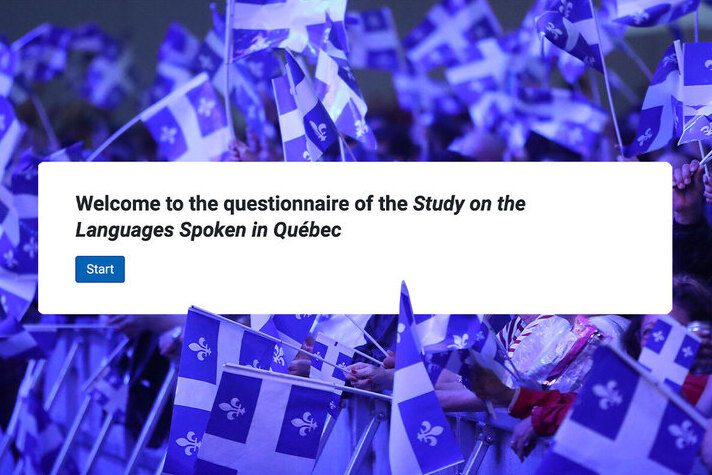
Two government surveys landed in some Quebec mailboxes this spring. One was mandatory: the federal census. The other, a Quebec language survey sent to 75,000 randomly selected households, was not.
Yet some recipients were unsure whether participation in the provincial survey was required. Many invitation letters did not explicitly state that it was optional and warned recipients they would receive followup calls if they did not respond.
Readers contacted The Gazette about the survey, and the Institut de la statistique du Québec says it has also fielded questions about whether participation was mandatory, along with complaints about repeated letters and phone calls.
The concerns come amid heightened sensitivity around language policy under the Coalition Avenir Québec government.
In recent years, the government has posted notices limiting access to English content on provincial websites and briefly proposed tying English-language health care to proof of historic anglophone status. Last week, it received a recommendation from a government-appointed language adviser to sharply limit English in online services, which it ultimately rejected.
The language survey — containing detailed questions about language use in various settings — has prompted questions about how it is conducted, why it was launched and how the results will be used.
Here’s what you need to know.
What is the survey?
The annual survey, launched in 2024 and now in its third year, is conducted by the province’s official statistics agency on behalf of Quebec’s French Language Ministry to assess the use of French, English and other languages.
It includes dozens of questions.
Most are about languages, including those spoken at home, at work, with friends and used when sending private text messages, listening to music, following the news, shopping online and posting on social media.
Others delve into more personal details, including occupation, household size and type, birthplace (and parents’ birthplace), years living in Quebec, income and postal code.
Respondents can answer online or call a toll-free number and complete the questionnaire with the help of an ISQ interviewer. It takes about 15 minutes.
The survey is being conducted between November 2025 and July 2026.
Why is the government conducting the survey?
The ISQ says the linguistic survey will help it collect “reliable and objective data on the languages used by Quebecers in various contexts.”
The questionnaire is part of the CAQ government’s intensified focus on the French language, with polls finding that francophone Quebecers are worried about the future of the province’s majority language.
The CAQ has doubled the budget of the Office québécois de la langue française, which is increasingly conducting inspections and undercover visits to stores. The government also hired its first French language commissioner, who conducts his own linguistic probes.
What is done with the results?
The French Language Ministry uses the findings in Quebec’s “Dashboard on the Linguistic Situation,” the ISQ says.
Launched last year, that web page shows key language metrics over time.
Why isn’t it clear that it’s optional?
The ISQ sent initial survey letters to households in three waves.
“Unfortunately, there was an oversight in the letters sent in November 2025 (the first wave), and the situation was corrected at the beginning of January,” ISQ spokesperson Manon Leclerc told The Gazette.
People who did not respond to the initial letters received two followup letters.
Copies of these letters that were seen by The Gazette also did not mention that the survey is not mandatory.
And some wording could easily lead recipients to believe participation is compulsory.
For example, the letters cite the Act respecting the Institut de la statistique du Québec as their legal authority, giving them a quasi-mandatory tone. They also mention that if respondents don’t answer, someone from the ISQ “will call you to obtain your answers.”
On the ISQ’s frequently-asked-questions page, the agency mentions that its surveys of individuals are “usually voluntary.”
Why does the ISQ keep trying to contact people?
Failure to answer one of the three mailed letters results in phone calls from the ISQ.
The agency says it continues to contact people unless they indicate they do not want to participate.
“In 2024–2025, the ISQ conducted 68 surveys, totalling 232,726 completed questionnaires,” Leclerc said. “Given the volume of people solicited, it is normal that some may be inconvenienced by reminders.”
How does the agency know to send letters in English to anglophones?
The ISQ contacts most people in French. But it sends English letters to those who prefer to receive correspondence in English from the Régie de l’assurance maladie du Québec, the province’s health insurance board.
Leclerc said the ISQ wants to ensure the entire population is adequately represented.
“The language used in communications with each selected person is critical,” she said. “It allows respondents to fully understand the instructions, definitions and vocabulary used in the questionnaire.”
That “has a direct impact on the quality of responses, the participation rate and, ultimately, the reliability of the results.”
Will the data be used in any other way?
The ISQ says answers “will remain confidential and will only be used for statistical purposes.” The agency says its ethics committee has reviewed the survey to “ensure it is conducted in a way that respects participants and protects their dignity.”
Why should you participate?
“Through its surveys, the ISQ enables Quebec ministries and organizations to obtain reliable data, allowing them to make informed decisions regarding policies, programs and issues affecting Quebec society,” Leclerc said.
In the 2025 language survey, 44,634 of the 75,000 people contacted participated.
Editor’s Picks

A Montreal native, Andy Riga has reported for The Gazette since 1991, covering technology, transport, business, and now politics, language and other Quebec issues.
Montréalais d’origine, Andy Riga est journaliste à la Gazette depuis 1991. Après avoir couvert la technologie, le transport et les affaires, il traite aujourd’hui de la politique, des enjeux linguistiques et d’autres sujets d’actualité au Québec.
ariga@postmedia.com