
PLACER COUNTY, Calif. — In a nook of Dusty Baker’s brightly lit kitchen, there is a framed photo on the wall featuring Jimmy Stewart, Donna Reed and some rosy-cheeked children ’round the Christmas tree.
The picture is unmistakably the final scene from “It’s a Wonderful Life,” which, come to think of it, would have made a heck of a name for Baker’s autobiography.
“I know that,’’ he says softly. “That was gonna be the title, I swear.”
Baker, who turns 77 on June 15, bowed out of baseball with a happy ending that indeed seemed Capra-esque (that’s Frank Capra, not Buzz). Baker won a World Series as a manager in 2022, after 25 years of trying, likely securing future residence in the Baseball Hall of Fame with an induction that could come as soon as next year.
With his ideal title spoken for since 1946, the manager landed on another name for his own nostalgic (and surprisingly painful) look back at a lifetime of tragedy and triumph. “Crossroads: A Memoir in Baseball and Life” will be released by Crown Publishing as a 416-page whopper on Tuesday.
During a visit by The Athletic to Baker’s house about 30 miles northeast of Sacramento, there is the Hollywood photo, yes, but also a wall dedicated to music memorabilia from the likes of the Rolling Stones, Tom Petty, Carlos Santana and dear friends John Lee Hooker and Elvin Bishop.
His two beloved hunting dogs, Gracie and Rylie, are on this level, too, and Baker has to intervene to make sure one of them doesn’t devour a reporter as a midday snack. “It’s OK, he’s with daddy,” he explains to the snarling one.
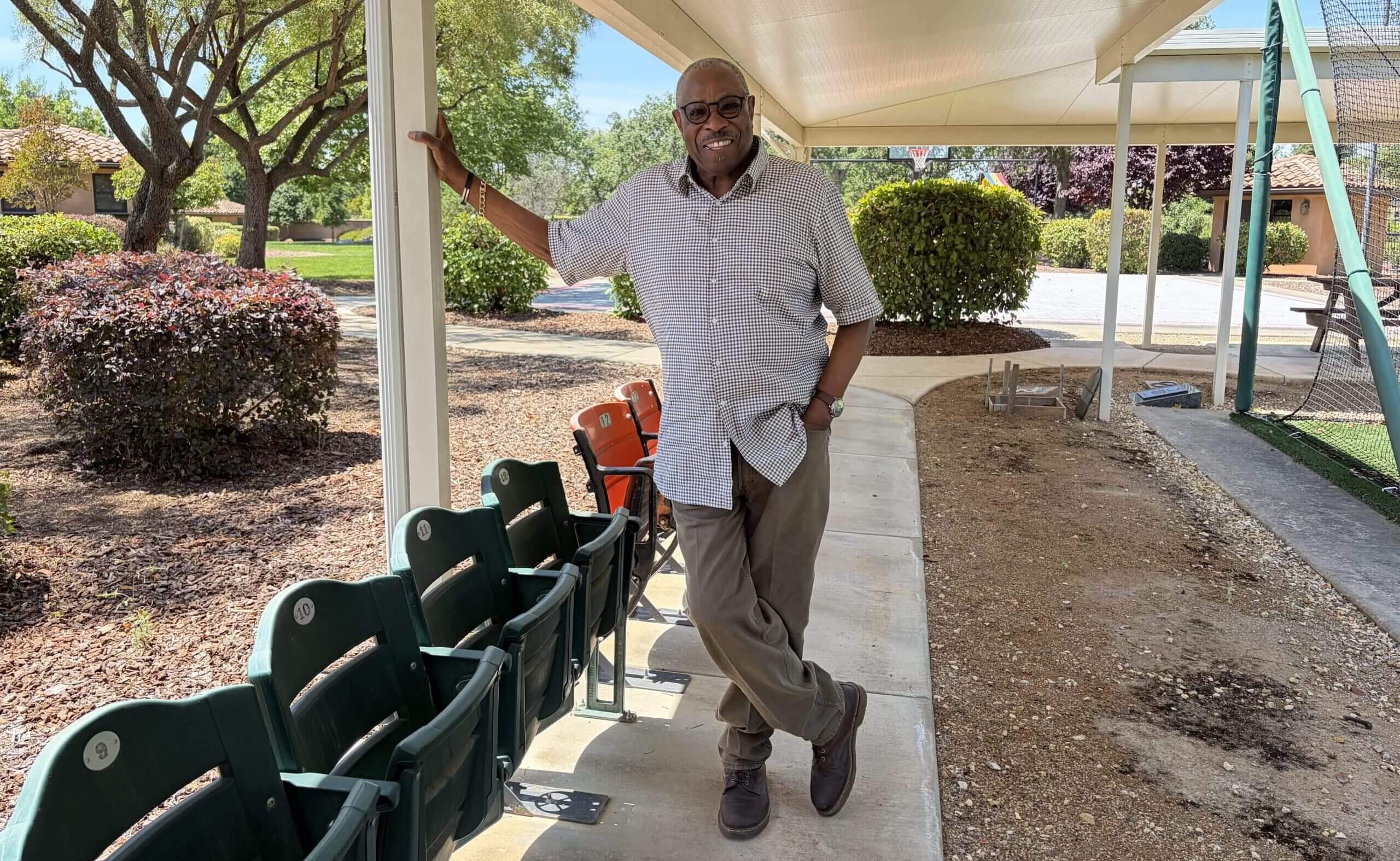
Dusty Baker relaxes in his garden in front of stadium seats from some of the ballparks he visited during a lifetime in the majors. (Daniel Brown / The Athletic)
Oddly, there is no trace of Baker’s baseball career, a surprising decor choice for someone whose hardware includes a Gold Glove, two Silver Sluggers, an NLCS MVP and three Manager of the Year awards.
Surely, there are a few mementos he’d want to display.
Baker smiles wryly.
“Come with me,” he says.
We are in an elevator going up, which is as good a place as any to introduce how Baker’s childhood forever shaped his worldview.
This is an elevator that takes passengers from the first floor of his house to the second floor, and it exists solely because of a day in the early 1960s when Baker’s ostentatiously rich schoolmate decided to be a snot. “The kind of kid who would make the all-star team in place of me, just because of who his dad was,” Baker writes in the book.
As detailed in the memoir, Dusty and his dad, Johnnie B. Baker Sr., were on a gardening job at a stately home in Riverside, Calif., when the kid from the wealthy family called Dusty over. “Pick up that piece of paper,” he ordered.
Dusty was gearing up to respond with his fists when his dad approached with calm resolve. “You go over there, and you pick up that piece of paper,” Johnnie B. told his son. “We need this job. You hear me?”
But the lesson didn’t end there.
“Then on Monday, when you’re back at school, and they’re playing flag football, well, you’ll be playing tackle. You just run right over him.”
Dusty did as instructed on both counts, clearing the debris and delivering a delayed wallop on the playground. “Oh, man, he didn’t know what hit him.”
Then he made a solemn promise that reverberates even now. You see, that rich kid had an elevator in his house.
“And I remember thinking, ‘someday,’” Baker says.
His words land just as the doors open to reveal the glorious wonders of the Baker family’s second floor. Notably, the first room to the left is a cozy lounge with televisions and recliners. This is where Baker watched games with his aging father before Johnnie B. died in 2009.
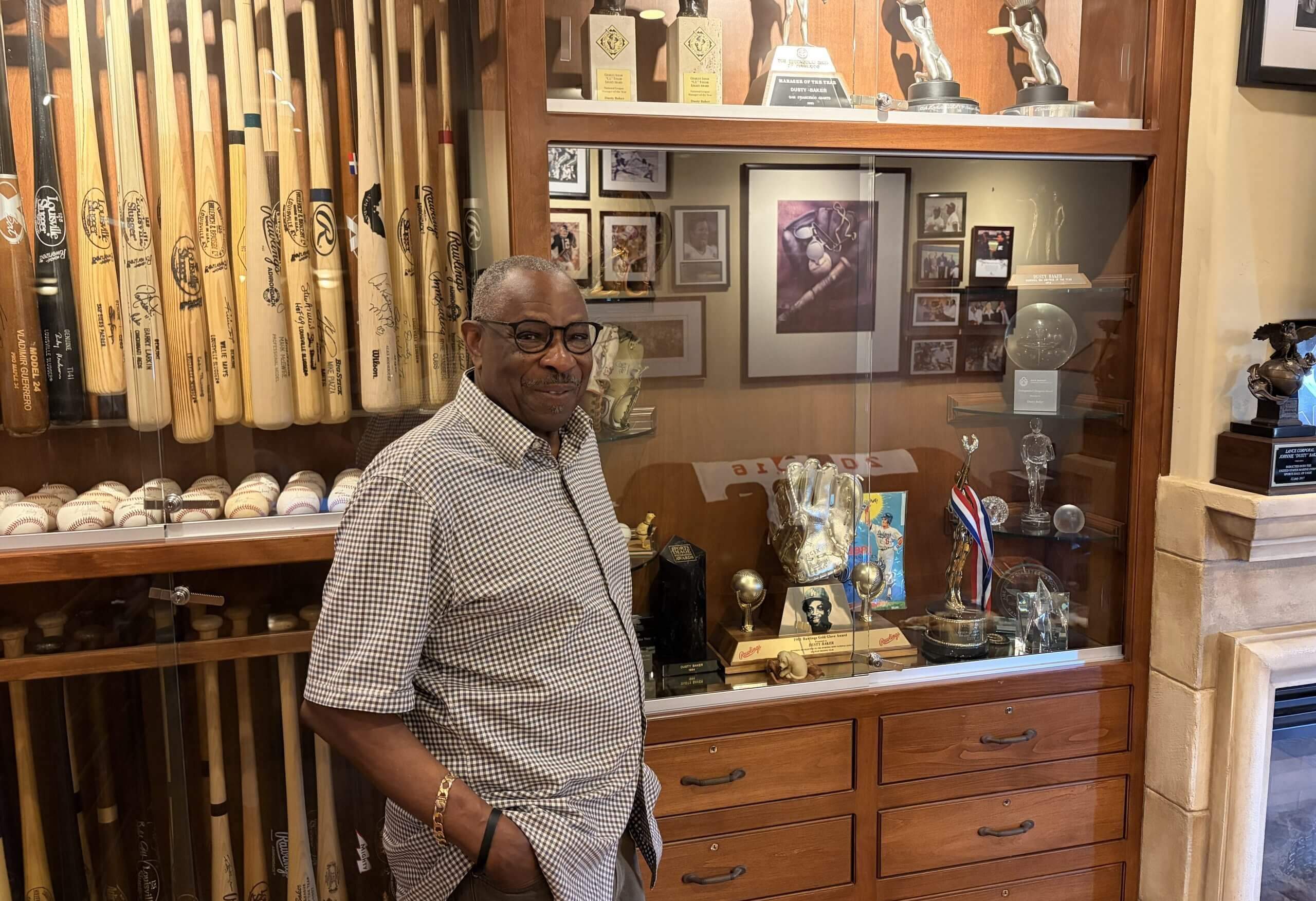
Dusty Baker’s massive and eclectic memorabilia collection dominates the second floor of his home. (Daniel Brown / The Athletic)
Up here, the concern about the lack of baseball relics on display proves laughably misplaced. This is Cooperstown West, lacking only a ticket window and a turnstile. There are hundreds of jerseys, autographed baseballs and game-used bats. There are boundless photos on the walls bringing bygone eras back to life, from the Negro Leagues to the majors, from black-and-white to the Technicolor splendor of the 1970s and ’80s.
And what makes this tour — and “Crossroads”— so much damn fun is that Baker has a personal connection to nearly every face hanging in this 9,000-square-foot home.
Some people name-drop. Baker name-storms. And for every photo we stop to admire, the manager supplies a backstory like a kindly museum docent.
Is that … Satchel Paige? “He used to make me carry his fishing rods.” (The two crossed paths while Baker was in the Atlanta Braves organization, when the Negro Leagues legend insisted on calling him “Daffy,” not “Dusty.”)
Bob Uecker? “Clete Boyer and Bob Uecker bought me and Ralph (Garr) our first suits. And then they took us to the Playboy Club. I was 19!” Baker took a Polaroid photo from that night and sent it back home to a childhood friend, Dennis. His note began, “Man, this is the life.”
Sandy Koufax? Henry Aaron once told Baker that Koufax was the toughest pitcher he ever faced. Then he asked Koufax about his toughest hitter. “Bad Henry,” Koufax replied.
Sadaharu Oh? “That’s when (Oh’s Yomiuri Giants) had spring training with us in L.A. We sat down by the pool and had a discussion about hitting, with an interpreter.”
John Wooden? The famed UCLA basketball coach gave Baker signed artwork featuring his famed “Pyramid of Success” after inviting the Dodgers outfielder over to his house for lunch.
Bill Walsh? When the 49ers coach died, he left many of his papers to Baker, notes he took on preparing for meetings and building a culture of winning.
And on it goes, to absurdity and beyond. Improbably, he breaks out tales of Cool Papa Bell (born in 1903) and Double Duty Radcliffe (1902). There’s also a wall reserved for photos or letters from presidents. (Ronald Reagan, in his letter, told Baker he was “a fine person doing fine things.”)
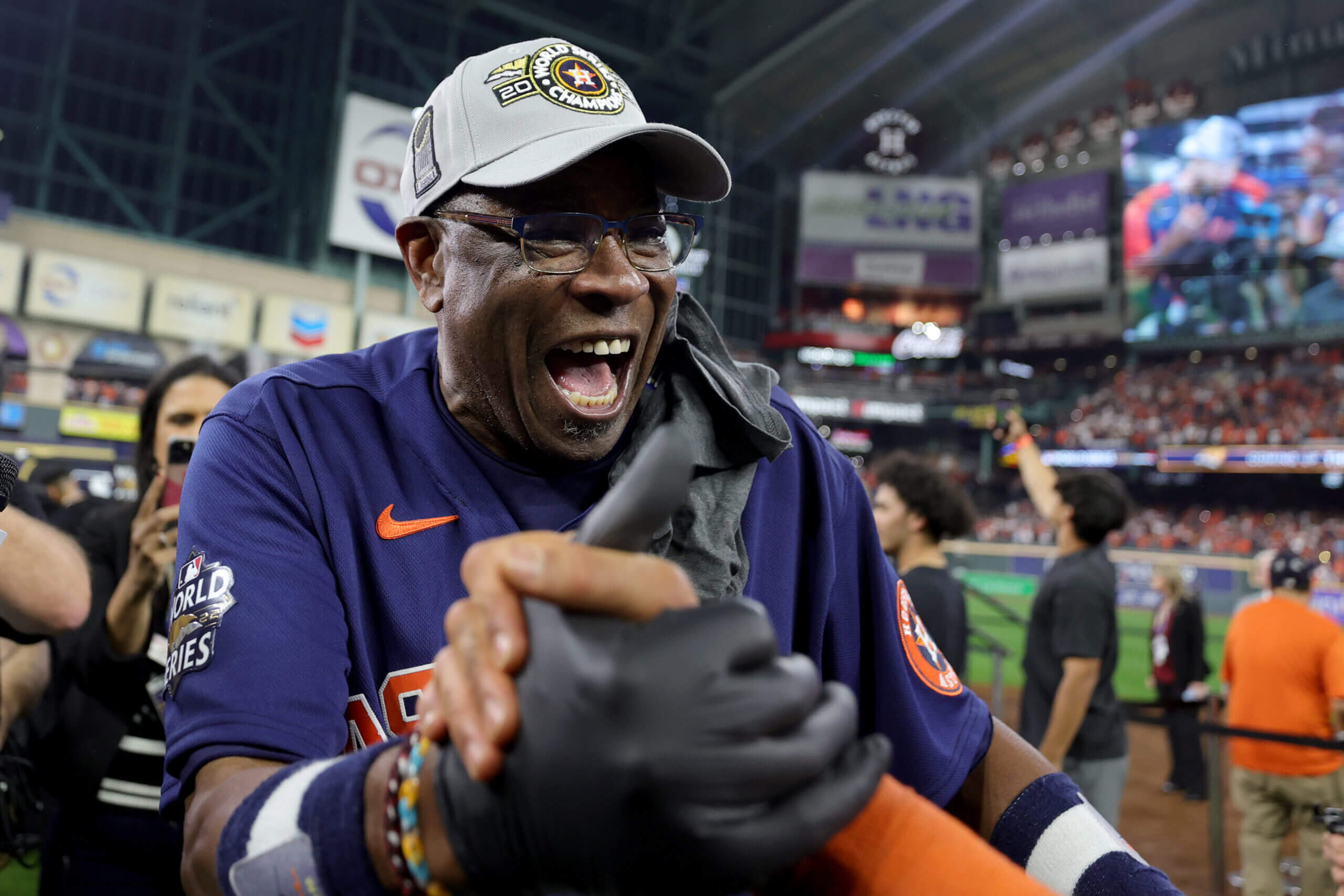
Dusty Baker guided the Houston Astros to the 2022 World Series title after resolving to trust his instincts. (Carmen Mandato / Getty Images)
It can get weird in here. Baker’s collection feels like a cross between the Immaculate Grid and “Hollywood Squares.” One of his display cases features a signed baseball from singer Chris Isaak next to one from former Giants infielder Hal Lanier next to one from model Cindy Crawford next to one from boxer Joe Frazier to … wait, how do you know “Magnum P.I.?”
“I used to hang out with Tom Selleck. We worked out together,” Baker says. “In L.A., you might run into anybody. He was a good dude.”
There’s a framed photo of one of Nolan Ryan’s seven no-hitters signed by Ryan, catcher Alan Ashby, home-plate umpire Doug Harvey, and Baker himself. “I made the last out,” he says.
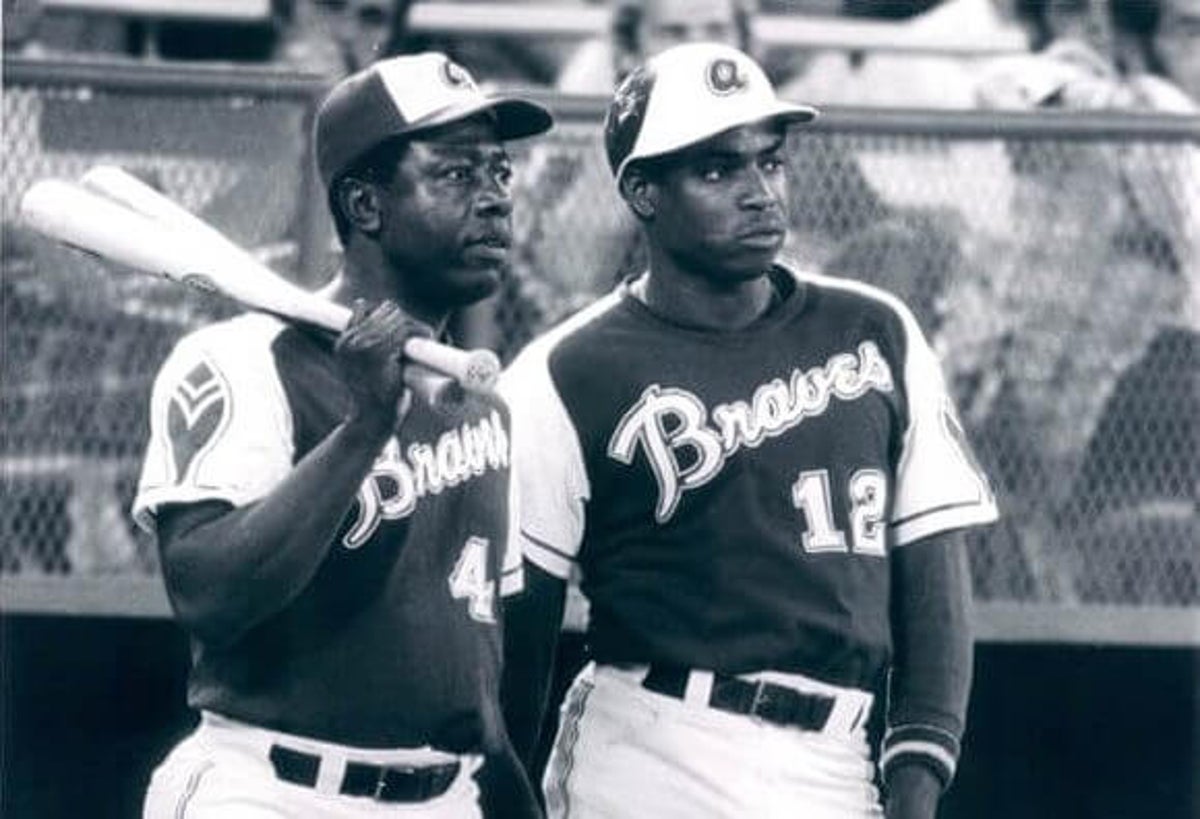
Towering above these encounters, though, is Hank Aaron, the Hall of Famer whom Baker describes in the book as “my baseball dad. He schooled me, and it wasn’t always easy.”
“Crossroads” soars whenever it delves into the profound bond between the taciturn Braves slugger and his young pupil. Aaron was already an all-time great by the time the Braves selected Baker in the 26th round of the 1967 amateur draft, and Hammerin’ Hank more or less adopted him on the spot.
The book recounts that before Baker signed his contract, his mother, Christine, met Aaron at a workout and asked, “Will you look after my son like he was your own son?”
“Yes, I will, Mrs. Baker,” Aaron said.
And soon, Hammerin’ Hank was hammering home lessons that Baker would pass on to his own players for decades to come.
As Baker writes:
My time with Hank on the Braves gave me a foundation for what to be and what not to be — as a ballplayer, as a father, and as a man. Being around Hank on a daily basis was so special, an opportunity to learn and grow. … To go to his room after games was to go to school. To sit and learn from this wise, brilliant man, fifteen years older than me and to absorb from him a sense of what was even possible, if I could learn my lessons well — that was beyond priceless.
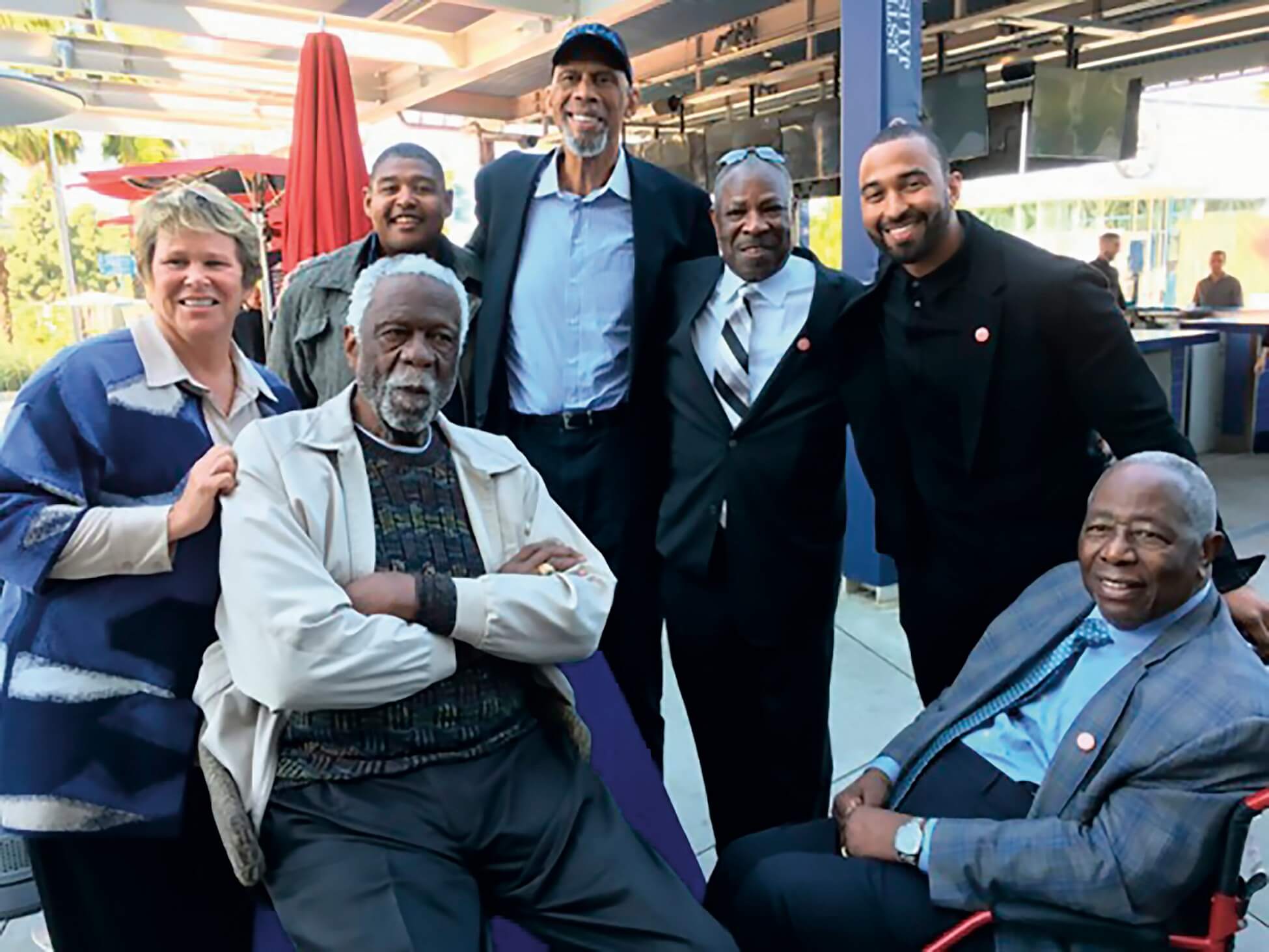
From left, Ann Meyers Drysdale; Bill Russell (seated); actor Omar Miller; Kareem Abdul-Jabbar; Dusty Baker; Matt Kemp and Hank Aaron (seated). (Courtesy of the Baker family)
Over time, this becomes the overriding theme of the memoir. It’s not that Baker met all of these key figures in baseball history; it’s that he listened to them. And, as with that incident with the rich kid, the experience was imprinted on his soul.
“Crossroads” is Baker’s origin story, unspooled one personal connection at a time.
By the time the reader gets to a notable revelation, that Baker’s lone World Series title came after he went rogue and trusted his instinct over the Houston Astros’ baseball operations department, it doesn’t seem so shocking.
After a life like that, why wouldn’t he trust his gut?
I was seventy-three years old, enough to have learned to remember what you’ve learned. Hank taught me that you won in baseball by trusting your feelings. I was going to trust my feelings in this series. I was going to manage with my mind, my heart, and my faith. … I know I should have done some things differently, according to the data, but I didn’t feel it.
The Astros beat the Philadelphia Phillies in six games as Baker became the oldest manager to win a World Series.
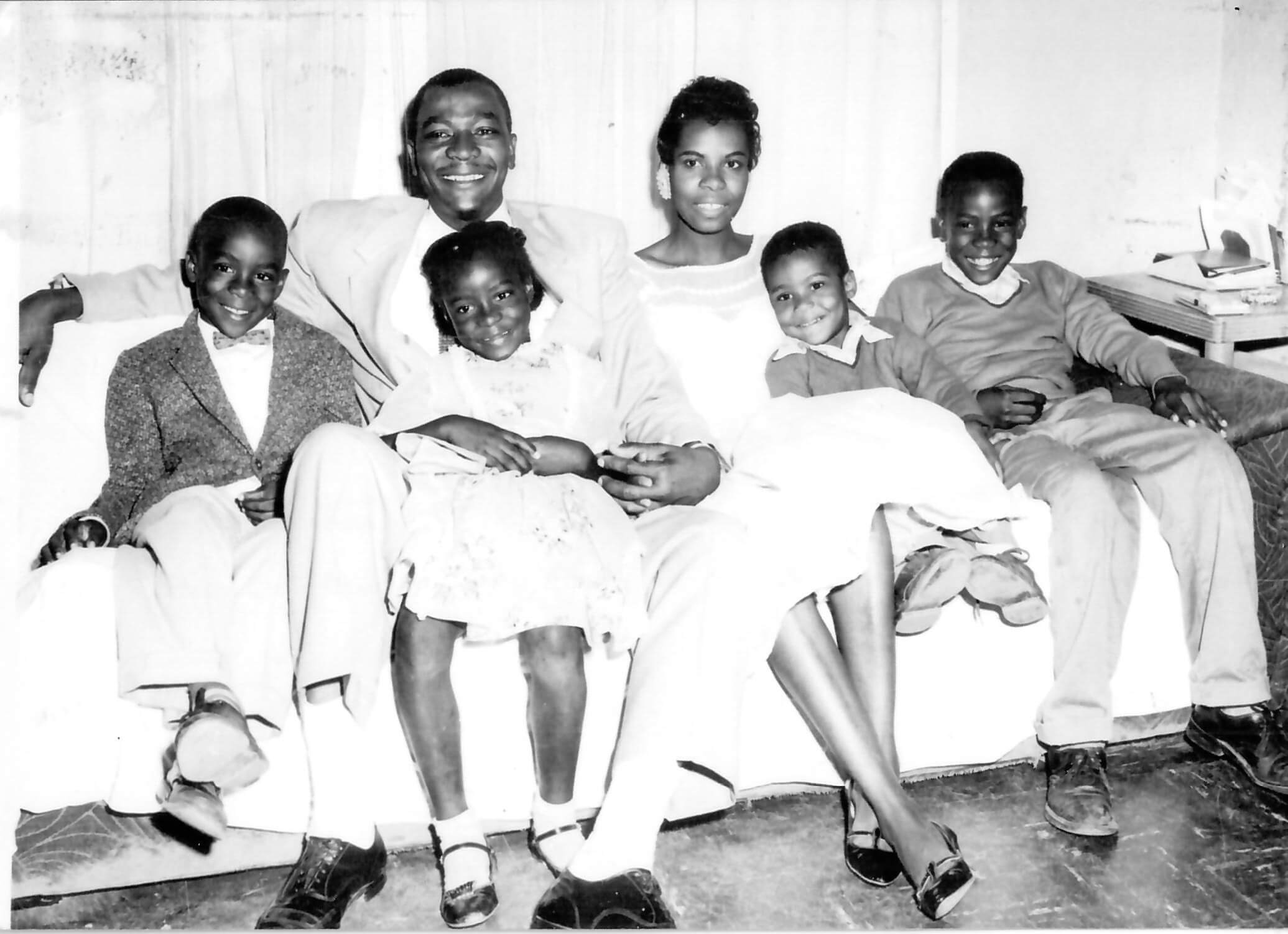
Dusty Baker’s family, from left: brother Rob; father Johnnie B.; sister Tonay; mom Christine; brother Vic; and Dusty. (Courtesy of the Baker family)
One of the reasons that Baker relates to “It’s a Wonderful Life” is that the blissful payoff comes only after unthinkable hardship. The treacly ending makes it easy to forget that the George Bailey character was so despondent that he jumped off a bridge and into an icy abyss.
The movie features a calamitous financial mistake by a family member, multiple near-death experiences and a father struggling to provide for the household. Baker endured all that, too.
Baker glances over at the still from the movie in his kitchen, toward the innocence in the children’s searching eyes. “I know that look,” he says. “My kids were looking at me, and I didn’t know what I was supposed to do and where to turn.
“It’s like when he says, ‘Sometimes, I wish I was never born.’”
In 1987, after retiring as a player, Baker took classes in finance and investing. He got a job as a stockbroker in L.A., but his main mission was saving the investment company he’d founded with his brothers, Rob and Victor.
In “Crossroads,” Baker opens up about just how horribly things went wrong. The Tax Reform Act of 1986 changed several rules relating to allowable tax deductions. A lot of things that Baker and his brothers had been doing that seemed smart were now possibly illegal. “That set us back in a big way,” he wrote.
By the 1990s, that financial wrong turn proved ruinous. Baker explains in the book that he began to hate checking the mail because he “suddenly owed money I hadn’t owed the day before. We’re talking crazy numbers. I went from owing nothing to getting notices claiming I owed millions!
“To this day, I have flashbacks whenever I hear one of those ads on TV or radio talking about the IRS garnishing wages or seizing funds. I lived all that.”
Victor, whom Dusty revered for his brilliant mind, broke under the strain and undeserved guilt. His brother never recovered, as his mental health deteriorated to the point where he lived on the streets in a manic-depressive state. Dusty and Rob would drive around L.A. looking for him in different hotels. Vic Baker died in 2019, and Baker says revisiting his brother’s troubled final years was the hardest part of the book.
“It didn’t break him a little bit. It broke him a lot,” Baker says. “We had 10 or 11 other ballplayers with us (in the investment group) and he felt guilty for all of them. I mean, this had been the best-looking, smartest dude around, you know? He was so sharp.
“I’d see him on the street and he’d say, ‘Hey, man. Leave me alone.’ I kept going back anyway because even though your feelings are hurt, you know it wasn’t really him talking.”
That devastation is one of several surprisingly dark turns in “Crossroads.’”
There are a handful of chilling brushes with the law, sometimes racially charged, such as a night in Shreveport, La., in 1968, when Baker went out to dinner with two married white friends. When the husband stayed behind to pay the bill, Baker and the wife stepped out onto the street. That’s when two cops slammed Baker against the wall: “Boy, don’t you know it’s against the law for a Black man to be on the streets after dark with a white woman?”
In 1980, Baker caught a burglar trying to steal a Porsche out of his garage. Baker chased him down, hauled him into his house and then held his pistol close until the cops arrived. When they got there, they pulled their guns — on Baker. “I live here,” Baker told the cops while pointing at the burglar. “He’s the bad guy.”
There are also parking lot brawls, a scary potential head-on collision while driving with Ralph Garr, a near-fatal stroke, a battle with cancer and a boat on a stormy sea in Mexico.
It wasn’t always a wonderful life.
“All my friends are like, ‘Man, you got nine lives. You might only have a couple left,’” Baker says. “I hope I have more than that.”
It’s peaceful out here in the garden. There are oak trees, grapevines, roses, mandarin oranges, peaches, plums, apricots, kale and collard greens. Baker, as he did with the photos, supplies grand details about each variety as we walk the path.
He also speaks often of the hippies, a loose cabal of free spirits who know where to get just the right rocks and folk art for this 4.75-acre property. The hippies don’t tell Baker where they get the stuff because it’s secret.
The hippies sometimes talk to rocks. Baker likes them very much.
“I’ve never seen two hippies fighting. Have you?” he says. “I’ve seen two drunks fighting, but I ain’t never seen two hippies fighting.”
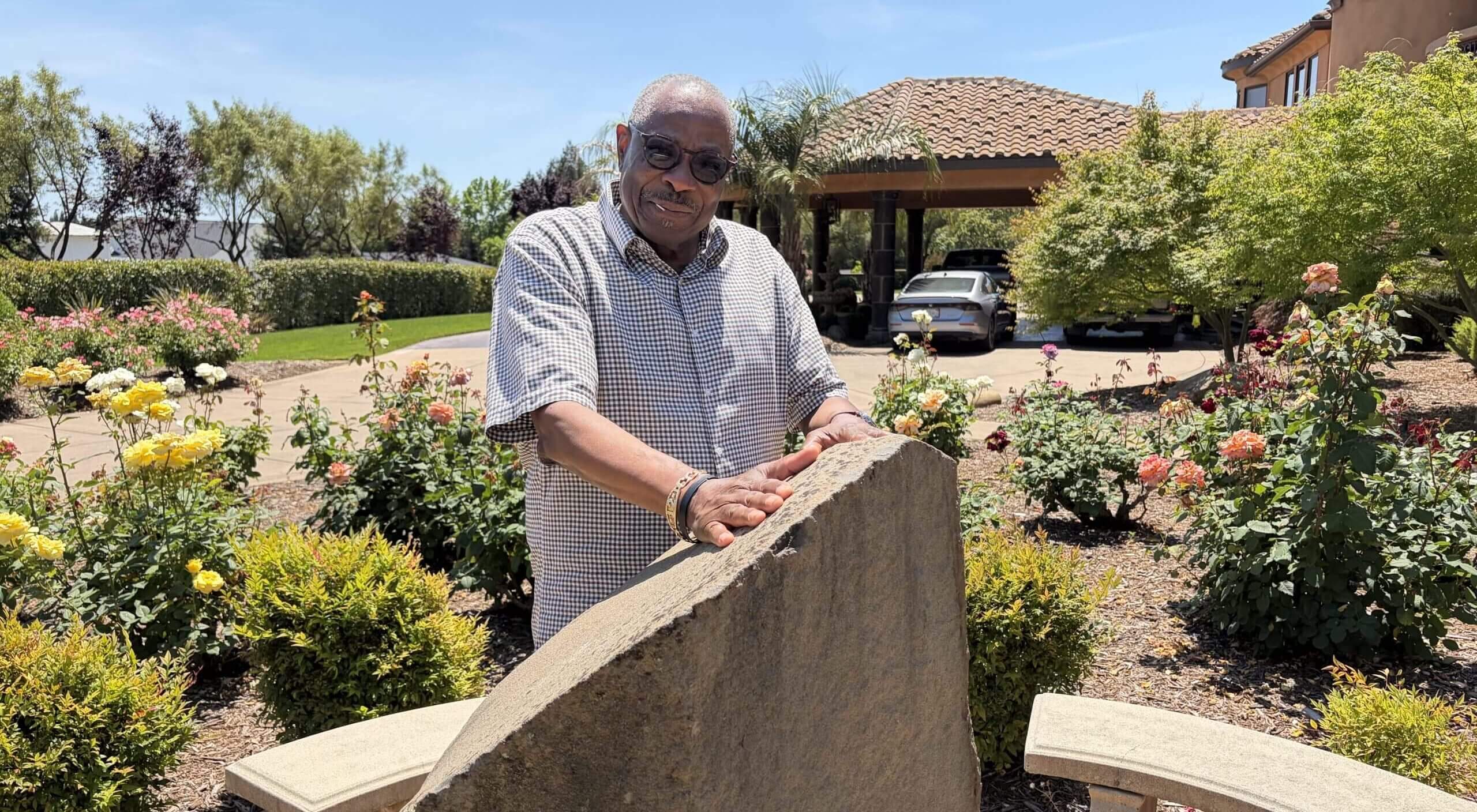
Dusty Baker stands behind his “thinking rock.” (Daniel Brown / The Athletic)
A few years ago, hippies brought him a thinking rock, a concept taken from the 1950s TV sitcom “The Many Loves of Dobie Gillis.” Baker’s wife was there, and baffled, when the hippies added a massive stone to the Baker garden. The rocks change colors when they get wet.
“You have to have a rock to think?” Melissa asked.
“Baby, it helps,” Baker replied.
Apparently so, because Baker’s memoir, co-written with Steve Kettmann, a former San Francisco Chronicle baseball writer, is a deeply meditative journey into baseball and cultural history. These pages are his Eras Tour, a spin to the zeniths and the nadirs and the meaning of it all.
These days, his elevator goes nowhere but up.
“I have a lot to live for, you know,” Baker says. “This whole process made me really appreciative of just life and God’s goodness. And you wonder sometimes, ‘Why me?’”