

Listen to this article
Estimated 4 minutes
The audio version of this article is generated by AI-based technology. Mispronunciations can occur. We are working with our partners to continually review and improve the results.
Residents of recently-amalgamated parts of Fredericton may not fully benefit from a proposed piece of property tax legislation, according to a senior city staffer.
The proposed formula, set to be imposed by the provincial government via new legislation, is aimed at counteracting the inflationary effect that rising property assessments has had on property tax bills in the province.
However, a small group of property owners in Fredericton won’t be seeing their entire tax bill decreased by the new formula, according to Fredericton’s treasurer Alicia Keating.
“What we know is the rate stabilizer will apply to all local governments and provincially-controlled property taxes, but it does not appear to apply to some of the other charges that people would see on their property tax bills,” Keating said during a presentation to Fredericton city council about the incoming stabilizer formula.
Those charges include the 41.15-cent road tax for provincially-controlled roads, Keating said, affecting the newly-amalgamated areas, such as Douglas, Lakeside Estates and Pepper Creek.
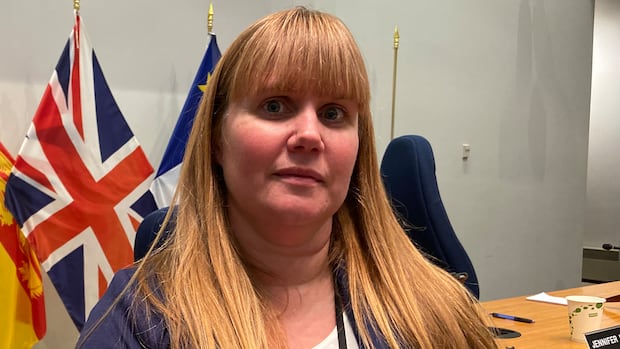
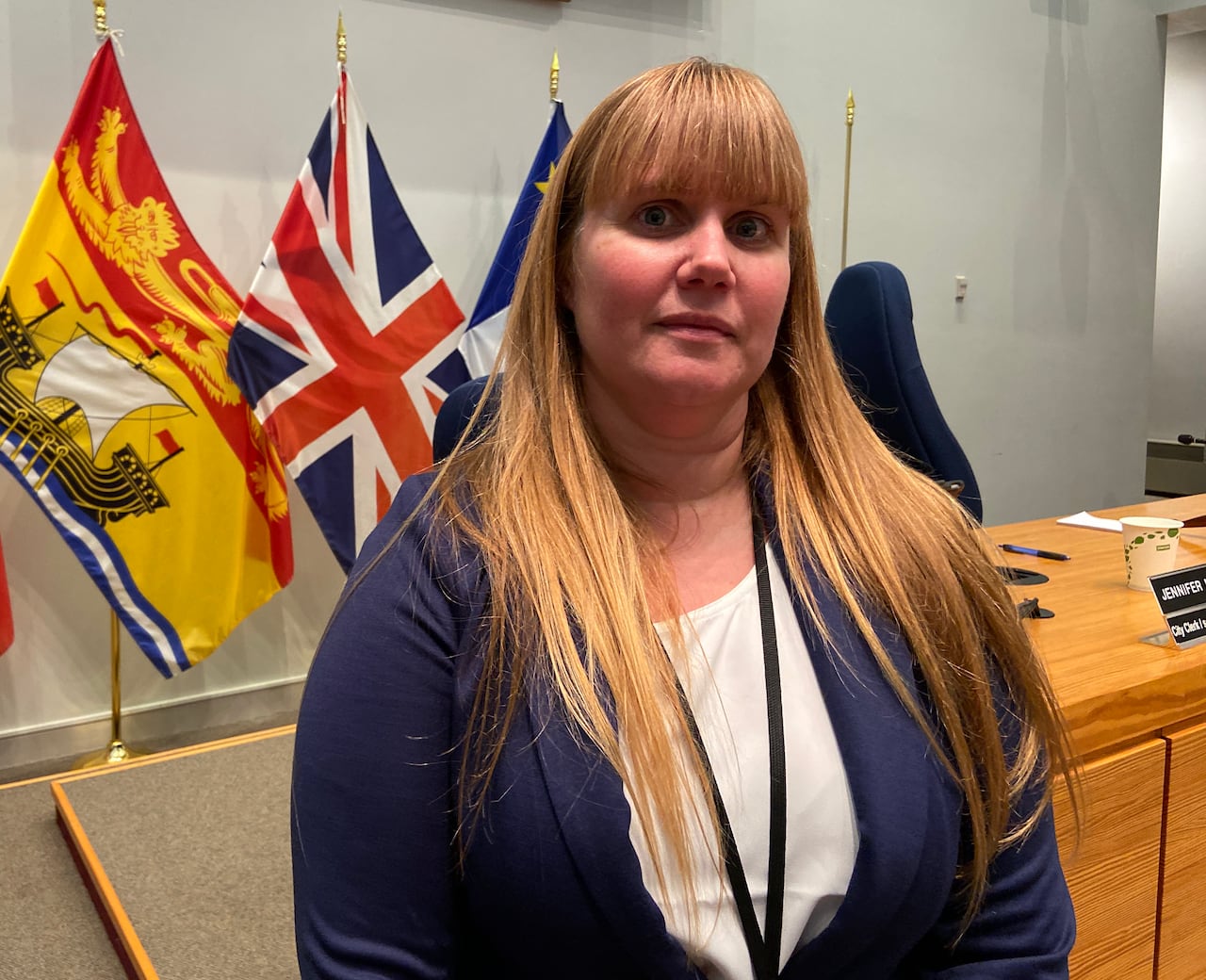 Fredericton city treasurer Alicia Keating says she was told residents in the amalgamated parts of Fredericton won’t have the province’s proposed stabilizer formula applied to the part of their tax rate that goes toward maintaining provincially-owned roads. (Aidan Cox/CBC)
Keating’s presentation was aimed at briefing council on what city hall staff have learned so far about the province’s proposed property tax reforms.
Core to those reforms is a complex new formula the province will use to arrive at property tax rates for each municipal government.
In New Brunswick, the province is responsible for assessing the value of properties, while each municipality sets their own tax rate to be applied to the assessed value of those homes and businesses.
As it stands, rising assessment values result in rising tax revenues for municipalities, unless members of council take action to lower the tax rate, which is usually set in the fall before bills get sent out early the following year.
But under the proposed legislation, a reduction in a municipality’s tax rate would be automatic if it saw a spike in the assessed values of properties.
A municipality has the option of overriding the reduction, but doing so would require a vote by council and an official public explanation.
In her presentation, Keating said the province’s proposed formula considers the consumer price index, the non-residential building cost index, salaries and wages of the municipality’s population, as well as population growth.
That figure, which she referred to as the local government cost index, would then be applied against the percentage in increase in assessed property value.
As an example, Keating used a scenario where the assessed value of property in Fredericton went up by eight per cent in a year.
Then, if the local government cost index were calculated at three per cent, the city’s tax rate would have to be reduced by five per cent.
In Fredericton, 90 per cent of households pay the inside tax rate, which was set at 1.3086 per cent for 2026.
However, in 2023, local government reform resulted in Fredericton amalgamating outlying neighbourhoods, boosting its population by about 5,000 people.
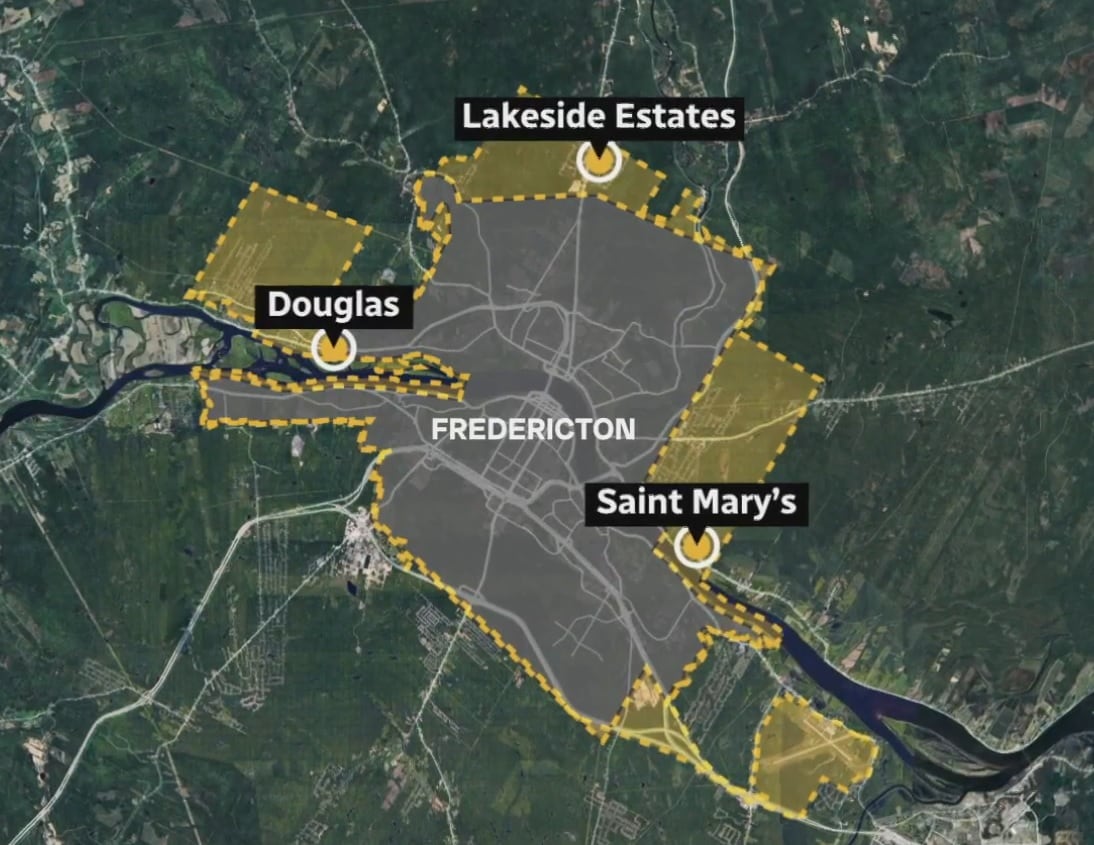 In 2023, Fredericton absorbed about 5,000 new residents through local government reform. Those amalgamated areas are represented by the yellow shaded parts of the map. (CBC)
Those residents pay the city a tax rate ranging from 0.5542 per cent to 0.7786 per cent, depending on the area.
They then pay the provincial government a separate property tax rate of 0.4115 per cent for road maintenance.
Keating said her understanding is the local government cost index would apply against the rate those residents pay to the city, but not to the one paid to the province.
“There seems to be some kind of disjointed thinking there,” Coun. Jocelyn Pike said.
Pike asked Keating if she could provide more details about why the proposed formula would be implemented that way.
“I don’t know all of the details other than we were told that this rate stabilizer will not apply to that tax,” Keating said.
“So we will definitely continue to ask questions to better understand that.”
Speaking after the meeting, Keating said the proposed changes will just be enforcing something the city has already been following.
Between 2021 and 2026, the city has lowered its tax rate by about 8.5 per cent in response to soaring property assessment values.
“So we’ve kind of followed the practice that the province is recommending,” Keating said. “They’re just kind of solidifying it and making it more visible to the taxpayer.”