

UBC’s Neville Scarfe Building was brimming with excitement on May 28, filled with a crowd of chattering, energetic children. They weren’t there for a scintillating summer course, but rather to display their projects in the 2026 Vancouver Heritage Fair, representing Grade 4–8 students from elementary schools across the city.
Revived by the Faculty of Education’s Dr. Lindsay Gibson and Vancouver Heritage Foundation (VHF) Community Manager Jessica Quan, this year’s fair featured 60 projects selected from over 500 student participants across seven schools.
For Gibson, a professor and researcher in the department of curriculum and pedagogy, the fair’s alignment with inquiry pedagogy was part of what drove his interest in revisiting the project after learning of its discontinuation. Through the fair, students get to “do history on a regular basis,” he explained. “We regularly accept the fact that … to learn science, you need to do science; to learn math, you need to do math; and yet in history, we want [students] to learn … but we don’t ever get them [to do] any history. We get them [to learn] other people’s conclusions.”
Across three rooms in the Neville Scarfe Building, the students’ poster boards indicated the eclectic range of interests and issues that occupy the minds of preteens. Structured around specific historical events, figures or themes, the Heritage Fair projects showcased key Canadian moments and people. The projects went far beyond the typical written boards and oral presentations, with animations, stop-motion videos, models, paintings, poems, Lego builds, pamphlets, zines, comics and a paper insulin syringe taller than some of the participants.
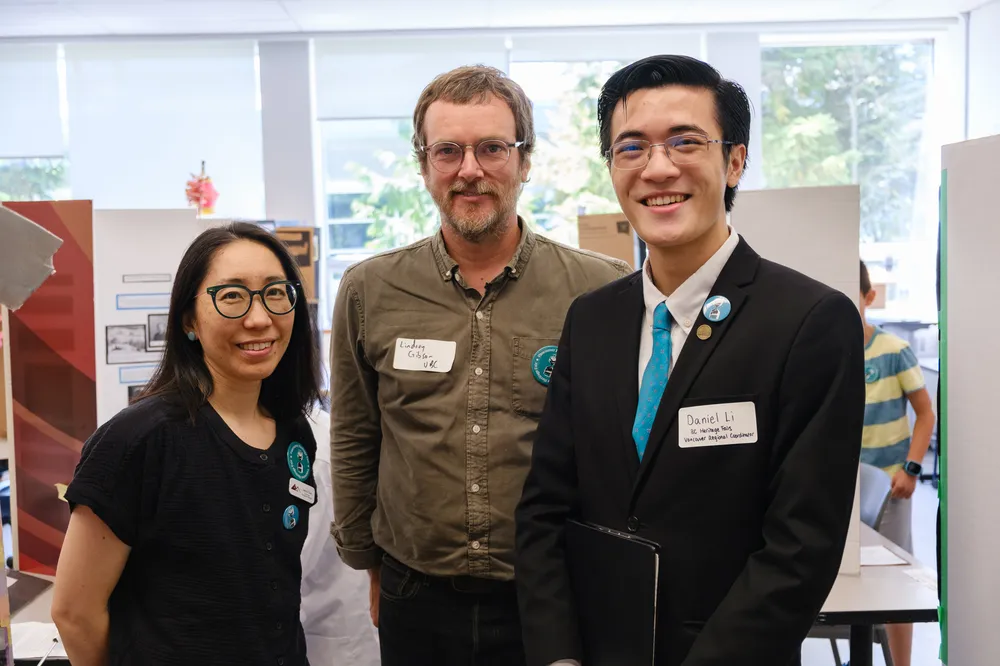
Organizers Jessica Quan, Lindsay Gibson and Daniel Li, from left to right. Guntas Kaur / The Ubyssey
Participant Sam Suto became a live uniformed artifact for his project on Kaye Kaminishi, Elliot McCallum dressed up as a French “haute commandant” from the War of 1812 and Jasmine Kaur Sodhi — the winner of the 2025 Heritage Fair National Showcase — recreated murals from Hogan’s Alley.
The fair’s blend of individual passion and curriculum structure was evident, as students anchored their thinking in primary sources — often stylized to match their poster, such as printed newspaper archives — and inquiry questions, the main starting point for their research process.
For Gibson, the process showcased how these young students “took on difficult subjects, framing really good questions, looking at varying types of evidence and sources, constructing, understanding and designing an exhibit that they wanted to display to other people.” BC Heritage Fair Vancouver Regional Coordinator Daniel Li said while teachers provide structure and criteria, “students provide the creative energy for each project,” and decide “the direction it takes, what research gets included [and] how to interpret sources and provide critical thought.”
This was an opportunity for students to deepen the specific points of the curriculum they connected with, Gibson said. This included characters from military and political life, such as Lester B. Pearson and Igor Gouzenko; from sports, such as Christine Sinclair and Wayne Gretzky; from music, like Joni Mitchell; and from science, through Frederick Banting and Maud Menten.
Injustice was a consistent theme throughout the fair. Li said many of the projects documented under-represented voices and marginalized communities, allowing students to “understand what has to be done in order to redress past and present injustice, and for a greater recognition of the stories that are often left out of the national conversation.”
Many projects explored migrant and Indigenous histories of Canada and Vancouver. Some looked at the Canadian Pacific Railway’s treatment of Chinese workers, the Chinese Head Tax or Chinatown’s unofficial mayor, Yip Sang. They also inquired into racism, sexism and colonialism. One studied the internment of Japanese Canadians during the Second World War. Another studied Chloe Cooley, and in their presentation, displayed a pamphlet for a hypothetical contemporary protest in her honour.
Grade 6 student Reyva Thakore did a chilling project on the Starlight Tours — referring to a practice by Saskatoon police of picking up and abandoning Indigenous persons (mostly Indigenous men) outside the city, leaving them to freeze, from the ’90s to early 2000s. Thakore engaged with historical traumas and demonstrated a mature understanding of how history is actively mobilized in the present. “I really wanted to do this for my Heritage Fair [project], because you need to raise more awareness about Starlight Tours … not enough people know about it,” Thakore explained.
Neelu Childress, another Grade 6 student, presented on female representation in Canadian politics, using stop-motion animation, dolls and graphs detailing female representation across municipal, provincial and federal elections. She proposed her own amendment of Bill C-23, 444 (an amendment to the Fair Elections Act) and presented a petition for her interviewers to sign. “You need to have the past to understand what’s going on right now [and] to prepare for the future, because I want to live in a world where women aren’t held back because of their gender,” Childress said.
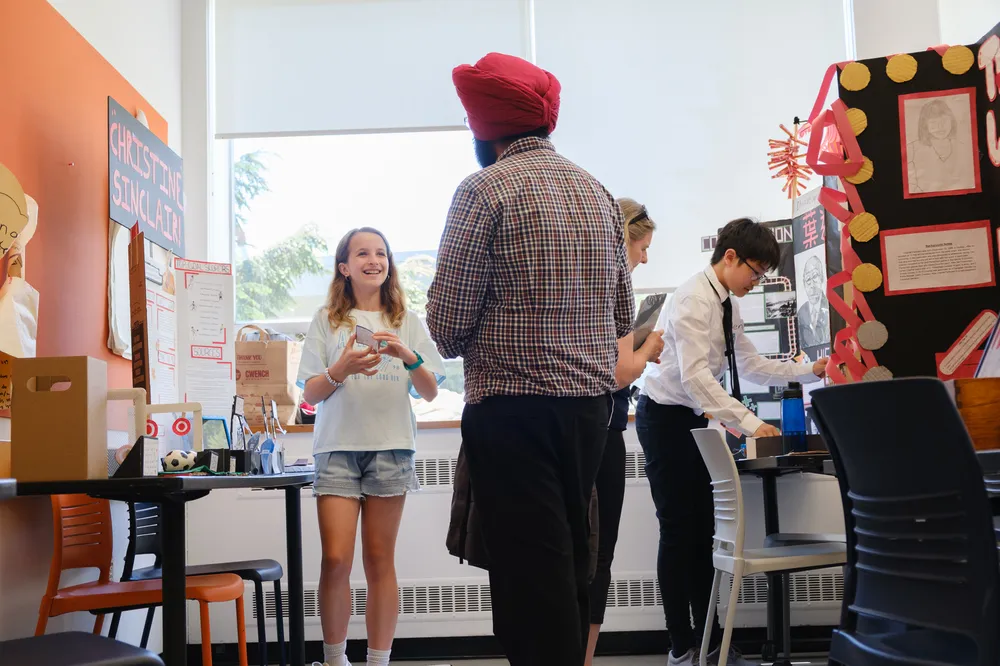
The depth of research and care was apparent across all projects, but resonated particularly in those rooted in denouncing injustice and violence. Guntas Kaur