
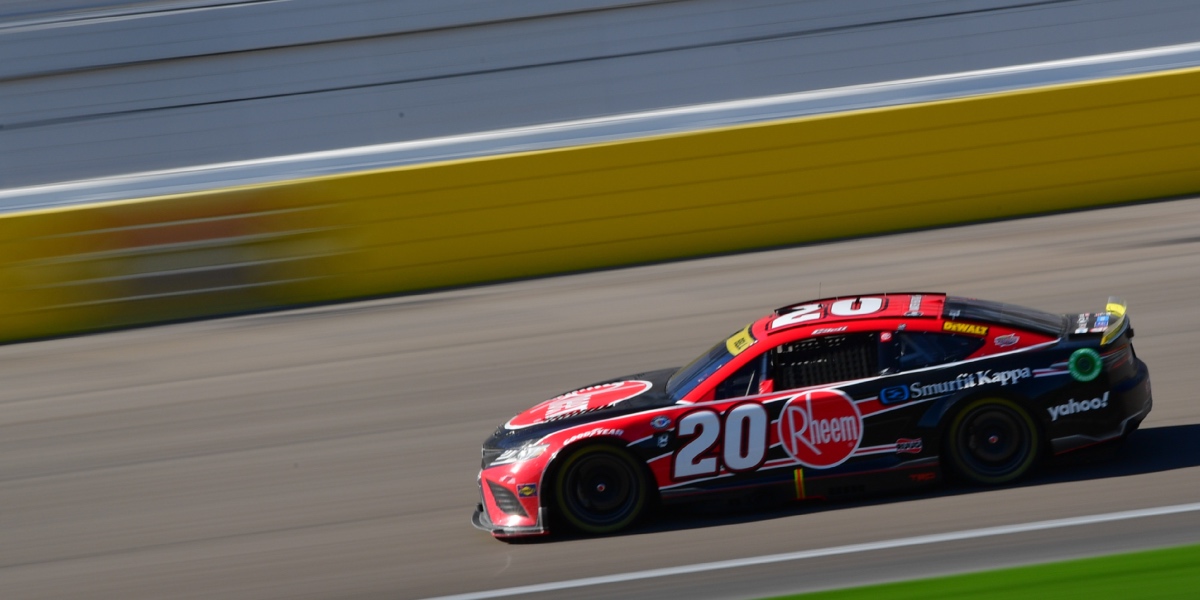
Christopher Bell was involved in the hardest crash of the Next Gen era at Michigan, NASCAR has confirmed. He took the brunt of a hard hit into the outer wall, causing a fractured wrist.
Bell will race at Pocono despite the fractured wrist, Joe Gibbs Racing said on Wednesday. Bell also confirmed the news, issuing a short statement on his Twitter account.
“Thank you to each and everyone who reached out to check on me, I truly feel the love,” Bell wrote. “I’m grateful for my team of doctors, JGR, NASCAR and all of the previous drivers who have helped pave the way for the safety standards in our sport. See you in Pocono!”
So about that hit… According to Matt Harper, NASCAR’s managing director of safety systems, it was the hardest hit recorded in at least a decade.
NASCAR vice president of racing communications Mike Forde joined the Hauler Talk podcast this week to discuss the incident. He noted, while withholding some proprietary data, that the Christopher Bell incident was extremely severe.
“Delta-v is the measure of speed lost in an incident,” Forde said. “So if you’re going 200 miles per hour and then all of a sudden you come to a stop because you hit a wall and scrub off X amount of speed, that difference is what the Delta-v is. I can’t give out the Delta-v number for Bell. That data is proprietary in a way. We share that with the team and the driver, and that’s their data to do with what they want. But we can confirm that it was the largest number we’ve seen in the Next Gen era.”
Harper conducted a remote investigation of the crash as soon as data and photos were uploaded from the incident. NASCAR also conducted a further review Monday morning of Christopher Bell’s car at the Joe Gibbs Racing shop.
Even at the time the severity of the crash was clear. Bubba Wallace commented on it, as did Dale Earnhardt Jr.
But the intended safety measures mostly did their job for Christopher Bell. And that’s a huge credit to NASCAR.
“A big priority is being put around the head surround foam,” Forde said. “We keep updating this part of the rule book as we learn more and more. The thickness of the head surround is so important. And because we were pleased with how the head surround supported Christopher in this incident, we did a lot of measurements of the type of foam he used, the softness and the thickness.
“We want to see, ‘Hey, is this sort of the magic number? Is this something that other drivers may want to look at?’ Because this was the biggest hit we’ve ever seen in the Next Gen era, and by and large, Christopher came out of it pretty well. So that’s one of the things we’ll be studying as we move forward.”