

Listen to this article
Estimated 4 minutes
The audio version of this article is generated by AI-based technology. Mispronunciations can occur. We are working with our partners to continually review and improve the results.
A transportation safety advocate is critical of a recent Vancouver council motion, in which amendments by the majority ABC slate meant that the city will not be reducing speed limits on major roads in the near future.
As part of the city’s “vision zero” plan to reduce traffic fatalities to zero by 2050, city staff had recommended a range of actions — including traffic calming and changing traffic signals to allow pedestrians and bikes to be more visible while crossing.
One of those near-term actions was to reduce the speed limits on major roads — like Robson, Denman and Davie streets in the downtown core, as well as streets like Boundary Road and Commercial Drive in East Vancouver.
The speed limits would have been reduced to 30 km/h or 40 km/h depending on the number of travel lanes on the street, according to staff, with a timeline of implementing the speed reductions by 2031.
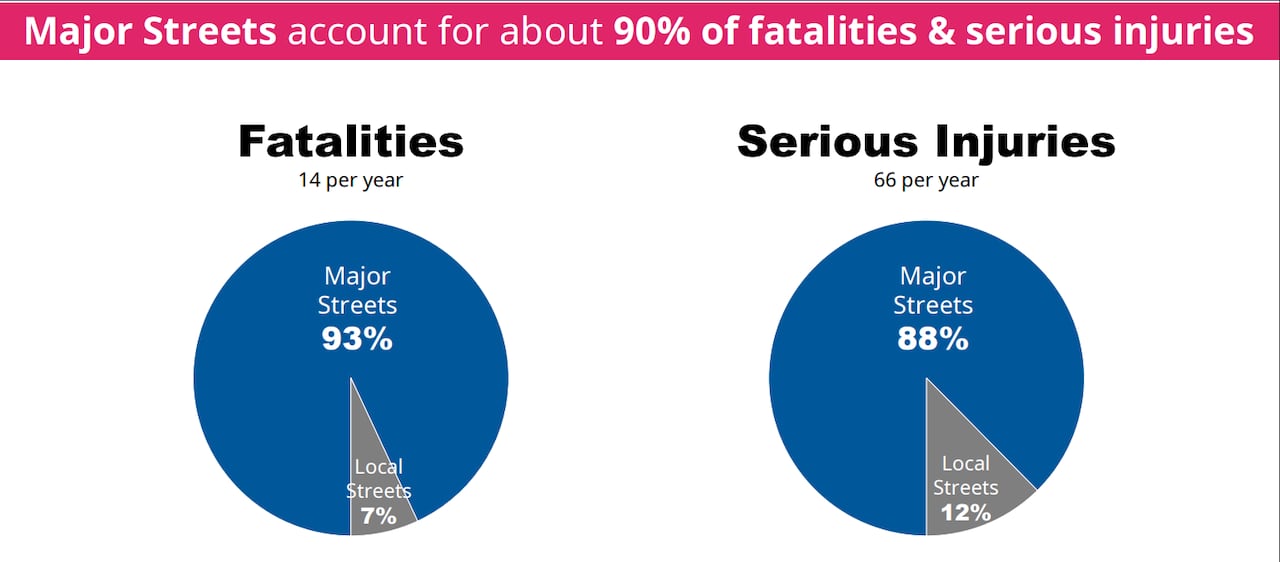 A staff presentation detailed that the number of traffic fatalities and senior injuries were concentrated along the city’s major streets between 2019 and 2023 — including arterial roads and those with high pedestrian activity. (City of Vancouver)
While council voted to support every other staff recommendation in the plan, the proposal to reduce speed limits on major roads was removed in an amendment by ABC Coun. Peter Meiszner.
Fellow ABC Coun. Sarah Kirby-Yung argued that city staff were in the process of collecting collision analysis data from across the city, and council should be making evidence-based decisions.
“I don’t think that there is any one panacea to supporting safety on our streets, regardless of people’s mode of travel,” she said.
Meiszner had said council should instead prioritize “targeted and data-driven solutions” at locations with the highest risks of traffic fatalities.
The current speed limit set by the province on urban streets is 50 km/h unless otherwise posted, according to city staff.
 Coun. Peter Meiszner said that the city should prioritize locations with the highest risks instead of implementing broad speed reductions. (Ben Nelms/CBC)’Cynical move’
Ultimately, the ABC majority voted to pass Meiszner’s amendment, with opposition councillors Sean Orr, Rebecca Bligh and Lucy Maloney voting against it.
Maloney, the lone OneCity councillor, called the amended motion a “cynical move to increase [ABC’s] popularity in an election year,” and that data from around the world showed reduced speed limits saved lives.
“Staff let us know that reducing speed limits doesn’t significantly affect travel times. In fact, it can help traffic flow,” she told CBC News.
“Reducing speed limits is good for business. It reduces noise for residents. There are so many reasons to do it.”
 OneCity Coun. Lucy Maloney said the vision zero plan was “gutted” with the amendment. (Ben Nelms/CBC)
The advocacy group Vision Zero Vancouver was also highly critical of the move, calling the amended motion a “watered-down safety plan.”
Mihai Cirstea, a volunteer with the group, said Vancouver police data showed that speeding was the number one cause of people being killed in crashes.
“If you’re a pedestrian, you’re hit by a vehicle that’s going 50 km/h, you have about [an] 85 to 90 per cent chance of being killed,” he said.
“If you’re hit by by a vehicle going 30 km/h, you have about 80 per cent chance of surviving. So it’s a huge difference, just a small decrease in speed.”
WATCH | Vancouver residential streets’ speed limit lowered: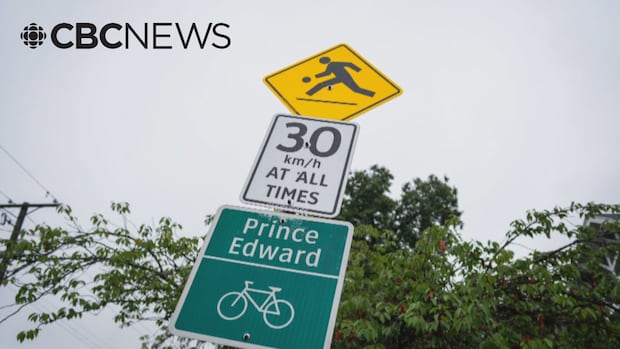
Vancouver council votes to lower speed limits to 30 km/h on side streets
If you’re driving in Vancouver, you’re soon going to have to take it a bit slower on local streets. Vancouver councillors voted Wednesday to lower speed limits from 50 km/h to 30 km/h in parts of the city, and as Maurice Katz reports, council is changing more rules to try to make the city’s streets safer.
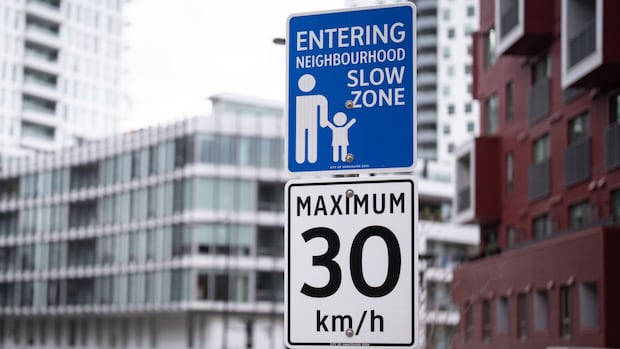
Last year, Vancouver council voted to reduce speed limits on residential streets to 30 km/h across the city.
Cirstea argued that the staff proposals to reduce speeds on major streets would have addressed busy shopping streets like Robson and Main, where a number of seniors and families often go.
He said the rest of the vision zero plan was “really comprehensive,” and featured proposals to redesign streets and beef up post-collision responses.
Cirstea said that ABC was making road safety their lowest priority leading up to the municipal election in the fall.
“They made some excuses about wanting a balanced approach — and basically just saying that drivers being able to drive as fast as they want is more important than, you know, human lives,” the advocate said.