
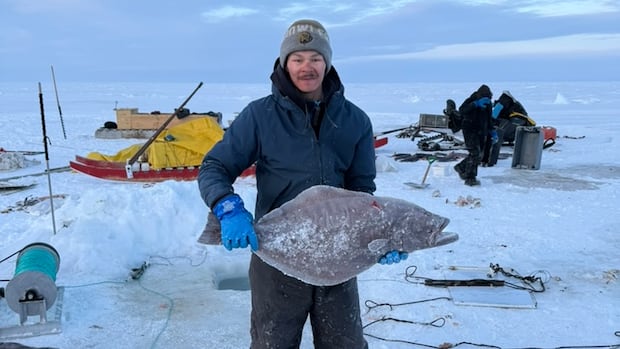
Justin Kautuq was part of a small team that had a fruitful fishing trip 100 kilometres north of Clyde River, Nunavut, in late April.
The crew, organized by fishing company Niqitaq Fisheries, brought home 432 turbot.
Kautuq described it as the best trip he’s been on, by the numbers.
“It went well,” he said.
The total catch weighed about 1,400 kilograms — enough that some of the turbot could be distributed in the Arctic community while about 680 kilograms could be sold to Skipper Otto, a Vancouver-based company that runs a subscription-style program for Canadian seafood.
Nunalik Fisheries, which helps Nunavut harvesters and communities find markets for their fish, connected the two enterprises. Skipper Otto has bought Arctic char from other Nunavut communities – but this was the first time it was able to offer turbot to its customers.
“They want[ed] 4,000 pounds of fish right away. And I thought, my God, that’s a big sale for us,” said Loomis Loder, the inshore fishing manager for Baffin Fisheries. He described Niqitaq Fisheries as a “side arm” of Baffin Fisheries Coalition.
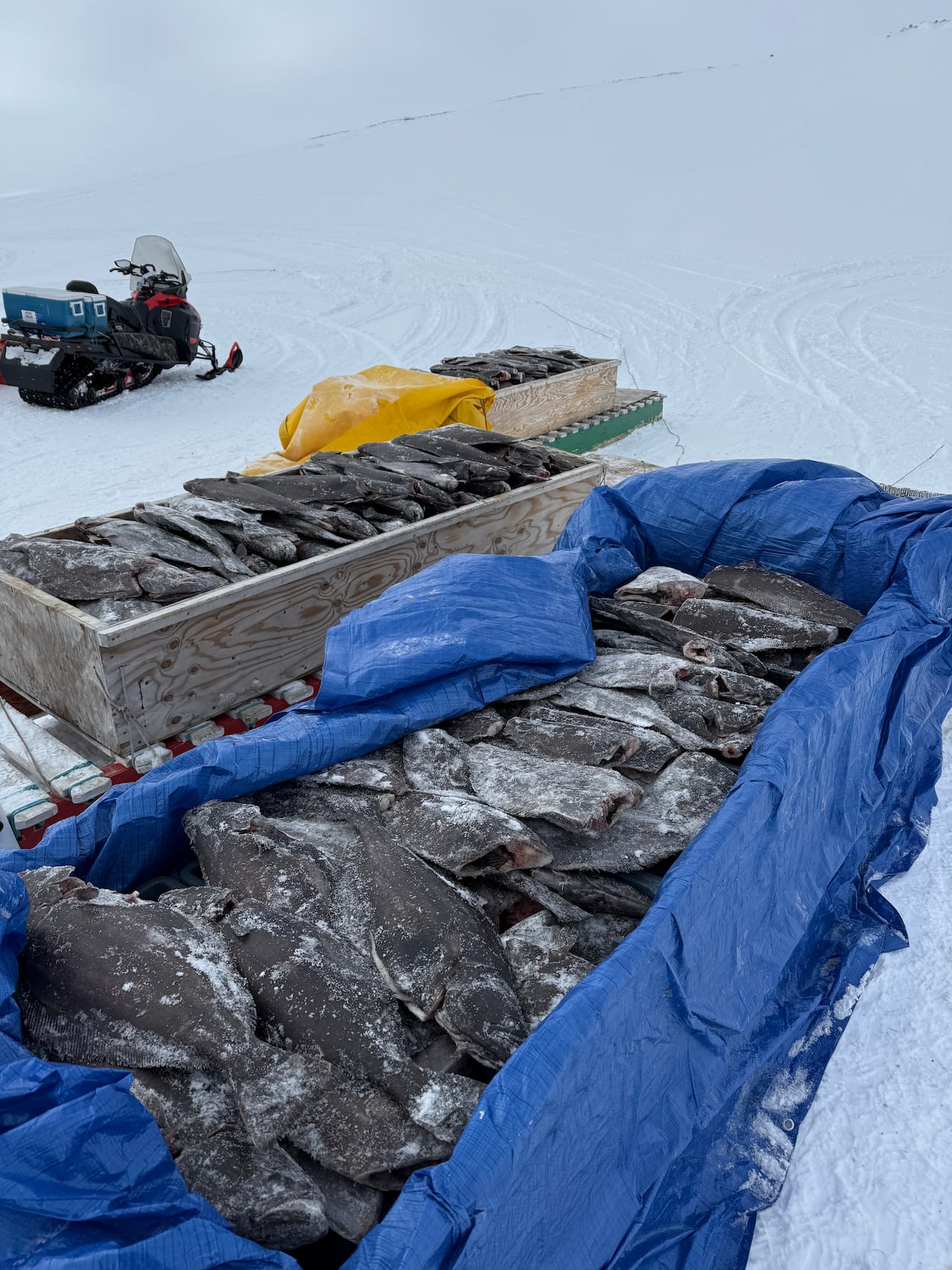 Niqitaq Fisheries sold about 680 kilograms of turbot to Skipper Otto, a Vancouver-based business that offers customers subscription-based access to Canadian seafood, earlier this year. (Submitted by Loomis Loder)
Loder said they sent about 680 kilograms of turbot by plane to Ottawa, where it was then put on a truck to Vancouver for further processing. He said Niqitaq was paid $7.50 per pound, minus the cost of freight.
Gabriel Paniloo, who has been working on fishing trips with Loder for two years and was on that trip in late April as well, said selling fish to distributors in the South is good for him and his community.
“We know that there’s a lot of fish up there,” he said. “We could get money if we start to sell fish, since there’s barely any job[s] in town.”
Nunalik does ‘everything but fishing’
Will Hyndman, the director of the Nunalik Fisheries, said his organization got going around 2019. It’s been working with harvesters in Naujaat, Taloyoak, Igloolik and Qikiqtarjuaq, as well as Clyde River.
He said going out on the land, catching fish, and bringing it back to their community is a “hugely important” skill set among Nunavut harvesters. Being able to get that fish to new markets, he said, requires another set of skills – which he said involves a lot of desk work.
Hyndman said Nunalik Fisheries, which is a two-person team including himself, reads Canadian Food Inspection Agency regulations, coordinates food-safe packaging, talks to customers, troubleshoots logistics, and does marketing as well.
“We try to do everything but the fishing, so that when hunters come back to their community, they can make one phone call and ship out their fish, and they get to go back out on the land,” he said.
Preserving a fishing way of life
Sonia Strobel, Skipper Otto’s co-founder and CEO, said her business has been working with Nunavut communities for five or six years now.
The fish from Nunavut is frozen outside once it’s caught, and then flown to either Winnipeg or Ottawa before it’s trucked to Skipper Otto’s fish-cutting facility in Vancouver. From there, it’s packaged and shipped to pick-up locations across Canada.
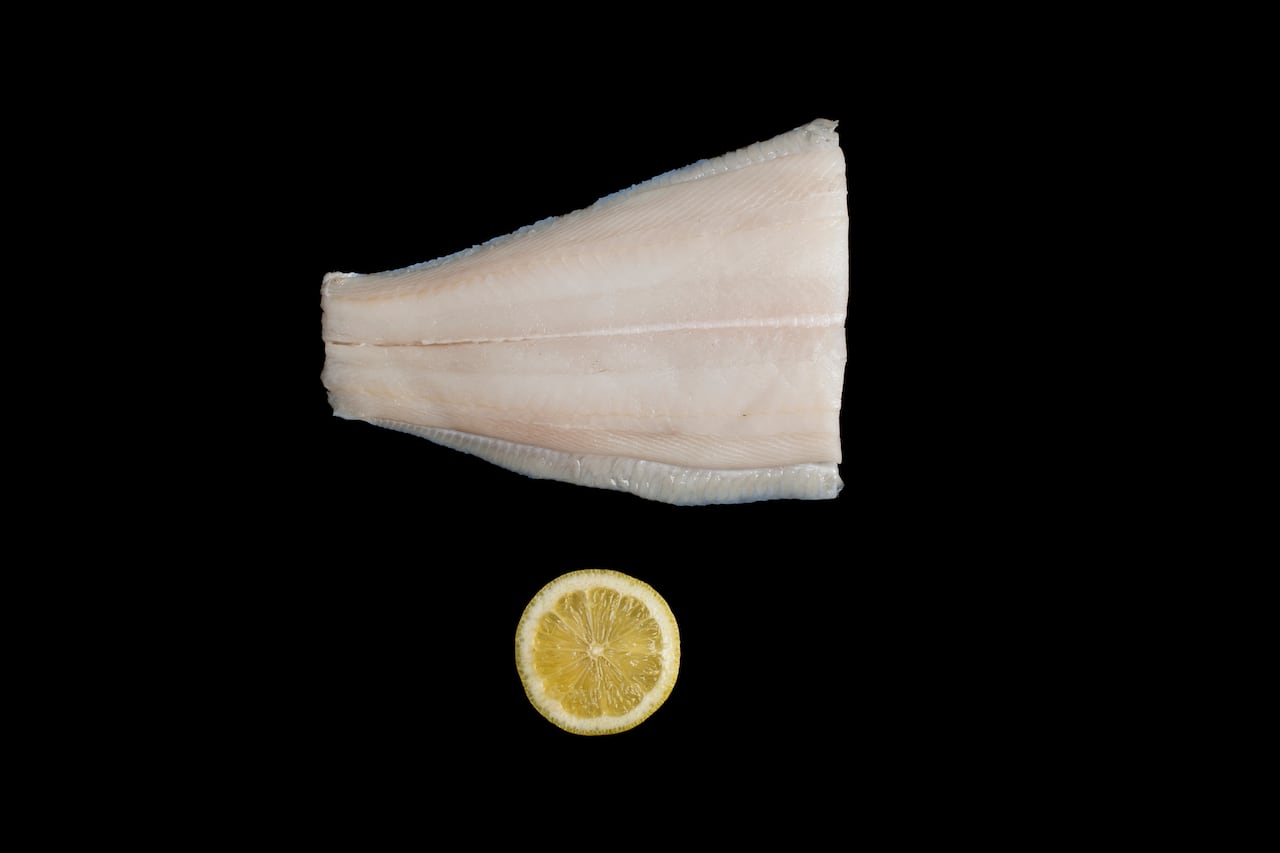 A turbot fillet after it’s been completely processed and is ready for packaging. (Olivia Sari-Goerlach)
The company has been in business for 18 years and has 10 full-time staff as well as about a dozen part-time employees. Strobel said the company has about 7,000 customers.
“I think that the work that fishing families do in Nunavut is so incredibly important,” she said. She hopes partnerships between Skipper Otto and Nunavut communities “help preserve a fishing way of life.”
Hopes for the future
Loder said he’d like to sell more turbot to Skipper Otto next winter. Paniloo wants the relationship to continue too – and hopes it’ll help his community make its case for building a fish processing plant in the future.
Hyndman would like Nunavut to have a “thriving harvesting economy,” where fish are sustainably caught and Inuit are able to make a career out of catching fish for their communities and for southern markets.
“They recognize that they have amazing fish, they eat amazing fish all around their community,” he said.
And that was plain when talking to Loder’s crew.
Kautuq said people in his community react quickly when he’s giving out smoked turbot.
“They start running to get some,” he said with a laugh. “They like it.”
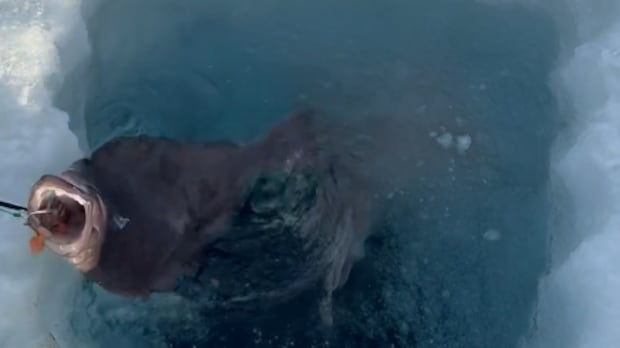
Harvesters haul line of turbot from below the ice north of Clyde River, Nunavut
A small team had a fruitful fishing trip north of Clyde River, Nunavut earlier this year, and were able to sell some of their catch to a southern distributor.