
Exploding populations. Urbanization. “Megalopolises.”
Flash back to the 1970s, when governments, activists and communities around the globe were grappling with rapid urban growth as the world’s population was expected to double over the next 30 years. What to do?
Enter Habitat I — a United Nations conference held in Vancouver in 1976 from May 31 to June 11 to share and debate ideas and solutions around human settlements.
“Vancouver could be the place where the world solves the problem of its urban jungles,” wrote a journalist in The Province newspaper in 1974.
Fifty years ago, Habitat ’76 was the largest UN conference to date.
WATCH | This UN conference sparked global conversations on city-building: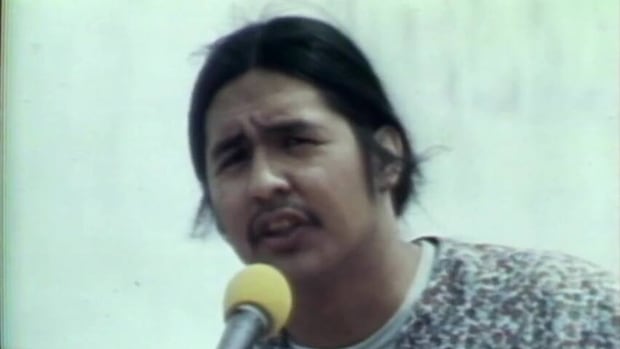
Habitat I: Vancouver’s global housing conference
Reporter Ann Medina visits the Jericho Beach site of the public forum for the first United Nations Conference on Human Settlements.
Estimates differ, but about 10,000 people flocked to Vancouver from 131 countries to talk everything from deteriorating living conditions in slums, to food supplies and agriculture, to predicted energy crises and the future of automobiles.
Vancouver-based researcher and activist Lindsay Brown, who is writing a book on the conference, traced the roots of Habitat to an earlier UN meeting on the environment.
“It was being understood that where people live is where energy is used,” she said. “And if cities were going to be made equitable, you would also have to make them sustainable.”
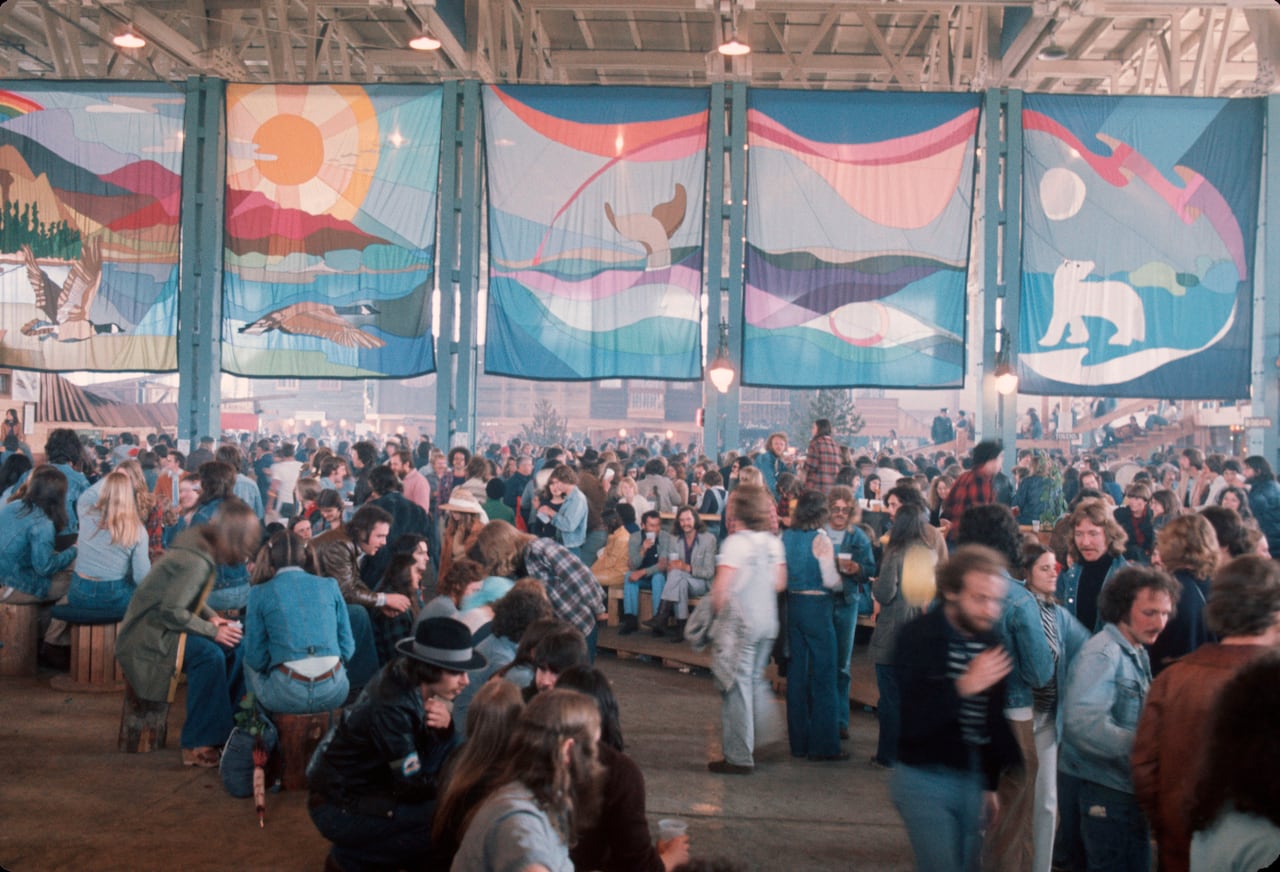 Habitat I — also known as the United Nations Conference on Human Settlements — was held in Vancouver in 1976. A parallel conference, Habitat Forum, pictured here, was held at Jericho Beach, inviting the world to share ideas around urbanization. (Erol Baykal/Vancouver Archives)
The legacy of Habitat is as unwieldy as any conference addressing issues spanning from the future of nuclear energy to clean drinking water to regional governance.
Brown, who volunteered at Habitat as a preteen, noted the conference has fallen out of the city’s cultural memory.
But while many say it was Expo ’86 that brought the world to Vancouver, Brown says that idea feels “ahistorical and incorrect.”
Habitat, says Brown, was Vancouver’s first exposure to the world.
What was Habitat I?
Habitat I — officially the United Nations Conference on Human Settlements — was a formal UN conference held at the Queen Elizabeth Theatre downtown.
It hosted about 4,000 representatives from more than 130 countries, according to newspapers in 1974.
It was a founding conference, establishing what would become the UN-Habitat Programme, based in Nairobi, Kenya.
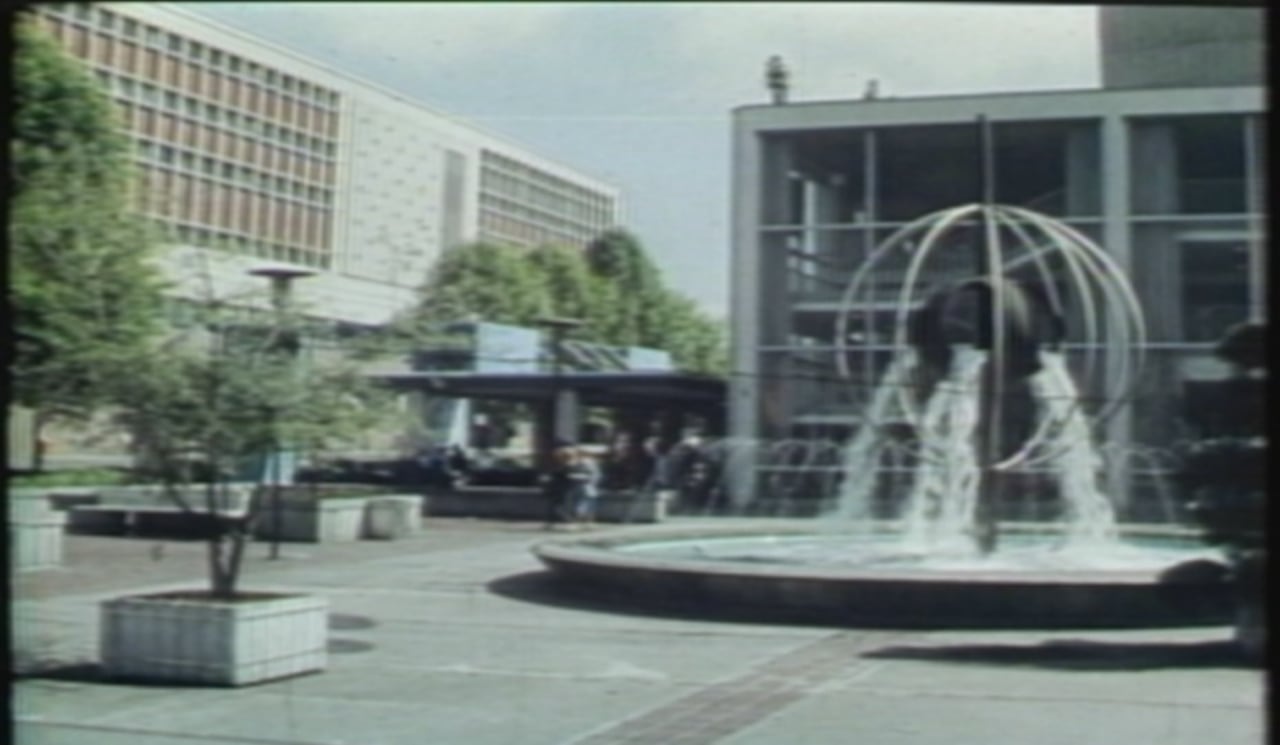 The UN Conference on Human Settlements was held at the Queen Elizabeth Theatre in downtown Vancouver in 1976. (CBC News)
Rather than just talk problems, countries were asked to submit potential solutions in the form of a film or slides.
Former Vancouver mayor and B.C. premier Mike Harcourt, who was a city councillor in ’76 and liaison to the forum, said Habitat kickstarted discussions about cities and regional planning.
“It was kind of a start of a real focus on the fact that we were becoming very urbanized and we’d better get cities right or we’d be in trouble.”
Paper pavilion, modular housing, electric cars
At the formal downtown conference, UN delegates debated complex topics — including heated conversations on Israel and Palestine.
Meanwhile, a ferry ride away, on the banks of Jericho Beach, a second, parallel conference sprung up called Habitat Forum, drawing non-governmental groups, grassroots organizers and interested community members to five refurbished airplane hangars.
It was an eclectic festival of speakers, art exhibits, housing demonstrations and cultural performances — and attendees could drink and socialize at what was billed as the world’s longest stand-up bar.
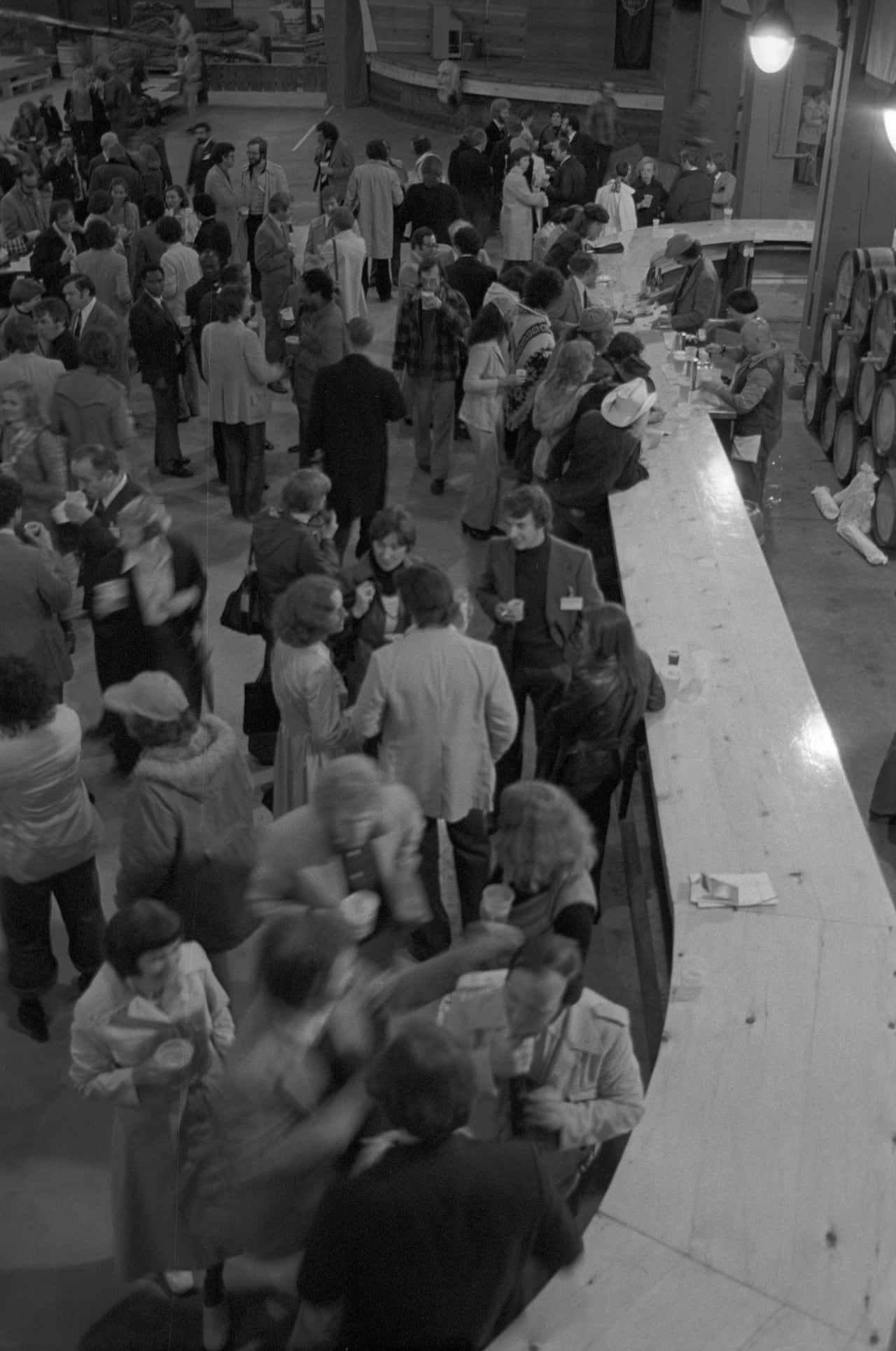 The social centre at Habitat Forum, with what was called the world’s longest stand-up bar, was considered the place to be for convivial conversations on the future of cities and settlements. (Erol Baykal/Vancouver Archives)
Eagle Glassheim, a history professor at the University of B.C. (UBC), said some of the discussions at the forum focused on housing technologies as potential solutions to the issues of the day.
A cluster of buildings at the Jericho site demonstrated low-cost shelter techniques, particularly for homes in developing countries. The homes showcased ideas like sewerless sewage disposal, alternative DIY building materials, and using solar and wind power for heat and electricity, according to the forum’s program.
One example featured was a “paper pavilion” designed and constructed by famed architect Arthur Erickson at what is now the Vancouver Art Gallery.
The pavilion — built with the help of schoolchildren — was intended to show how structures could be built anywhere, with recycled materials, according to Glassheim. It was among a variety of possible housing strategies proposed for those displaced by natural disasters or war.
Habitat Forum also featured many displays on renewable energy. UBC engineering students, for example, showed off their electric car project.
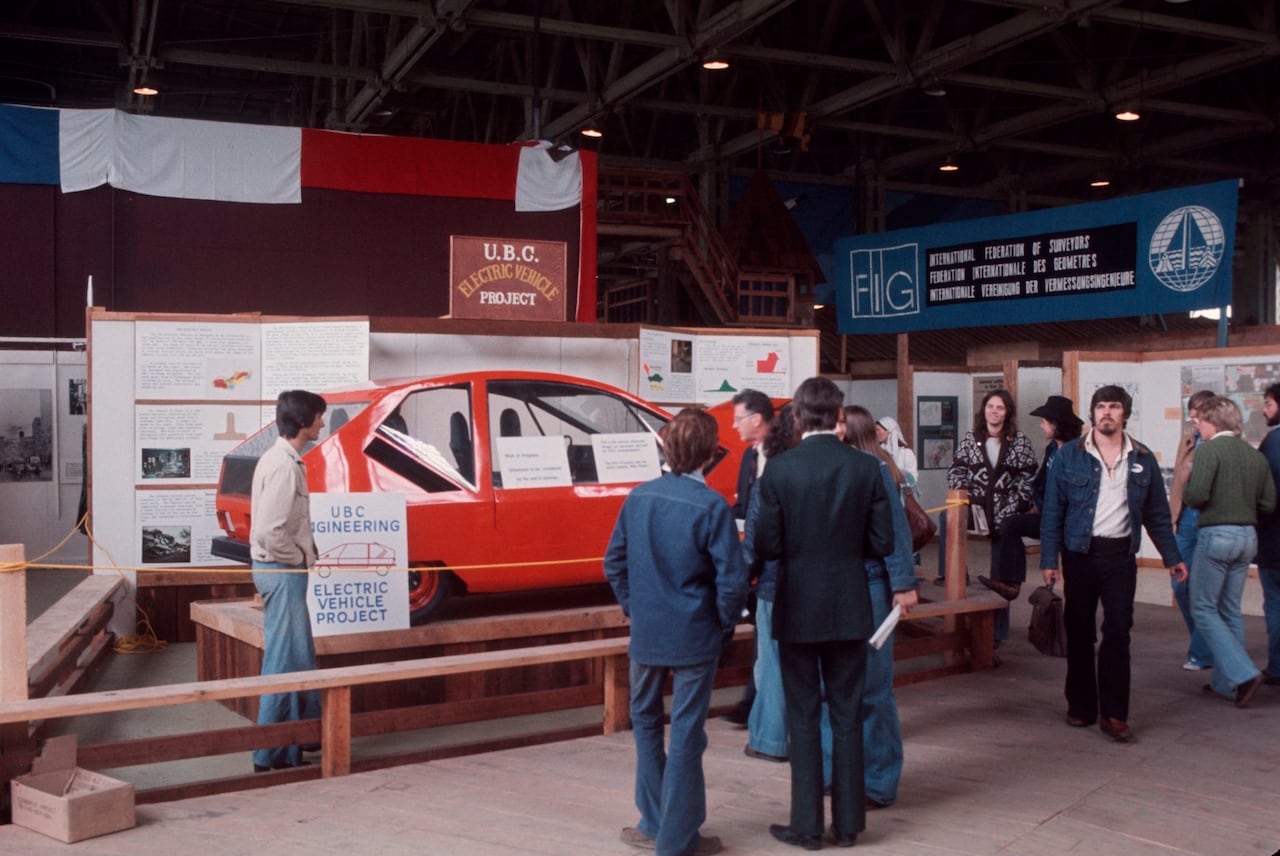 Engineering students from UBC displayed their electric vehicle project at Habitat Forum at Jericho Beach in Vancouver in 1976. The forum explored ways to deal with the world’s growing population including alternative energy and transportation. (Erol Baykal/Vancouver Archives)
While electric vehicles never gained wide popularity until the last decade or so, Glassheim noted they were “nothing new at the time.”
Luminaries of the day spoke at the Jericho forum: Mother Teresa, economist Barbara Ward, architect Buckminster Fuller and anthropologist Margaret Mead drew thousands of people to the artfully designed hangars.
Ward’s research assistant, David Satterthwaite, sent out invitations and plane tickets to anti-poverty activists, trade unionists and environmentalists around the world to speak at the forum.
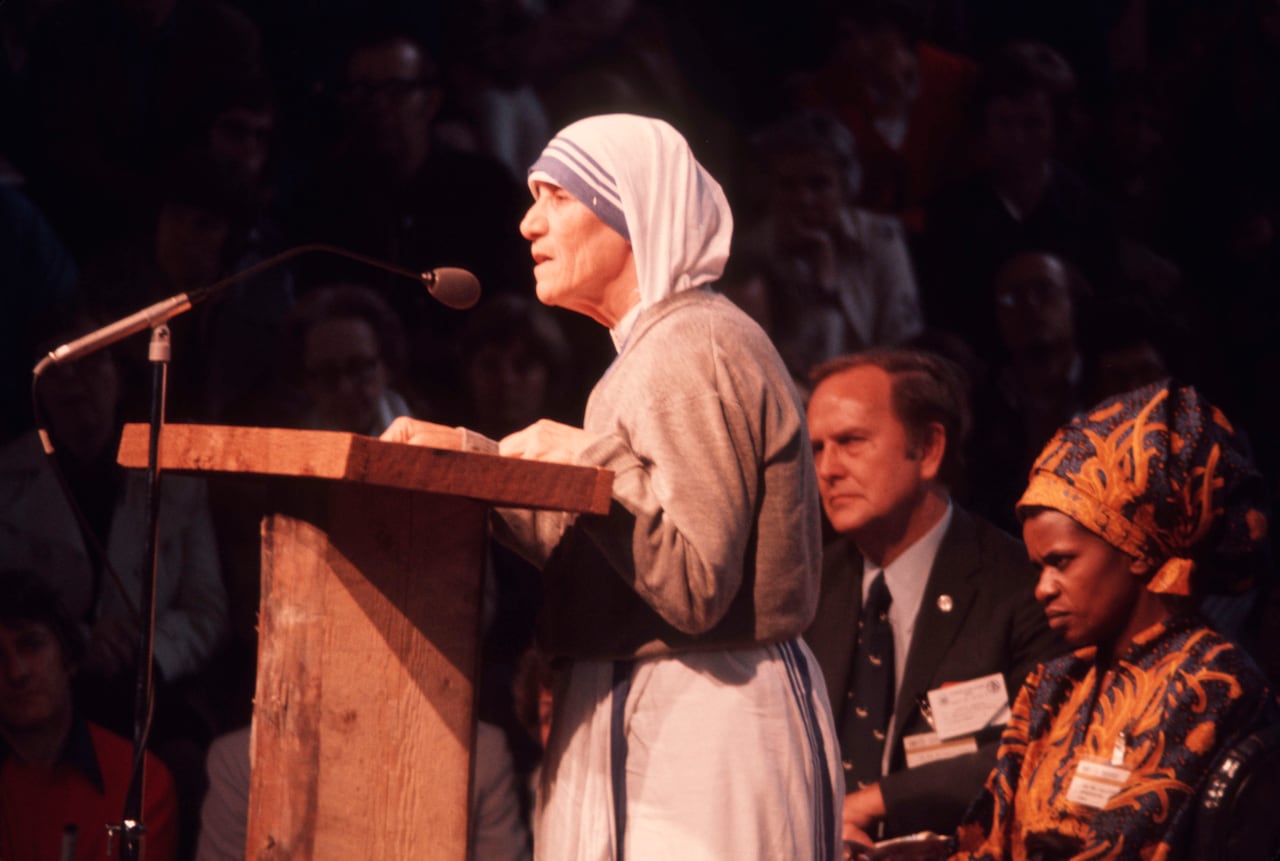 Mother Teresa spoke on ‘working for the most disadvantaged’ in the Habitat Forum’s plenary hall at Jericho Beach in Vancouver on May 31, 1976. (Erol Baykal/Vancouver Archives)
Margaret Trudeau made headlines advocating for clean drinking water by marching along the Vancouver waterfront to the forum site. Her husband, Prime Minister Pierre Trudeau, also showed up to welcome the UN to Canada.
In the papers, the forum at Jericho was dubbed the “Woodstock” of housing.
The formal UN conference culminated in delegates passing the Vancouver Declaration on Human Settlements, along with a set of recommendations for how to ensure shelter, clean water and sanitation.
The declaration, partly responding to the emergence of large urban areas or “megalopolises,” also recommended that governments help regulate markets to discourage real estate speculation, Glassheim said, and to prioritize public housing.
50 years on, what’s remembered?
Trudeau predicted that Vancouver would “long be remembered as the site of one of the most important meetings ever held by the United Nations.”
Now, every so often, someone on Facebook will share an old photo or memory of Habitat.
Others reply with their memories: Of the many, many flags waving, the beer tokens emblazoned with the Habitat logo, and the “big long bar serving drinks.”
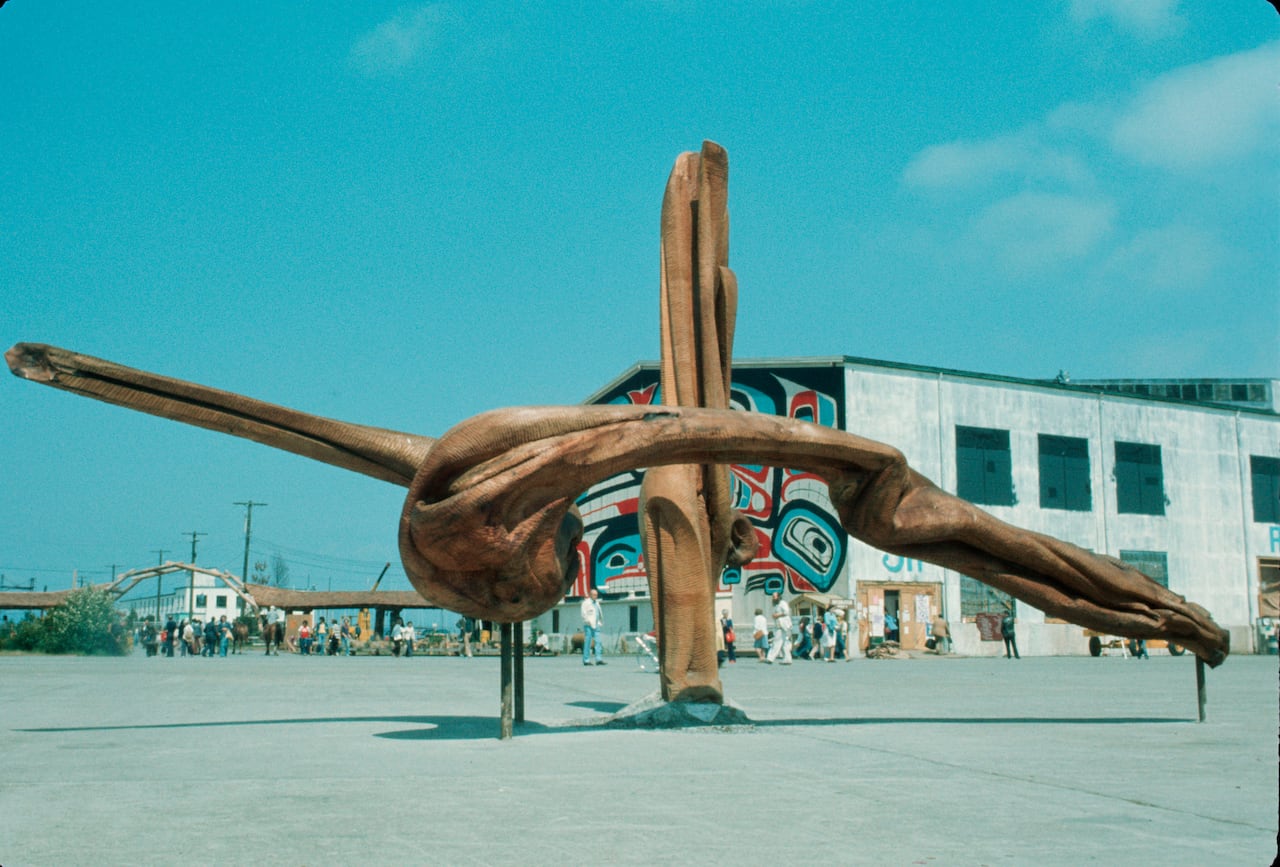 A driftwood sculpture by the carver Bernard Thor commemorates Habitat Forum in this photo from 1976. The sculpture is one of the few remaining artifacts of Habitat still standing at Jericho Beach today. (Erol Baykal/Vancouver Archives)
But the conference has been overshadowed in the memory of many by the flashier Expo ’86. And there are few physical reminders left of Habitat Forum — only a large wooden sculpture at Jericho Beach and one of the refurbished airplane hangars, now home to the Jericho Sailing Centre.
Brown is mixed on the forum’s legacy in the city.
“There has been no real memorializing of [Habitat] because, I don’t know, I think to a lot of people those ideas seem impractical, lefty, dated and ’70s,” she said. “But we are going back to those ideas.”
WATCH | Habitat Forum drew thousands to share ideas on the future of human settlements: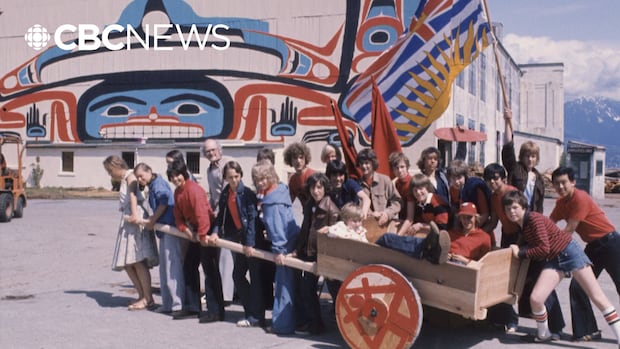
Habitat ’76 turns 50. What is its lasting legacy?
The City of Vancouver has played host to a few mega events over the decades. At the moment the FIFA Men’s World Cup is dominating the cityscape. Forty years ago it was Expo 86, an event many credit for turning the world’s attention to the region. But 10 years before Expo, Habitat ’76 drew thousands to the region for the first time.
She described the conference as the “last gasp” before neoliberalism — personified in the Thatcher, Reagan and Mulroney governments — took hold.
And, for Brown, the fact that the UN’s declaration is named for Vancouver stands as just one more irony.
“Vancouver since then has built itself entirely on speculation,” she said. “It has no interest in resurrecting the ideas of Habitat.”
“It’s so forgotten,” Brown said. “But for us … it’s become almost mythical.”
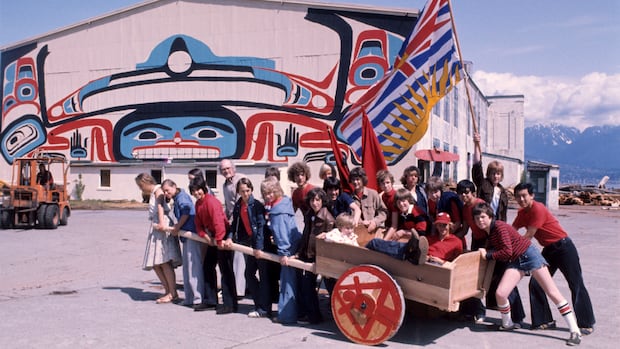
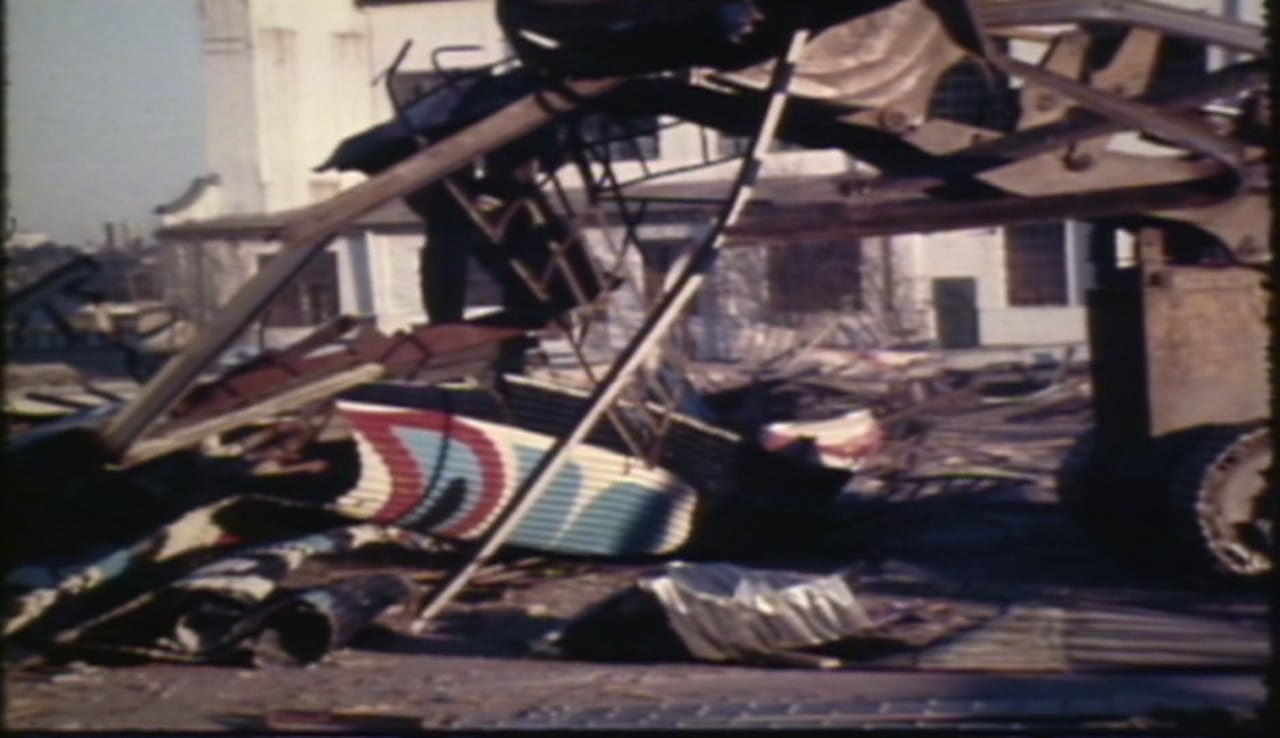 Two years after Habitat Forum, four of the five refurbished airplane hangars were demolished by the Vancouver Park Board, including the hangar featuring a mural by legendary Haida artist Bill Reid. (CBC News)
Anacláudia Rossbach, executive director of the UN-Habitat Programme, said the Vancouver conference remains significant for its part in founding the program.
One of the key takeaways from Habitat ’76, in Rossbach’s view, is the broader recognition that housing is a human right.
“We shouldn’t actually look at housing per se as a building isolated from the social fabric, isolated from the urban environment and connection to livelihoods,” she said.
For Harcourt, the lesson is even simpler: “The future of cities is not inevitable,” he said.
“You can choose the city you want — and you better choose right, because if you get it wrong, you end up with a smog-filled, slum-filled, car-overrun place that’s not very pleasant to live in.”
UBC is planning a symposium to mark the 50th anniversary of Habitat I this fall.