
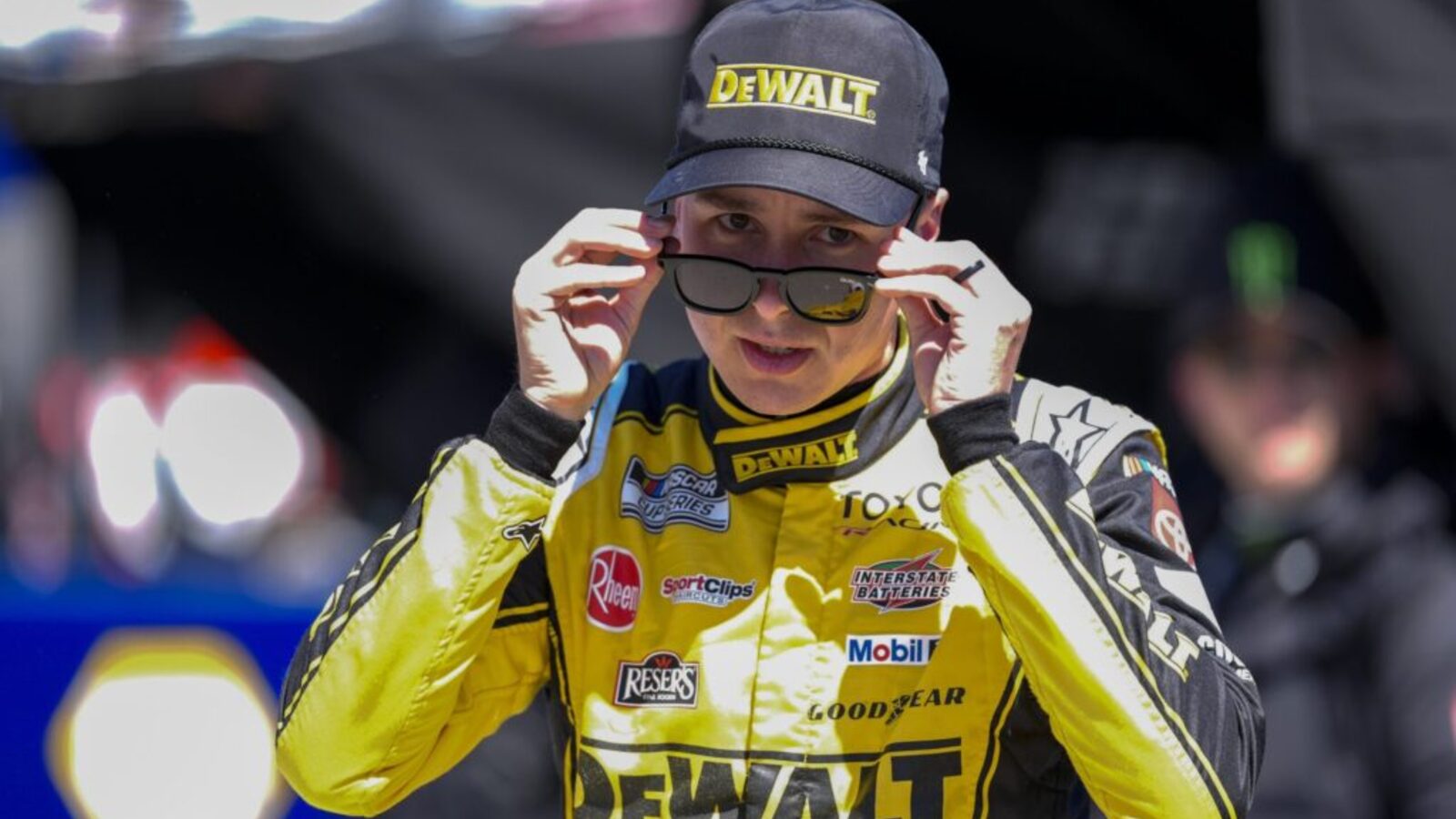
Christopher Bell’s frightening crash at Michigan is finally being labeled as what it is: the hardest crash in the Next Gen era. This isn’t being labeled so by another podcaster or fan writer, but by NASCAR officials themselves.
This development is overwhelmingly significant, not because it thankfully ended with only a fractured left wrist for Bell, but because it produced the largest crash data recording since the Next Gen car debuted in 2022.
Speaking on the Hauler Talk podcast, NASCAR Vice President of Racing Communications Mike Forde revealed all the findings from the crash investigation led by none other than Managing Director of Safety Systems Matt Harper.
“Yeah, you know, if you look at the social media posts after, I think fans, media, other competitors, you heard from the in-car radios from several of them saying that that was the hardest hit I have ever seen,” Forde said.
Harper, who works very closely with the engineering teams, has been trying to analyze the incident since it occurred.
“And he did confirm that this was the largest hit we have seen in the Next Gen era,” Forde explained. “And he said it was also the hardest hit that he’s seen and has looked at from a data perspective since he’s been here, and he’s been here since 2015.”
Forde then told us, based on which quantitative variable such a comparison was made, as per NASCAR standards for severity.
“But what we mostly look at, well, we look at all of those, but the one we kind of point to as far as what we put the most stock in, as far as measuring what, quote-unquote, the biggest is, is delta-V,” he said.
Even though no official figure for the delta-V has been released for Bell’s crash, Forde confirmed, “We can confirm that it was the largest number we’ve seen in the Next Gen era.”
Despite it all, the question for our readers and us remains: what is delta-V? Well, let’s find out.
What is Delta-V?
Let’s say you’re riding a bicycle very fast, based on your excellent aerobic health, but due to a lack of foresight, you hit a wall quite abruptly. Before the crash, you were moving rapidly. After the crash, not so much. The difference between your earlier speed and your new speed is basically delta-V.
NASCAR uses this delta-V to measure how severe a crash was. It’s not just about how fast you were going, but about how much speed you lose when you hit something.
Let us make it clearer. If you were going 20 mph, again owing to your aerobic health, and slowed down to 5 mph after a crash, your delta-V is 15 mph. So basically, the bigger the speed change, the bigger the crash.
This is exactly why NASCAR is concerned about the Michigan incident. They said it produced the highest delta-V of the Next Gen era, meaning Bell’s car lost more speed in the impact than any other Next Gen crash recorded since 2022. Hence, how Christopher Bell left with just a broken wrist is truly nothing short of a miracle.