
Kitchn and Yahoo may earn commission from links in this article. Pricing and availability are subject to change.
Credit: Alexandra Foster
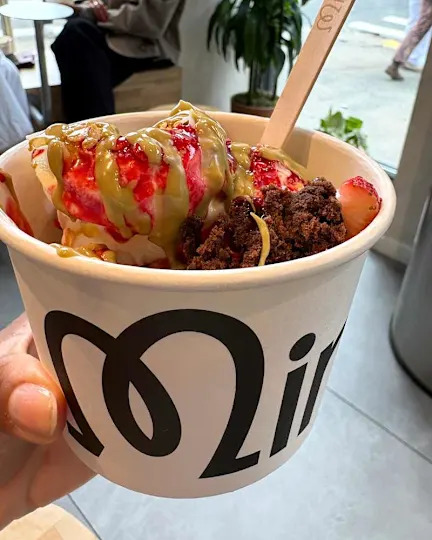
It’s official: 2026 is the summer of frozen yogurt. If you’re anything like me, your social media feed is full of people trying the new, trendy local frozen yogurt shop or revisiting the classics. The frozen dessert is causing a frenzy, especially in New York City, where lines are wrapped around the block at hot spots like Mimi’s and Myka with people waiting up to an hour just to get a swirl of the good stuff.
A frozen yogurt shop was the go-to afternoon hangout spot when I was in high school, so I’m very much welcoming the resurgence. But let’s be honest — a huge part of the experience of getting frozen yogurt is customizing the toppings. All of this got me wondering: Is fro-yo healthy? While it may contain protein and probiotics, do the toppings outweigh the benefits? I reached out to two experts, Amy Davis, registered dietitian nutritionist for Live Conscious, and Neha Shah, nutrition practitioner and founder of Diaspora Nutrition, to find out.
Credit: Alexandra Foster
How Healthy Is Frozen Yogurt?
So is frozen yogurt actually better for you than ice cream? According to Davis, generally speaking, yes, “but it depends largely on the brand or the ingredients used in the ice cream and frozen yogurt,” she says.
“Frozen yogurt is typically considered a healthier option because it is lower in fat and calories than ice cream. Ice cream contains at least 10% milk fat, but can contain up to 25%. On the other hand, frozen yogurt contains only 2–6% milk fat,” Davis explains. She further outlines the nutrition breakdown, saying, “For context, a typical 2/3-cup serving of ice cream is about 240 calories and 12 grams fat (7 grams saturated fat), whereas frozen yogurt is about 150 calories and 3.5 grams fat (2.5 grams saturated fat) for the same serving size. Frozen yogurt may also contain probiotics, but it depends on the way it was processed.”
Davis notes that the carb and sugar content of frozen yogurt and ice cream are pretty similar. “Most servings of ice cream and frozen yogurt will contain about 25–30 grams carbohydrates and 15–20 grams added sugar, but this also varies greatly depending on the brand or specific recipe,” she says.
Shah is not as convinced. “Frozen yogurt removes the fat … [but] fat is not the enemy. Fat is the satisfaction signal. It slows digestion, tells your brain you’ve had enough, and keeps blood sugar stable,” she says. When the fat is removed, it’s often replaced with “sugar, gums, and emulsifiers … to compensate for the taste.” This can lead to a higher spike in blood sugar.
Shah also says that “the freezing process, additives, and stabilizers [can] destroy the beneficial bacteria or live cultures.” Instead, she recommends eating ice cream mindfully and occasionally. “Choose one with fewer ingredients and [that’s] whole food-based. A small portion of genuine dairy ice cream — real A2 grass-fed cream, real unrefined sugar, nothing artificially extracted ingredients, is more satisfying,” Shah says.
Davis agrees that eating a small portion of ice cream to satisfy an occasional craving is perfectly fine, but recommends frozen yogurt “if someone is on a weight loss journey or trying to decrease their saturated fat intake.”
Ultimately, it depends on your own personal goals, preferences, and how often you’re having it.
Healthy Frozen Yogurt Toppings, According to Nutrition Experts
If you’re getting fro-yo, Davis and Shah recommend the following toppings that are still nutritious and will help you not to overdo it with the sugar.
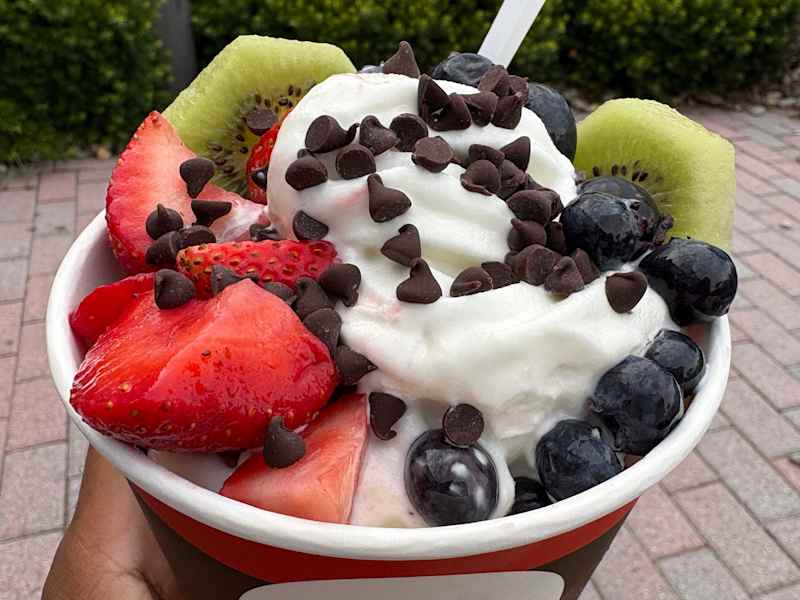
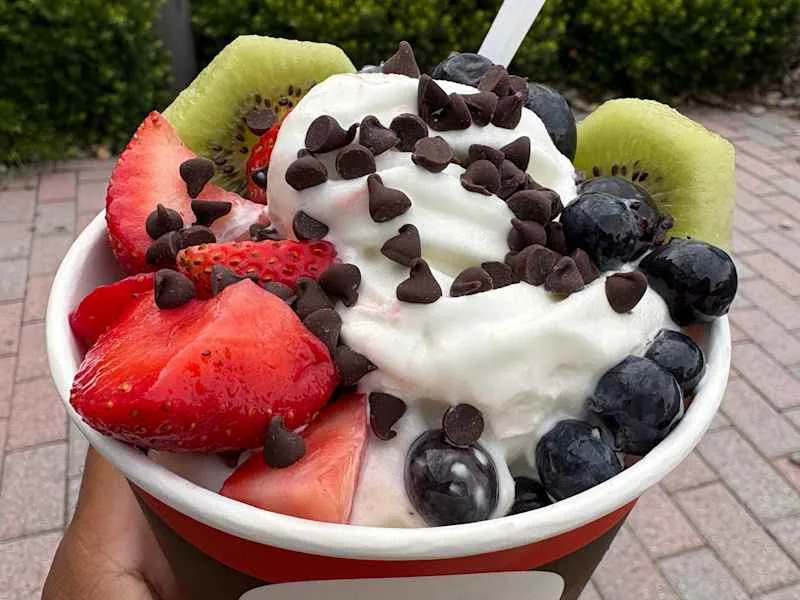
“Choose just one or two toppings that won’t add significant amounts of calories, fat, or carbs, such as fresh berries or fruit, a sprinkle of chocolate chips, or a couple tablespoons of chopped nuts,” Davis says.
Similarly, Shah recommends “fresh fruit such as berries, sliced mango, pomegranate seeds, chopped cherries. These add natural sweetness, fiber, and antioxidants without compounding the sugar load.” She also recommends a handful of unsalted nuts, such as pistachios, since “the fat and protein slow sugar absorption and extend satisfaction significantly.” While she suggests skipping any flavored syrups, a drizzle of raw honey will do the trick, and adding “fresh mint or a pinch of cardamom if available” will support digestion.
Further Reading
I Tested 7 Ways to Hard-Boil Eggs and Found a Clear Winner
We Tested 4 Famous Chocolate Cake Recipes and Found a Clear Winner