

Listen to this article
Estimated 5 minutes
The audio version of this article is generated by AI-based technology. Mispronunciations can occur. We are working with our partners to continually review and improve the results.
It’s here.
Nearly four years ago to the day, Vancouver was confirmed as one of the host cities for the 2026 FIFA Men’s World Cup. The tournament began this week and tonight, the first of Vancouver’s seven matches will be played.
But with hosting a global event comes a myriad of security concerns — terrorism, rioting and conflict, but also increased risk of fraud, theft and human trafficking.
So, when Vancouver got the green light, local law enforcement got to work.
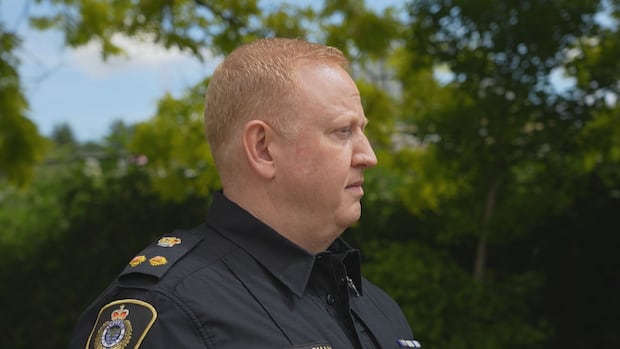
Vancouver Police Department (VPD) Deputy Chief Don Chapman said they’ve been planning for the event for three years, running scenario-based training exercises and meeting with experts across the globe.
But in some ways, local police have been training for this massive global event for much longer.
“We’ve been dealing with large scale events in the downtown core and B.C. Place for years and years and years,” he said, pointing to a pair of Stanley Cup riots in 1994 and 2011, the 2010 Winter Olympics and the Taylor Swift Eras tour in December, not to mention an estimated 1,000 protests in the city annually.
“We’re ready for it.”
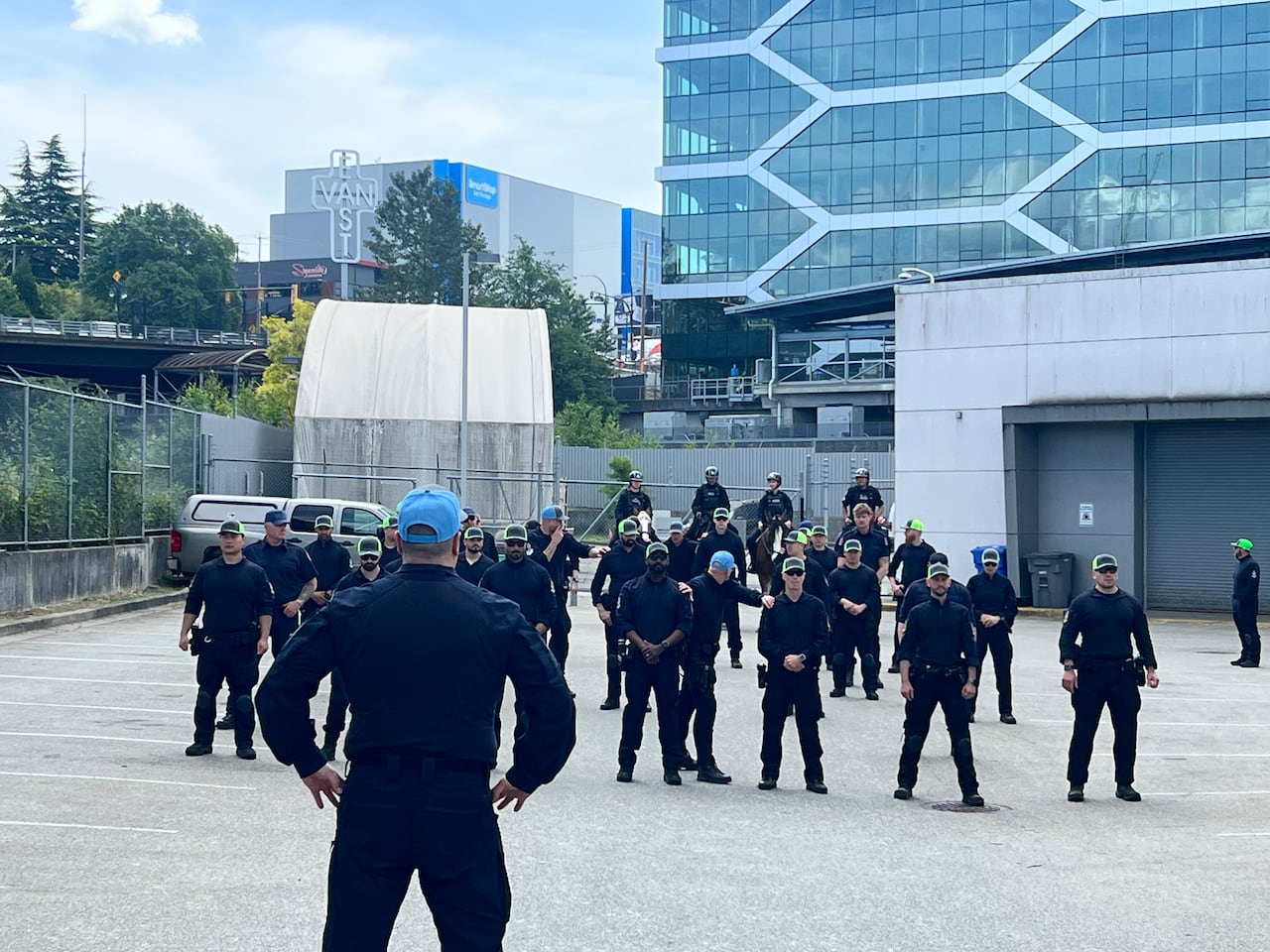 Vancouver police during a training exercise leading up to the 2026 FIFA Men’s World Cup. (Mia Sheldon/CBC)
Chapman said police learned a lot in the wake of the Lapu-Lapu Day tragedy, where a man drove a vehicle into a crowd at a street festival in south Vancouver.
But in his 29 years on the force, he’s never seen a policing and security plan quite as complicated as the one for the World Cup.
“This is the most complex problem the Vancouver police have faced for planning an event of this size and this magnitude. It’s the largest one and the longest one.”
FIFA estimates 350,000 fans will be in downtown Vancouver for matches.
In a news release, the province said safety and security costs in Vancouver alone are estimated at $242 million for the duration of the tournament.
Chapman said his team consulted with security officials in Qatar, which hosted the World Cup in 2022. He said the West Asia country had significantly more police than Vancouver will.
“I think they did have a lot of overkill,” Chapman said.
Vancouver police media liaison Const. Megan Lui said most of the VPD will be involved in World Cup policing efforts at some point over the month-long event. As of 2025, there were 1,452 sworn officers in the VPD.
Staffing will be increased, particularly for the two games in July, according to Chapman.
Police from other jurisdictions will be helping out, including RCMP, transit police and officers from Delta, Calgary and Edmonton, Chapman said.
There will also be police from other countries in Vancouver during the tournament working with local officers to share information about fan behaviour. Local police will also share information with a central command centre in Washington — although Chapman emphasized that no other police will have authority over the actions of law enforcement here in Vancouver.
WATCH | CCTV cameras part of Vancouver World Cup policing strategy: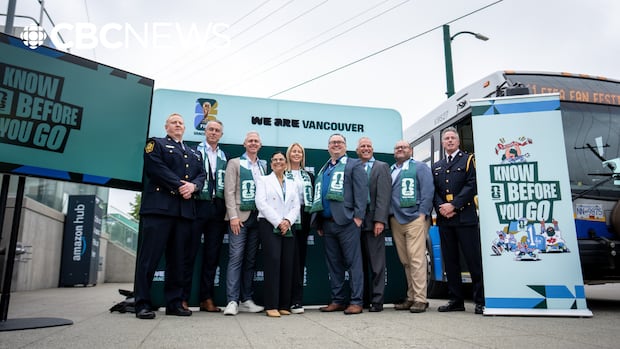
Drones, CCTV cameras and extra transit part of Vancouver’s World Cup plan
Officials announced new details of what Vancouver can expect when the FIFA World Cup comes to town. Security and transit plans for the events were unveiled Wednesday, but as Jon Hernandez reports, B.C. residents still don’t have a clear answer on the cost to taxpayers.
Chapman said dozens of CCTV cameras will be installed around B.C. Place and officers will wear body cameras. There will be limits to who has access to that footage, he added.
Lui said drones may be deployed to monitor crowds or if one is required to aid a police investigation or call for assistance.
‘Overzealous’ policing
Clifford Stott, professor of policing research at the Open University in the U.K., said the general public in Vancouver needn’t worry about safety during the tournament.
“There is no fear necessary about some invading hoard of hooligans who come emblazoned with the intention to create violence and disorder. Nothing could be further from the truth,” he said.
Stott, who has long studied crowd behaviour, described soccer (or football) fans as “inherently rowdy,” but said their celebrations are “often misinterpreted.”
He also said each country’s fan base is different — they have unique cultural norms, traditions and responses at football (soccer) matches and security should understand each to respond appropriately.
“When those kinds of violent escalations occur, they occur for very specific reasons that are usually highly contextually embedded and situationally determined.”
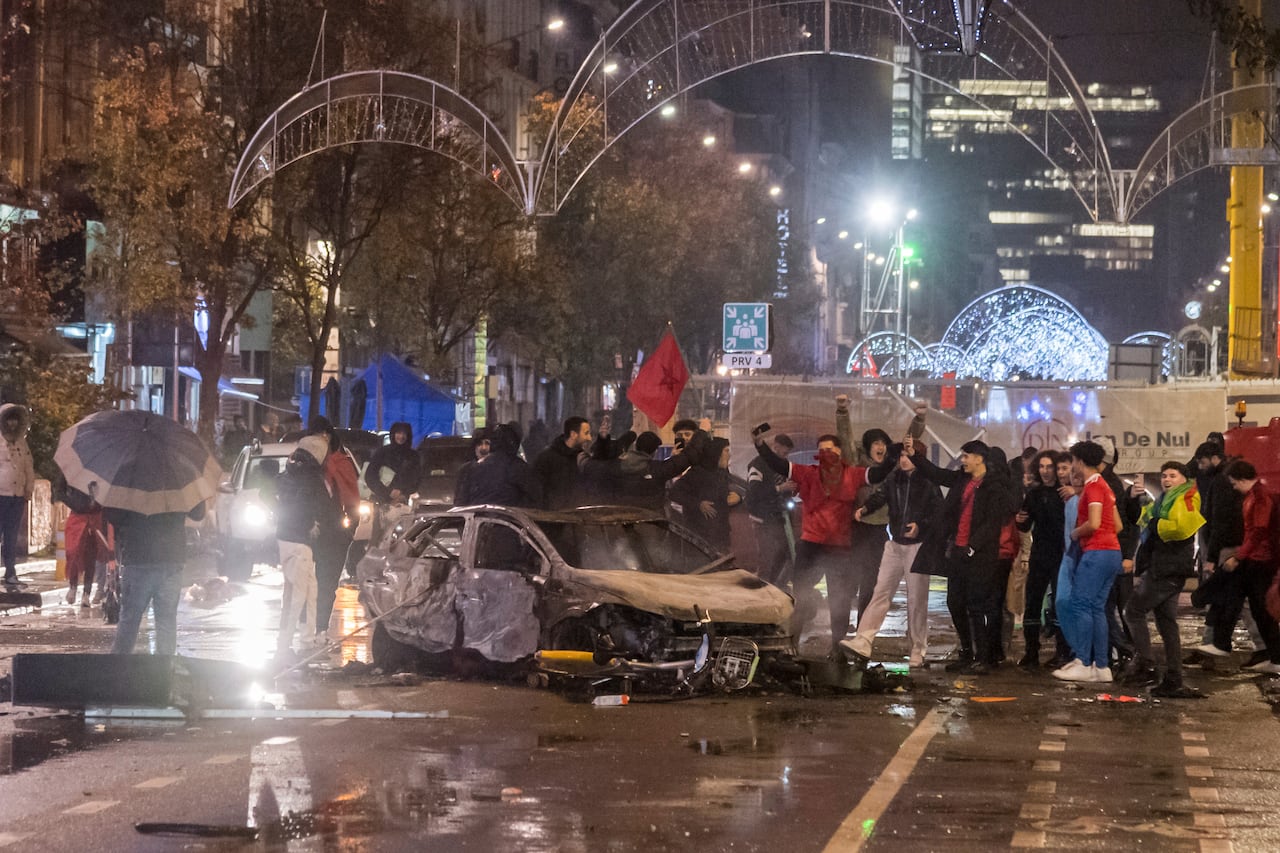 Riots and violence do happen at soccer matches. This Associated Press photo was taken in 2022 following violence in Brussels during and after a game. (Geert Vanden Wijngaert/The Associated Press)
He argues that an “overzealous” approach to policing could fuel situations with the potential to get out of hand or become violent, rather than create a sense of security.
Stott encourages police to focus on de-escalation and communication as opposed to force when it comes to an event like the World Cup.
“This is not going to be World War Three. This not going be the Stanley Cup final and the subsequent riot.”
WATCH | A look back at the 2011 Stanley Cup riot in Vancouver: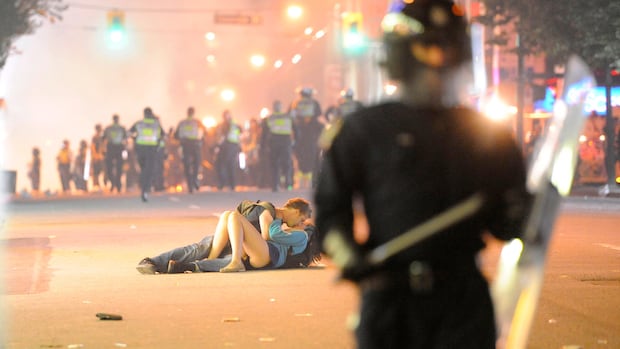
Vancouver’s Stanley Cup riots, 10 years later
Ten years after the streets of Vancouver were flooded with rioters after the Canucks lost Game 7 of the Stanley Cup final, Ian Hanomansing talks to the former police chief about that night and the role cellphones played. He also catches up with a couple who went viral after being photographed kissing on the ground.
But, Stott said he does see value in being prepared for the worst.
“It’s absolutely important that all forms of contingency are thought through and it’s refreshing to know the authorities are thinking about some of those more extreme events.”