

Listen to this article
Estimated 5 minutes
The audio version of this article is generated by AI-based technology. Mispronunciations can occur. We are working with our partners to continually review and improve the results.
Spring arrived in Fort McMurray with a thud that Mohammed Tarrabin says cost him more than $5,500.
Tarrabin was driving a Hummer SUV last month when he hit a pothole on a section of Highway 63 that crosses through Fort McMurray. He says another pothole damaged a different vehicle he was driving south of Fort McMurray.
Tarrabin said he has heard more stories than usual of people’s tires exploding and rims bending from potholes on Highway 63 over the last 12 months.
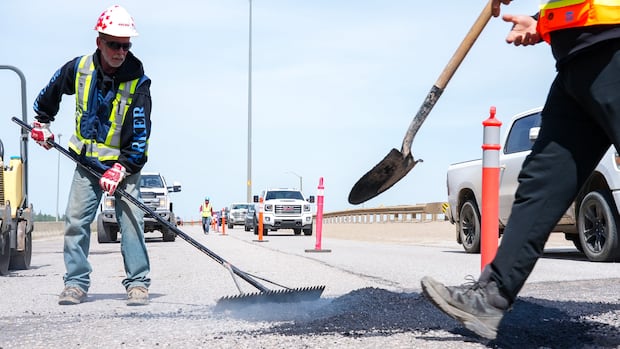
On Friday, Tarrabin and dozens of volunteers started setting up pylons, directing traffic and filling the potholes themselves.
“I have been here for 20 years and I’ve never seen it ever like this. It’s actually a shame that our city has to go through this,” he told CBC News. “Fort McMurray doesn’t deserve this, billions of dollars go through that road every day.”
The volunteers were helped by local contractors who said they are just as frustrated with the state of Highway 63. They provided shovels, rakes, a truck full of asphalt and the heavy equipment needed for road paving.
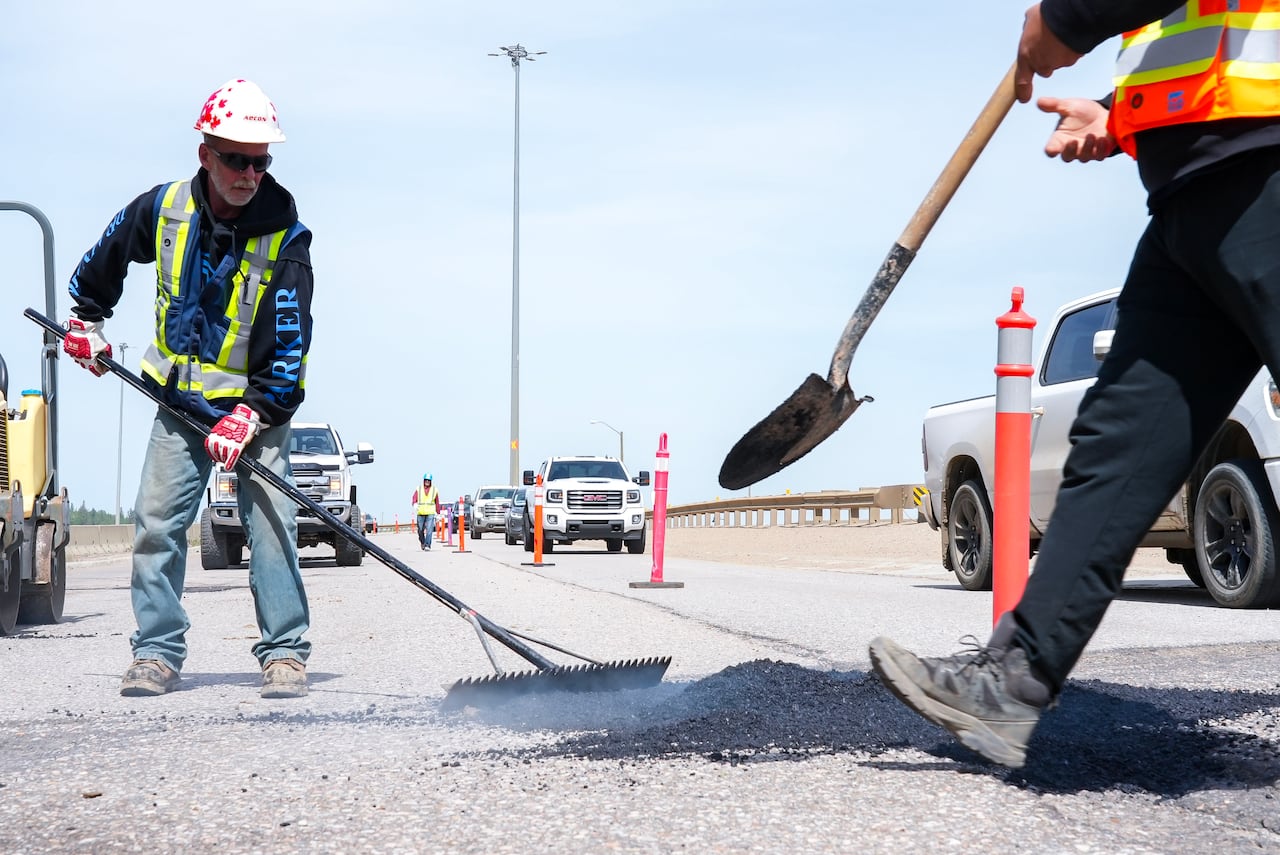 Volunteers fill potholes along a stretch of Highway 63 passing by downtown Fort McMurray on June 12, 2026. (Vincent McDermott/CBC)
“I was honestly thinking about making a video and making it like [the] Mario Kart ,” said Kimberly Mackie, who was documenting filled potholes to send to the Alberta government.
Mackie said she and her husband have spent $2,500 on both their vehicles after they were damaged by Highway 63 potholes.
“It feels like they’re coming out of nowhere.”
Potholes are created when rain or melting snow seeps into cracks in the pavement and collect in the underlying soil. The roads are pushed up as the water freezes. Traffic forms new cracks, which fill with moisture. A pothole is formed when the road weakens and collapses from the weight of traffic.
The province contracts Emcon Services to maintain the highway. The company did not return CBC News’ requests for an interview.
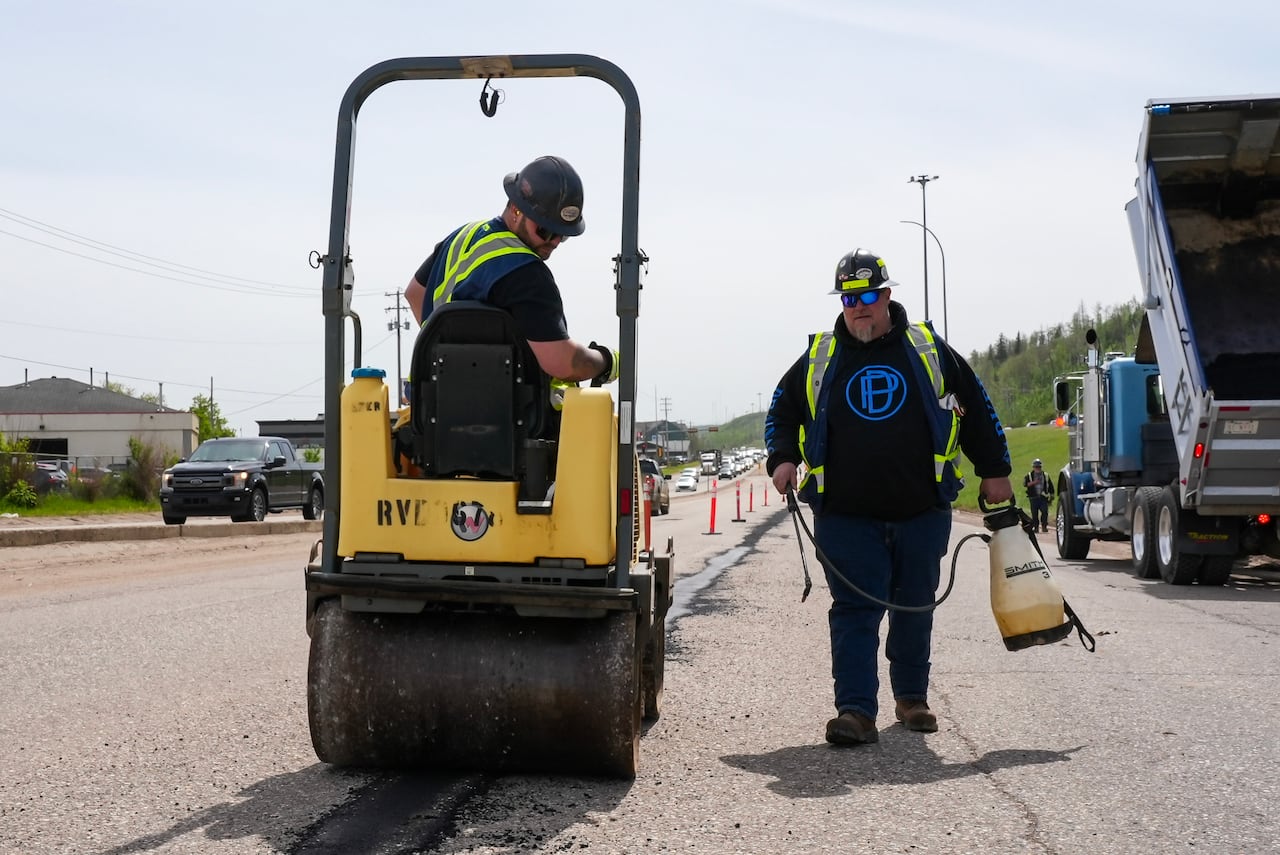 Volunteers fill potholes with asphalt on a stretch of Highway 63 passing through downtown Fort McMurray on June 12, 2026. (Vincent McDermott/CBC)
“I’m empathetic for the drivers experiencing the driving conditions when you have potholes and rough roads,” Alberta Transportation Minister Devin Dreeshen said in an interview with CBC News on Friday.
“I’m a driver myself. I understand the frustration when you see rough roads, especially in the springtime, but know that the hot asphalt plants are starting up today.”
Regional Municipality of Wood Buffalo (RMWB) Mayor Sandy Bowman told CBC News he shares the community’s frustrations. In recent months Highway 63 potholes have also damaged his vehicle, he said, as well as vehicles driven by municipal councillors.
Laila Goodridge, the Conservative MP for Fort McMurray-Cold Lake, said in a letter she posted to Facebook on Thursday that the highway is in the worst condition she has ever seen.
“Excessively large potholes, lack of functional lighting throughout most of the townsite, inadequate plowing, insufficient mowing of ditches and flooding are all negatively impacting the usability of the road and the health of our community,” she wrote in letter to Dreeshen.
“The state of Highway 881 isn’t much better, with a bridge that washes out nearly every year, flooding, potholes and still no passing lanes.”
Mayor wants RMWB to oversee sections of Highway 63
Bowman said he warned the province there would be plenty of potholes this spring after northeastern Alberta faced a long winter. Last year was just as bad, he said.
Bowman said he wants the municipality to manage pothole repairs, line painting and road cleaning along an 18-kilometre stretch of Highway 63 that passes through Fort McMurray. He said talks with the province have been positive recently, but he does not want the RMWB to cover the bill.
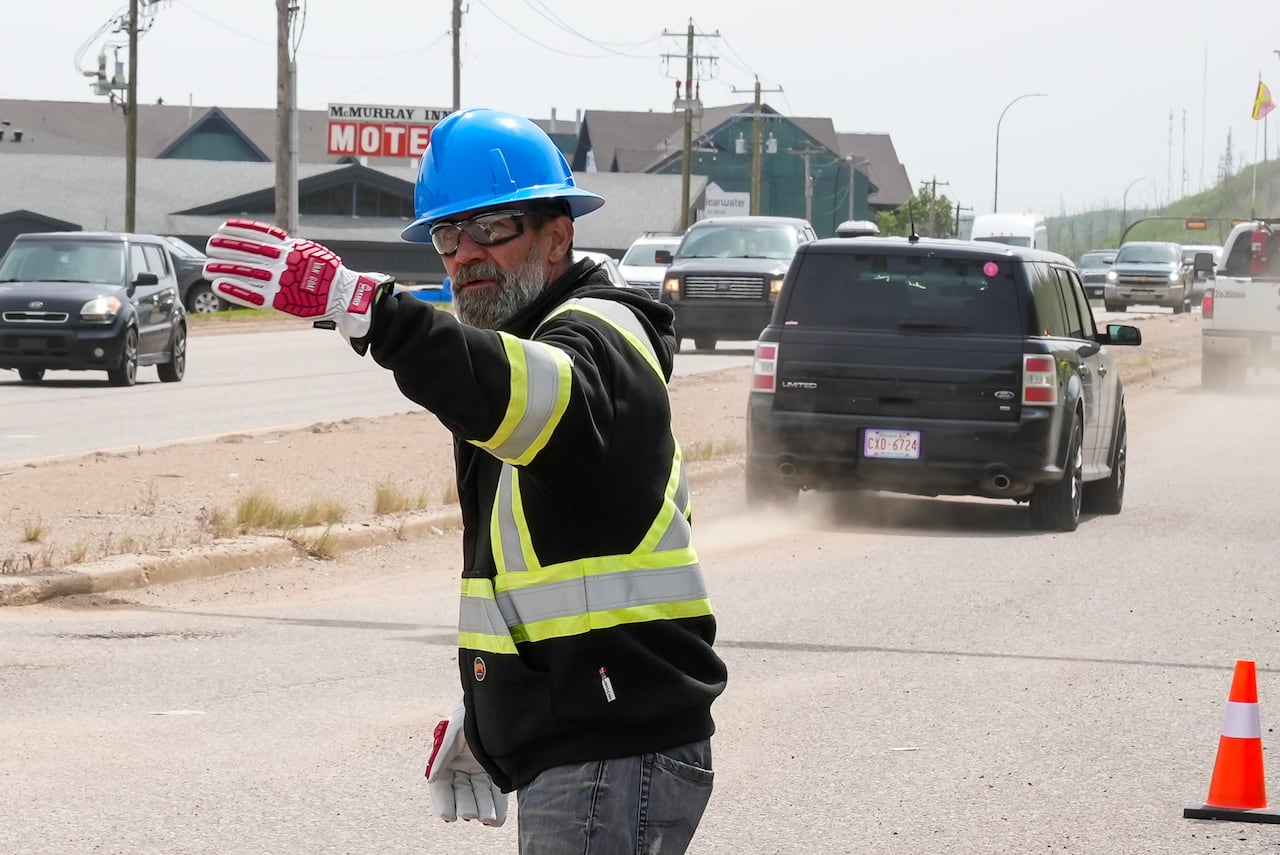 A man directs traffic on Highway 63 near downtown Fort McMurray on June 12, 2026. (Vincent McDermott/CBC)
“We don’t want our taxpayers paying because we’re fixing their highway,” he said.
“The province can’t contract the municipality to do work, but we may be able to work something [out] where we’re contracting it and we’re controlling the contract.”
Dreeshen said he has heard “loud and clear” from Fort McMurray’s political leaders and residents on the issue. He said he agrees the highway would be well cared for by the municipality and is open to the idea.
“This rough spring and a tough freeze-thaw cycle and just potholes being more prevalent, we already were going in this direction to transfer it over, but it really did accelerate the timelines,” he said.
“The province obviously understands the importance of Fort McMurray — the $15 billion-plus of royalties that the province gets comes from the Fort McMurray region.”