
Some Montrealers online are calling it “Noshgate.” Others prefer “Tabarnosh.”
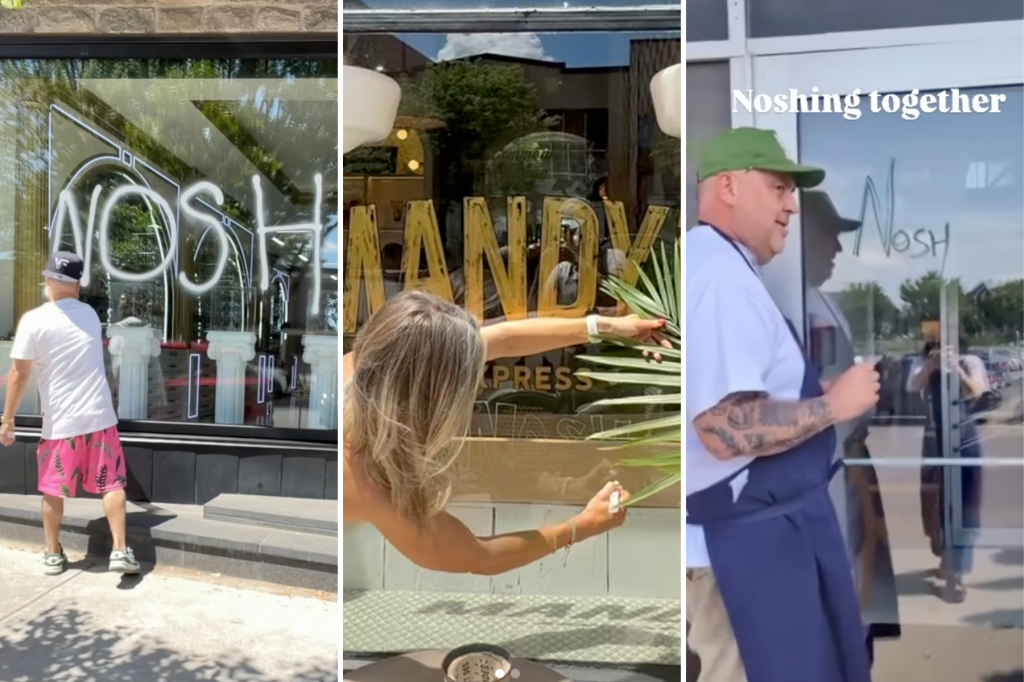
Days after Quebec’s language watchdog took issue with the use of the Yiddish word “nosh” in the name of Arthurs Nosh Bar, restaurant owners and businesses across Montreal have rallied around the beloved St-Henri brunch spot, covering their storefronts with the four-letter word.
David McMillan, one of the city’s best-known chefs, posted a video of himself on social media writing “Nosh” on the door of his West Island restaurant, Grille-Nature.
“Noshing together,” he wrote.
Yan’s Delicatessen, founded by Benji Greenberg, shared a similar video.
Another response came from Mandy’s, the Montreal-based salad chain.
“Falafel. Taco. Dim sum. Gelato. Satay. Souvlaki. Nosh,” the company wrote on Instagram alongside a photo of its window covered with food words borrowed from around the world.
“The words may come from different places, but they belong to all of us now,” the company wrote. “Here’s to the cheis, bakers, restaurateurs and food lovers who make our community richer, more flavourful and more connected every day.”
Even eyewear company Vintage Frames sprayed “NOSH” across its storefront window in white paint.
“Nosh around and find out,” the company wrote.
Arthurs owners Raegan Steinberg and Alex Cohen told The Gazette the controversy began when they received a letter from the OQLF regarding the word “nosh” on their trademarked sign.
“Nosh is the Yiddish word for ‘grab a bite’ or ‘have a nibble,’” Steinberg told The Gazette. “We thought it was a perfect fit.”
UNESCO classifies Yiddish as an endangered language. Much of its population was wiped out during the Holocaust.
Steinberg said the complaint has been “frustrating.” She told The Gazette she is now trying to bring the restaurant into compliance, but the agency “didn’t offer much of a solution.”
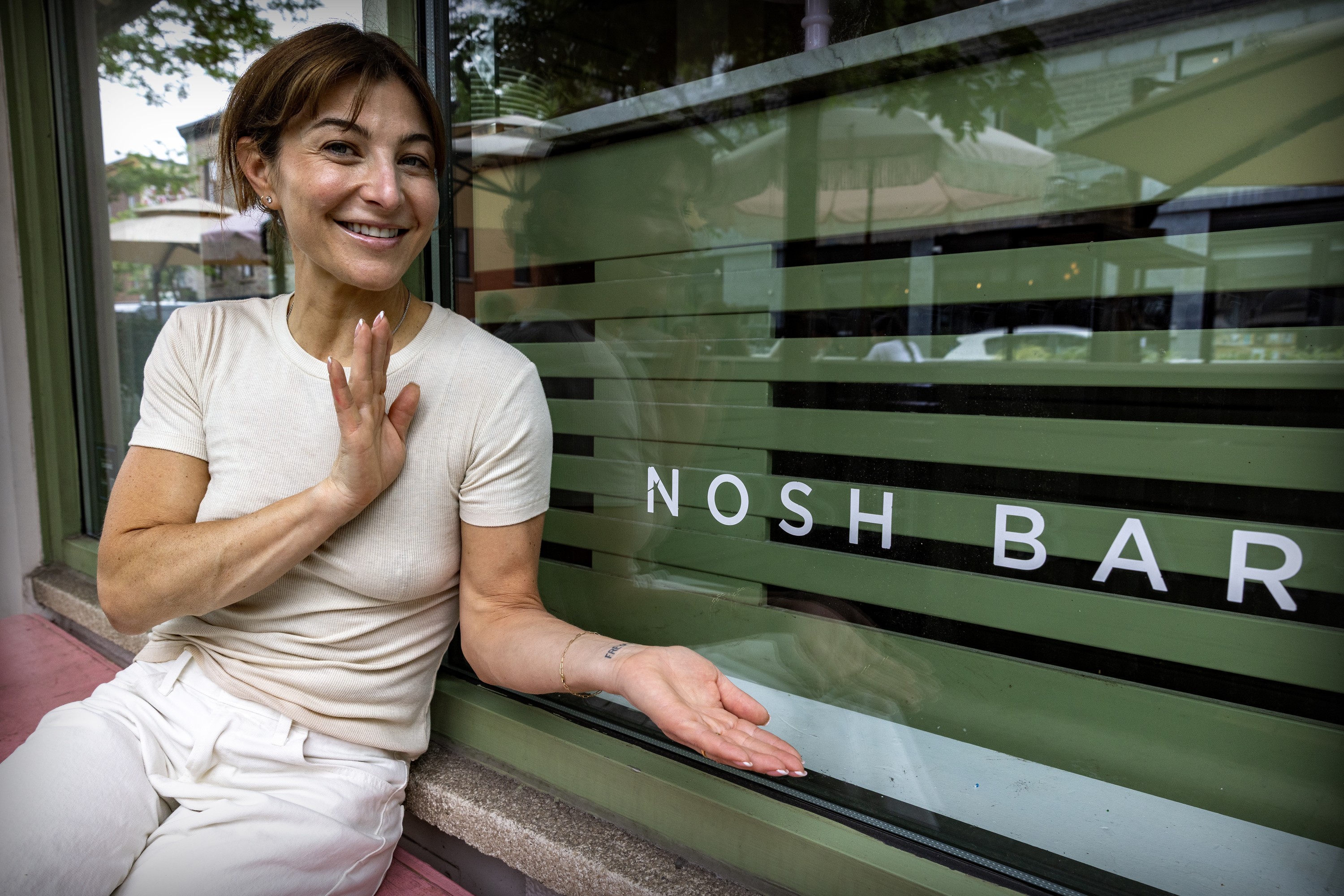 Arthurs Nosh Bar owner Raegan Steinberg with the not-French signage outside her restaurant. “I love Quebec. I love Montreal. I’m a proud Quebecer,” she says. John Mahoney / Montreal Gazette
Montreal, which accounts for more than half of Quebec’s economy, has become a recurring target for National Assembly politicians who portray the city as a source of cultural dilution.
That has been especially true in recent years under former premier François Legault’s drive to strengthen the use of French in public life. Sweeping new language rules that took effect last June have left business owners grappling with the costs and bureaucracy of ensuring their signs and branding comply.
The Office québécois de la langue française (OQLF) has also been given significantly more resources to enforce the province’s language laws. Its annual budget has roughly doubled to about $49 million.
Earlier this year, Lahmajoune, a Syrian-Armenian-Lebanese bakery in Villeray, received a complaint concerning the language used on its social media accounts.
The Burgundy Lion Pub, further east on Notre-Dame Street, faced a similar encounter with the OQLF last year. Owner Toby Lyle told The Gazette the agency deemed “Pub” and “Lion” acceptable on the establishment’s sign but raised concerns about the word “Burgundy,” which refers to the neighbourhood’s name, Little Burgundy — or Petite-Bourgogne in French.
But Lyle said the English name has been used for generations. The agency later apologized and allowed the sign to remain unchanged.
“Given the difficulties of day-to-day life, the fact that this is what we’re dealing with is frustrating,” Steinberg said on Arthurs’ complaint.
“I’m all for preserving the French language. I’m a proud French-speaking Quebecer. My grandfather is from Joliette, Quebec. My grandmother is from Quebec City.”
The dispute has also spawned a steady stream of memes, jokes and photoshopped images online.
One shared image on social media rebrands the city’s iconic Orange Julep as the “Orange Tabarnosh.”
Do you have a story? Write to me at hnorth@postmedia.com

I’ve been writing for the Montreal Gazette since 2023. My favourite stories are ones that make you think and I’m always looking for new ways to tell them. At McGill, I studied economics and computer science. Now I live in the city’s Plateau, where I wear Doc Martens to try and blend in among the hipsters. Got a story? Email me.
hnorth@postmedia.com