
When Fady Dagher was chosen as Montreal’s next police chief in 2023, expectations were high he would help improve relations with the city’s diverse population and confront concerns about discrimination within the department.
He acknowledged at the time that it wasn’t going to happen overnight, but there had been signs of progress in the three years since. Dagher had recruited more officers from different cultural backgrounds, sought closer ties with community leaders, set a fresh tone within the ranks, and implemented a strategy to address racial profiling that involved tracking complaints.
The disturbing allegations of racist abuse by officers in Montreal North that came to light Friday are a repudiation of all that Dagher has ever stood for.
But at the same time, the fact that they surfaced at all shows that the culture change he is trying to bring to the Service de Police de la Ville de Montréal (SPVM) may be slowly taking hold.
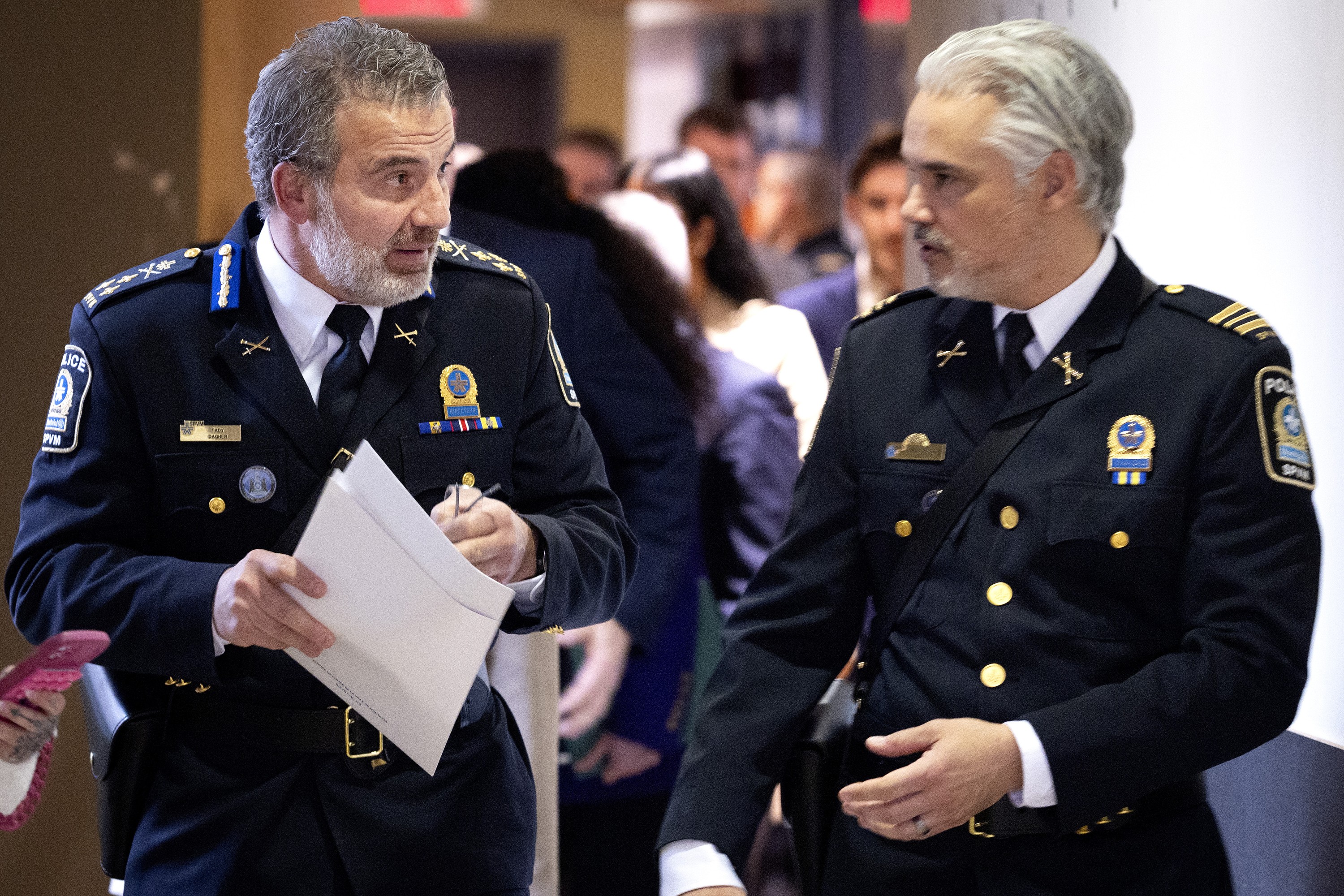 Montreal police chief Fady Dagher, left, speaks with François Sauvé as they arrive to make an announcement at SPVM headquarters in Montreal, on Monday, March 30, 2026. (Allen McInnis / MONTREAL GAZETTE) Allen McInnis / Montreal Gazette
Late Friday night, Dagher summoned reporters to police headquarters, where he revealed that the night patrol in Station 39 had been disbanded just over an hour earlier. A total of 16 officers were removed from active duty and could face disciplinary action — or even criminal charges if prosecutors decide they’re warranted.
The abuse alleged is repugnant: that these mostly male recent recruits were in the habit of collecting trophies from suspects by cutting the dreadlocks and hair from Black and Arab men they arrested. More than just a few unfortunate incidents, this suggests a pattern of toxic and racist behaviour.
At a time when Montreal is increasingly investigating hate crimes and extremist groups are flexing, the existence of these kinds of attitudes within the SPVM itself is troubling.
The seriousness of the allegations surpasses the kind of systemic discrimination that the department has tried to curb in recent years, namely racial profiling stemming from random interceptions.
If proven, these actions would be a betrayal of the very policing philosophy Dagher has tried to instill. He professed himself “hurt.”
Dagher has made a career of trying to forge better relationships and foster understanding between officers and citizens of different races, backgrounds and cultures. He has worked in these diverse communities himself.
As chief of police in Longueuil, he pioneered a new approach to policing, where some of the officers would spend time in the homes of residents within their territory, help the families cook dinner, sit across the table from them at meal times and listen to their stories. The intent was to build trust and prevent crime.
Dagher was brought to Montreal’s force to bring this ethos to a city amid growing concerns about racial profiling in recent years. He has tweaked the street checks policy that courts have increasingly ruled discriminatory, but refused an outright ban.
The chief’s swift and decisive action in Montreal North means he could be able to preserve his own credibility.
The fact that the rotten apples in Montreal North were denounced by their own colleagues indicates a shift is underway.
Past chiefs might have denied, minimized or claimed to be shocked when presented with such evidence — or simply tried to keep it under wraps.
Public trust in the SPVM, however, has still been shaken in a city with a long history of friction between police and minority groups.
The shooting death of teenager Fredy Villanueva during a skirmish with police in Montreal North in 2008 has cast a long shadow over the city.
Riots, protests and a lengthy public inquiry followed. But the proceedings ended with a sentiment that police got off without consequences.
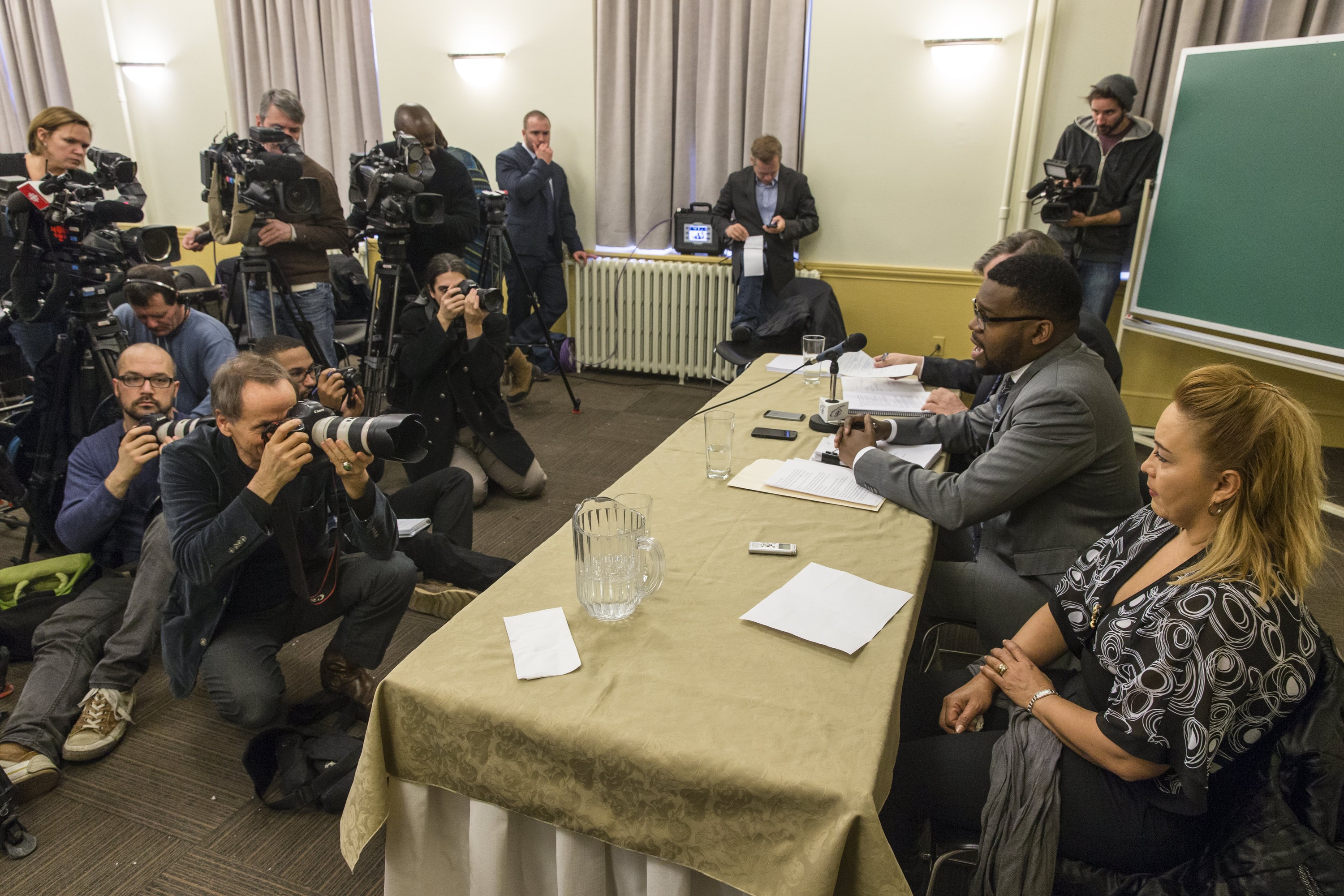 Lilian Villanueva, right, mother of Fredy Villaneuva, who was shot and killed by Montreal police in August 2008, and Villanueva family lawyer Peter Georges-Louis, second from right, speak to the media to react to the Quebec coroner report into the death of Fredy Villanueva in Montreal on Tuesday, December 17, 2013. (Dario Ayala / Montreal Gazette) Dario Ayala / Montreal Gazette
Years of incidents of Montrealers being stopped for driving, crossing the street, laughing, singing too loudly or taking out the trash while Black (or Arab, or Indigenous, or Latino) have created lingering mistrust. Statistics have demonstrated that Montrealers of racialized backgrounds are many times more likely to be intercepted by police.
The fatal shooting of teenager Nooran Rezayi by Longueuil police last fall has reignited old concerns about how minorities are treated by law enforcement — while sparking new questions about whether officers followed protocols for investigating such cases.
Nevertheless, the fact that the rotten apples in Montreal North were denounced by their own colleagues indicates a shift is underway. The blue cone of silence that once allowed corruption to fester may now be yielding and the impunity that has long protected those in uniform from accountability may finally be giving way.
But it is not yet complete. And it will take significant effort to restore fragile confidence in Montreal police after the fresh allegations.
Montreal Mayor Soraya Martinez Ferrada called for calm Saturday alongside Montreal North borough mayor Christine Black.
“The bond of trust between the public and those who are there to protect us has been weakened,” Martinez Ferrada acknowledged, while adding that Montrealers deserve the “truth” about what happened.
She must take responsibility for making sure people get these answers by pushing for a full and transparent investigation, ensuring real accountability and demanding serious consequences where warranted for all those involved.
The initial responses from the police chief and mayor may have been reassuring. They showed authorities are taking these damaging and alarming allegations seriously.
But they’re only the first steps on a long road to rebuilding trust in Montreal police.
ahanes@postmedia.com
Editor’s Picks

I started at The Montreal Gazette in 2000 as an intern. Since then I have covered the National Assembly and courts, worked on the assignment desk and written editorials, before debuting as city columnist in 2017.
ahanes@postmedia.com