
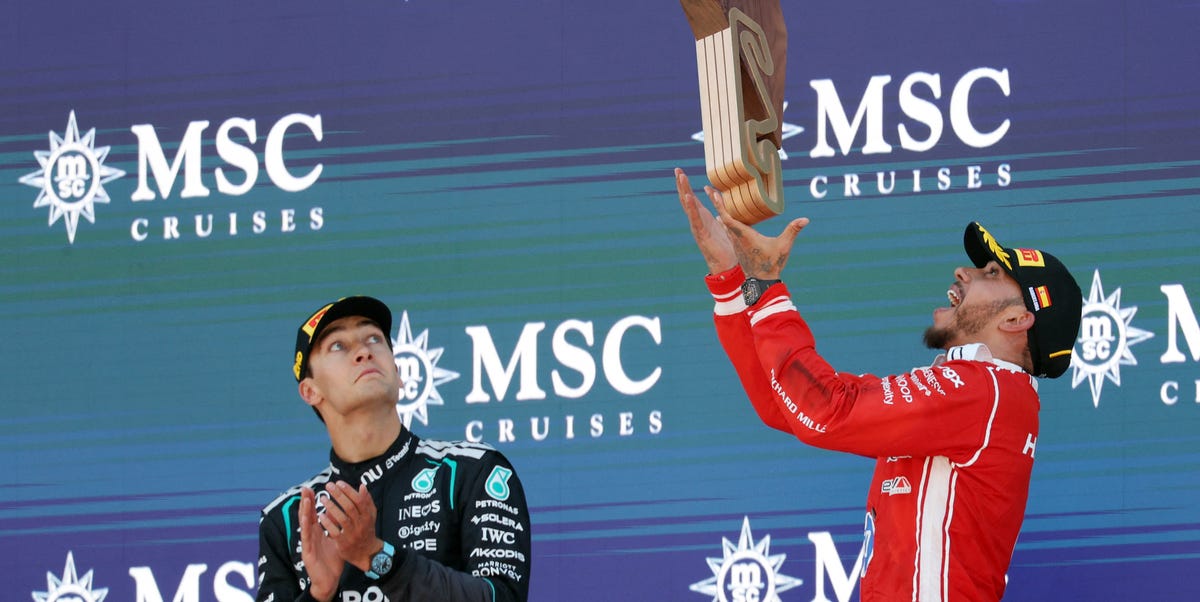
After last weekend, Mercedes Formula 1 team boss Toto Wolff knows that this season won’t just be about Kimi Antonelli and George Russell slugging it out. The 2026 Barcelona-Catalunya Grand Prix suggested that Lewis Hamilton and Ferrari will be a serious threat over the balance of what is still a long F1 season.
Hamilton won in Spain on pure performance, helped by the latest aero upgrade package, which followed on from another deployed just three races ago in Miami. Mercedes played its hand in Montreal, and between them, the two teams will continue to bring new bits until the very end of the season. Form will ebb and flow depending on the characteristics of the track and the success or otherwise of everyone’s R&D programs, and there will be venues where one or the other team is ahead. And McLaren and Red Bull also have the potential to get involved from time to time as well, further adding to the Three-Pointed Star’s potential headaches.
Mark Thompson//Getty Images
The search for performance is one thing, but the real concern for Wolff and his team at the moment is the reliability of the 2026 power unit. In recent years, we’ve become used to the idea that modern F1 cars are bulletproof, and it’s not been unusual for all 20 starters to see the checkered flag. So when something happened to a frontrunner—for example, when Lando Norris retired in Zandvoort last year and handed a bonus to title rivals Oscar Piastri and Verstappen—it was seen as something of an outlier.
Not so this year, when costly gremlins have been as common as they were 30 years ago. In Montreal, Russell retired with a battery issue while in the lead; Antonelli lost second place during the closing laps in Barcelona last weekend with a similar failure. Mercedes customer McLaren has had even worse luck, with a series of mechanical dramas, including a catastrophic double non-start in China. Hamilton, meanwhile, has had no such problems. Indeed, he has scored in all 10 2026 races, including the three sprints. If the works Mercedes drivers continue to have costly failures, it’s likely he’ll be there to take advantage.
Antonelli’s Barcelona retirement really hit Wolff hard, as the TV pictures of him thumping the desk in the garage indicated. “We don’t know yet what was the cause of the failure,” he said after the flag. “Most of the others were battery related, but different failures. It was not always the same, so we need to understand what it was—but clearly the symptom was quite similar to George in Montreal, where the car just switched off. We will be really digging deep to make sure that this doesn’t happen again.”
NurPhoto//Getty Images
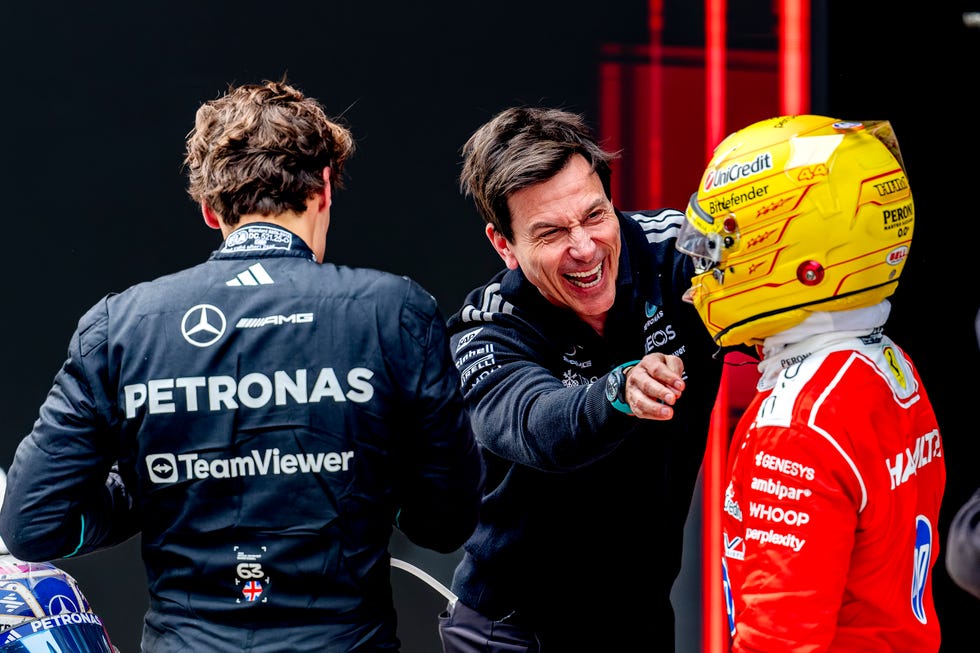
The retirement made losing out to Ferrari even more painful, as second and third would have been a decent outcome. “I’m underwhelmed,” said Wolff. “We can’t DNF cars in a continued way—losing 25 points in a constructors’ championship in Montreal, and losing another 18 points today. In order to finish first, first you have to finish, and reliability … this is what we need to get on top of, and that’s number one. So nobody’s happy about that, and we will leave no stone unturned to understand.”
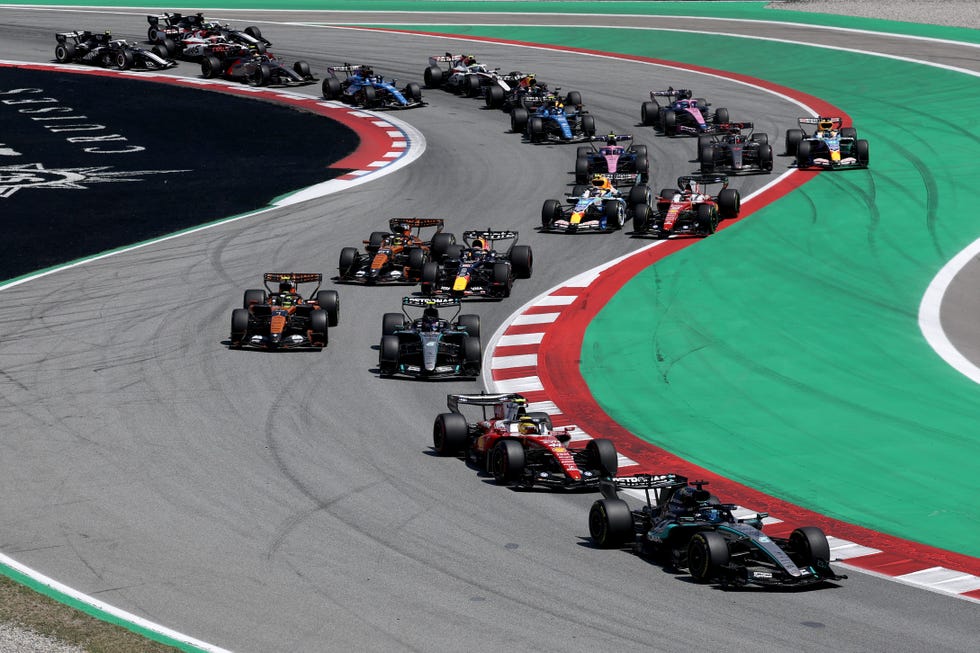
Wolff doesn’t just have to worry about the performance and reliability of the W17. His other ongoing challenge is to balance the interests of Antonelli and Russell, and give them both a fair chance. To his credit, he has allowed them to race thus far, although things had to be reined in a little after the fraught Montreal sprint. Explaining the ground rules in Canada, Wolff stressed that things might have to change if a third party entered the fight, with the proximity of Lando Norris that weekend demonstrating how Antonelli and Russell had slowed each other up by fighting. Barcelona was another demonstration of those concerns as Hamilton seized the initiative.
“George had an unbelievable beginning of the race, where it looked like everybody was standing still behind him,” he said. “But then the pace fell away, and towards the end of the first—and the other two stints clearly—Kimi had the advantage. And we didn’t interfere in them fighting, because that’s how we’ve always raced. But it’s a situation we need to look into for the future with both drivers: how to handle a situation where there’s a pace differential if we are fighting for a victory at the risk of losing a victory. And that’s going to be an interesting discussion, but always totally transparent to the best interest of the team.”
NurPhoto//Getty Images
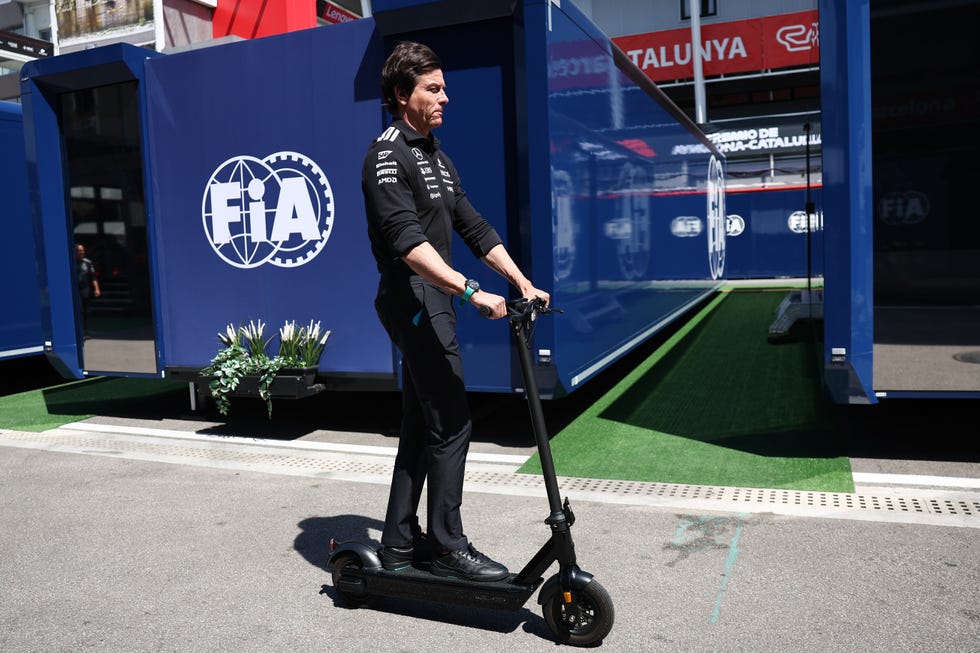
Asked by Road & Track to elaborate, he said: “We have always said that there is a third party now getting involved in the championship fight, constructor and driver. And in that respect we will discuss internally with them, with the two drivers, how we want to handle a situation where we risk of holding each other up. And I think it’s not going to be a problem; it’s just, maybe we need to recalibrate.”
Wolf seems to be implying that there could be times when the drivers are told to hold station and run in formation rather than race each other, potentially opening up a margin over the opposition that then allows the team to loosen the reins and let them battle later in the race. That sounds fine in theory, but it might not be easy to manage in practice.