

Listen to this article
Estimated 4 minutes
The audio version of this article is generated by AI-based technology. Mispronunciations can occur. We are working with our partners to continually review and improve the results.
Anand Sharma spies a TV wedged between overfilled recycling and garbage bins at a condo in Edmonton’s southwest.
The 113 West condo manager says despite not knowing where it came from, one of the building staff will take it to the eco station. If they don’t, they risk not getting municipal waste collected that week.
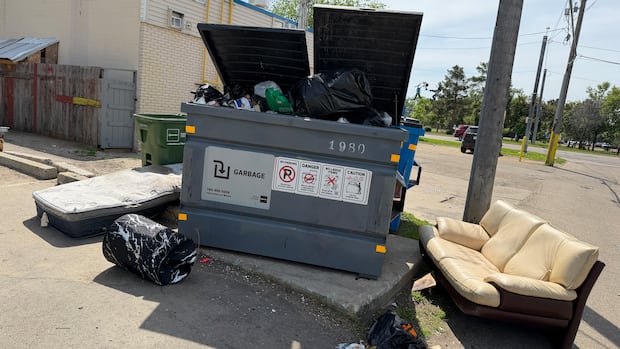
Mattresses, couches, a washing machine and even an exercise bike can be found at condo and apartment dumpsters around Edmonton. It’s a problem the city wants to clamp down on, with a number of new measures being discussed by utility committee next week.
Some measures city staff are considering include:
More free eco station daysA public awareness campaign about illegal dumpingEducation for condo or apartment managers, such as tips about putting bins further away from the street or site monitoring tools Higher finesA large item pick up program
According to the committee report, in surveying property managers, 73 per cent of them report hiring private waste disposal companies to deal with illegal dumping.
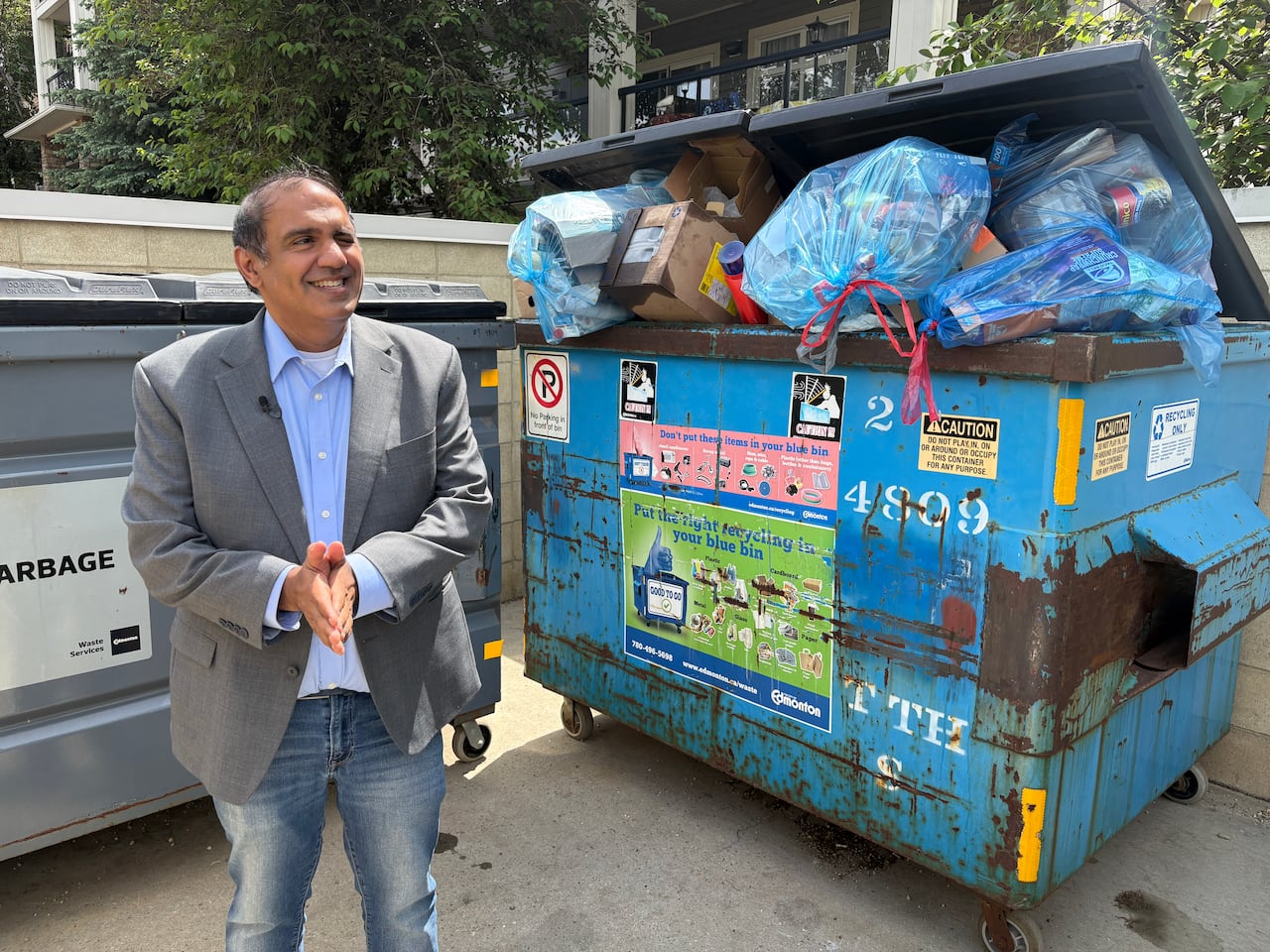 Anand Sharma, condo manager with 113 West, says his properties across the city are facing overflowing bins and illegal dumping. (Sam Brooks/CBC)
Sharma said condo corporations are paying more than they have in the past to keep spaces clean, and keeping illegal dumping at bay can be an administrative headache.
“How do you know when the garbage is going to be overflowing? You have to constantly watch it and then resource it.”
And that trickles down to condo owners, he said.
“They’re already paying the City of Edmonton fairly high rates for garbage service and waste services. And now they’re being extra taxed,” he said.
Sharma said while illegal dumping has always been an issue, it’s getting worse with waste volume limits. With the rollout of organic waste green bins, city crews are collecting less garbage.
Coun. Keren Tang said in an interview with CBC that while three-stream waste sorting has been a bumpier ride with condos and apartments, things like mattresses and two-by-fours shouldn’t be going into residential waste in the first place.
“This is an issue of illegal dumping, not necessarily an issue of the three-stream rollout. Let’s deal with the problem with the right tools,” she said.
For example, Tang notes the current city approach to large waste is car-centric.
“We’re always expecting people to come to us, to come to our facility, get a car, bring those items to us, it can create some challenges,” she said.
She said she’s excited by the idea of bringing services to residents, noting that many other cities already do a large item collection day.
“It certainly won’t be groundbreakingly new, but I’m glad that we’re at least exploring options.”
Some of these programs can be paid for with higher utility rates, others will have to be part of fall budget considerations, Tang said.
Enforcement woes
In the survey, property managers said while illegal dumping sometimes corresponds with tenants moving out, the problem for the most part is driven by non-tenants.
The fine for dumping common items on private property is $250 or $1,000 for large items or construction waste.
But the report highlights the high bar for successfully enforcing illegal dumping. Property managers must provide a witness statement and appear in court.
But even then, 60 per cent of property managers were dissatisfied with bylaw enforcement’s response, saying the process is cumbersome, slow and dumping often goes unenforced despite evidence.
Over a more-than-five-year period, the city handed out 240 tickets for illegal dumping at apartment and condo buildings.