
Your support helps us to tell the story
From reproductive rights to climate change to Big Tech, The Independent is on the ground when the story is developing. Whether it’s investigating the financials of Elon Musk’s pro-Trump PAC or producing our latest documentary, ‘The A Word’, which shines a light on the American women fighting for reproductive rights, we know how important it is to parse out the facts from the messaging.
At such a critical moment in US history, we need reporters on the ground. Your donation allows us to keep sending journalists to speak to both sides of the story.
The Independent is trusted by Americans across the entire political spectrum. And unlike many other quality news outlets, we choose not to lock Americans out of our reporting and analysis with paywalls. We believe quality journalism should be available to everyone, paid for by those who can afford it.
Your support makes all the difference.Read more
The soaring use of weight loss jabs the UK is hitting supermarket sales as the so-called “small appetites” economy grows.
Research by retail data firm Worldpanel by Numerator shows that weight loss drug use among Britons has nearly tripled in two years, with 6.3 per cent of households in Britain having at least one user in 2026.
That’s up sharply from 4.1 per cent in 2025 and 2.3 per cent in 2024.
That has led to a change in shopping patterns, with grocery bills falling overall by £780m as users of the GLP-1 drug cut back, Worldpanel found in its survey of 11,500 households.
This equates to a £418 decline in spend per household when compared to non-user households.
Sales of crisps and chocolates are the worst hit, though sales of oral health products are up due to side-effects of the jabs, such as bad breath.
But the jabs are expensive – four out of ten users say they have quit the medication because of the expense, which can be several hundred pounds a month.
This is the third year Worldpanel has studied Britain’s relationship with weight loss drugs.
In 2026, women accounted for 77 per cent of current users, while men accounted for 23 per cent.
Over a quarter (26 per cent) of respondents said they would use GLP-1 medication to lose weight, even if they did not have a major health issue – marking a shift away from medical or health reasons for buying the drugs.
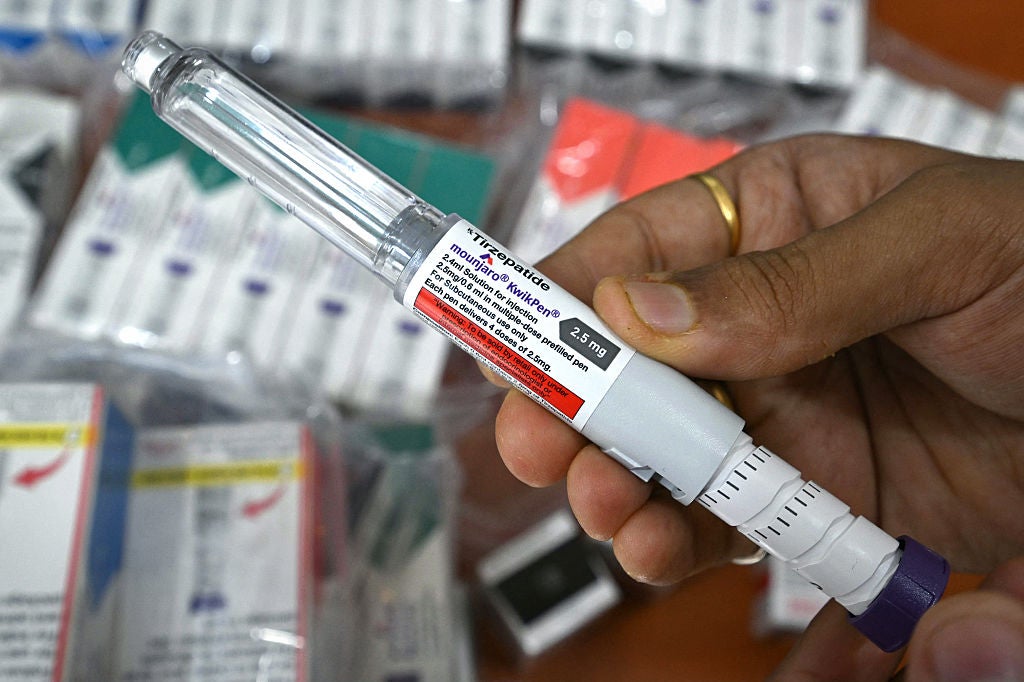 Some 6.3 per cent of households in Britain having at least one user in 2026 (AFP via Getty Images)
Chantel Kennaugh, head of public sector and nutrition at Worldpanel, said: “What was once a specialised treatment, primarily prescribed for type 2 diabetes, has in just a few short years become a mainstream force. Now, 68 per cent of users are taking GLP-1s specifically to lose weight, opening them up to a much wider audience.
“These drugs are fundamentally disrupting how people engage with food and drink, with ripple effects already being felt across grocery and lifestyle, forcing brands and businesses to adapt at pace.”
The findings reveal that over half of users now describe their approach to eating as “mindful”, meaning they are guided by their body’s hunger cues rather than habit, routine or restriction.
Similarly, users’ expectations of food businesses and retailers are changing. Two-fifths (40 per cent) of users want smaller portion sizes on menus, and over a quarter (26 per cent) want GLP-1 friendly menu sections.
Nishita Pattni, senior consultant at Worldpanel by Numerator said: “The picture ahead is complex. While 72 per cent believe GLP-1 medications are being adopted too quickly without sufficient understanding of their long-term effects, growth shows no sign of slowing.
“Rising adoption in markets like the US, combined with continued innovation, points to even faster uptake. As these drugs reshape user needs, consumers will increasingly look to retailers and manufacturers for support and guidance.”
The British Retail Consortium says supermarkets will adjust to customer needs.
Andrew Opie, director of food & sustainability at the BRC, said: “Retailers have invested heavily in healthier products, along with specific product lines to support those on GLP-1. Fierce competition between retailers means they are quick to deliver new products as consumer preferences change and new consumption trends emerge.”