

Listen to this article
Estimated 5 minutes
The audio version of this article is generated by AI-based technology. Mispronunciations can occur. We are working with our partners to continually review and improve the results.
A Leaside house that has been sitting vacant for six years is testing the patience of the homeowner’s neighbors.
According to city’s building records, the former bungalow on Laird Drive is being converted to a multiplex, but the local neighbourhood association says work on the house happens only sporadically.
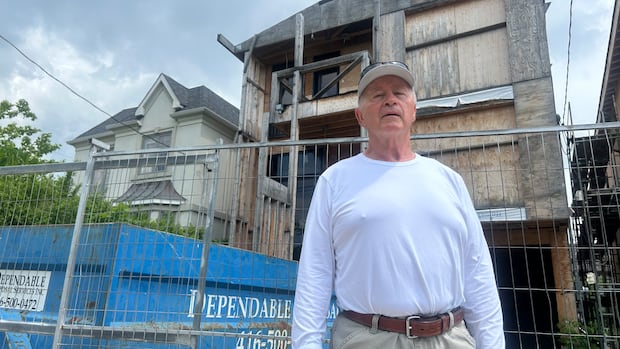
“Houses being built shouldn’t take years and years and years,” said Rick Price, a member of the Leaside Residents Association who also lives around the corner from the home.
“It becomes an eyesore,” he said.
The Laird Avenue house was sold to its current owner in 2020 for about $1.4 million, real estate records show, but neighbours say it has been either empty or under construction ever since. It’s now a weather-worn two-storey structure clad in plywood, which building records show will eventually include three separate units.
CBC Toronto has contacted the Laird Drive property owner and requested an interview but he has not yet responded.
Empty homes a larger issue across Toronto
Geoff Kettel, co-president of the Leaside Residents Association, says the problem of homes sitting empty is not unique to his neighbourhood. City records show there are currently thousands of vacant homes in Toronto.
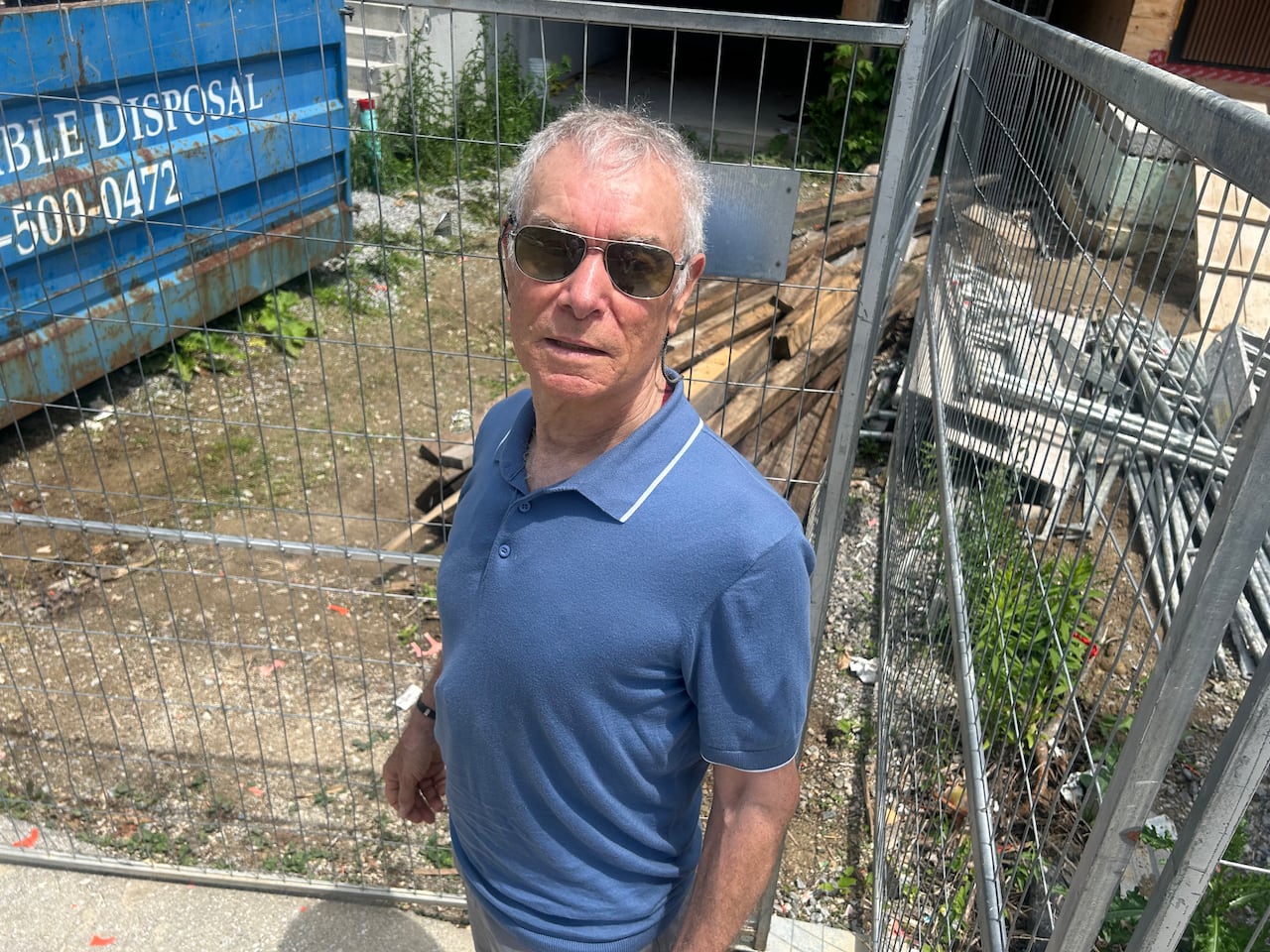 Geoff Kettel is president of the Leaside Residents Association, and says problems with vacant, unfinished homes are not unique to Leaside. (Mike Smee/CBC)
“It’s a city-wide issue,” said Kettel, who’s also co-chair of the Federation of North Toronto Residents Associations.
In 2022 the city implemented a vacant home tax (VHT) as a way of tackling the housing crisis.
The idea was to encourage people to rent their empty properties, and to penalize those who choose to leave them vacant. In the first year, property owners were billed one per cent of their home’s assessed value — this year, it’s up to three per cent.
The number of homes eligible to be taxed has been dropping steadily, according to city records, although the issue still persists.
In 2022, there were 7,276 houses eligible for the vacant home tax, city staff told CBC Toronto in an email. That number dropped to 5,110 in 2023, and just under 5,000 in 2024, the last year for which statistics are available.
The number of unoccupied houses is likely larger, however, because homes that are undergoing renovations or are rebuilding, such as the one on Laird Avenue, are exempt from the vacant home tax.
Staff say appeals and re-assessments are still ongoing but they expect the city to take in about $50 million annually for 2022 and 2023 and slightly more for 2024, because of the hike in the VHT from one to three per cent.
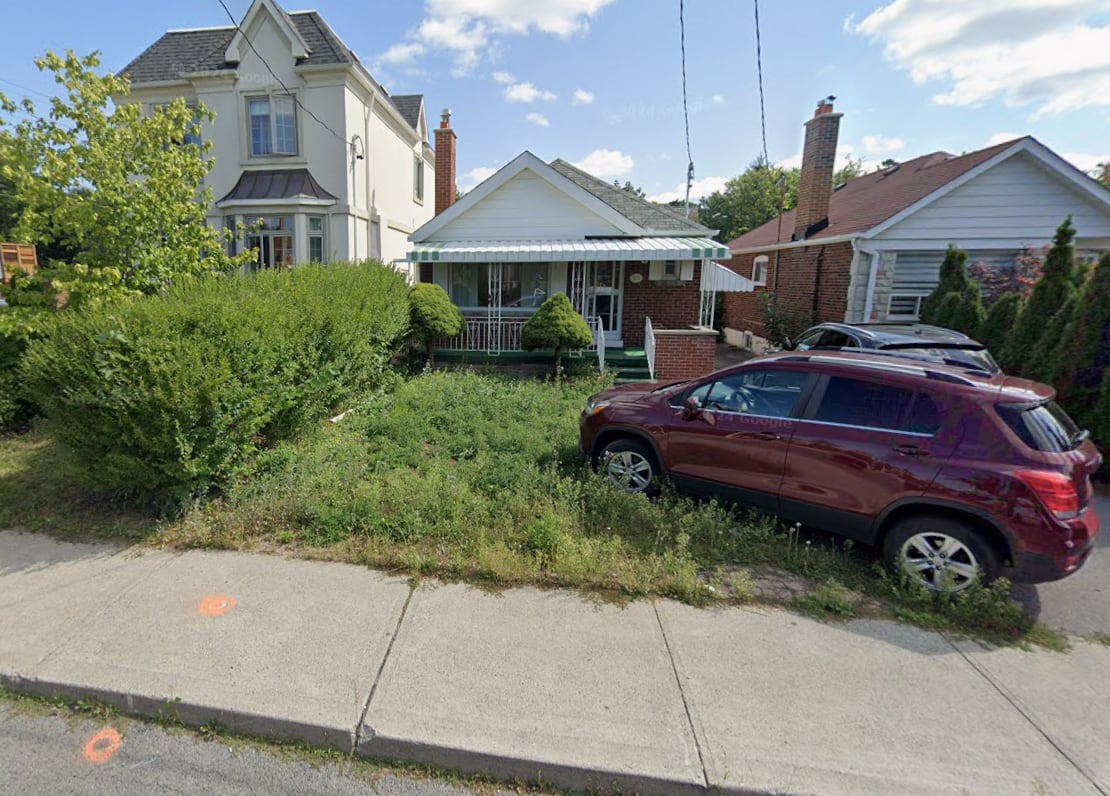 The house was sold to its current owner in 2020 for about $1.4 million, real estate records show, but neighbours say it has been either empty or under construction ever since. (Google Maps)Vacant homes can be put to better use: developer
David Walsh, a commercial real estate developer who sometimes works with non-profits to create homes for low income families, says houses like the one on Laird Drive could be ideal temporary housing.
“They’re a real resource for the city’s housing needs,” he said.
But the idea hasn’t really caught on. He says developers he’s approached in the past tell him they “couldn’t be bothered” turning their unfinished projects over to temporary low income housing, often citing insurance and damage concerns.
Walsh points out that insurance costs could be covered by either the city or any non-profit that chooses to take on the project. And damage wouldn’t be a major concern since in many cases the house is destined to be torn down anyway, he says.
In the case of the Laird Avenue property, Walsh says the original bungalow would have made a good candidate for temporary housing: “One like this doesn’t have a lot to lose — they were going to tear it down or reconstruct it anyway,” he says.
Walsh says the economic slowdown is the reason why some owners are holding off developing their properties.
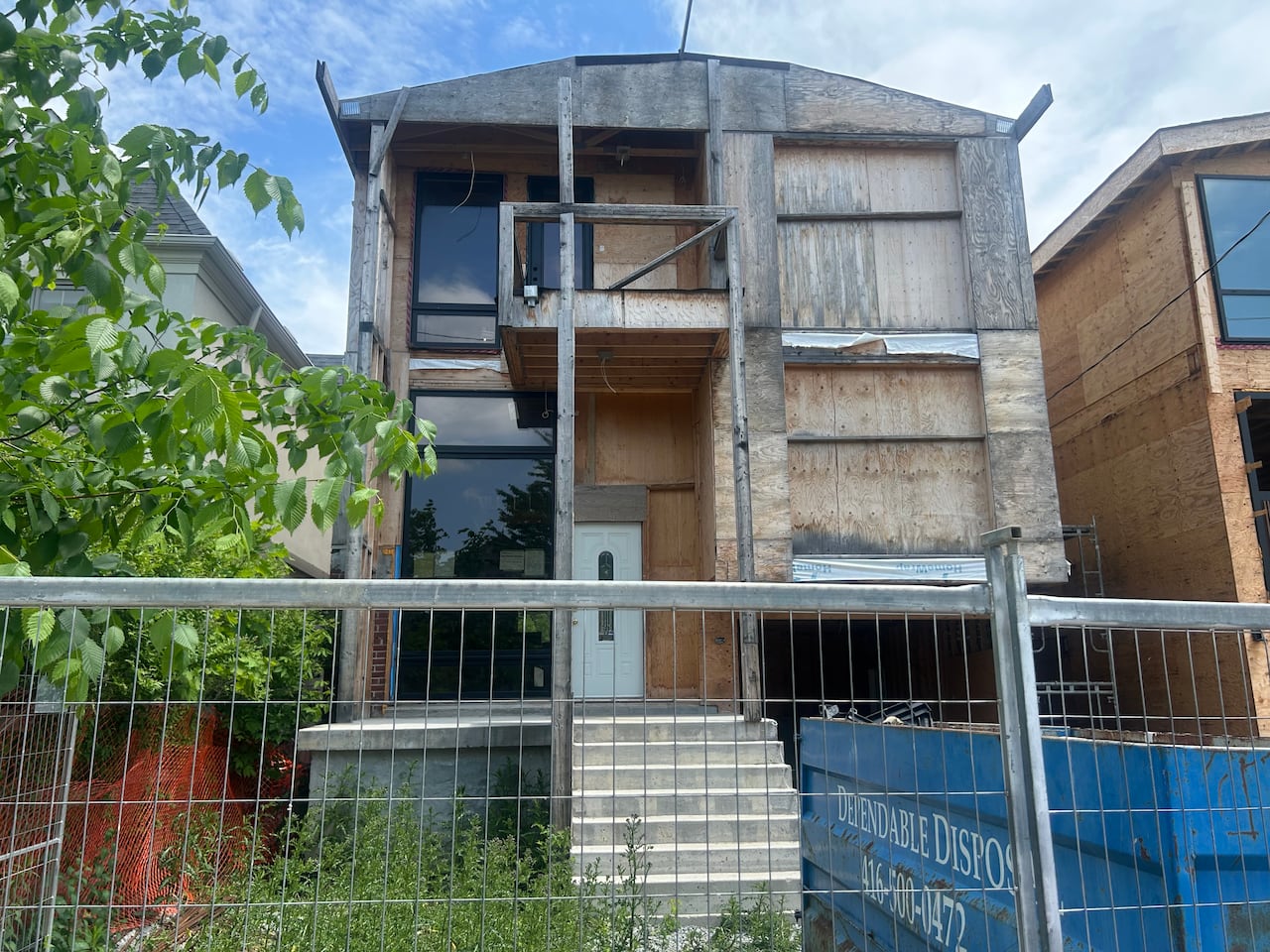 The homeowner has a city-issued permit to build a triplex on the site, however work on the Laird Drive property only happens sporadically, neighbours say. (Mike Smee/CBC)’Finish it, and sell it, or live in it’:
Back on Laird drive, Price said he just wants to see the home finished.
City records show the owner applied for minor variances to slightly enlarge the bungalow’s footprint and height two years after he bought the house, which were turned down.
But in 2024, he appealed to the Toronto Local Appeal Body, and won the right to turn the former bungalow into a multiplex.
City records show he was issued a building permit for the project in 2025.
Price and other neighbours tell CBC Toronto that although some work has happened over the years, it has been inconsistent.
“I haven’t seen anything [happening on the property] in years,” he said. “Finish it, and sell it, or live in it.”