
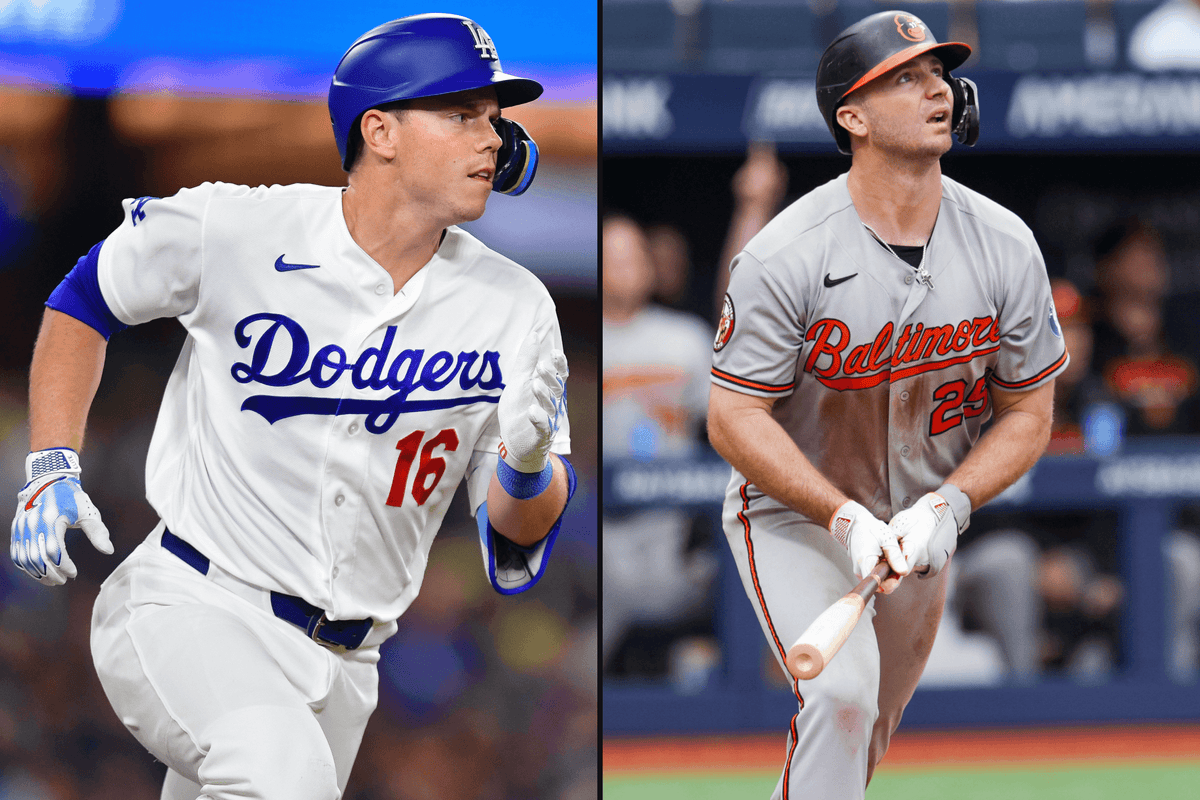
We are less than a month away from the 2026 MLB Draft. As soon as it’s over, the question will be asked: Who won the draft? While we have our initial opinions on best and worst picks, we won’t truly know who “won” the draft until years down the road. That’s why it’s always instructive to look back at drafts years later to see what we can learn. One decade out, let’s look back at the 2016 MLB Draft.
We knew the 2016 draft wasn’t good at the top even as it was happening, but I don’t think anyone knew just how bad it was. To wit: No player taken in the first round proper has amassed even 10 bWAR in the majors to date; the highest-drafted player to do so was Will Smith, taken with the 32nd pick by the Dodgers, and he’s the only player among the top 50 picks to reach that threshold.
That draft has produced a handful of quality big leaguers; however, fewer than the typical amount but with two Cy Young Award winners and a Rookie of the Year among them. It’s not pretty, however you slice it. There’s a word on the tip of my tongue that would describe this draft class as a whole, but I’ll be nice and say nothing more about it.
This is a “redraft,” in which I try to reselect the top 30 picks based on what we know of the past 10 years and what I think these players might do for the remainder of their careers. I don’t include players who didn’t sign, and I don’t think about service time considerations (when you draft a player, you only control the first six-plus years of his career). I’m just going big picture here, and while I cite players’ Wins Above Replacement figures throughout (using Baseball-Reference), I didn’t just rank the players by their WAR totals; a few times, I deviated quite a bit from those rankings.
I’ll follow up with a column on the “misses” of the first round, which includes some famous names but a lot of “remember some guys” types, too. (Note: WAR figures from Baseball-Reference are through June 14.)
1. Will Smith, C
Career WAR to date: 23.9
Spot Actually Selected: Sandwich Round, Pick 32, Los Angeles Dodgers
Player Actually Selected No. 1: Mickey Moniak, OF, Philadelphia Phillies
Smith wasn’t even the highest-drafted player on his own college team, as Corey Ray went at pick 5, and the following year, two-way player Brendan McKay was the No. 4 pick, so Smith certainly can argue he didn’t get enough respect. He was a strong defensive catcher who rarely struck out in college (14 times in 203 PA), but he hit just seven homers. Smith might be the Dodgers’ greatest player development success story in the past decade, as he hit 11 homers in 2017, 20 in 2018 and has held that power without sacrificing his ability to hit or get on base. While he’s second in career WAR right now, he’s probably going to end up leading this class when they’re all retired, especially since he’ll have value as a part-time catcher for as long as he wants to play.
2. Pete Alonso, 1B
Career WAR to date: 24.8
Spot Actually Selected: Second Round, Pick 64, New York Mets
Player Actually Selected No. 2: Nick Senzel, 3B, Cincinnati Reds
Alonso has 280 career homers, leading this draft by 134 at this writing, and while I think his best years are behind him, he should have several more 2-3 WAR seasons in him, maybe a little better if he can DH instead of playing first base. Like Smith, Alonso wasn’t a huge power hitter in college, only getting to double digits once in three seasons at Florida, and like Smith, he wasn’t the highest-drafted player on his own team. A.J. Puk and Dane Dunning went ahead of him in this draft, and that Gators roster had four more future first-rounders.
3. Bryan Reynolds, OF
Career WAR to date: 23.4
Spot Actually Selected: Second Round, Pick 59, San Francisco Giants
Player Actually Selected No. 3: Ian Anderson, RHP, Atlanta
I talk enough about being wrong that I think I can mention being right here — I had Reynolds as a first-rounder in this draft, ranked 16th on my top-100 board. And as long as there are no questions about who I placed above him, I’ll continue: Reynolds was like Alonso in that he saw his home run total jump in his draft year, but he struck out more than you’d like for a first-rounder at that time, although today no one would even blink at a 20.4 percent rate. Much of it came from him taking so many pitches early in the count, which is a skill in and of itself, and he seemed to me like the perfect guy to give some highly technical advice best summarized as “swing more.” He started fine in the Giants’ system, but he took off when the Pirates got him, and he is one of the Neil Huntington era’s best player development efforts.
4. Bo Bichette, SS
Career WAR to date: 20.5
Spot Actually Selected: Second Round, Pick 66, Toronto Blue Jays
Player Actually Selected No. 4: Riley Pint, RHP, Colorado Rockies
I’m going to assume that Bichette’s miserable start to his tenure in New York is not an indication that he’s finished at age 28. Going into the draft, Bichette was extremely well-known as a prospect, thanks to his dad (Dante), his brother (Dante Jr., a sandwich pick by the Yankees who did not pan out), and his experience playing at a ton of showcase events. Bichette’s ability to get the bat to the ball was evident, and he was a better runner and defender than either of his family members, but his very unorthodox swing kept him from going in the first round. He wasn’t even Toronto’s second pick, as they had another selection in the second round, nine spots earlier, and took a college tools goof, J.B. Woodman, who really couldn’t hit. And apparently there was still significant disagreement within the Jays’ draft room on whether to take Bichette where they did. They made the right call.
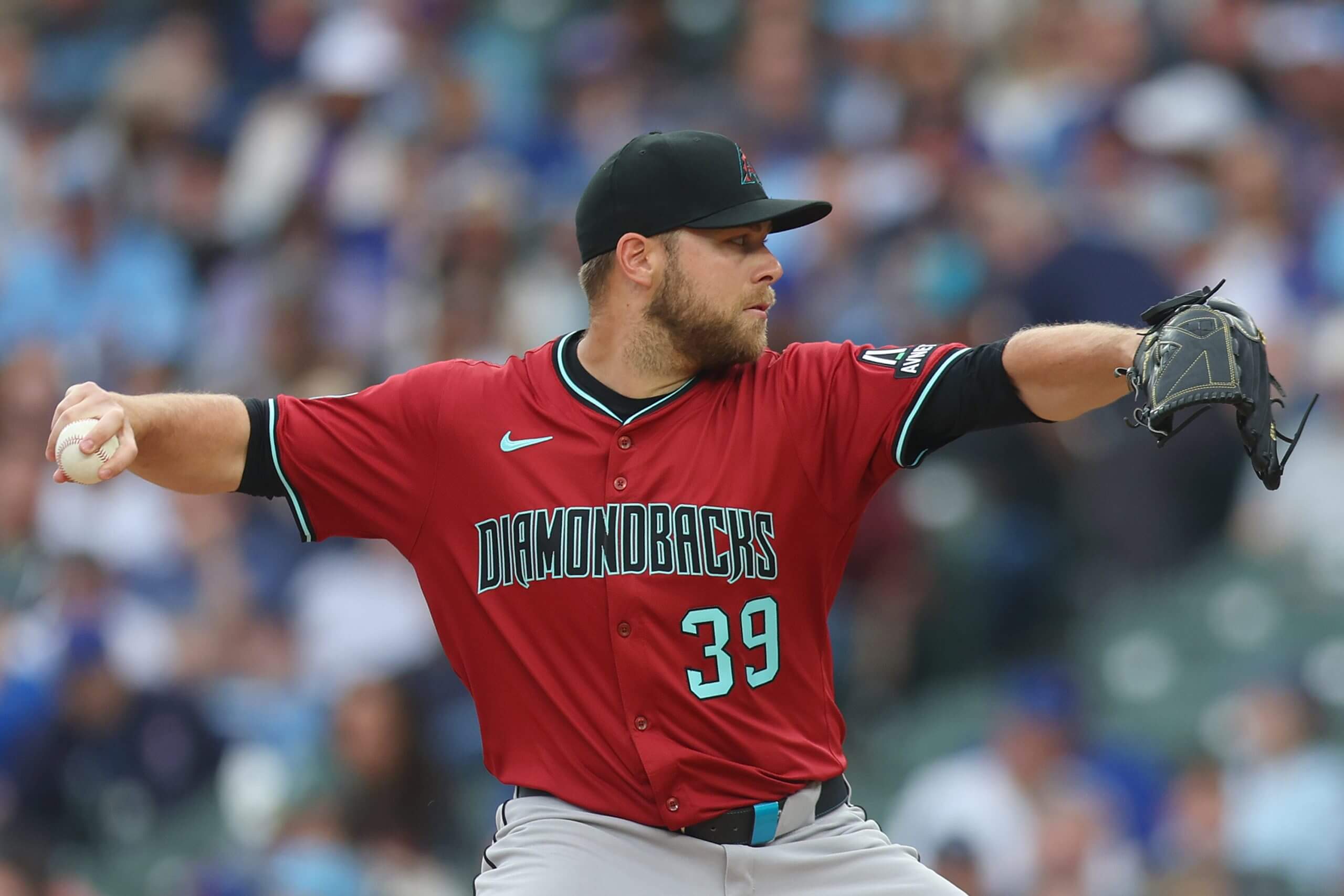
Corbin Burnes was a fourth-round pick out of Saint Mary’s, but with the Milwaukee Brewers, he developed into a Cy Young Award winner and eventually a prime free agent target. (Geoff Stellfox / Getty Images)
5. Corbin Burnes, RHP
Career WAR to date: 19.5
Spot Actually Selected: Fourth Round, Pick 111, Milwaukee Brewers
Player Actually Selected No. 5: Corey Ray, OF, Milwaukee Brewers
The Brewers actually took Louisville outfielder Corey Ray here; he ended up playing one game in the majors. Burnes looked like a top two-rounds guy for most of the spring but lost some velocity later in the season, which is probably how he ended up going in the fourth round. The Brewers got him back to full strength and cleaned up the delivery to turn him into an above-average command/control guy. He was still pitching at a very high level when his UCL finally broke last year; he recently suffered a strained teres major muscle while rehabbing from Tommy John and probably won’t return until September, if he pitches at all this year.
6. Shane Bieber, RHP
Career WAR to date: 18.6
Spot Actually Selected: Fourth Round, Pick 122, Cleveland
Player Actually Selected No. 6: A.J. Puk, LHP, Oakland Athletics
Bieber turned out to be the earliest evidence that Cleveland was up to something, targeting pitchers with good deliveries and control a little later in the draft, then adding velocity and/or other pitches to make them better. Bieber’s control was ridiculous even at the pitching factory of UC-Santa Barbara; he walked 38 total in three seasons with the Gauchos, a 3.1 percent walk rate that should have earned him more attention from everyone, myself included. (For some perspective, USC lefty Mason Edwards, who is probably going to be a top-50 pick next month, has walked 43 batters already just this season.)
7. Zac Gallen, RHP
Career WAR to date: 19.9
Spot Actually Selected: Third Round, Pick 106, St. Louis Cardinals
Player Actually Selected No. 7: Braxton Garrett, LHP, Miami Marlins
Gallen hasn’t been the same pitcher for a year-plus now, and there’s a chance he’s done. But if this is it, he’s still had a heck of a career for a third-rounder — and it was a great pick for the Cardinals, too. Gallen was an early exemplar of the trend toward high-riding four-seamers, as his other stuff was mostly average in college, with good control probably his best attribute. His secondaries improved somewhat in pro ball, but it was the fastball that made him his money.
8. Tommy Edman, IF
Career WAR to date: 19.1
Spot Actually Selected: Sixth Round, Pick 196, St. Louis Cardinals
Player Actually Selected No. 8: Cal Quantrill, RHP, San Diego Padres
Randy Flores’ first draft as the Cardinals’ scouting director turned out to be a strong one. Even though their first pick, Delvin Pérez, was a disaster, Gallen, Edman, Dylan Carlson, Dakota Hudson, Andrew Knizner and Daniel Castano all reached the majors and generated positive WAR. (More on Pérez to come in my companion piece on the many first-round misses of 2016.) Edman, meanwhile, was a completely unremarkable middle infielder at Stanford with a slappy swing who failed to hit .300 or slug .400 in any of his three seasons for the Cardinal, although he did hit well in both summers, one in the NECBL and one in the Cape Cod League. The Cardinals loved his actions and range at second and third, along with his plus speed, but he improved his arm strength after signing, which allowed him to play third and to even try center field, where he’s also been excellent. They had to be one of the only teams that saw his potential at the time.
9. Jesús Luzardo, LHP
Career WAR to date: 12.6
Spot Actually Selected: Third Round, Pick 94, Washington Nationals
Player Actually Selected No. 9: Matt Manning, RHP, Detroit Tigers
Luzardo received a $1.4 million bonus, over slot at for pick 94, about mid-second round money. He was a first-round talent but had had Tommy John surgery that spring. He threw just 13 2/3 innings in the Nationals’ system before they traded him to Oakland with two other players for Sean Doolittle and Ryan Madson, and he’s been traded twice since. He really came into his own as a No. 2 starter in 2023 while he was with Miami. He had velocity and a great changeup in high school, while his curveball was prettier than it was effective, and now he has much more of a complete pitch mix along with better control and a lot more poise on the mound. He might have more WAR left in him than anyone on this list.
10. Sean Murphy, C
Career WAR to date: 15.6
Spot Actually Selected: Third Round, Pick 83, Oakland Athletics
Player Actually Selected No. 10: Zack Collins, C, Chicago White Sox
You may want to sit down for this: Even while he was at Wright State, Murphy got hurt a lot. If he’d had a better track record of health, he probably would have gone a round higher. He could really throw, defended well and flashed power. I think he’s been a slightly better version of what scouts who liked him thought he’d become. Looking forward, it concerns me that he hasn’t even hit .200 since 2023, and he may be trending toward backup territory, since it’s not like players get more durable in their 30s.
11. Cole Ragans, LHP
Career WAR to date: 7.2
Spot Actually Selected: Sandwich Round, Pick 30, Texas Rangers
Player Actually Selected No. 11: Kyle Lewis, OF, Seattle Mariners
Ragans underwent two Tommy John surgeries that cost him three seasons, so he didn’t even throw a pitch in full-season ball until 2021. After a trade to Kansas City for Aroldis Chapman, he picked up a few miles an hour and became a front-line starter, producing 7.6 WAR in less than three calendar years with the Royals. He’s had further injury trouble the past two seasons, and that may be his future — good when healthy, but infrequently healthy.
12. Michael King, RHP
Career WAR to date: 12.5
Spot Actually Selected: 12th Round, Pick 353, Miami Marlins
Player Actually Selected No. 12: Jason Groome, LHP, Boston Red Sox
The Marlins traded King to the Yankees 17 months after drafting him in exchange for Garrett Cooper and Caleb Smith, and the Yankees developed him (around time lost to Tommy John surgery) into an above-average starter by tinkering with his pitch mix and playing into his strength of above-average movement on both two- and four-seamers. He went to the Padres in the Juan Soto trade and, like Ragans, is in that “good when healthy” category.
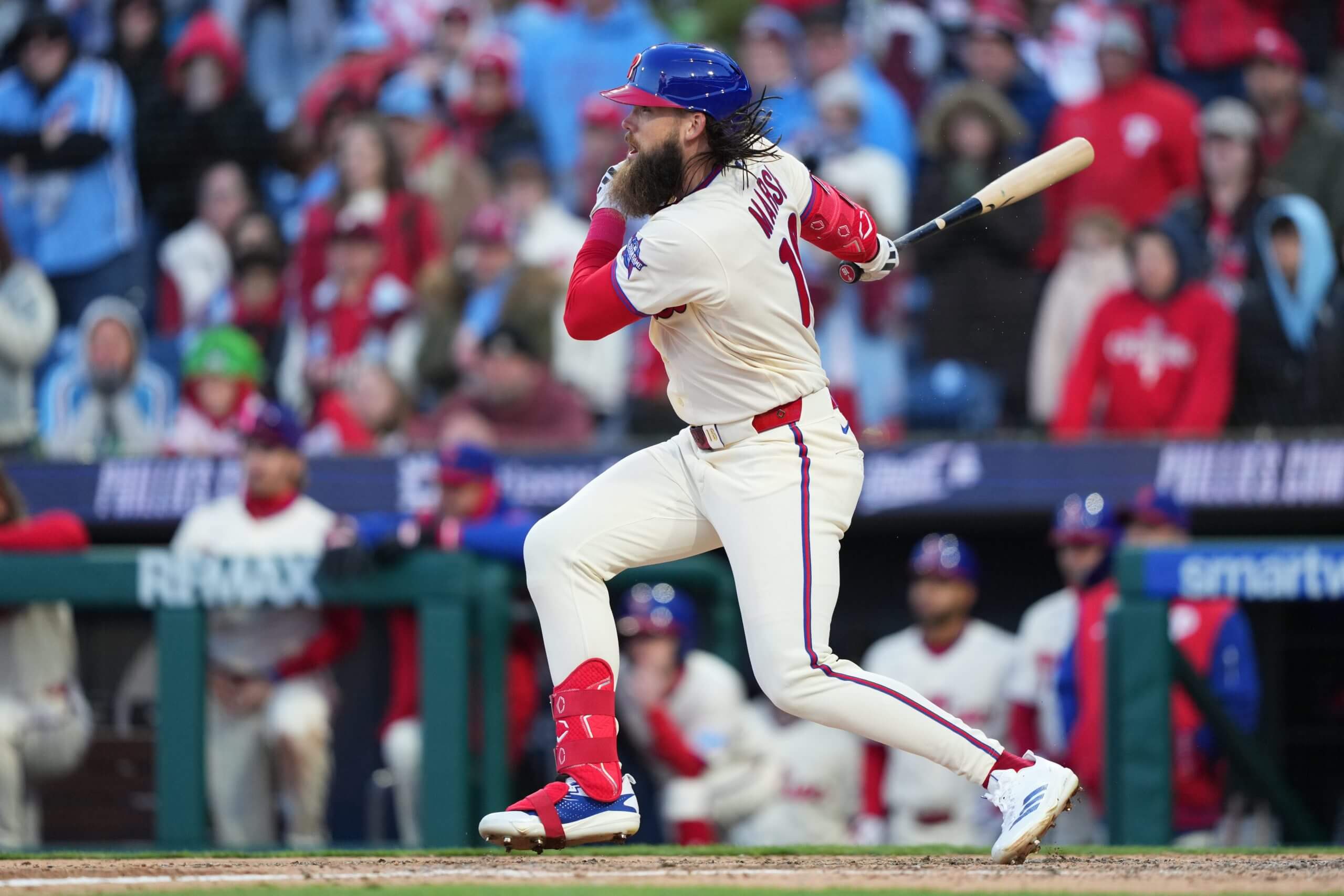
Brandon Marsh has blossomed offensively with the Phillies. (Kyle Ross / Imagn Images)
13. Brandon Marsh, OF
Career WAR to date: 11.9
Spot Actually Selected: Second Round, Pick 60, Los Angeles Angels
Player Actually Selected No. 13: Josh Lowe, 3B, Tampa Bay Rays
Marshie — must have taken them ages to come up with that nickname — was a two-sport star in high school, playing wide receiver until his senior year when he quit playing hand-egg to focus on baseball. He spent about a year in the majors with the Angels before they traded him to the Phillies for Logan O’Hoppe. Marsh has evolved from a good defensive outfielder with limited on-base skills to a very good platoon outfielder (he has never hit lefties) with much reduced defensive value.
14. Nathaniel Lowe, 1B
Career WAR to date: 13.0
Spot Actually Selected: 13th Round, Pick 390, Tampa Bay Rays
Player Actually Selected No. 14: Will Benson, OF, Cleveland
Lowe played just one year at Mississippi State, starting at Mercer and then spending a year at a junior college back in the archaic days when players had to sit out a year as punishment when they wanted to transfer (but coaches could change schools on a dime, no waiting required!). He had an unremarkable year for the Bulldogs, with just five homers in 284 PA. That’s not going to get you much attention when you’re strictly a first baseman, even in the SEC. Two years later, he hit 27 homers across three levels, with just some small changes to his stride and swing. He’s off to a great start this year thanks to the Reds’ home park, where he’s hit eight of his nine homers to date.
15. Austin Hays, OF
Career WAR to date: 10.1
Spot Actually Selected: Third Round, Pick 91, Baltimore Orioles
Player Actually Selected No. 15: Alex Kirilloff, Minnesota Twins
Hays debuted in the majors in 2017, but his career was derailed temporarily when Buck Showalter refused to give him any opportunities the following year, and he only got back to the majors after the Orioles replaced their GM and manager following the 2018 season. Given real playing time, he had a solid three-year run as an everyday player from 2021-23, but is now bouncing around as a bench option who’s been close to replacement level for a few years. He’s the second-best player ever drafted out of Jacksonville University, after Daniel Murphy.
16. Aaron Civale, RHP
Career WAR to date: 8.0
Spot Actually Selected: Third Round, Pick 92, Cleveland
Player Actually Selected No. 16: Matt Thaiss, C, Los Angeles Angels
Civale was a reliever for Northeastern for two years, then broke out as a starter in his draft year, walking just 15 in 15 starts (3.4 percent of batters), but the projection wasn’t good: He wasn’t in great shape and topped out at 91 with an average slider as his best pitch. Cleveland shot him with a beam from their pitcher transmogrifier™ and he got himself in better shape. Even now, after years of injuries, he’s still averaging 91 and remains a capable fifth starter.
17. Cal Quantrill, RHP
Career WAR to date: 7.9
Spot Actually Selected: First Round, Pick 8, San Diego Padres
Player Actually Selected No. 17: Forrest Whitley, RHP, Houston Astros
Quantrill was a bit of a surprise pick for San Diego, as he was still coming back from Tommy John surgery at that point, and A.J. Preller isn’t exactly known for taking college players with high picks — Quantrill is the last college player the Padres took in the first or sandwich rounds. He had moments where he’d flash his pre-surgery stuff, but never held it, with a cutter that the Padres gave him turning out to be his best pitch. He’s had some value as a bulk innings guy but is now in the Rangers’ bullpen and is probably a replacement-level arm going forward.
18. David Bednar, RHP
Career WAR to date: 7.3
Spot Actually Selected: 35th Round, Pick 1,044, San Diego Padres
Player Actually Selected No. 18: Blake Rutherford, OF, New York Yankees
The best player to ever come out of Lafayette College in northeastern Pennsylvania, Bednar was a starter in college, went to one of the Padres’ predraft workouts, and then immediately went into the bullpen on signing. He had an outstanding debut that summer, where he struck out 40 with just two unintentional walks in 31 innings. (Remember when the draft was early enough for drafted players to play right after signing? And we had short-season leagues for them to play in? That was awesome.) Bednar made his MLB debut in 2019 but had no success until the Padres traded him to the Pirates in the three-team Joe Musgrove deal in January 2021. He’s lost some velocity but has adapted by reducing his reliance on the fastball, which makes me think he has a few more years of above-average relief work left in his arm.
19. Tony Gonsolin, RHP
Career WAR to date: 7.8
Spot Actually Selected: Ninth Round, Pick 281, Los Angeles Dodgers
Player Actually Selected No. 19: Justin Dunn, RHP, New York Mets
Gonsolin signed for the smallest bonus of anyone on this list, just $2,500, as a senior sign out of Saint Mary’s, where he was primarily an outfielder who was also a swingman and threw 40-odd innings a year. The Dodgers put him on the mound full-time and he improved almost immediately, eventually cracking my top-100 prospect list in January 2020, but once his body started giving out after his 4.3 WAR season as a starter in 2022, he was done. The Dodgers outrighted him after 2025 and he’s still a free agent.
20. Gavin Lux, SS
Career WAR to date: 7.2
Spot Actually Selected: First Round, Pick 20, Los Angeles Dodgers
Player Actually Selected No. 20: Gavin Lux
This is where Lux actually went, but I didn’t do that deliberately — if anything, I had no idea how to handle Lux, who has turned into a league-average hitter with no position between throwing issues and a catastrophic ankle injury that cost him all of 2023. He’s on the IL right now with the Rays, dealing with injuries to both shoulders, which, well, it’s just a flesh wound.
21. Luke Raley, OF
Career WAR to date: 5.7
Spot Actually Selected: Seventh Round, Pick 221, Los Angeles Dodgers
Player Actually Selected No. 21: T.J. Zeuch, RHP, Toronto Blue Jays
One of the few times I ever said “no” to an article idea given to me by an editor was back at ESPN when I was told to do a five-year look back for a specific draft class rather than the standard 10-year redraft like this one. I said that was way too short a time period to assess the class, and would do a disservice to the readers and make me look like a fool — well, maybe more of one than usual — to people in the industry whose opinions really do matter to me. The result was that I didn’t do a redraft at all that year, so nobody won. Anyway, if I’d done this column in 2021, Raley wouldn’t have appeared anywhere in my coverage because he had only been in the majors for a month at that point and hadn’t done anything. He became a regular at age 28, in 2023, and thanks to above-average power and magnets in his body that attract pitches to him. He’s had two years as a legitimate everyday player and is on track for a third. Fun fact: The Dodgers traded him to the Twins in July 2018 for Brian Dozier, then traded to get him back in February 2020 for Kenta Maeda, but never got any positive production from him before shipping him to Tampa Bay for minor-league pitcher Tanner Dodson.
22. Dean Kremer, RHP
Career WAR to date: 6.6
Spot Actually Selected: 14th Round, Pick 431, Los Angeles Dodgers
Player Actually Selected No. 22: Will Craig, 3B, Pittsburgh Pirates
Kremer pitched one season for UNLV after transferring from a junior college, and struck out 46 in 82 innings, or just 12.7 percent of the batters he faced. Two years later, he struck out 178 in 131 1/3 innings across three minor-league levels and became a key part of the Manny Machado trade at the 2018 deadline. The Dodgers had a pretty good draft in 2016: they signed 14 picks who made the big leagues, five of whom are on this list, along with Dustin May, current KBO star Mitch White and 33rd-rounder Zack McKinstry.
23. Nicky Lopez, SS
Career WAR to date: 5.5
Spot Actually Selected: Fifth Round, Pick 163, Kansas City Royals
Player Actually Selected No. 23: Delvin Pérez, SS, St. Louis Cardinals
Lopez was so lightly regarded at the time of the draft that I didn’t even mention him in my Royals draft recap, going from their fourth-rounder (Jace Vines) to their sixth-rounder (Cal Jones). Lopez had no power at all in college, with zero homers in his first two years and then a whopping two as a junior, but he was impossible to strike out — 5.3 percent of his PA as a junior, 48 times total in three seasons, which Vance Honeycutt would call “April.” Lopez never did develop much power, but he puts the ball in play a ton and has a lot of defensive versatility, which has kept him and many similar players employed for a long time.
24. Braxton Garrett, LHP
Career WAR to date: 5.3
Spot Actually Selected: First Round, Pick 7, Miami Marlins
Player Actually Selected No. 24: Hudson Potts, SS, San Diego Padres
Garrett might be the high school pitcher who broke me. I saw him throw about as well as I have ever seen a high school pitcher pitch; he had more strikeouts in that game than called balls, and he did it with so little effort, working 90-93 with three pitches and just filling up the zone, that he seemed like as safe a bet to hold up as any high school pitcher could be. He blew out his elbow almost exactly a year after he was drafted, came back with slightly less velocity, then had a shoulder injury to start 2024 and had a second Tommy John before that year was out. The fact that he’s made a career for himself despite constant injuries is a testament to his command and feel to pitch, but, man, if that guy couldn’t stay healthy, I have no idea which ones will.
Alex Call has exceeded expectations from early in his professional career. (Mary DeCicco / MLB Photos via Getty Images)
25. Alex Call, OF
Career WAR to date: 4.9
Spot Actually Selected: Third Round, Pick 86, Chicago White Sox
Player Actually Selected No. 25: Eric Lauer, LHP, San Diego Padres
Full disclosure: I saw Call play after the draft, at what was then Low-A Lakewood, and I thought he would never hit enough to reach the majors. He got eaten alive by above-average stuff that night, then hit .207/.295/.316 the next year around some injuries, mostly playing in Low A. He reached the majors in 2022 and has made a career for himself because he will draw walks, with walk rates over 10 percent in every one of his major-league seasons, and can play all three outfield spots. It’s not exciting, but it’s good enough to keep him going.
26. Eric Lauer, LHP
Career WAR to date: 5.6
Spot Actually Selected: First Round, Pick 25, San Diego Padres
Player Actually Selected No. 26: Zack Burdi, RHP, Chicago White Sox
The Padres had three first-round picks in 2016, taking college pitchers with two of them — which they haven’t done once in the 10 years since — along with high school infielder Hudson Potts, who played just two games in Triple A. Lauer was a polished, finesse lefty at Kent State who’d show an above-average slider, dominant in a mid-major but with a lower ceiling at the time. I’d say he’s been as expected. Also, it seems fitting to have the White Sox take a left-handed pitcher in this redraft.
27. JoJo Romero, LHP
Career WAR to date: 2.9
Spot Actually Selected: Fourth Round, Pick 107, Philadelphia Phillies
Player Actually Selected No. 27: Cody Sedlock, RHP, Baltimore Orioles
Romero’s another late bloomer from this class. He’s one of a few players in the class still on the upswing, as he’s found himself since the Phillies traded him to St. Louis for Edmundo Sosa, which seems like a real win-win deal. He’s always had a great arm — for a while I thought he could start, and maybe be a good starter at that — but since the Cardinals gave him a sweeper as his main breaking pitch, he’s been consistently above-average in short relief for them.
28. Anthony Bender, RHP
Career WAR to date: 4.8
Spot Actually Selected: 20th Round, Pick 613, Kansas City Royals
Player Actually Selected No. 28: Carter Kieboom, 3B, Washington Nationals
A great find in the 20th round from Santa Rosa Junior College in California, Bender never got out of A-ball with the Royals, so they released him in the spring of 2023. He played briefly in independent ball, signed with the Brewers, posted a 1.49 ERA in 36 1/3 relief innings across three levels, pitched again in indy ball during the pandemic, then signed as a minor-league free agent with Miami in 2020. He made his MLB debut in 2021.
29. Dylan Lee, LHP
Career WAR to date: 4.8
Spot Actually Selected: 10th Round, Pick 293, Miami Marlins
Player Actually Selected No. 29: Dane Dunning, RHP, Washington Nationals
Selected out of Fresno State, Lee is a testament to the power of throwing strikes. His stuff isn’t all that great on paper, but he never walks anyone and lives on the edges of the zone, with a 5 percent walk rate in more than 220 big-league appearances.
30. John Schreiber, RHP
Career WAR to date: 4.8
Spot Actually Selected: 15th Round, Pick 445, Detroit Tigers
Player Actually Selected No. 30: Cole Ragans, LHP, Texas Rangers
Signed for just a $6,000 bonus as a senior out of an NAIA school — the University of Northwestern Ohio — Schreiber has now pitched in 300-odd major-league games, been waived, been traded (for David Sandlin), and has generally been a half-tick better than replacement level at each stop.