
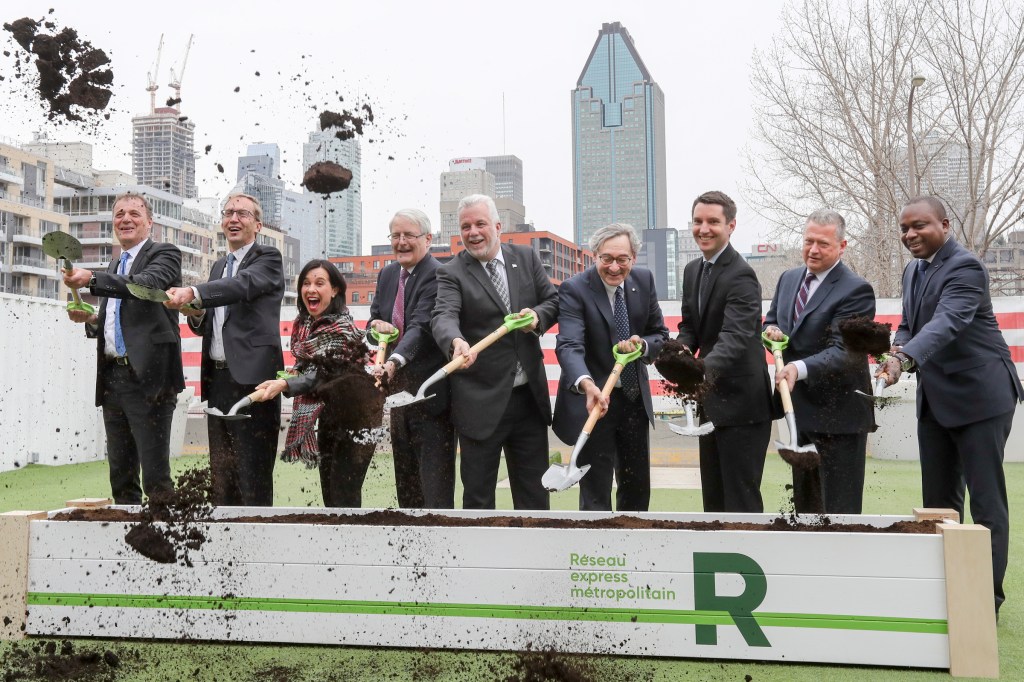
Eight years after the REM project officially broke ground in Griffintown, plans for a long-promised station in the neighbourhood are moving into a new phase.
CDPQ Infra, the Quebec government and the City of Montreal announced Tuesday that planning will begin for two additional REM stations: Griffintown—Bernard-Landry and a station near Bridge and Wellington Sts. in the Bridge-Bonaventure sector.
The planning phase, expected to begin in the coming months, will include technical and environmental studies as well as procurement work aimed at establishing the project’s final cost and schedule. Construction could begin in 2028 and be complete in 2030.
The Griffintown station was included in the REM’s original plans, but its timeline was pushed back after the city requested an additional station in Bridge-Bonaventure in 2023. The new stop is intended to support redevelopment around the Wellington Basin and the south side of the Lachine Canal, while Griffintown—Bernard-Landry will serve the north side.

The next stage of the project is being supported by an additional $250 million from the Canada Infrastructure Bank and $25 million from the Quebec government. CDPQ Infra said its contribution will be determined once construction costs are finalized.
“The simultaneous construction of these two stations is the best solution for users and for the network,” CDPQ Infra president and CEO Daniel Farina said in Tuesday’s statement. “It enables the implementation of the most efficient method to deliver this major enhancement while limiting impacts on REM service and local communities.”
The approach is intended to reduce construction costs, limit disruptions to nearby residents and minimize impacts on the REM network, which will remain in operation while the work is carried out.
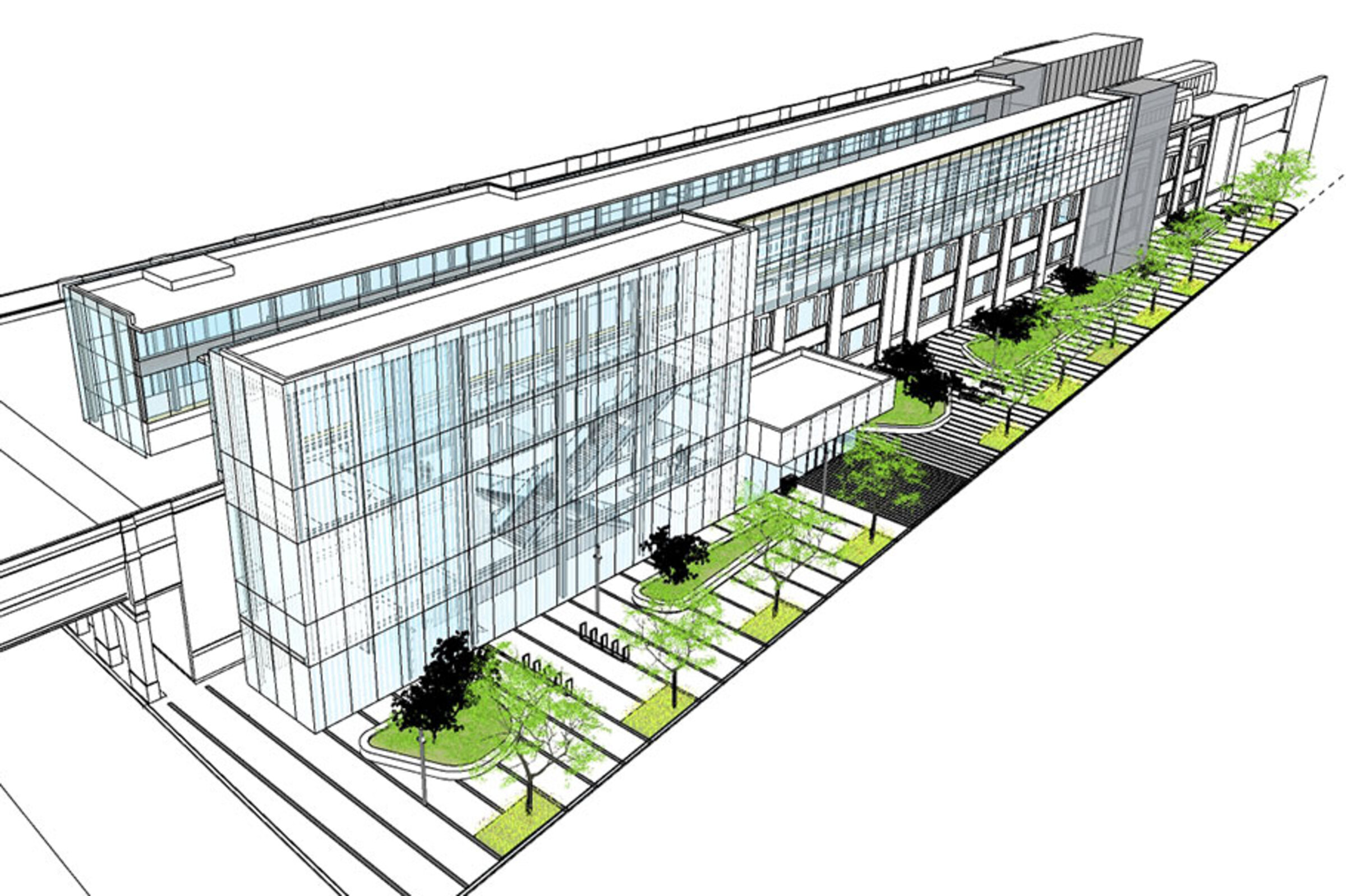 Artist’s conception from 2020 of the Griffintown—Bernard-Landry REM station showing the entrance from Dalhousie St. CDPQ Infra
Ahmed El-Geneidy, a McGill University professor and Canada Research Chair in transportation planning, said the project would help address a long-standing issue in Griffintown.
“Griffintown in general is like an island on its own, and you can’t access it by public transit without a headache,” he said.
But El-Geneidy explained “the main question is the capacity of the trains and how full are they?”, adding that the agency should demonstrate the network can accommodate future demand without creating crowding issues.
While the addition of stations will inevitably add some travel time for current passengers, El-Geneidy said the impact should remain limited if sufficient capacity exists within the system.
If completed on the current timeline, the two stations would open roughly a decade after work on the REM first began in Griffintown, extending rapid transit access to two sectors expected to see continued residential and economic growth in the years ahead.