
When I landed in Monaco, eyes heavy from a red-eye flight out of Newark, I peered out at the tarmac crowded with so many private jets, it looked like a line of cars jostling for a spot at your local mall. Only in Monaco do you find out there is what my friend described as the “billionaire must-have jet of the moment”—the Bombardier Global 6000, a long $62 million plane with an entire dining area. It was my first sign that in Monaco, everything from the methods of arrival to the accommodations, the clothes, and the watches are gilded with the shine of today’s unfathomably wealthy.
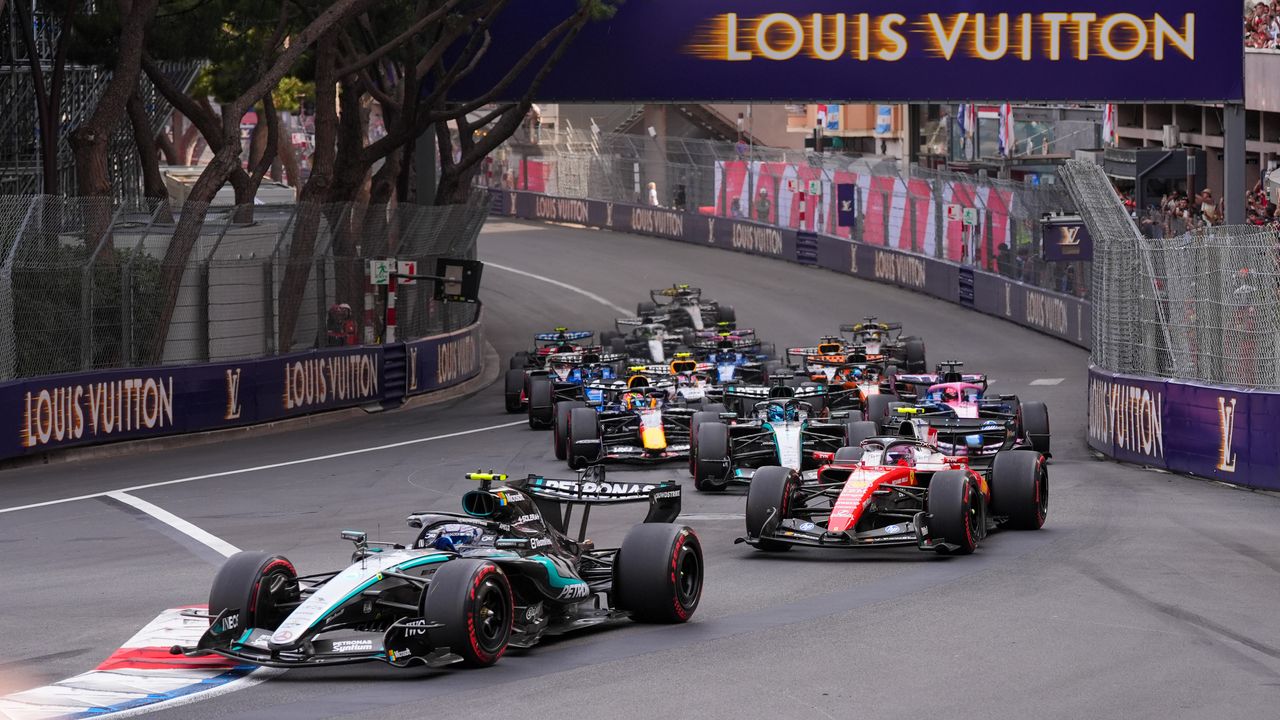
Au courant private jets aren’t the only way to touch down in Monaco, though, where even this logistical matter is an opportunity to show off. As Enzo Ferrari once said, “To arrive first, you have first to arrive.” This quote rang through my head as I made my way into Monaco for the Formula 1 Grand Prix, where those who don’t show up on the PJ arrive via superyachts. Eight weeks leading up to the event, the principality that’s just smaller than Manhattan’s Central Park undergoes a drastic transformation, even repotting its palm trees, to accommodate what is considered the crown jewel of the F1 season and European social calendar. The race itself, largely unchanged since the first Monaco Grand Prix in 1929, actually takes place on the streets of Monte Carlo, which close down to support all the infrastructure required to make the whole thing possible.

The PJ parking lot at the Nice airportBrynn Wallner
At the opening dinner for the event with the race’s title sponsor TAG Heuer, I discovered that Monaco is entirely unique on the F1 calendar. “The way to understand it is that, today, the F1 calendar is divided in two,” said Nicholas Biebuyck, TAG Heuer’s heritage director, in between bites of tuna tataki prepared by Michelin-starred chef Philippe Etchebest. “You have the lifestyle races—Vegas, Miami—the ones that really move the brand of F1 forward. Then you have what I call the ‘enthusiast’ races: Spa, Silverstone, et cetera. Monaco is a blend of the two, with the strongest combination of lifestyle and history.”
Of all the 24 F1 races, Monaco is uniquely situated as a hybrid of flashy overconsumption and true heritage. “Fundamentally, it’s still the same as it’s been since its inception,” explained Biebuyck. Despite a few additions, like safety upgrades and the Olympic-size Moët-branded swimming pool, the track remains identical. Monaco is known for its iconic hairpin curve, challenging elevation shifts, and notoriously narrow streets that make it nearly impossible for cars to pass one another without an accident or pit-lane mishap.