

Make better investment decisions with Simply Wall St’s easy, visual tools that give you a competitive edge.
Microsoft (NasdaqGS:MSFT) is restructuring its Xbox division, closing studios such as Ninja Theory and Compulsion Games, and reviewing options that include a possible spin-off, joint venture, or tighter subsidiary structure.
The company is aligning Xbox decisions with margin accountability, hardware cost trends, and its broader focus on AI partnerships and new Surface devices.
These moves come as investors assess recent class-action lawsuits and how gaming fits alongside Microsoft’s core cloud and AI priorities.
Microsoft, traded as NasdaqGS:MSFT, is making these Xbox changes while the stock trades around $393.97 and carries a value score of 6. Shares have risen 19.3% over 3 years and 54.6% over 5 years, even as they are down 16.7% year to date and 16.9% over the past year. For investors, that mix of longer term gains and recent weakness provides context for how this new approach to gaming may influence sentiment around Microsoft’s broader portfolio.
Looking ahead, the key issue is how any Xbox restructuring, together with AI driven partnerships and hardware aimed at creators, might reshape Microsoft’s risk and return profile. The balance between capital intensive gaming, AI infrastructure, and higher margin software businesses could affect how investors view future cash allocation, volatility in consumer units, and the role of Xbox within Microsoft over time.
Stay updated on the most important news stories for Microsoft by adding it to your watchlist or portfolio. Alternatively, explore our Community to discover new perspectives on Microsoft.
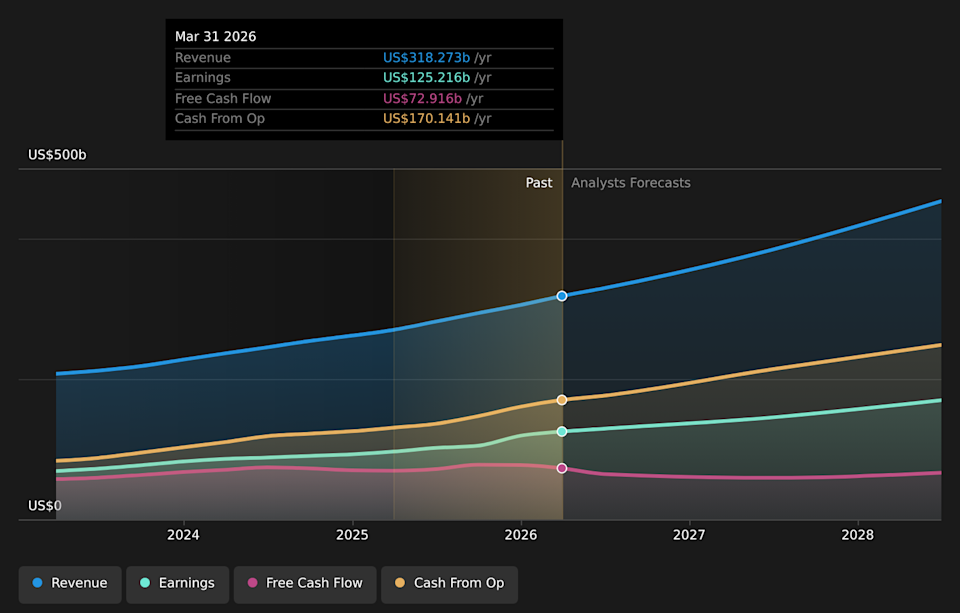 NasdaqGS:MSFT Earnings & Revenue Growth as at Jun 2026
5 things going right for Microsoft that this headline doesn’t cover.
The Xbox studio closures and restructuring debate highlight where Microsoft is drawing the line between capital intensive entertainment and higher margin AI and cloud businesses. Shuttering teams like Ninja Theory and Compulsion Games, while reviewing options such as a spin off, joint venture, or tighter subsidiary, signals that Xbox now has to justify its capital needs against AI data centers, Copilot and Azure. At the same time, new Surface devices priced for AI developers and creators show hardware is being repositioned as a showcase for Microsoft’s wider AI stack rather than only as consumer PCs. All of this is playing out while class action lawsuits keep attention on disclosure around AI capex and Azure growth, so the way management explains Xbox’s role sits directly in front of investors already focused on capital discipline and transparency.
How This Fits Into The Microsoft Narrative
The restructuring supports the existing Microsoft narrative that management is concentrating resources on higher margin cloud and AI franchises, with Xbox decisions now framed explicitly in terms of margin accountability and hardware cost trends.
It challenges any narrative that consumer platforms automatically benefit from the same economics as Azure and Microsoft 365, because low margin console hardware and rising component costs show that not every subscription driven unit scales in the same way.
The possibility of an Xbox spin off or joint venture, and the tighter link between Surface hardware and AI workloads, are not fully captured in high level AI focused storylines that largely treat gaming and devices as supporting acts rather than potential restructuring candidates.
Knowing what a company is worth starts with understanding its story. Check out one of the top narratives in the Simply Wall St Community for Microsoft to help decide what it’s worth to you.
The Risks and Rewards Investors Should Consider
⚠️ Execution risk in closing studios and reshaping Xbox is material, because weaker first party pipelines or staff departures could make consoles and Game Pass less competitive against Sony, Nintendo and PC platforms such as Valve’s Steam.
⚠️ Legal scrutiny around Azure and AI disclosures, together with Xbox restructuring, raises the chance of management distraction just as Microsoft is committing very large sums to data centers, custom chips and Copilot related workloads.
🎁 A leaner Xbox structure, whether as a subsidiary or via partnerships, could improve capital discipline and give investors clearer visibility on how much cash is tied up in gaming versus AI infrastructure and software.
🎁 Positioning Surface hardware for AI developers and creators, alongside ecosystem deals with healthcare, retail and enterprise AI partners, can reinforce Microsoft’s role as a full stack provider that spans devices, cloud and software in a way rivals like Alphabet and Amazon do not fully match.
What To Watch Going Forward
From here, watch how Microsoft segments and reports Xbox and devices, including any new disclosure on margins, capital employed and long term structure. Track whether management formally announces a spin off, subsidiary or joint venture, and how that is framed relative to AI and cloud priorities. It is also worth monitoring studio output, Game Pass engagement and console pricing as memory and storage costs evolve, and comparing those signals with how competitors respond on hardware and content. In parallel, keep an eye on updates from the class action lawsuits and any changes in how Microsoft describes AI infrastructure spending and Azure capacity, because those disclosures will shape how investors interpret the trade off between gaming, hardware and AI projects.
To ensure you’re always in the loop on how the latest news impacts the investment narrative for Microsoft, head to the community page for Microsoft to never miss an update on the top community narratives.
This article by Simply Wall St is general in nature. We provide commentary based on historical data and analyst forecasts only using an unbiased methodology and our articles are not intended to be financial advice. It does not constitute a recommendation to buy or sell any stock, and does not take account of your objectives, or your financial situation. We aim to bring you long-term focused analysis driven by fundamental data. Note that our analysis may not factor in the latest price-sensitive company announcements or qualitative material. Simply Wall St has no position in any stocks mentioned.
Companies discussed in this article include MSFT.
Have feedback on this article? Concerned about the content? Get in touch with us directly. Alternatively, email editorial-team@simplywallst.com