
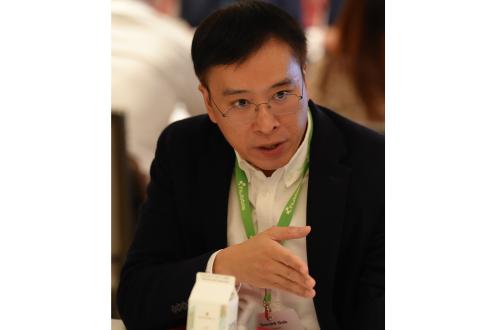
At WealthTHINK Singapore 2026, one of the day’s most animated discussions examined how digital assets are moving from the margins of private wealth into the infrastructure of regulated advisory models. Hosted by Gerald Goh, Co-Founder and APAC CEO of Sygnum, and Max Stuedlein, Head of Partnerships, APAC at Sygnum, the session brought together senior private wealth participants for a practical discussion on Bitcoin, custody, tokenisation, client demand and adviser readiness.
The conversation did not treat digital assets as a single theme or product category. It moved between Bitcoin as a store-of-value debate, stablecoins as payments infrastructure, crypto custody as a banking proposition, and real-world asset tokenisation as an area where promise still runs ahead of market depth. The most useful thread was institutionalisation: what it takes for private banks, EAMs and MFOs to support client demand without pushing clients into unmanaged risk or sending them outside the advisory relationship.
The table also made clear that avoidance is becoming harder to defend. Some clients already hold crypto independently. Others are accessing Bitcoin through ETFs. Younger clients may see digital asset fluency as a basic expectation. The challenge for advisers is to move from curiosity to capability, with custody, education, compliance and portfolio framing in place before client demand forces the issue.
Key Takeaways
Digital assets are entering the advisory perimeter: The discussion reflected growing pressure for private banks and wealth managers to offer regulated access rather than leaving clients to use external platforms.
Bitcoin remains both an investment and an ideological debate: Participants debated store of value, monetary systems, ETFs, native custody and whether Bitcoin should be seen as a structural allocation or speculative position.
Infrastructure matters more than enthusiasm: Custody, licensing, reporting and source-of-wealth processes determine whether digital assets can be embedded safely into private wealth models.
RM education is a major blocker: Simply putting crypto on a platform does not create client adoption if advisers lack the confidence to explain it.
Digital assets need a clearer framework: Participants distinguished between Bitcoin, stablecoins, blockchain infrastructure tokens and speculative assets, rather than treating crypto as one category.
Tokenisation is promising but uneven: Real-world asset tokenisation has potential, but distribution, liquidity and ownership rights remain unresolved practical challenges.
Setting the Scene: What is WealthTHINK?
WealthTHINK is an exclusive, invitation-only forum designed for CEOs and senior management at leading private wealth management firms. It offers a platform for industry leaders to engage in peer-to-peer networking and collaborative discussion, free from product pitches and formal presentations. The event focuses on proactive, table-specific debates around key themes shaping the future of wealth management, including digitisation, AI, regulation, business model profitability, family office development, digital assets and regional connectivity.
By keeping participation senior and the format deliberately interactive, WealthTHINK is designed to encourage honest, commercially grounded exchanges on the issues firms are grappling with in real time.
From Crypto Product to Regulated Infrastructure
A central theme of the discussion was the distance digital assets have travelled since the early crypto market. Sygnum was presented as a firm built on the view that crypto would only become mainstream if it moved towards regulation rather than away from it. Participants heard that the firm was founded by professionals with backgrounds in investment management and regulation, with a strategy focused on securing licences in trusted financial centres such as Singapore and Switzerland before offering services to the market.
That positioning shaped the broader discussion. Digital assets were not framed simply as coins to be bought or sold, but as assets that require custody, execution, reporting, suitability processes and compliance infrastructure. Sygnum described a model that includes direct clients, partner banks and financial intermediaries, with white-label and API-based arrangements allowing private banks to offer crypto access within their existing client experience.
The table also discussed different engagement models. Some institutions may use API connectivity to integrate crypto trading and custody into their own front end and reporting. Others may operate through omnibus accounts or higher-touch manual processes. For intermediaries that are uncomfortable onboarding crypto-originated wealth directly, Sygnum described arrangements where source-of-wealth, KYC and digital asset servicing can sit with a regulated specialist, while the adviser continues to manage the broader relationship.
The Demand Question: Why Hold Bitcoin?
The liveliest part of the conversation centred on why a client should hold Bitcoin at all. Participants challenged the value proposition directly, asking whether the case rests mainly on accessibility, independence from the banking system, or the belief that the existing monetary system is flawed.
One participant argued that Bitcoin is best understood by returning to the original white paper and the context in which it was created. Another pushed back, noting that Bitcoin’s value ultimately depends on what others are willing to pay for it, drawing a comparison with art and other assets whose prices depend on collective belief.
The discussion did not resolve the philosophical debate, and that was part of its usefulness. Some participants saw Bitcoin as a response to broken monetary systems and restrictions on financial access. Others viewed it more cautiously, as a volatile asset whose value is still difficult to anchor. What emerged was a more practical point: advisers do not need every client to agree on the ideology of Bitcoin, but they do need a credible framework for explaining what it is, why clients hold it, and how it should be sized and accessed.
ETF Access, Native Custody and the Nature of Ownership
The table also explored the difference between owning Bitcoin directly and accessing it through an ETF or other wrapper. One participant noted that ETF access is often easier, particularly for clients who are used to traditional brokerage channels. But others argued that Bitcoin is digitally native, which makes the rationale for holding it through a structure less obvious than, for example, holding gold through a fund rather than storing physical bullion.
That distinction goes to the heart of digital asset advice. An ETF may solve convenience and onboarding challenges, but it also changes the nature of the exposure. Direct ownership raises different issues: custody, wallet security, private keys, operational resilience and client education. For private wealth advisers, the question is therefore not only whether to provide exposure, but what form of exposure best fits the client’s objectives, risk profile and operational competence.
Education Turns Availability into Adoption
A recurring message was that making digital assets technically available is not enough. The transcript included a clear example of a private bank relationship where crypto trading and custody had been enabled, but adoption remained low until the adviser education component was strengthened.
Participants suggested that many RMs avoid the topic because they do not hold crypto personally, do not understand it well enough, or are concerned about saying the wrong thing. The easiest response is silence — if the client does not ask, the adviser does not raise it.
As one participant observed, there is a meaningful difference between having something on the shelf and equipping advisers to discuss it. After structured RM education and specialist support, adoption reportedly increased materially: digital asset capability depends as much on front-office fluency as on platform functionality.
A Practical Framework for Client Conversations
The discussion moved towards a simple framework for helping advisers talk about digital assets without collapsing everything into one broad crypto category.
Bitcoin was described primarily through the lens of store of value and neutral collateral. Stablecoins were framed as a means of payment and operational efficiency tool, though some yield-bearing structures are now bringing them closer to an investment conversation. Blockchain infrastructure tokens such as Ethereum, Solana and Sui were positioned differently again: not as payment assets, but as exposure to the infrastructure on which digital applications are built.
This taxonomy matters because suitability conversations differ by category. A Bitcoin allocation is not the same as a stablecoin holding. A staking strategy is not the same as buying a meme coin. Advisers need enough structure to separate the institutional conversation from the speculative noise.
Defensive and Offensive Motives for Private Banks
For private banks and EAMs, the business case was framed in both defensive and offensive terms. Defensively, clients may already be holding digital assets elsewhere. If the primary adviser cannot support those holdings, the client relationship fragments and assets move outside the bank’s field of view.
Offensively, digital assets create access to new pools of wealth. Some investors have generated substantial wealth through crypto and may now require traditional wealth management, structuring, lending, succession planning or diversification. But onboarding these clients is not straightforward. Source-of-wealth analysis may require the ability to read exchange histories, wallet activity and transaction flows, while still meeting the same regulatory standard expected for traditional assets.
This is where specialist infrastructure becomes commercially relevant. The ability to understand crypto-derived wealth can determine whether a firm can serve a new generation of clients or whether it rejects the relationship because the compliance pathway feels too unfamiliar.
Real-World Asset Tokenisation: Promise Meets Market Reality
The final major theme was real-world asset tokenisation. Participants discussed tokenised gold and silver, tokenised funds, buildings, fine wine, art and other assets. Sygnum noted that it had built tokenisation technology early and had worked on projects including fine wine, a Picasso and building-related proofs of concept.
The tone, however, was pragmatic rather than promotional. Tokenisation can create a digital claim over an asset, but it does not automatically solve distribution, liquidity, ownership rights or regulatory restrictions. A tokenised property interest may still be constrained by who is legally allowed to own the underlying asset. A tokenised private asset may still trade in a shallow market. A tokenised structure may be technically elegant without having enough buyers and sellers to make it useful.
One participant described the issue as less about licensing and more about fragmented liquidity. Without last-mile infrastructure, deeper distribution and tighter markets, tokenisation risks remaining a set of interesting pilots rather than a fully functioning asset class. The opportunity is real, but the market still needs practical depth.
Strategic Summary: Capability, Not Curiosity
The discussion made clear that digital assets are no longer just a curiosity for private wealth firms. Clients are already accessing the market, whether through ETFs, exchanges, regulated partners or direct holdings. The question is whether their primary advisers can support that exposure in a disciplined way.
For private banks, EAMs and MFOs, the next phase is not about declaring interest in digital assets but about building the capability to custody, report, explain, assess and manage them within the wider advisory relationship — which requires infrastructure, regulatory clarity, adviser education and a more precise vocabulary than simply referring to “crypto”.
At WealthTHINK Singapore 2026, the table’s message was clear: digital assets are becoming part of the private wealth conversation, but institutional relevance will depend on execution. Firms that build regulated, explainable and adviser-led access will be better placed to retain clients, attract new sources of wealth and participate in the next stage of digital asset adoption.