
MARS Moment: Small, chatty and vulnerable – Vancouver Island’s squirrels
Published 10:30 am Wednesday, June 17, 2026
On a fine summer day, a walk through Vancouver Island’s forests sometimes features the sight and sound of the American red squirrel, (Tamiasciurus hudsonicus), a small, reddish, and fiercely territorial rodent.
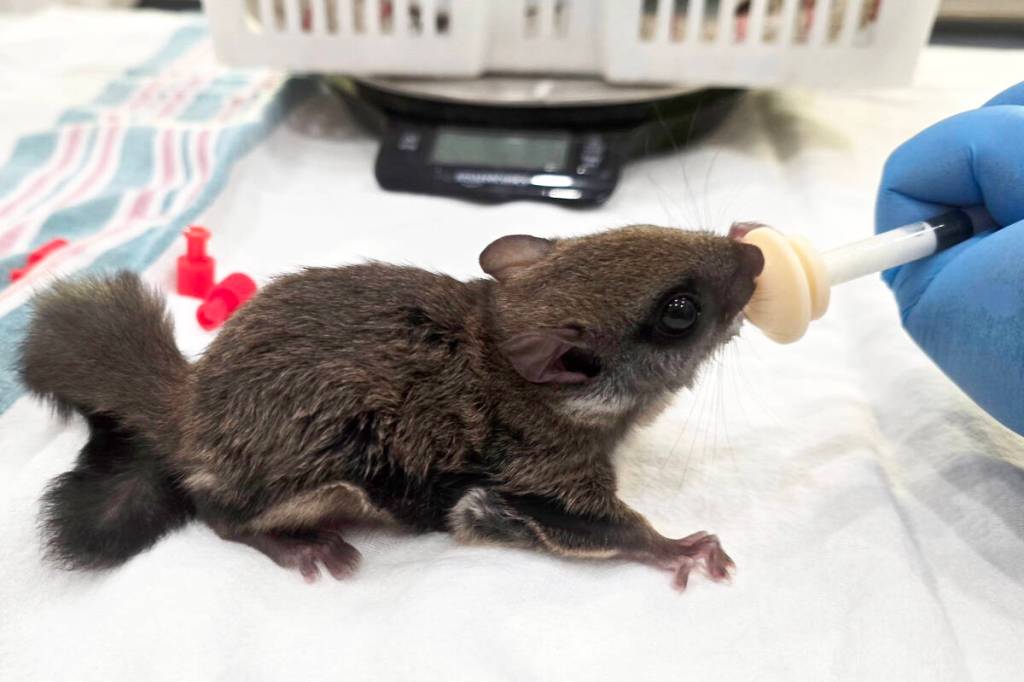
Over on the mainland, the closely related Douglas squirrel was introduced in 1960 and has slightly different colouration but occupies the same niche. A nighttime stroll might reveal a spookier cousin, the elusive Humbolt’s flying squirrel, which doesn’t actually fly but glides from tree to tree with the aid of membranes stretching from its front paws to it’s hind ones, the long tail acting as a rudder to guide the flight path and as a brake.
These are keystone animals and play an essential role in the health of local ecosystems as they munch on nuts and seeds found in the forest and create ‘middens’ or stores. Flying squirrels will also snack on mosses, fungi, and lichens which make up a large portion of their diet, and in doing so they disperse fungi spores that help grow new mushrooms which in turn connect with plant roots, assisting in nutrient absorption. All three species are key seed dispersers, helping to ensure the future of our forests.
Each species faces existential threats such as attacks by cats and other predators that bring them into MARS Wildlife Rescue. Vancouver Island has only the one native squirrel species which is a variant of the American red squirrel, but northern flying squirrels inhabit nearby old growth forests on the mainland, and sometimes come by BC Ferries for treatment at MARS!
Why Squirrels End Up at MARS Wildlife Rescue
Like many other wildlife calamities, squirrel admissions stem from human-related causes. Attacks by roaming cats are the leading reason squirrels arrive at the hospital. The bacteria in a cat’s saliva means that any encounter requires rapid treatment.
Many baby squirrels are orphaned by dogs or cats disturbing nests, tree trimming, and windstorms. Without intervention, these tiny squirrels quickly become dehydrated or hypothermic. Adult catastrophes involve vehicle strikes, squirrels fleeing predators and misjudging reflections, hitting glass at high speed, and autumn’s frantic foodcaching season leading to more road crossings and more accidents.
Eastern grey squirrels, twice the size of our native ones, were introduced to Stanley Park in 1909 and on southern Vancouver Island in 1966. Grey squirrels are now well established in the Lower Mainland and in the Capital Regional District on Vancouver Island, but should not be introduced into new areas. Although enjoyable to watch, they pose significant challenges to native species. Grey squirrels are very much at home in urban environments and are expanding their range as forests give way to human settlement. Grey squirrels raiding bird nests put additional pressure on already-stressed songbird populations.
Protecting our wildlife:
You can help our native squirrels and other wildlife by keeping your cats indoors or supervised, and by waiting to trim trees and bushes until after nesting season. Don’t feed grey squirrels or allow them to raid your bird feeders, and please don’t let your dogs chase squirrels!
Our small native squirrels are vital threads in the ecological fabric of Vancouver Island. When they arrive at MARS Wildlife Rescue, it is often because of human activities. By learning more about their lives and taking simple steps to reduce potential harms, we help ensure that the forests remain full of the chatter and the quiet work of these remarkable animals.
– Jane Thomson, MARS Volunteer